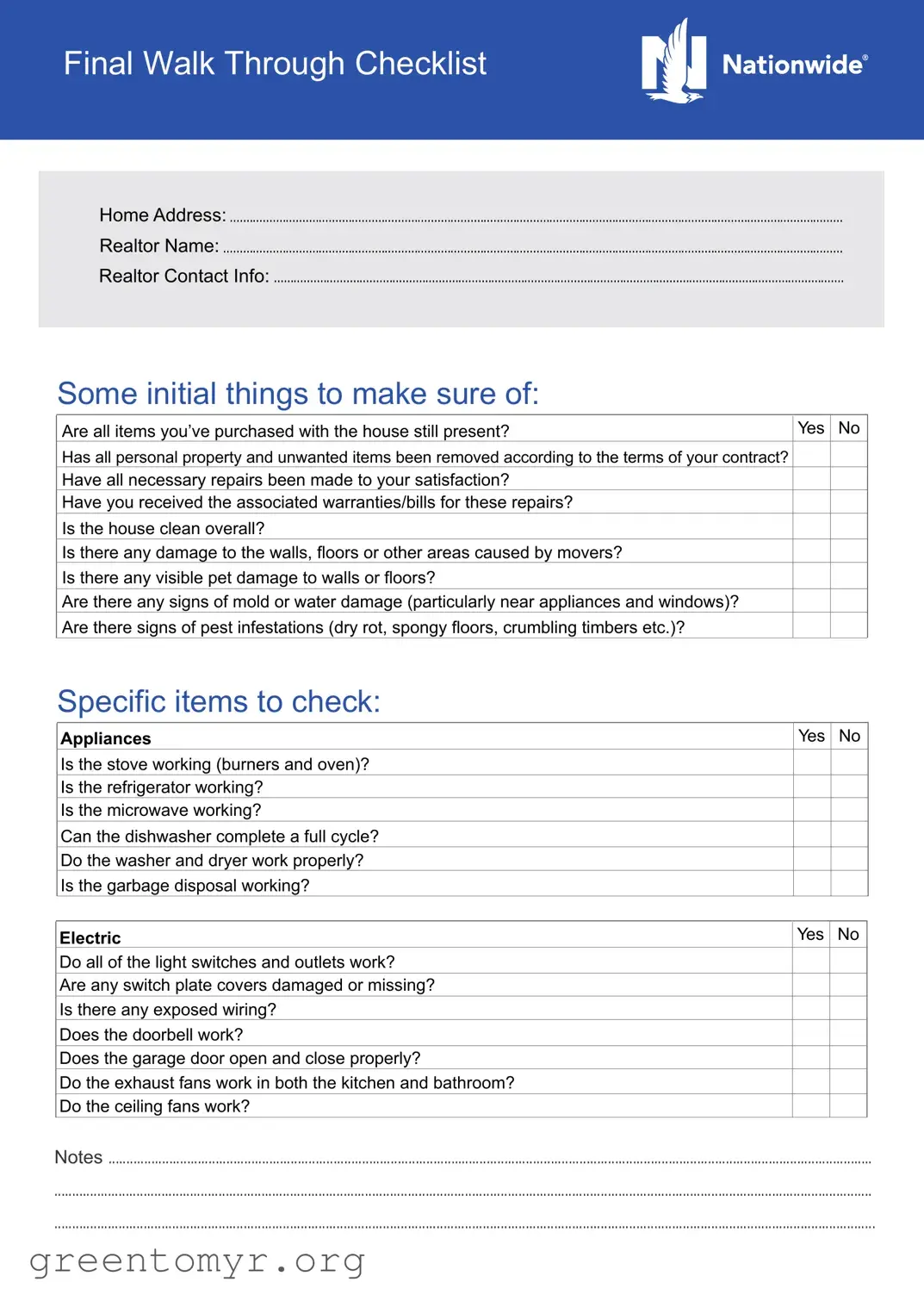
Purchasing a home is a significant milestone, and the Final Walk Through Checklist is an essential tool to ensure that everything is in order before closing the deal. This checklist helps you confirm that all items included in the sale are still present and that any personal property has been removed as per the contract. It prompts you to assess whether necessary repairs have been completed satisfactorily and whether you have received all relevant warranties or bills. Cleanliness is also crucial; the checklist encourages you to inspect the home for any damage caused by movers, as well as any signs of pet damage, mold, or water damage. You will also want to look for pest infestations, which can lead to more significant issues down the line. Specific sections guide you through checking the functionality of appliances, electrical systems, plumbing, HVAC systems, and the condition of windows and doors. Additionally, it prompts you to evaluate outdoor areas, including landscaping and sprinkler systems. Completing this checklist can provide peace of mind, ensuring that your new home meets your expectations and is ready for you to move in.
Final Walk Through Checklist
Home Address: ..........................................................................................................................................................................................
Realtor Name: ............................................................................................................................................................................................
Realtor Contact Info: .............................................................................................................................................................................
Some initial things to make sure of:
Are all items you’ve purchased with the house still present? |
Yes No |
Has all personal property and unwanted items been removed according to the terms of your contract?
Have all necessary repairs been made to your satisfaction?
Have you received the associated warranties/bills for these repairs?
Is the house clean overall?
Is there any damage to the walls, floors or other areas caused by movers?
Is there any visible pet damage to walls or floors?
Are there any signs of mold or water damage (particularly near appliances and windows)?
Are there signs of pest infestations (dry rot, spongy floors, crumbling timbers etc.)?
Specific items to check:
Appliances
Is the stove working (burners and oven)?
Is the refrigerator working?
Is the microwave working?
Can the dishwasher complete a full cycle?
Do the washer and dryer work properly?
Is the garbage disposal working?
Electric
Do all of the light switches and outlets work?
Are any switch plate covers damaged or missing?
Is there any exposed wiring?
Does the doorbell work?
Does the garage door open and close properly?
Do the exhaust fans work in both the kitchen and bathroom?
Do the ceiling fans work?
Yes No
Yes No
Notes ......................................................................................................................................................................................................................
.....................................................................................................................................................................................................................................
......................................................................................................................................................................................................................................
Plumbing
Do the toilets flush properly (do they run or leak)?
Do the sinks, bathtubs and showers drain properly?
Is the water pressure sufficient?
Are there signs of leaking near faucets?
HVAC
Does the heating system work properly?
Does the air conditioning unit work properly?
Does the thermostat work?
Windows/Doors
Are there any signs of condensation or fog near
Are any windows broken or missing screens?
Do all windows open and close properly?
Do all doors open and close properly?
Do the locks and latches work?
Basement/Attic/Crawlspace
Have the spaces been cleared out and emptied?
Are there any signs of exposed plumbing?
Are there any signs of pests?
Outdoors
Is landscaping as you remembered?
Do the sprinklers work?
Yes No
Yes No
Yes No
Yes No
Yes No
Notes ......................................................................................................................................................................................................................
.....................................................................................................................................................................................................................................
.....................................................................................................................................................................................................................................
| Fact Name | Description |
|---|---|
| Purpose | The Final Walk Through Checklist ensures that all agreed-upon conditions of the home are met before closing. |
| Items Verification | Buyers should confirm that all purchased items, including appliances, are present and functional. |
| Condition of Property | It is essential to check for any damages, including those caused by movers or pets. |
| Repairs Completion | All necessary repairs must be completed to the buyer's satisfaction, with warranties provided. |
| Cleanliness | The property should be clean and free of personal belongings or unwanted items. |
| Pest Inspection | Buyers should look for signs of pest infestations, mold, or water damage in critical areas. |
| State-Specific Laws | In California, the governing law for real estate transactions includes the Civil Code § 1102, which outlines disclosure requirements. |
After completing the Final Walk Through Checklist, you will have a comprehensive understanding of the condition of the property before finalizing your purchase. This is an essential step to ensure everything is in order and meets your expectations. Here’s how to fill out the checklist effectively.
The Final Walk Through Checklist serves as a comprehensive tool for homebuyers to ensure that the property is in the expected condition before closing the sale. This checklist helps buyers confirm that all agreed-upon repairs have been made, personal items have been removed, and that the home is clean and free of damage. It acts as a safeguard against any last-minute surprises that could affect the buyer’s satisfaction with the purchase.
During the final walk-through, it is essential to verify that all appliances included in the sale are functioning properly. Check the following:
Document any issues with appliances, as this may affect your negotiations or requests for repairs.
Assessing the interior condition of the home involves a thorough examination of various aspects. Look for:
Make note of any concerns, as these could impact your final decision or require further action.
Plumbing is a critical area to evaluate during the final walk-through. Ensure that:
Identifying plumbing issues before closing can save you from unexpected repair costs later on.
When inspecting the exterior of the home, pay attention to the following elements:
These checks help ensure that the outdoor areas meet your expectations and that there are no hidden maintenance issues.
If you discover any issues during the final walk-through, it is important to address them immediately. Document each problem with photos and detailed notes. Discuss these findings with your realtor, who can assist in negotiating repairs or adjustments with the seller. Depending on the severity of the issues, you may consider postponing closing until satisfactory resolutions are reached.
When filling out the Final Walk Through Checklist, many people overlook important details. One common mistake is failing to check that all items purchased with the house are still present. It’s essential to ensure that everything agreed upon in the contract is accounted for. Missing items can lead to disputes later on.
Another frequent error is not confirming that all personal property and unwanted items have been removed. This step is crucial, as any leftover items could become your responsibility. Always double-check that the space is clear of anything that should not be there.
People often forget to assess whether all necessary repairs have been made to their satisfaction. It’s important to take the time to inspect these repairs thoroughly. If something doesn’t meet your expectations, now is the time to address it before finalizing the purchase.
Many individuals skip over the cleanliness of the house. A thorough inspection should reveal whether the house is clean overall. Dirt and debris can be more than just an eyesore; they can indicate neglect or other underlying issues.
Checking for damage caused by movers is another critical step that is sometimes neglected. Look for any scratches, dents, or other marks on walls and floors. This damage could affect your decision to proceed with the purchase.
Signs of mold or water damage can easily be missed. Pay close attention to areas near appliances and windows. If you notice anything unusual, it’s vital to investigate further, as these issues can lead to costly repairs down the line.
Lastly, people often forget to look for signs of pest infestations. Issues like dry rot or spongy floors can indicate a more significant problem. A thorough inspection can save you from unexpected headaches after moving in.
When completing the home buying process, several documents work in conjunction with the Final Walk Through Checklist. Each of these documents serves a specific purpose and helps ensure a smooth transition into your new home. Below is a list of commonly used forms that may accompany the checklist.
Having these documents on hand during the final walk-through can help ensure that all aspects of the transaction are clear and that the property meets your expectations. Being well-informed will contribute to a smoother transition into your new home.
When completing the Final Walk Through Checklist form, it is essential to ensure a thorough and accurate assessment. Here are some recommendations on what to do and what to avoid:
By following these guidelines, you can help ensure a successful final walk-through, protecting your investment and ensuring a smooth transition into your new home.
Misconceptions about the Final Walk Through Checklist can lead to misunderstandings during the home-buying process. Here are five common misconceptions:
Understanding these misconceptions can help buyers approach the Final Walk Through with the right mindset, ensuring a smoother transition into their new home.
When preparing to fill out the Final Walk Through Checklist form, keep the following key takeaways in mind:
Completing this checklist thoroughly can help you avoid potential issues after closing. Take your time to go through each item carefully. If you find anything that needs attention, discuss it with your realtor to determine the best course of action before finalizing the sale.