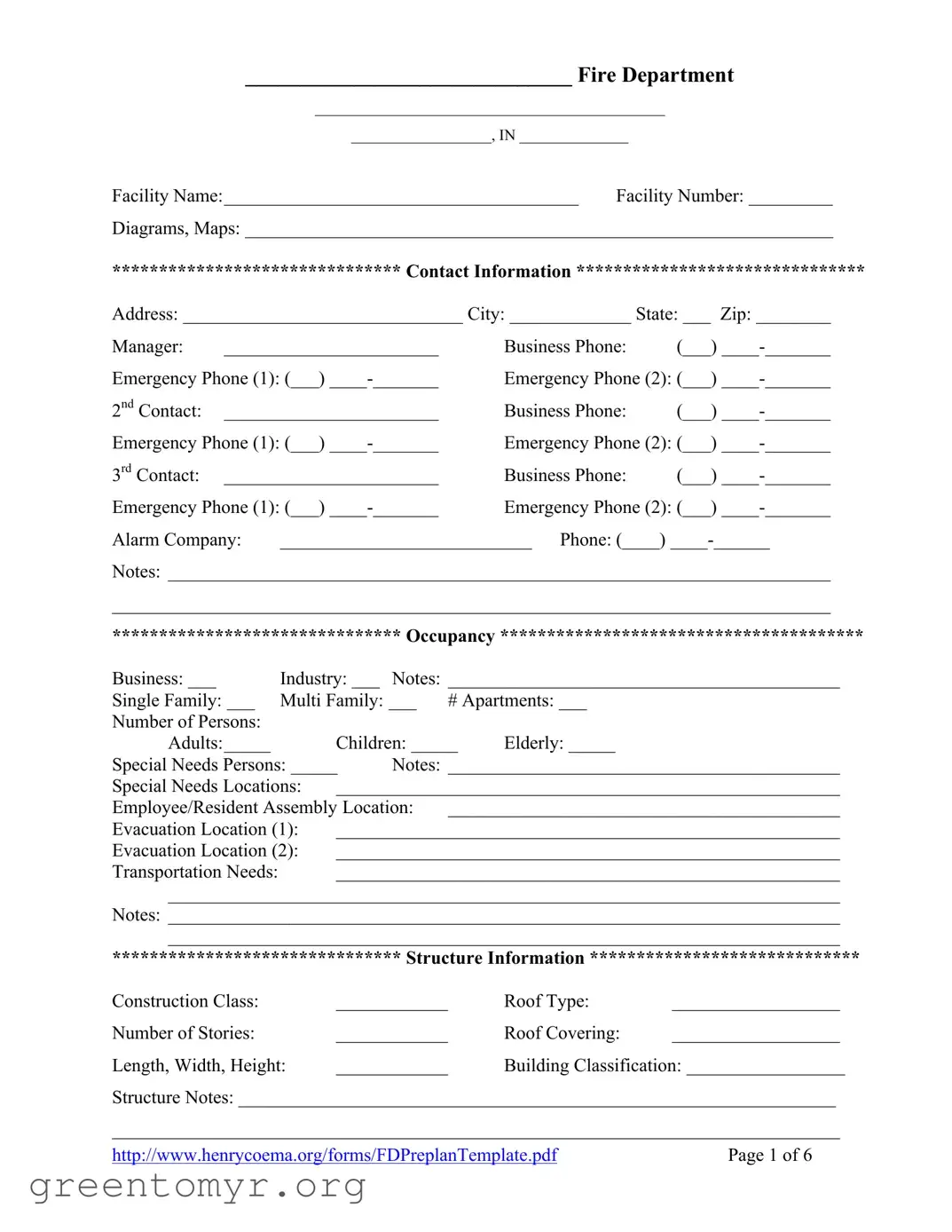
The Fire Department Pre Plan form serves as a crucial tool for ensuring safety and preparedness in various facilities. This comprehensive document collects essential information about a building, including its layout, contact details, and emergency protocols. Key sections of the form address aspects such as facility identification, contact information for managers and emergency personnel, and specifics about the building's occupancy type and structure. Additionally, the form includes vital fire access information, water supply details, and any hazardous materials present on-site. By providing clear diagrams and maps, the form helps fire departments visualize the premises, facilitating efficient response strategies. Moreover, it outlines critical safety features, such as sprinkler systems and emergency shutoff locations, which are essential during a fire emergency. Overall, the Fire Department Pre Plan form is designed to enhance communication and coordination between facility managers and emergency responders, ultimately aiming to protect lives and property in the event of a fire or other emergencies.
______________________________ Fire Department
_____________________________________________
__________________, IN ______________
Facility Name:______________________________________ Facility Number: _________
Diagrams, Maps: _______________________________________________________________
******************************* Contact Information *******************************
Address: ______________________________ City: _____________ State: ___ Zip: ________
Manager: |
_______________________ |
Business Phone: |
(___) |
Emergency Phone (1): (___) |
Emergency Phone (2): (___) |
||
2nd Contact: |
_______________________ |
Business Phone: |
(___) |
Emergency Phone (1): (___) |
Emergency Phone (2): (___) |
||
3rd Contact: |
_______________________ |
Business Phone: |
(___) |
Emergency Phone (1): (___) |
Emergency Phone (2): (___) |
||
Alarm Company: ___________________________ Phone: (____)
Notes: _______________________________________________________________________
_____________________________________________________________________________
******************************* Occupancy ***************************************
Business: ___ |
Industry: ___ |
Notes: __________________________________________ |
|||
Single Family: ___ |
Multi Family: ___ |
# Apartments: ___ |
|||
Number of Persons: |
|
|
|
|
|
Adults:_____ |
|
Children: _____ |
Elderly: _____ |
||
Special Needs Persons: _____ |
Notes: __________________________________________ |
||||
Special Needs Locations: |
______________________________________________________ |
||||
Employee/Resident Assembly Location: |
__________________________________________ |
||||
Evacuation Location (1): |
______________________________________________________ |
||||
Evacuation Location (2): |
______________________________________________________ |
||||
Transportation Needs: |
|
______________________________________________________ |
|||
________________________________________________________________________
Notes: ________________________________________________________________________
________________________________________________________________________
******************************* Structure Information *****************************
Construction Class: |
____________ |
Roof Type: |
__________________ |
Number of Stories: |
____________ |
Roof Covering: |
__________________ |
Length, Width, Height: |
____________ |
Building Classification: _________________ |
|
Structure Notes: ________________________________________________________________
______________________________________________________________________________
http://www.henrycoema.org/forms/FDPreplanTemplate.pdf |
Page 1 of 6 |
******************************* Fire Access Information ***************************
Main Access: |
____________________________________________________________ |
Secondary Access: |
____________________________________________________________ |
Roof Access: |
____________________________________________________________ |
Attic Access: |
____________________________________________________________ |
Basement: |
____________________________________________________________ |
Lowest Access: |
____________________________________________________________ |
Lock Box: |
____________________________________________________________ |
Alarm Panel: |
____________________________________________________________ |
Annunciator Panel: |
____________________________________________________________ |
Notes: _______________________________________________________________________
_____________________________________________________________________________
******************************* Response Information ******************************
Primary Staging: |
____________________________________________________________ |
Secondary Staging: |
____________________________________________________________ |
******************************* Water Supply Information**************************
Volume (GPM) |
________ |
Main Size: |
_____ |
Status: ______________ |
Notes: _______________________________________________________________________
_____________________________________________________________________________
Volume (GPM) |
________ |
Main Size: |
_____ |
Status: ______________ |
Notes: _______________________________________________________________________
_____________________________________________________________________________
Volume (GPM) ________ Main Size: _____ Status: ______________
Notes: _______________________________________________________________________
_____________________________________________________________________________
http://www.henrycoema.org/forms/FDPreplanTemplate.pdf |
Page 2 of 6 |
Alt
Volume (GPM) ________ Main Size: _____ Status: ______________
Notes: _______________________________________________________________________
_____________________________________________________________________________
Alt
Volume (GPM) ________ Main Size: _____ Status: ______________
Notes: _______________________________________________________________________
_____________________________________________________________________________
******************************* Protection Information *****************************
|
Yes/No |
Special Notes |
Sprinklers: |
_____ |
_______________________________________________ |
Spare Heads: |
_____ |
_______________________________________________ |
FD Connection: |
_____ |
_______________________________________________ |
Stand Pipe: |
_____ |
_______________________________________________ |
Gas Shutoff: |
_____ |
_______________________________________________ |
Electrical Shutoff: |
_____ |
_______________________________________________ |
Water Shutoff: |
_____ |
_______________________________________________ |
Notes: _______________________________________________________________________
_____________________________________________________________________________
_____________________________________________________________________________
_____________________________________________________________________________
_____________________________________________________________________________
_____________________________________________________________________________
_____________________________________________________________________________
_____________________________________________________________________________
_____________________________________________________________________________
_____________________________________________________________________________
_____________________________________________________________________________
http://www.henrycoema.org/forms/FDPreplanTemplate.pdf |
Page 3 of 6 |
******************************* HAZMAT ****************************************
Chemical Name: |
___________________________________________________________ |
|||
Location: |
|
___________________________________________________________ |
||
Quantity: |
_____________ Gallons/Pounds |
|
||
Flammable: |
____ |
Toxic: ____ |
Corrosive: ____ |
Oxidizer: ____ |
UN #: _____ |
Guide # _____ |
|
|
|
NFPA 704: |
Fire __ Health __ Reactivity __ Special _________ |
|||
Chemical Name: |
___________________________________________________________ |
|||
Location: |
|
___________________________________________________________ |
||
Quantity: |
_____________ Gallons/Pounds |
|
||
Flammable: |
____ |
Toxic: ____ |
Corrosive: ____ |
Oxidizer: ____ |
UN #: _____ |
Guide # _____ |
|
|
|
NFPA 704: |
Fire __ Health __ Reactivity __ Special _________ |
|||
Chemical Name: |
___________________________________________________________ |
|||
Location: |
|
___________________________________________________________ |
||
Quantity: |
_____________ Gallons/Pounds |
|
||
Flammable: |
____ |
Toxic: ____ |
Corrosive: ____ |
Oxidizer: ____ |
UN #: _____ |
Guide # _____ |
|
|
|
NFPA 704: |
Fire __ Health __ Reactivity __ Special _________ |
|||
Chemical Name: |
___________________________________________________________ |
|||
Location: |
|
___________________________________________________________ |
||
Quantity: |
_____________ Gallons/Pounds |
|
||
Flammable: |
____ |
Toxic: ____ |
Corrosive: ____ |
Oxidizer: ____ |
UN #: _____ |
Guide # _____ |
|
|
|
NFPA 704: |
Fire __ Health __ Reactivity __ Special _________ |
|||
Copy this sheet and attach as many as necessary
http://www.henrycoema.org/forms/FDPreplanTemplate.pdf |
Page 4 of 6 |

Basic Site Plan
http://www.henrycoema.org/forms/FDPreplanTemplate.pdf |
Page 5 of 6 |
Basic Floor Plan, |
____ Floor |
|
|
|
|
Make as many copies as necessary
http://www.henrycoema.org/forms/FDPreplanTemplate.pdf |
Page 6 of 6 |
| Fact Name | Description |
|---|---|
| Purpose | The Fire Department Pre Plan form is designed to provide critical information about a facility to aid in emergency response and planning. |
| Contact Information | The form includes sections for multiple contacts, ensuring that emergency responders can reach key personnel quickly. |
| Occupancy Details | It captures important occupancy details such as the number of residents and special needs individuals, which helps in evacuation planning. |
| Legal Requirement | In Indiana, compliance with local fire codes mandates the completion of this form to enhance safety and preparedness in emergency situations. |
Completing the Fire Department Pre Plan form is an important step in ensuring safety and preparedness for your facility. This form collects crucial information about your building, its occupants, and emergency contacts. Follow the steps below to fill out the form accurately.
The Fire Department Pre Plan form serves as a crucial tool for emergency responders. It provides essential information about a facility, including its layout, contact details, and specific hazards. This information helps firefighters and other emergency personnel understand the environment they will be working in during an emergency, allowing for quicker and more effective responses.
Typically, facility managers or owners are responsible for completing the Fire Department Pre Plan form. It’s important for those who are familiar with the layout and operations of the facility to provide accurate and detailed information. Involving key personnel ensures that all necessary details are captured effectively.
The form requires various types of information, including:
Providing this information helps ensure that emergency responders are well-prepared for any situation.
It’s advisable to review and update the Fire Department Pre Plan form at least once a year or whenever significant changes occur. Changes might include renovations, alterations in occupancy, or the introduction of new hazardous materials. Keeping this information current helps maintain safety and preparedness.
A completed Pre Plan form offers numerous benefits, including:
These advantages can make a significant difference in emergency situations.
Yes, the Fire Department Pre Plan form typically follows a structured format, which includes sections for contact information, occupancy details, structure information, fire access, and more. Using the standard format ensures that all necessary information is captured and makes it easier for emergency responders to find what they need quickly.
If your facility contains hazardous materials, it is crucial to provide detailed information on the Pre Plan form. This includes the type of chemicals, their locations, and any safety measures in place. Clearly indicating this information helps emergency responders take the necessary precautions when responding to incidents involving hazardous materials.
Yes, the Fire Department Pre Plan form is often available online through your local fire department's website. Many departments provide downloadable templates that you can fill out and submit. This accessibility makes it easier for facility managers to complete and update the form as needed.
If you have questions about the Fire Department Pre Plan form, it’s best to contact your local fire department directly. They can provide guidance on how to fill out the form correctly and ensure that you include all necessary information. Engaging with them can also help build a strong relationship between your facility and emergency responders.
Completing the Fire Department Pre Plan form is a critical step for ensuring safety and preparedness in case of emergencies. However, many individuals make common mistakes that can hinder the effectiveness of this essential document. Recognizing these errors can lead to better planning and improved safety outcomes.
One frequent mistake is incomplete contact information. Failing to provide accurate and comprehensive contact details for the facility manager and key personnel can lead to delays in communication during an emergency. It is vital to ensure that all phone numbers are correct and that alternative contacts are listed. This facilitates swift coordination among emergency responders.
Another common error is neglecting to detail occupancy information. This section should include the number of adults, children, and individuals with special needs present in the facility. Missing this information can complicate evacuation efforts and hinder rescue operations. Accurate occupancy data helps first responders assess potential risks and allocate resources effectively.
Many people also overlook the importance of structure information. Failing to specify construction class, roof type, and other structural details can lead to miscalculations in fire response strategies. First responders rely on this information to understand the building's vulnerabilities and develop an effective approach to firefighting and rescue.
Inadequate documentation of fire access information is another critical mistake. This includes specifying main and secondary access points, as well as roof and attic access. Without clear directions, emergency personnel may waste valuable time searching for entry points, potentially exacerbating the situation. Clarity in this section is essential for efficient response.
Additionally, some individuals provide insufficient details regarding water supply information. It is crucial to include the status, volume, and main size of hydrants and alternative water supplies. Inadequate information can hinder firefighting efforts, especially in large or complex structures where water supply is critical for effective fire suppression.
Lastly, neglecting to document hazardous materials accurately can have severe consequences. This section must include chemical names, quantities, and associated risks. Incomplete or incorrect information can put first responders and occupants at risk. Properly identifying hazardous materials ensures that emergency personnel are prepared for any potential dangers they may encounter.
In conclusion, paying close attention to these common mistakes can significantly enhance the effectiveness of the Fire Department Pre Plan form. Properly completed forms not only aid emergency responders but also contribute to the overall safety of the facility and its occupants.
The Fire Department Pre Plan form is an essential document for emergency responders, providing crucial information about a facility's layout, contact details, and emergency procedures. In addition to this form, several other documents are often utilized to ensure a comprehensive understanding of the site and to enhance safety measures. Below is a list of these documents, each serving a specific purpose in the planning and response process.
Utilizing these documents alongside the Fire Department Pre Plan form enhances the preparedness of both facility managers and emergency responders. By having a clear understanding of the site and its potential hazards, all parties involved can work together more effectively to ensure safety and minimize risks during emergencies.
The Fire Department Pre Plan form serves as a crucial document for fire safety and emergency response planning. Several other documents share similarities with this form, primarily in their focus on safety, emergency preparedness, and facility management. Below is a list of nine documents that are comparable to the Fire Department Pre Plan form:
When filling out the Fire Department Pre Plan form, it's important to be thorough and accurate. Here are some guidelines to help you through the process:
By following these do's and don'ts, you can help ensure that the Fire Department has the information it needs to respond effectively in case of an emergency.
This form is applicable to all types of facilities, regardless of size. Small businesses and residential properties can also benefit from having a pre plan in place.
While not legally required, having a pre plan is highly recommended. It enhances safety and preparedness for emergencies.
Various stakeholders, including facility managers and emergency responders, find the information valuable for planning and response efforts.
Regular updates are necessary. Changes in occupancy, structure, or hazardous materials should prompt a review and revision of the form.
While some information may be accessible, sensitive details are typically protected to ensure privacy and security.
It is best completed by someone knowledgeable about the facility's layout and emergency protocols, such as a manager or safety officer.
The pre plan covers various safety concerns, including hazardous materials, evacuation routes, and emergency contact information.
While it contains many sections, each part is straightforward. Guidance is often available from local fire departments.
Continuous access to the form is essential. It should be readily available during emergencies and training exercises.
It serves as a comprehensive emergency management tool, aiding in various situations, including medical emergencies and natural disasters.
Filling out the Fire Department Pre Plan form is essential for ensuring safety and preparedness in case of emergencies. Here are some key takeaways to keep in mind:
By following these guidelines, you can help ensure that the Fire Department has the necessary information to respond effectively in an emergency.