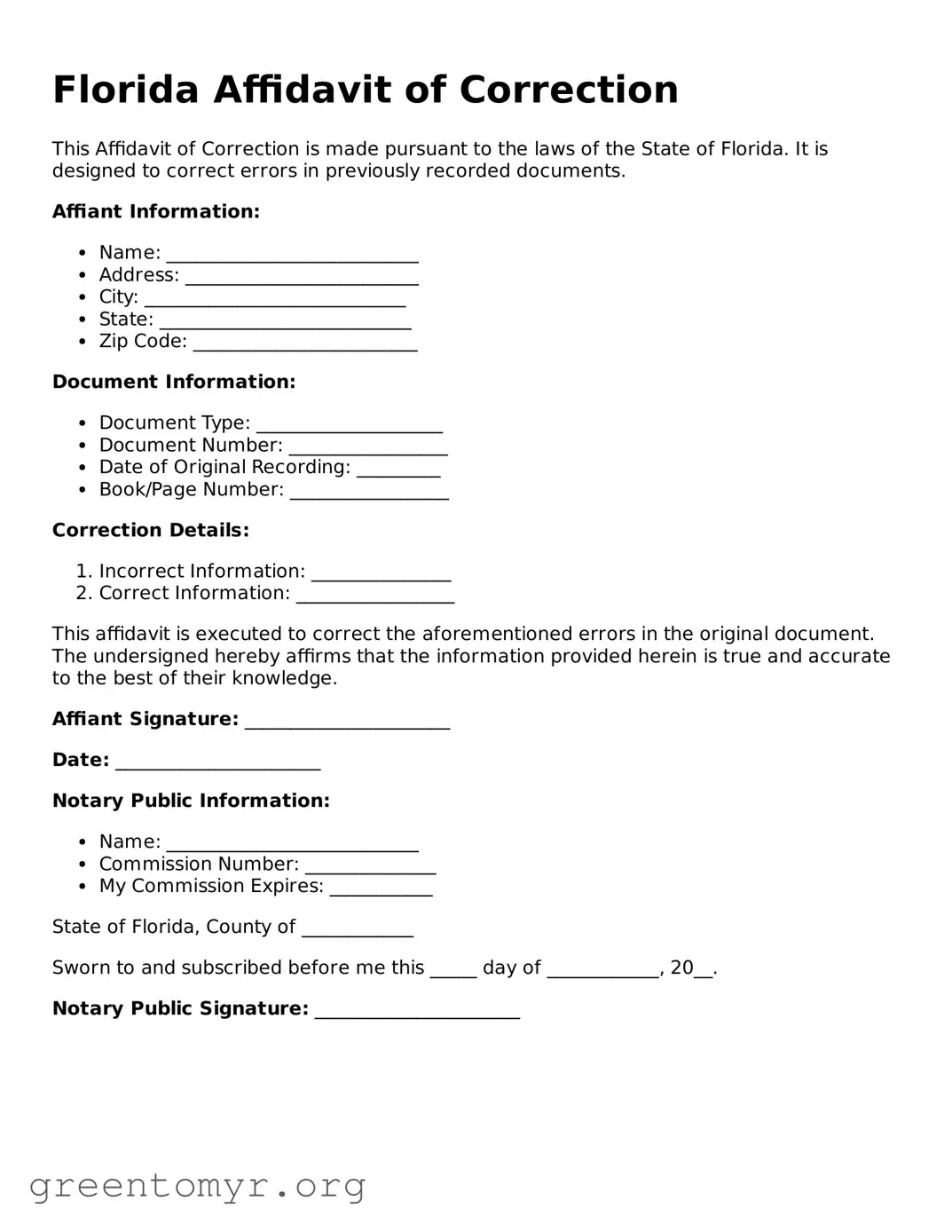
The Florida Affidavit of Correction form serves as a valuable tool for individuals seeking to rectify errors in public records. This form is particularly useful when there are inaccuracies in documents such as deeds, mortgages, or other legal filings. By submitting this affidavit, individuals can clarify or correct information that may have been misrepresented or mistakenly recorded. The process involves providing a sworn statement that outlines the specific errors and the correct information. This affidavit must be signed before a notary public, ensuring its authenticity. Once filed, the corrected information can help prevent potential disputes or misunderstandings in the future. Understanding how to properly utilize this form can streamline the correction process and enhance the accuracy of public records in Florida.
Florida Affidavit of Correction
This Affidavit of Correction is made pursuant to the laws of the State of Florida. It is designed to correct errors in previously recorded documents.
Affiant Information:
Document Information:
Correction Details:
This affidavit is executed to correct the aforementioned errors in the original document. The undersigned hereby affirms that the information provided herein is true and accurate to the best of their knowledge.
Affiant Signature: ______________________
Date: ______________________
Notary Public Information:
State of Florida, County of ____________
Sworn to and subscribed before me this _____ day of ____________, 20__.
Notary Public Signature: ______________________
| Fact Name | Details |
|---|---|
| Purpose | The Florida Affidavit of Correction is used to correct errors in public records. |
| Governing Law | Florida Statutes, Chapter 695.26 governs the use of this affidavit. |
| Eligibility | Any individual or entity can file an affidavit to correct errors in their recorded documents. |
| Common Errors | Common corrections include misspellings, incorrect legal descriptions, and wrong dates. |
| Filing Process | The affidavit must be signed in the presence of a notary public before filing. |
| Submission Location | File the affidavit with the Clerk of Court in the county where the original document was recorded. |
| Cost | There may be a filing fee, which varies by county. |
| Effectiveness | Once filed, the affidavit serves to officially correct the public record. |
| Additional Documentation | Supporting documents may be required depending on the nature of the correction. |
Once you have the Florida Affidavit of Correction form in hand, it's essential to complete it accurately to ensure that any necessary corrections can be made. Following the steps below will help you fill out the form correctly and efficiently.
After completing these steps, keep an eye on the processing time. It may take a few weeks for the corrections to be reflected in the official records. If you have any questions or concerns during this process, consider reaching out to a legal professional for guidance.
A Florida Affidavit of Correction is a legal document used to correct mistakes in public records. This may include errors in property deeds, liens, or other official filings. The affidavit serves to clarify the intended information and ensure accurate records.
Any party involved in the original document can file an Affidavit of Correction. This typically includes property owners, lienholders, or their authorized representatives. It is important that the person filing has the authority to make corrections on behalf of the involved parties.
Common errors that can be corrected include:
However, the affidavit cannot be used to change substantive rights or interests in the property.
To complete the Affidavit of Correction, follow these steps:
The completed Affidavit of Correction should be filed with the county clerk or recorder's office where the original document was recorded. It is essential to ensure that the affidavit is filed in the correct jurisdiction to be effective.
Yes, there is typically a filing fee associated with submitting an Affidavit of Correction. The fee varies by county, so it is advisable to check with the local clerk's office for the exact amount.
The processing time for an Affidavit of Correction can vary. Generally, it may take a few days to a few weeks, depending on the county's workload and procedures. It is recommended to follow up with the clerk's office if confirmation is not received within a reasonable timeframe.
Yes, once the Affidavit of Correction is processed, you should receive confirmation from the clerk's office. This may come in the form of a stamped copy of the affidavit or a notification that the correction has been made in the public records.
If your Affidavit of Correction is denied, you may have options to appeal the decision. The process for appealing can vary by county, so it is important to consult with the clerk's office or seek legal advice to understand the next steps.
Filling out the Florida Affidavit of Correction form can be a straightforward process, but individuals often encounter pitfalls that may complicate their efforts. One common mistake is providing inaccurate information. When individuals fail to double-check the details they enter, such as names, addresses, or dates, it can lead to significant delays or even rejection of the affidavit. Accuracy is crucial, as any discrepancies can undermine the purpose of the document.
Another frequent error involves the omission of required signatures. The Affidavit of Correction must be signed by the appropriate parties. If a necessary signature is missing, the affidavit may not be considered valid. Individuals should ensure that all required signatures are present and that they have the authority to sign on behalf of any involved parties.
People often neglect to include supporting documentation. The Affidavit of Correction may require additional paperwork to substantiate the corrections being made. Failing to attach relevant documents can hinder the processing of the affidavit. It is advisable to review the form's instructions carefully to determine what supplementary materials are needed.
Lastly, individuals sometimes overlook the importance of submitting the form to the correct office. The Florida Affidavit of Correction must be filed with the appropriate government agency. If it is sent to the wrong location, it will not be processed, leading to further complications. Proper research is essential to ensure that the affidavit reaches the right destination.
The Florida Affidavit of Correction is a legal document used to rectify errors in public records. When filing this affidavit, there are several other forms and documents that may be relevant in the process. Below is a list of commonly used documents that accompany the Affidavit of Correction.
Each of these documents plays a significant role in ensuring that the correction process is thorough and legally sound. Properly preparing and submitting these forms can help facilitate a smoother resolution to any discrepancies in public records.
The Affidavit of Correction form is similar to several other documents used to amend or clarify information. Below are four documents that share similarities with the Affidavit of Correction:
When filling out the Florida Affidavit of Correction form, it’s important to be careful and thorough. Here are some guidelines to help you:
Following these guidelines can help ensure that your Affidavit of Correction is processed smoothly. Take your time and make sure everything is in order.
The Florida Affidavit of Correction form is often misunderstood. Clearing up these misconceptions can help individuals navigate the process more effectively. Here are eight common misunderstandings:
The Affidavit of Correction is specifically designed for correcting clerical errors in recorded documents, not substantive changes.
While legal advice can be beneficial, individuals can file the form themselves without needing a lawyer.
This form cannot change ownership details. It is strictly for correcting minor mistakes, such as typos or misstatements.
While the affidavit is a formal correction, it can be amended if necessary, following the proper procedures.
Notarization is not a requirement for the affidavit, but having it notarized can add an extra layer of authenticity.
This affidavit is only applicable to documents that have been recorded in Florida. It cannot correct errors in documents from other states.
Only certain types of clerical errors are eligible for correction. Substantive errors often require different legal remedies.
The process is generally straightforward and can be completed relatively quickly if all information is accurate and complete.
Filling out and using the Florida Affidavit of Correction form is a crucial process for ensuring the accuracy of public records. Here are some key takeaways to keep in mind:
Taking these steps will help you navigate the process of correcting errors effectively and efficiently.