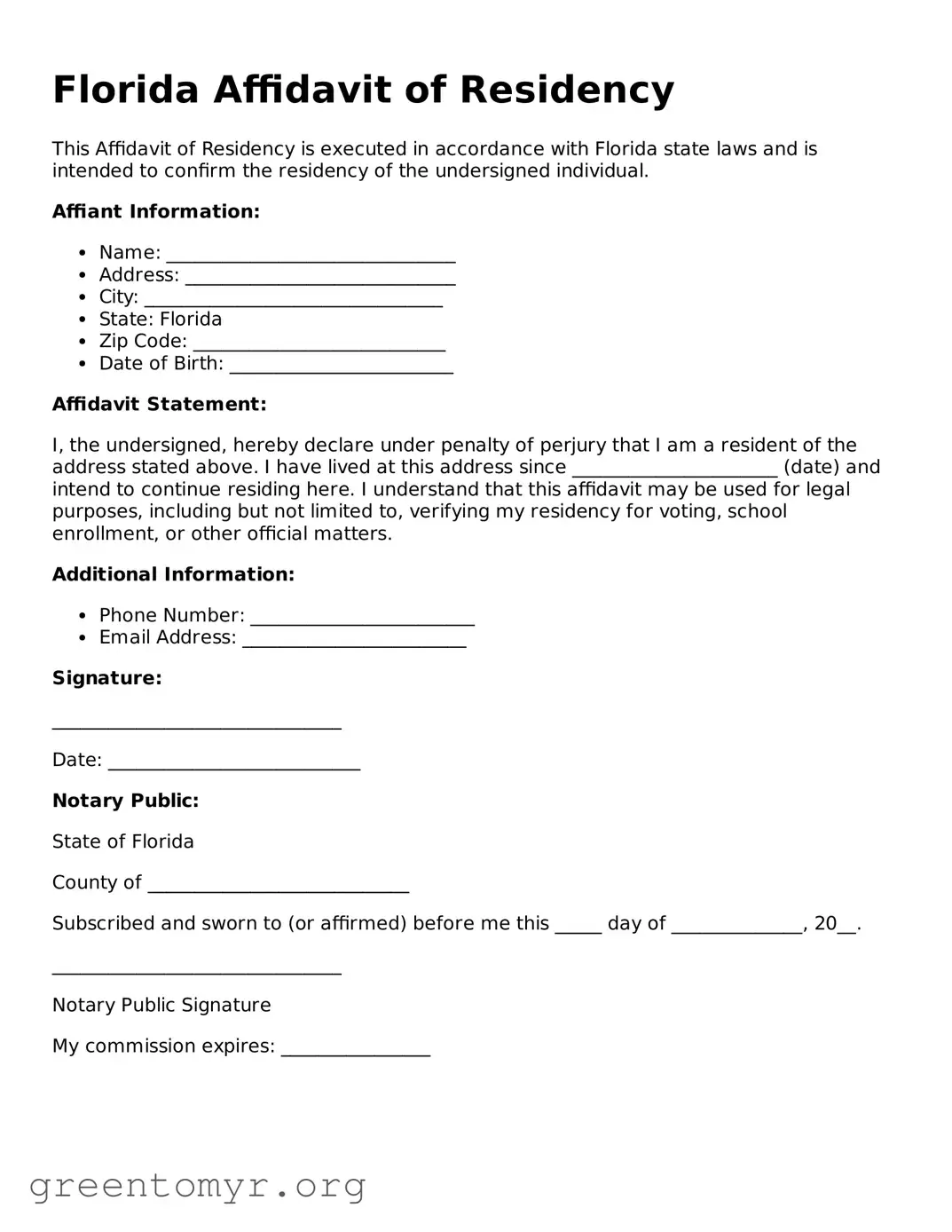
The Florida Affidavit of Residency form serves as a crucial document for individuals seeking to establish their residency in the state of Florida. This form is often utilized in various situations, such as when applying for a driver's license, enrolling children in public schools, or obtaining in-state tuition rates at colleges and universities. It requires the individual to provide specific information that verifies their current living situation, including their address and the duration of residence. Additionally, the form may necessitate the inclusion of supporting documentation, such as utility bills or lease agreements, to substantiate the claims made within the affidavit. By signing this document, the affiant attests to the truthfulness of the information provided, which can have significant legal implications. Understanding the requirements and proper use of the Florida Affidavit of Residency is essential for anyone looking to navigate the state's administrative processes effectively.
Florida Affidavit of Residency
This Affidavit of Residency is executed in accordance with Florida state laws and is intended to confirm the residency of the undersigned individual.
Affiant Information:
Affidavit Statement:
I, the undersigned, hereby declare under penalty of perjury that I am a resident of the address stated above. I have lived at this address since ______________________ (date) and intend to continue residing here. I understand that this affidavit may be used for legal purposes, including but not limited to, verifying my residency for voting, school enrollment, or other official matters.
Additional Information:
Signature:
_______________________________
Date: ___________________________
Notary Public:
State of Florida
County of ____________________________
Subscribed and sworn to (or affirmed) before me this _____ day of ______________, 20__.
_______________________________
Notary Public Signature
My commission expires: ________________
| Fact Name | Details |
|---|---|
| Purpose | The Florida Affidavit of Residency form is used to verify a person's residency in Florida. |
| Governing Law | This form is governed by Florida Statutes, specifically Section 92.525. |
| Who Can Use It | Residents of Florida who need to affirm their residency status can use this form. |
| Required Information | The form typically requires the individual's name, address, and a statement affirming residency. |
| Notarization | The affidavit must be signed in the presence of a notary public. |
| Submission | This form may need to be submitted to various government agencies or institutions. |
| Legal Consequences | Providing false information on this affidavit can lead to legal penalties. |
| Validity | The affidavit remains valid as long as the residency status is unchanged. |
After obtaining the Florida Affidavit of Residency form, you will need to complete it accurately. This process involves providing personal information and ensuring that all details are correct. Once you have filled out the form, you will be ready to submit it as required.
Once you have completed these steps, you will be prepared to submit the form according to the guidelines provided by the relevant authority.
The Florida Affidavit of Residency form is a legal document used to declare a person's residence in the state of Florida. This form is often required for various purposes, such as enrolling children in school, obtaining a driver's license, or registering to vote. It serves as a sworn statement that verifies an individual's address and residency status within the state.
Individuals who wish to prove their residency in Florida may need to complete this form. Common scenarios include:
It is important for individuals to check specific requirements based on their needs, as different agencies may have varying criteria for residency verification.
To complete the form, follow these steps:
Ensure that all information is accurate and complete to avoid delays or complications in processing your application.
Yes, notarization is typically required for the Florida Affidavit of Residency. A notary public must witness your signature on the form. This step adds a layer of authenticity and helps prevent fraudulent claims of residency. It is advisable to check with the specific agency requesting the affidavit to confirm their notarization requirements.
The submission location for the completed Affidavit of Residency form depends on the purpose for which it is being used. Generally, you may need to submit it to:
Be sure to verify the submission process with the relevant agency to ensure that you follow their specific guidelines.
If you have questions about the Affidavit of Residency form or the process, consider the following options:
It is important to ensure that you understand the requirements and processes involved to avoid any issues with your residency verification.
Filling out the Florida Affidavit of Residency form can seem straightforward, but many people make common mistakes that can lead to delays or complications. One frequent error is failing to provide accurate personal information. Ensure that your name, address, and date of birth are correct. Even a small typo can cause issues.
Another mistake is not signing the affidavit. It might seem obvious, but some individuals forget to sign the document. A signature is essential for the affidavit to be valid. Without it, the form cannot be processed.
People often overlook the requirement for witnesses. In Florida, the affidavit must be signed in the presence of a notary public or two witnesses. Failing to have the proper signatures can render the document useless.
Some applicants provide outdated information. It’s crucial to use your current address and any recent changes in your situation. Using old or incorrect information can lead to misunderstandings or legal issues later on.
Many individuals neglect to read the instructions carefully. Each section of the form has specific requirements. Skipping over these can result in incomplete applications, which may require additional time and effort to correct.
Another common mistake is not providing supporting documentation. Depending on the purpose of the affidavit, you may need to include proof of residency, such as utility bills or lease agreements. Failing to include these documents can lead to rejection.
Some people rush through the process. Taking your time to review the form can help catch errors before submission. A rushed application is more likely to have mistakes that could delay processing.
Additionally, misunderstanding the purpose of the affidavit can lead to errors. Some people fill it out thinking it serves a different function than it does. Clarifying the purpose beforehand can help you complete it correctly.
Lastly, not keeping a copy of the completed affidavit is a mistake many make. Having a copy for your records can be helpful if questions arise later. It’s always a good practice to retain important documents.
The Florida Affidavit of Residency form is an important document for establishing residency within the state. When completing this form, you may also need to provide additional documentation to support your claim of residency. Here are four other forms and documents that are often used in conjunction with the Affidavit of Residency:
When gathering these documents, ensure that they are current and accurately reflect your residency status. Providing comprehensive evidence will help facilitate the process of establishing residency in Florida.
When filling out the Florida Affidavit of Residency form, it’s important to ensure that your application is accurate and complete. Here are some essential dos and don’ts to keep in mind:
Following these guidelines will help you navigate the process more smoothly and avoid potential issues down the line.
The Florida Affidavit of Residency form is often misunderstood. Here are six common misconceptions about this important document:
Understanding these misconceptions can help individuals navigate the process of completing and submitting the Florida Affidavit of Residency form more effectively.
When filling out and using the Florida Affidavit of Residency form, consider the following key takeaways: