In the vibrant landscape of Florida's commercial real estate, the Commercial Lease Agreement form serves as a crucial document that outlines the relationship between landlords and tenants. This form encompasses essential elements, including the duration of the lease, the amount of rent, and the responsibilities of both parties. It addresses important considerations such as maintenance obligations, security deposits, and terms for renewing or terminating the lease. Additionally, the agreement may specify permitted uses of the property, ensuring that tenants operate within the guidelines set forth by the landlord. By clearly defining these aspects, the Commercial Lease Agreement helps to foster a transparent and cooperative environment, allowing both landlords and tenants to navigate their respective rights and obligations with confidence. Understanding this form is vital for anyone involved in commercial leasing, as it lays the foundation for a successful business relationship.
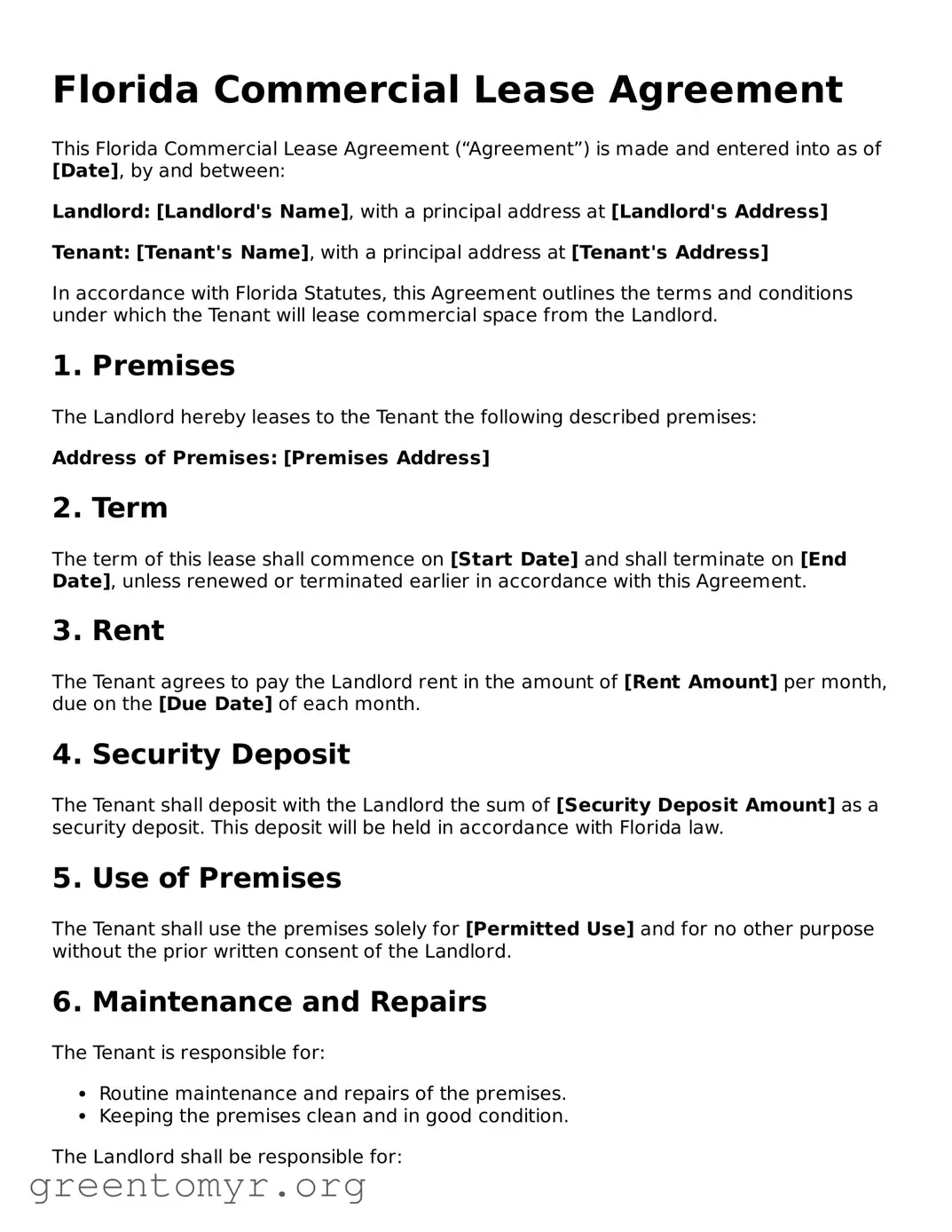
Florida Commercial Lease Agreement
This Florida Commercial Lease Agreement (“Agreement”) is made and entered into as of [Date], by and between:
Landlord: [Landlord's Name], with a principal address at [Landlord's Address]
Tenant: [Tenant's Name], with a principal address at [Tenant's Address]
In accordance with Florida Statutes, this Agreement outlines the terms and conditions under which the Tenant will lease commercial space from the Landlord.
1. Premises
The Landlord hereby leases to the Tenant the following described premises:
Address of Premises: [Premises Address]
2. Term
The term of this lease shall commence on [Start Date] and shall terminate on [End Date], unless renewed or terminated earlier in accordance with this Agreement.
3. Rent
The Tenant agrees to pay the Landlord rent in the amount of [Rent Amount] per month, due on the [Due Date] of each month.
4. Security Deposit
The Tenant shall deposit with the Landlord the sum of [Security Deposit Amount] as a security deposit. This deposit will be held in accordance with Florida law.
5. Use of Premises
The Tenant shall use the premises solely for [Permitted Use] and for no other purpose without the prior written consent of the Landlord.
6. Maintenance and Repairs
The Tenant is responsible for:
The Landlord shall be responsible for:
7. Utilities
The Tenant shall be responsible for all utilities and services required on the premises, including:
8. Termination
Either party may terminate this Agreement by providing [Notice Period] written notice to the other party.
9. Governing Law
This Agreement shall be governed by and construed in accordance with the laws of the State of Florida.
10. Signatures
IN WITNESS WHEREOF, the parties hereto have executed this Agreement as of the date first above written.
Landlord Signature: ____________________________ Date: _______________
Tenant Signature: ____________________________ Date: _______________
| Fact Name | Description |
|---|---|
| Governing Law | The Florida Commercial Lease Agreement is governed by Florida state laws. |
| Parties Involved | The agreement typically involves a landlord (lessor) and a tenant (lessee). |
| Property Description | The form requires a detailed description of the commercial property being leased. |
| Lease Term | The duration of the lease must be clearly stated, including start and end dates. |
| Rent Payment | The agreement outlines the amount of rent, payment schedule, and accepted payment methods. |
| Security Deposit | Details regarding the security deposit, including amount and conditions for return, are included. |
| Maintenance Responsibilities | The lease specifies which party is responsible for maintenance and repairs of the property. |
| Termination Conditions | Conditions under which the lease may be terminated by either party are outlined. |
Filling out a Florida Commercial Lease Agreement form requires careful attention to detail. Completing this form accurately is essential for establishing a clear understanding between the landlord and tenant. Below are the steps to guide you through the process.
A Florida Commercial Lease Agreement is a legal document that outlines the terms under which a landlord allows a business to use a commercial property. This agreement covers various aspects such as rent, duration, maintenance responsibilities, and permitted uses of the property. It serves to protect both the landlord's and tenant's rights and responsibilities, ensuring a clear understanding of the lease terms.
When drafting a Florida Commercial Lease Agreement, several important terms should be included to avoid misunderstandings. These typically include:
Yes, a Florida Commercial Lease Agreement can be modified after signing, but both parties must agree to the changes. It's essential to document any modifications in writing to maintain clarity and avoid future disputes. This could involve an addendum to the original lease or a completely new agreement, depending on the extent of the changes.
If a tenant wishes to terminate the lease early, they should first review the terms of the agreement. Many leases include a clause detailing the process for early termination, which may involve a penalty or notice period. It's crucial to communicate with the landlord and follow the outlined procedures to avoid legal complications.
Yes, Florida has specific laws and regulations that govern commercial leases. These laws address various aspects, including lease terms, tenant rights, and eviction procedures. While the lease agreement itself is a private contract, it's important for both landlords and tenants to be aware of state laws to ensure compliance and protect their interests.
Filling out a Florida Commercial Lease Agreement can be a daunting task. Many individuals and businesses overlook important details, leading to potential issues down the line. One common mistake is failing to accurately identify the parties involved in the lease. It is crucial to ensure that the names of both the landlord and tenant are correct and match their legal identities. This prevents confusion and establishes clear responsibilities for both parties.
Another frequent error is neglecting to specify the lease term. The duration of the lease should be clearly outlined, including the start and end dates. Without this information, disputes may arise regarding the length of the agreement, which can lead to misunderstandings about rent payments and property use. Clarity in this section is essential for both parties to understand their commitments.
People often make the mistake of not detailing the rent payment terms. This includes the amount due, the payment schedule, and acceptable methods of payment. Ambiguity in this area can result in late payments or disagreements over what constitutes a timely payment. Clearly stating these terms helps maintain a smooth landlord-tenant relationship.
Additionally, many individuals forget to address maintenance responsibilities. The lease should specify who is responsible for repairs and maintenance of the property. Without this information, tenants may assume the landlord will handle all issues, while landlords might expect tenants to take care of certain aspects. Clearly defining these responsibilities can prevent conflicts and ensure that both parties know their obligations.
Lastly, a common oversight involves not including provisions for lease termination. It is important to outline the conditions under which either party can terminate the lease. This includes notice periods and any penalties for early termination. Having these terms clearly stated can protect both parties and provide a clear exit strategy if circumstances change.
When entering into a Florida Commercial Lease Agreement, several other forms and documents often accompany it to ensure clarity and compliance throughout the leasing process. Each of these documents serves a specific purpose, helping both landlords and tenants navigate their responsibilities and rights effectively.
These documents, while distinct, work together to create a comprehensive framework for the commercial leasing process. By understanding their roles, both landlords and tenants can ensure a smoother and more transparent leasing experience.
The Commercial Lease Agreement is similar to several other documents in the realm of real estate and leasing. Each document serves a specific purpose but shares common elements with the lease agreement. Here are nine documents that are comparable:
When filling out the Florida Commercial Lease Agreement form, it's essential to approach the process with care and attention. Here are ten important dos and don'ts to consider:
By following these guidelines, you can help ensure that your experience with the Florida Commercial Lease Agreement is smooth and straightforward. Taking the time to fill out the form correctly can save you from potential issues down the road.
Understanding the Florida Commercial Lease Agreement form can be challenging due to various misconceptions. Here are eight common misunderstandings, along with explanations to clarify them.
In reality, commercial leases can vary significantly based on the type of property, the needs of the tenant, and the preferences of the landlord. Each lease should be tailored to the specific circumstances of the agreement.
Both landlords and tenants should have a clear understanding of the lease terms. This ensures that both parties are aware of their rights and responsibilities, which can prevent disputes later on.
Many lease terms can be negotiated before signing. Tenants should feel empowered to discuss terms that may not work for them, such as rent amounts, maintenance responsibilities, and lease duration.
While security deposits are often required, they can be refundable depending on the lease terms. Tenants should review the conditions under which they may receive their deposit back at the end of the lease.
Maintenance responsibilities can vary based on the lease agreement. Some leases may require tenants to handle specific maintenance tasks, while others may place the full burden on the landlord.
It is advisable for both parties to have legal counsel review the lease. This can help identify any potential issues and ensure that the lease complies with local laws.
Tenants can negotiate many aspects of a lease. Open communication with the landlord can lead to a more favorable agreement for both parties.
A commercial lease encompasses much more than just rent. It includes terms related to property use, maintenance, renewal options, and termination conditions, all of which are crucial for both parties.
When dealing with a Florida Commercial Lease Agreement, it's important to keep several key points in mind to ensure a smooth process. Here are some takeaways to consider:
By keeping these points in mind, you can navigate the lease agreement process more effectively and protect your interests.