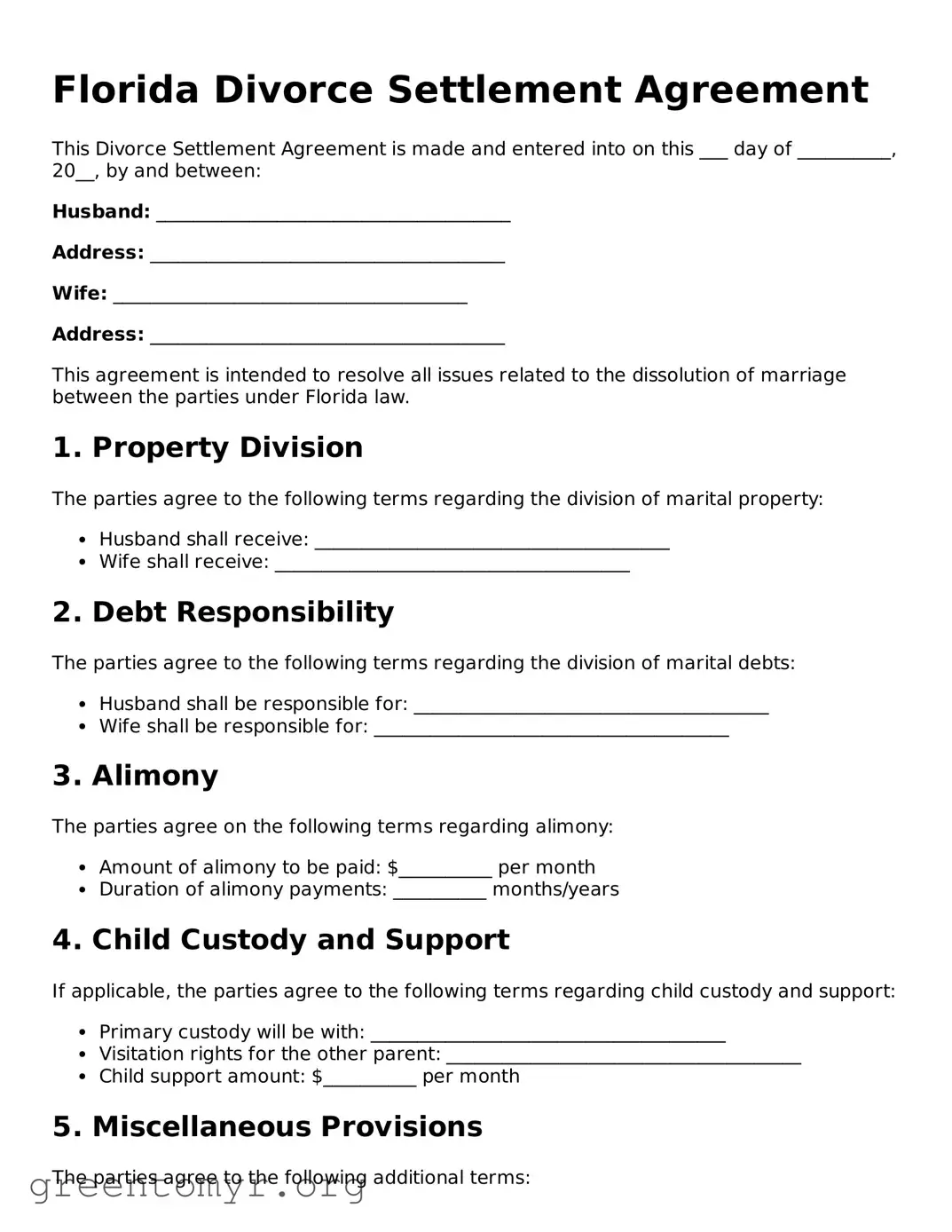
When navigating the emotional and legal complexities of divorce, having a clear and comprehensive Divorce Settlement Agreement form is essential for both parties involved. This document serves as a binding contract that outlines the terms of the divorce, addressing critical aspects such as property division, alimony, child custody, and child support. By detailing how assets and debts will be allocated, the agreement helps prevent future disputes and misunderstandings. Additionally, it provides a framework for co-parenting arrangements, ensuring that children's needs are prioritized. Completing this form requires careful consideration and negotiation, as it ultimately impacts the financial and emotional well-being of both spouses and any children involved. Understanding the intricacies of this form can empower individuals to make informed decisions, paving the way for a smoother transition into post-divorce life.
Florida Divorce Settlement Agreement
This Divorce Settlement Agreement is made and entered into on this ___ day of __________, 20__, by and between:
Husband: ______________________________________
Address: ______________________________________
Wife: ______________________________________
Address: ______________________________________
This agreement is intended to resolve all issues related to the dissolution of marriage between the parties under Florida law.
1. Property Division
The parties agree to the following terms regarding the division of marital property:
2. Debt Responsibility
The parties agree to the following terms regarding the division of marital debts:
3. Alimony
The parties agree on the following terms regarding alimony:
4. Child Custody and Support
If applicable, the parties agree to the following terms regarding child custody and support:
5. Miscellaneous Provisions
The parties agree to the following additional terms:
By signing below, the parties acknowledge that they have read and understood this agreement and agree to its terms.
Husband's Signature: ____________________________ Date: ____________
Wife's Signature: ____________________________ Date: ____________
This Divorce Settlement Agreement is made in accordance with the laws of the State of Florida.
| Fact Name | Description |
|---|---|
| Purpose | The Florida Divorce Settlement Agreement form outlines the terms of a divorce, including asset division, child custody, and support arrangements. |
| Governing Law | This form is governed by Florida Statutes Chapter 61, which covers dissolution of marriage and related issues. |
| Mutual Agreement | Both parties must agree to the terms outlined in the settlement for it to be valid and enforceable. |
| Filing Requirement | The completed form must be filed with the court as part of the divorce proceedings to finalize the settlement. |
| Modification | Once approved by the court, the terms can only be modified through a subsequent court order. |
| Legal Advice | It is advisable for both parties to seek legal counsel before signing the agreement to ensure their rights are protected. |
After completing the Florida Divorce Settlement Agreement form, you will be one step closer to finalizing your divorce. This form serves as a crucial document in outlining the terms of your separation, including asset division, child custody, and support arrangements. Make sure to review everything carefully before submission.
A Florida Divorce Settlement Agreement is a legal document that outlines the terms agreed upon by both spouses during a divorce. It addresses issues such as property division, alimony, child custody, and child support. This agreement is essential for ensuring that both parties have a clear understanding of their rights and responsibilities following the divorce.
This form is designed for couples who have reached an agreement on the terms of their divorce. It is suitable for those who wish to avoid a lengthy court battle and prefer to settle their differences amicably. Both parties must be in agreement on the terms for the form to be effective.
The Divorce Settlement Agreement typically includes the following components:
Once both parties have signed the Divorce Settlement Agreement, it must be filed with the appropriate Florida court. This usually involves submitting the agreement along with any required forms and paying a filing fee. The court will review the agreement to ensure it is fair and in compliance with state laws before finalizing the divorce.
Yes, the terms of a Divorce Settlement Agreement can be modified after it has been finalized. However, any changes must be agreed upon by both parties and may require court approval, especially in matters involving child custody or support. It is advisable to document any modifications in writing.
If one party fails to comply with the terms of the Divorce Settlement Agreement, the other party may seek legal recourse. This can include filing a motion with the court to enforce the agreement. The court may then take appropriate action to ensure compliance, which could involve modifying existing orders or imposing penalties.
The time it takes to finalize a divorce with a settlement agreement can vary. Generally, if both parties agree on the terms and all necessary documents are filed promptly, the process may take a few weeks to a few months. Factors such as court schedules and any required hearings can affect the timeline.
A Florida Divorce Settlement Agreement form can be obtained from various sources, including:
It is important to ensure that the form used complies with Florida state law.
Filling out the Florida Divorce Settlement Agreement form can be a daunting task. Many individuals overlook important details, leading to mistakes that can complicate the divorce process. Here are ten common errors to avoid.
One frequent mistake is failing to provide complete information. It’s essential to fill out every section of the form accurately. Leaving blanks or providing vague answers can lead to delays and misunderstandings. Ensure that all personal information, such as names and addresses, is correct and complete.
Another common error is not being specific about the terms of the agreement. Vague language can cause confusion later on. Clearly outline each party’s responsibilities regarding property division, alimony, and child support. Specificity helps prevent disputes down the line.
Many people forget to include all assets and debts. It’s crucial to disclose everything that belongs to both parties, including bank accounts, retirement funds, and debts. Omitting any asset or liability can lead to legal complications and potential financial loss.
Not understanding the implications of the agreement is also a mistake. Individuals should take the time to read and comprehend what they are signing. Consulting with a legal professional can provide clarity and ensure that both parties understand their rights and obligations.
Another issue arises when individuals do not consider future changes. Life circumstances can shift, and it’s important to include provisions for potential changes in income or living situations. Addressing these possibilities in the agreement can save time and stress later.
Some people neglect to account for tax implications. Certain financial decisions can have tax consequences. Understanding how property division or alimony affects taxes is vital to avoid unexpected liabilities.
Failing to review the document thoroughly before submission is a common pitfall. A rushed review can lead to overlooked errors. Take the time to read through the entire agreement, checking for accuracy and completeness.
Additionally, individuals may not keep copies of the signed agreement. It’s important to retain a copy for personal records. This can be helpful in case any disputes arise in the future.
Another mistake is not adhering to the required format. Each form has specific guidelines for submission. Ensure that the form is filled out according to the rules set by the Florida court system to avoid rejection.
Lastly, some individuals underestimate the importance of signatures. All necessary parties must sign the agreement for it to be valid. Missing signatures can render the entire document ineffective, leading to further complications.
By being aware of these common mistakes, individuals can navigate the Florida Divorce Settlement Agreement process more smoothly. Taking the time to complete the form accurately can lead to a more amicable and efficient divorce experience.
When navigating a divorce in Florida, several important documents accompany the Divorce Settlement Agreement. Each of these forms plays a crucial role in ensuring that all aspects of the divorce are addressed and finalized. Below is a list of commonly used documents that may be required during the divorce process.
Each of these documents serves a specific purpose in the divorce process. Ensuring that they are completed accurately and submitted on time can help facilitate a smoother transition into the next chapter of life. Understanding these forms can empower individuals to approach their divorce with confidence.
When filling out the Florida Divorce Settlement Agreement form, it is essential to approach the task with care and attention to detail. Below are some guidelines to follow and avoid during this process.
Understanding the Florida Divorce Settlement Agreement form is crucial for anyone navigating the divorce process. However, several misconceptions can lead to confusion. Here’s a list of ten common misunderstandings:
By clarifying these misconceptions, individuals can approach the Divorce Settlement Agreement with a better understanding, ensuring a smoother process during a challenging time.
When navigating the Florida Divorce Settlement Agreement form, it’s essential to understand the key elements that will guide you through the process. Here are some important takeaways:
By keeping these points in mind, you can approach the Divorce Settlement Agreement with confidence and clarity, ensuring a smoother transition during this challenging time.