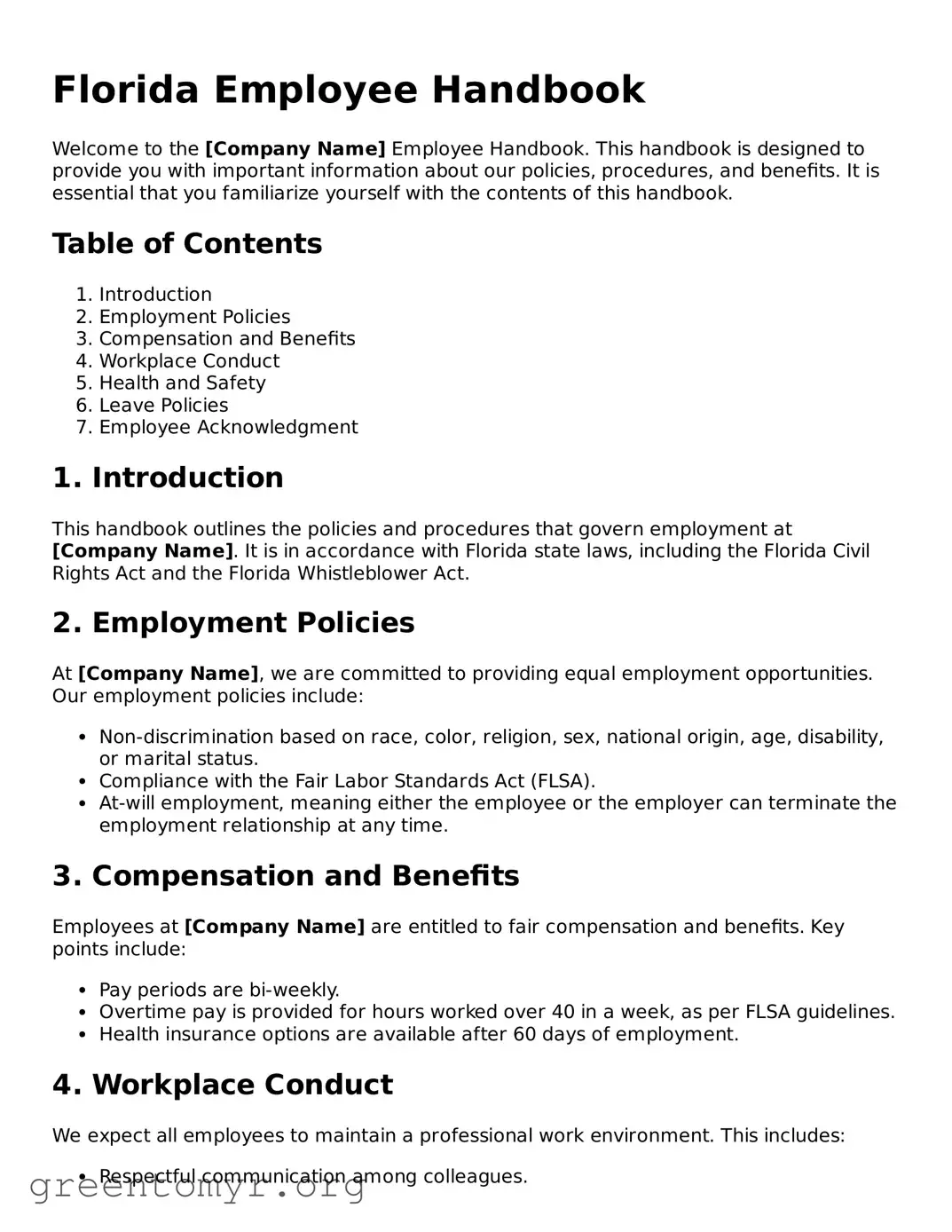
Creating a comprehensive employee handbook is an essential step for businesses in Florida, as it sets clear expectations and guidelines for both employers and employees. The Florida Employee Handbook form covers various important topics, including company policies, employee rights, and workplace procedures. It typically includes sections on anti-discrimination policies, harassment prevention, and leave entitlements, ensuring that employees understand their rights and responsibilities. Additionally, the handbook outlines workplace safety protocols and disciplinary procedures, which help maintain a positive work environment. By providing employees with this vital information, businesses can foster a culture of transparency and accountability, ultimately contributing to a more harmonious workplace.
Florida Employee Handbook
Welcome to the [Company Name] Employee Handbook. This handbook is designed to provide you with important information about our policies, procedures, and benefits. It is essential that you familiarize yourself with the contents of this handbook.
Table of Contents
1. Introduction
This handbook outlines the policies and procedures that govern employment at [Company Name]. It is in accordance with Florida state laws, including the Florida Civil Rights Act and the Florida Whistleblower Act.
2. Employment Policies
At [Company Name], we are committed to providing equal employment opportunities. Our employment policies include:
3. Compensation and Benefits
Employees at [Company Name] are entitled to fair compensation and benefits. Key points include:
4. Workplace Conduct
We expect all employees to maintain a professional work environment. This includes:
5. Health and Safety
Safety is a priority at [Company Name]. Employees are encouraged to report any unsafe conditions or practices. We comply with the Occupational Safety and Health Administration (OSHA) regulations.
6. Leave Policies
Employees are entitled to various types of leave, including:
7. Employee Acknowledgment
By signing below, you acknowledge that you have received, read, and understood the [Company Name] Employee Handbook.
_____________________________ [Employee Name]
Date: ________________________
_____________________________ [Manager Name]
Date: ________________________
| Fact Name | Details |
|---|---|
| Purpose | The Florida Employee Handbook serves as a guide for employees, outlining company policies, procedures, and expectations. |
| Legal Requirement | While not legally required, having an employee handbook is strongly recommended for clarity and legal protection. |
| State Governing Law | The handbook should comply with Florida's employment laws, including the Florida Civil Rights Act. |
| Content Recommendations | It should include sections on workplace conduct, attendance policies, and anti-discrimination policies. |
| At-Will Employment | Florida is an at-will employment state, meaning employers can terminate employees without cause, unless otherwise stated in the handbook. |
| Updates | Regular updates are necessary to reflect changes in laws and company policies, ensuring the handbook remains relevant. |
| Employee Acknowledgment | Employees should sign an acknowledgment form indicating they have received and understood the handbook. |
| Confidentiality Clause | Including a confidentiality clause can protect sensitive company information from being disclosed. |
| Grievance Procedures | Clear grievance procedures should be outlined to provide employees with a way to address concerns or complaints. |
| Non-Discrimination Policy | A strong non-discrimination policy is crucial to foster an inclusive workplace and comply with state and federal laws. |
Filling out the Florida Employee Handbook form is a straightforward process. By following these steps, you will ensure that all necessary information is accurately provided. This will help establish clear expectations and guidelines for both employees and employers.
The Florida Employee Handbook form is a document that outlines the policies, procedures, and expectations for employees working in Florida. It serves as a guide for both employers and employees, ensuring clarity on workplace rules and regulations.
An Employee Handbook is crucial for several reasons:
The Employee Handbook should be created by the employer, often with input from human resources and legal professionals. This ensures that the handbook complies with state and federal laws while addressing the specific needs of the organization.
Essential sections of the Employee Handbook may include:
The Employee Handbook should be reviewed and updated regularly, at least annually. Changes in laws, company policies, or organizational structure may necessitate updates. Keeping the handbook current helps ensure compliance and relevance.
Employees should receive a copy of the Employee Handbook during their onboarding process. Additionally, employers should hold training sessions to explain the handbook's contents and answer any questions. Regular reminders about the handbook can reinforce its importance.
If an employee has questions about the handbook, they should reach out to their supervisor or human resources. Open communication is encouraged to clarify any uncertainties and ensure understanding of the policies.
While the Employee Handbook is not a contract, it can have legal implications. Courts may consider it a binding document if it is clear that the employee acknowledged and agreed to its terms. Therefore, it is important to use precise language and provide an acknowledgment section for employees to sign.
Yes, the Employee Handbook can and should be customized to fit the specific needs of an organization. Each workplace has unique policies, culture, and operational requirements that should be reflected in the handbook. Tailoring the handbook helps ensure it is relevant and effective.
When filling out the Florida Employee Handbook form, many individuals make common mistakes that can lead to confusion or delays. One frequent error is neglecting to read the instructions thoroughly. Skipping this step can result in incomplete or incorrect information being provided. Taking the time to understand the requirements is essential for a smooth submission process.
Another mistake involves providing inaccurate personal information. This can include misspellings of names, incorrect addresses, or wrong Social Security numbers. Such errors may cause issues with payroll and benefits. Always double-check the details before submitting the form to ensure accuracy.
Some individuals fail to sign or date the form. A signature is often required to confirm that the employee has read and understood the handbook. Without it, the form may be considered invalid. Remember to add your signature and the date to avoid any complications.
Additionally, people sometimes overlook the importance of keeping a copy of the completed form. Not retaining a copy can create problems if there are questions or disputes about the information provided. It is advisable to keep a personal record for future reference.
Lastly, many forget to submit the form by the specified deadline. Late submissions can lead to penalties or delays in onboarding. Marking the due date on a calendar can help ensure timely completion and submission of the form.
When developing a comprehensive employee handbook in Florida, several other forms and documents can enhance clarity and compliance within the workplace. These documents work together to create a cohesive understanding of company policies, employee rights, and responsibilities. Below are four essential documents that are often used alongside the Florida Employee Handbook.
By integrating these documents with the Florida Employee Handbook, organizations can create a well-rounded framework that supports both employees and management. This approach not only enhances communication but also promotes a positive workplace culture built on mutual understanding and respect.
The Employee Handbook serves as a crucial resource within an organization, providing essential information about workplace policies, procedures, and expectations. It shares similarities with several other documents that serve similar purposes in guiding employee behavior and ensuring compliance with company standards. Below is a list of documents that are comparable to the Employee Handbook, along with explanations of how they relate to it.
When filling out the Florida Employee Handbook form, it's important to follow certain guidelines to ensure accuracy and compliance. Here are some things you should and shouldn't do:
By following these simple guidelines, you can help ensure that your submission is processed smoothly and efficiently.
Many employers in Florida have misunderstandings about the Employee Handbook form. Here are five common misconceptions:
This is not true. While not legally required, having a handbook is highly recommended. It provides clarity on company policies and can protect against legal issues.
Each handbook should reflect the unique culture and needs of the business. Policies can vary widely depending on the industry and specific company practices.
Policies and laws change. Regularly reviewing and updating the handbook is crucial to ensure compliance and relevance.
This misconception overlooks the benefits for small businesses. A well-crafted handbook can help establish expectations and improve workplace communication, regardless of size.
It is advisable to have employees sign an acknowledgment form. This ensures they understand the policies and reduces potential disputes in the future.
When filling out and using the Florida Employee Handbook form, it is essential to consider the following key takeaways: