In Florida, the Employment Verification form plays a crucial role in the hiring process and helps ensure compliance with state regulations. This form is typically used by employers to confirm the employment history of a candidate, providing essential details such as job titles, dates of employment, and reasons for leaving previous positions. It serves as a tool for both employers and employees, fostering transparency and trust in the workplace. By accurately completing this form, employers can assess a candidate's qualifications and reliability, while employees can showcase their professional background. The form may also require signatures from both the employer and the employee, adding a layer of authenticity to the information provided. Understanding the nuances of the Employment Verification form is important for anyone involved in the hiring process, as it can impact hiring decisions and employee relations significantly.
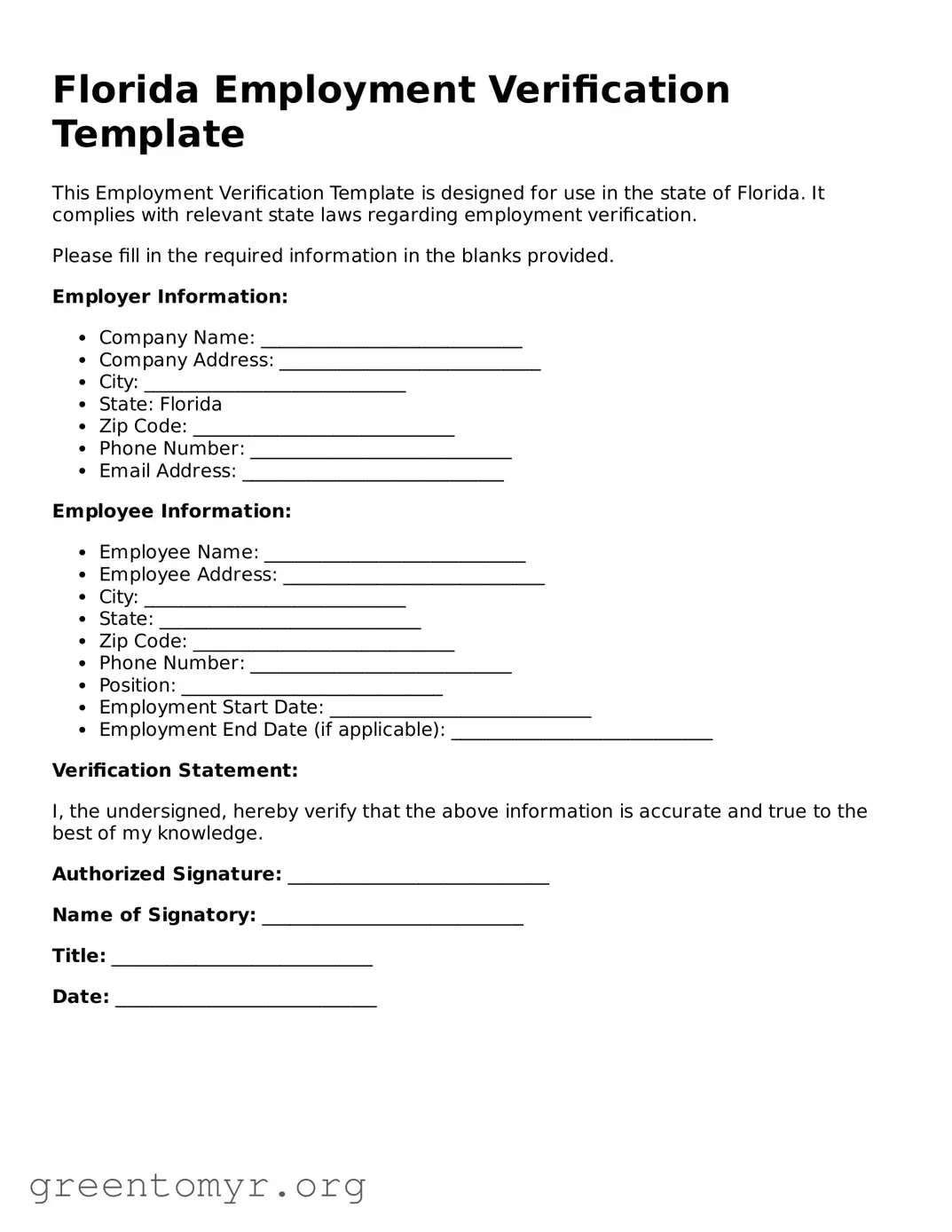
Florida Employment Verification Template
This Employment Verification Template is designed for use in the state of Florida. It complies with relevant state laws regarding employment verification.
Please fill in the required information in the blanks provided.
Employer Information:
Employee Information:
Verification Statement:
I, the undersigned, hereby verify that the above information is accurate and true to the best of my knowledge.
Authorized Signature: ____________________________
Name of Signatory: ____________________________
Title: ____________________________
Date: ____________________________
| Fact Name | Description |
|---|---|
| Purpose | The Florida Employment Verification form is used to verify an employee's employment status and income. |
| Governing Law | This form is governed by Florida Statute 448.095, which outlines employment verification requirements. |
| Who Uses It? | Employers and employees commonly use this form for various purposes, including loan applications and rental agreements. |
| Information Required | The form typically requires the employee's name, job title, employment dates, and salary information. |
| Signature Requirement | Both the employer and employee must sign the form to validate the information provided. |
| Submission | The completed form can be submitted to banks, landlords, or other entities requiring employment verification. |
| Confidentiality | Employers must handle the information on the form with confidentiality and in compliance with privacy laws. |
| Format | The form can be presented in either paper or electronic format, depending on the employer's preference. |
| Retention Period | Employers should retain copies of the form for a minimum of three years for record-keeping purposes. |
| Updates | Employers should stay informed about any changes to state laws that may affect the employment verification process. |
After obtaining the Florida Employment Verification form, you will need to complete it accurately. This form requires specific information about your employment history and personal details. Follow the steps below to ensure you fill it out correctly.
Once you have completed the form, review it for any errors or omissions. Submit the form to the appropriate agency or employer as directed. Keep a copy for your records.
The Florida Employment Verification form is a document used by employers to confirm an employee's work history, including their job title, dates of employment, and salary information. This form is often requested by other employers, banks, or agencies that need to verify a person's employment status for various purposes, such as loan applications or background checks.
Typically, the form is filled out by the employer or a designated representative. However, the employee may need to request it or provide necessary information to assist in the completion of the form. This ensures that the verification process is accurate and reflects the employee's work history.
You can obtain the Florida Employment Verification form from various sources, including:
The form typically requires the following information:
The time it takes to complete the form can vary. If the employer has all the necessary information readily available, it might take just a few minutes. However, if additional details are needed or if there are multiple requests, it could take longer. Generally, employers aim to respond promptly to verification requests.
In most cases, there is no fee for obtaining the Employment Verification form itself. However, some employers may charge a fee for processing the request or for providing additional documentation. It's best to check with your employer to understand their specific policies.
If your employer is unwilling to complete the Employment Verification form, you should first discuss the issue with them. Sometimes, misunderstandings can be resolved through open communication. If the problem persists, you may consider reaching out to your HR department or seeking advice from a labor rights organization.
Yes, you can use the Employment Verification form for multiple job applications. However, ensure that the information is accurate and up-to-date for each request. If different employers require specific details, you might need to provide additional context or documentation as needed.
If you notice any errors on the Employment Verification form, it’s important to address them immediately. Contact your employer or the person who completed the form to request corrections. Accurate information is crucial for your employment verification to be valid and accepted by third parties.
Completing the Florida Employment Verification form can be straightforward, but many individuals make common mistakes that can lead to delays or complications. Understanding these pitfalls is crucial for ensuring the form is filled out correctly. One frequent error is providing inaccurate personal information. This includes misspellings of names, incorrect Social Security numbers, or outdated addresses. Such inaccuracies can cause significant issues in verifying employment.
Another mistake involves failing to include all required documentation. The form may ask for specific supporting documents, such as pay stubs or tax forms. Omitting these can result in the application being incomplete, which may lead to further inquiries or a rejection. It is essential to read the instructions carefully and ensure all necessary documents are attached.
People often overlook the importance of clear and legible handwriting. If the form is filled out by hand, unclear writing can create confusion. Reviewers may misinterpret information, leading to mistakes in the verification process. Using a black or blue pen and writing neatly can help avoid this problem.
Another common issue is not signing the form. A signature is often required to validate the information provided. Without it, the form may be considered incomplete. Individuals should ensure they sign and date the form in the designated areas.
Inaccurate dates can also pose a problem. When listing employment dates, individuals should ensure that they are precise. Using approximate dates or estimations can lead to discrepancies during the verification process. It is advisable to double-check employment records to provide accurate information.
Some people fail to specify the job title or duties clearly. Providing vague descriptions can lead to misunderstandings about the nature of the employment. Clear and concise descriptions help ensure that the verification process goes smoothly.
Additionally, individuals may neglect to provide contact information for their employer. If the employer cannot be reached for verification, it can delay the process. Including a current phone number or email address ensures that the verification can be completed efficiently.
Not following the submission guidelines is another mistake that can hinder the process. Each form may have specific instructions regarding how to submit it, whether electronically or by mail. Ignoring these guidelines can lead to unnecessary delays.
Lastly, some individuals may not keep a copy of the completed form for their records. This can be problematic if there are follow-up questions or issues later. Retaining a copy allows individuals to refer back to their submission if needed.
When dealing with employment verification in Florida, several other forms and documents may come into play. Each of these serves a unique purpose and can help streamline the verification process. Here’s a list of commonly used documents alongside the Florida Employment Verification form:
Each of these documents plays a vital role in the employment verification process. Having them ready can make the process smoother and ensure that all necessary information is accurate and accessible.
The Employment Verification form is an important document used to confirm an individual's employment status. Several other documents serve similar purposes in different contexts. Here are seven documents that share similarities with the Employment Verification form:
When filling out the Florida Employment Verification form, it is essential to follow specific guidelines to ensure accuracy and compliance. Here is a list of things to do and avoid:
When dealing with the Florida Employment Verification form, several misconceptions can arise. Understanding these can help ensure that the form is used correctly and efficiently. Below are six common misconceptions:
Understanding these misconceptions can help individuals navigate the Employment Verification process more effectively. Accurate information is key to ensuring that employment status is properly verified.
When filling out and using the Florida Employment Verification form, keep the following key points in mind: