The Florida Financial Affidavit Short 12.902(b) form plays a crucial role in various legal proceedings, particularly in family law cases such as divorce and child support determinations. This form is designed to provide a clear and concise snapshot of an individual's financial situation. It requires the disclosure of income, expenses, assets, and liabilities, allowing the court to assess the financial standing of each party involved. The form is structured to be user-friendly, enabling individuals to complete it without extensive legal knowledge. By summarizing financial information, it aids in promoting transparency and fairness in financial negotiations. Additionally, the short version of the affidavit is intended for those with simpler financial situations, ensuring that the process remains accessible and efficient. Accurate completion of this form is essential, as it directly impacts the court's decisions regarding financial obligations and support arrangements.
INSTRUCTIONS FOR FLORIDA FAMILY LAW RULES OF PROCEDURE
FORM 12.902(b)
FAMILY LAW FINANCIAL AFFIDAVIT (SHORT FORM)
(10/21)
When should this form be used?
This form should be used when you are involved in a family law case which requires a financial affidavit and your individual gross income is UNDER $50,000 per year unless:
(1)You are filing a simplified dissolution of marriage under rule 12.105 and both parties have waived the filing of a financial affidavit;
(2)You have no minor children, no support issues, and have filed a written settlement agreement disposing of all financial issues; or
(3)The court lacks jurisdiction to determine any financial issues.
This form should be typed or printed in black ink. You should file this document with the clerk of the circuit court in the county where the petition was filed and keep a copy for your records.
What should I do next?
A copy of this form must be filed with the court and served on the other party or his or her attorney in your case within 45 days of being served with the petition, if it is not served on him or her with your initial papers. The copy you are serving to the other party must be either mailed,
IMPORTANT INFORMATION REGARDING
The Florida Rules of General Practice and Judicial Administration now require that all petitions, pleadings, and documents be filed electronically except in certain circumstances.
IMPORTANT INFORMATION REGARDING
After the initial service of process of the petition or supplemental petition by the Sheriff or certified process server, the Florida Rules of General Practice and Judicial Administration now require that all documents required or permitted to be served on the other party must be served by electronic mail (e- mail) except in certain circumstances. You must strictly comply with the format requirements set forth in the Florida Rules of General Practice and Judicial Administration. If you elect to participate in
Instructions for Florida Family Law Rules of Procedure Form 12.902(b), Family Law Financial Affidavit (Short Form) (10/21)
electronic service, which means serving or receiving pleadings by electronic mail
To serve and receive documents by
Where can I look for more information?
Before proceeding, you should read “General Information for
Special notes . . .
If you want to keep your address confidential because you have been found by a judge to be the victim of sexual battery, aggravated child abuse, aggravated stalking, harassment, aggravated battery, or domestic violence, do not enter the address, telephone, and fax information at the bottom of this form. Instead, file Request for Confidential Filing of Address, Florida Supreme Court Approved Family Law Form 12.980(h).
The affidavit must be completed using monthly income and expense amounts. If you are paid or your bills are due on a schedule which is not monthly, you must convert those amounts. Hints are provided below for making these conversions.
Hourly - If you are paid by the hour, you may convert your income to monthly as follows:
Hourly amount |
x |
Hours worked per week = |
Weekly amount |
|
Weekly amount |
x |
52 Weeks per year |
= |
Yearly amount |
Yearly amount |
÷ |
12 Months per year |
= |
Monthly Amount |
Daily - If you are paid by the day, you may convert your income to monthly as follows:
Daily amount |
x |
Days worked per week |
= |
Weekly amount |
Weekly amount |
x |
52 Weeks per year |
= |
Yearly amount |
Yearly amount |
÷ |
12 Months per year |
= |
Monthly Amount |
Weekly - If you are paid by the week, you may convert your income to monthly as follows:
Weekly amount |
x |
52 Weeks per year |
= |
Yearly amount |
Instructions for Florida Family Law Rules of Procedure Form 12.902(b), Family Law Financial Affidavit (Short Form) (10/21)
Yearly amount ÷ 12 Months per year = Monthly Amount
x |
26 |
= |
Yearly amount |
|
Yearly amount |
÷ |
12 Months per year |
= |
Monthly Amount |
2 |
= |
Monthly Amount |
Expenses may be converted in the same manner.
Remember, a person who is NOT an attorney is called a nonlawyer. If a nonlawyer helps you fill out these forms, that person must give you a copy of a Disclosure from Nonlawyer, Florida Family Law Rules of Procedure Form 12.900(a), before he or she helps you. A nonlawyer helping you fill out these forms also must put his or her name, address, and telephone number on the bottom of the last page of every form he or she helps you complete.
Instructions for Florida Family Law Rules of Procedure Form 12.902(b), Family Law Financial Affidavit (Short Form) (10/21)

IN THE CIRCUIT COURT OF THE |
JUDICIAL CIRCUIT, |
IN AND FOR |
COUNTY, FLORIDA |
|
Case No.: |
, |
Division: |
|
|
Petitioner, |
|
and |
|
, |
|
Respondent. |
|
FAMILY LAW FINANCIAL AFFIDAVIT (SHORT FORM)
(Under $50,000 Individual Gross Annual Income)
I, {full legal name} |
|
, being sworn, certify that the following |
information is true: |
|
|
My Occupation: |
|
Employed by: ___________________________ |
Business Address: _______________________________________________________________ |
||
Pay rate: $ |
( ) every week ( |
) every other week ( ) twice a month ( ) monthly |
( ) other: ____________ |
|
|
___ Check here if unemployed and explain on a separate sheet your efforts to find employment.
SECTION I. PRESENT MONTHLY GROSS INCOME:
All amounts must be MONTHLY. See the instructions with this form to figure out money amounts for anything that is NOT paid monthly. Attach more paper, if needed. Items included under “other” should be listed separately with separate dollar amounts.
1.$______ Monthly gross salary or wages
2.______ Monthly bonuses, commissions, allowances, overtime, tips, and similar payments
3._______ Monthly business income from sources such as
4._______ Monthly disability benefits/SSI
5._______ Monthly Workers’ Compensation
6._______ Monthly Unemployment Compensation
7._______ Monthly pension, retirement, or annuity payments
8._______ Monthly Social Security benefits
9._______ Monthly alimony actually received (Add 9a and 9b)
9a. From this case: $ _______
9b. From other case(s): $ _______
Florida Family Law Rules of Procedure Form 12.902(b), Family Law Financial Affidavit (Short Form) (10/21)
10._______ Monthly interest and dividends
11._______ Monthly rental income (gross receipts minus ordinary and necessary expenses required to produce income) (Attach sheet itemizing such income and expense items.)
12._______ Monthly income from royalties, trusts, or estates
13._______ Monthly reimbursed expenses and
reduce personal living expenses
14._______ Monthly gains derived from dealing in property (not including nonrecurring gains)
15._______ Any other income of a recurring nature (list source) _________________________
16.__________________________________________________________________________
17.$ _______ TOTAL PRESENT MONTHLY GROSS INCOME (Add lines
PRESENT MONTHLY DEDUCTIONS:
18.$______ Monthly federal, state, and local income tax (corrected for filing status and allowable dependents and income tax liabilities)
a.Filing Status ____________
b.Number of dependents claimed _______
19._______ Monthly FICA or
20._______ Monthly Medicare payments
21._______ Monthly mandatory union dues
22._______ Monthly mandatory retirement payments
23._______ Monthly health insurance payments (including dental insurance), excluding portion paid for any minor children of this relationship
24._______ Monthly
25._______ Monthly
25a. from this case: $ _______
25b. from other case(s): $ _______
26.$_______ TOTAL DEDUCTIONS ALLOWABLE UNDER SECTION 61.30, FLORIDA STATUTES (Add lines 18 through 25)
27.$_______ PRESENT NET MONTHLY INCOME (Subtract line 26 from line 17)
Florida Family Law Rules of Procedure Form 12.902(b), Family Law Financial Affidavit (Short Form) (10/21)

SECTION II. AVERAGE MONTHLY EXPENSES
Proposed/Estimated Expenses. If this is a dissolution of marriage case and your expenses as listed below do not reflect what you actually pay currently, you should write “estimate” next to each amount that is estimated.
A. HOUSEHOLD: |
|
|
E. OTHER EXPENSES NOT LISTED ABOVE |
||
Mortgage or rent |
$ |
_ |
Clothing |
$ |
_ |
Property taxes |
$ |
_ |
Medical/Dental (uninsured) |
$ |
_ |
Utilities |
$ |
_ |
Grooming |
$ |
_ |
Telephone |
$ |
_ |
Entertainment |
$ |
_ |
Food |
$ |
_ |
Gifts |
$ |
_ |
Meals outside home |
$ |
_ |
Religious organizations |
$ |
_ |
Maintenance/Repairs |
$ |
_ |
Miscellaneous |
$ |
_ |
Other: __________ |
$ |
_ |
Other: ______________ |
$ |
_ |
|
|
|
____________________ |
$ |
_ |
B. AUTOMOBILE |
|
|
____________________ |
$ |
_ |
Gasoline |
$ |
_ |
____________________ |
$ |
_ |
Repairs |
$ |
_ |
____________________ |
$ |
_ |
Insurance |
$ |
_ |
____________________ |
$ |
_ |
C. CHILD(REN)’S EXPENSES |
|
_ |
F. PAYMENTS TO CREDITORS |
|
|
Day care |
$ |
|
|
||
Lunch money |
$ |
_ |
CREDITOR: |
MONTHLY |
|
Clothing |
$ |
_ |
|
PAYMENT |
|
Grooming |
$ |
_ |
____________________ |
$ |
_ |
Gifts for holidays |
$ |
_ |
____________________ |
$ |
_ |
Medical/Dental (uninsured) |
$ |
_ |
____________________ |
$ _ |
_ |
Other: ______________ |
$ |
_ |
____________________ |
$ |
_ |
|
|
|
____________________ |
$ |
_ |
D. INSURANCE |
|
|
____________________ |
$ |
_ |
Medical/Dental (if not listed on |
|
|
____________________ |
$ |
_ |
lines 23 or 45) |
$ |
_ |
____________________ |
$ |
_ |
Child(ren)’s medical/dental |
$ |
_ |
____________________ |
$ |
_ |
Life |
$ |
_ |
____________________ |
$ |
_ |
Other: |
$ |
_ |
____________________ |
$ |
_ |
Florida Family Law Rules of Procedure Form 12.902(b), Family Law Financial Affidavit (Short Form) (10/21)

28. $_______ TOTAL MONTHLY EXPENSES (add ALL monthly amounts in A through F above)
SUMMARY
29.$_______ TOTAL PRESENT MONTHLY NET INCOME (from line 27 of SECTION I. INCOME)
30.$_______ TOTAL MONTHLY EXPENSES (from line 28 above)
31.$_______ SURPLUS (If line 29 is more than line 30, subtract line 30 from line 29. This is the amount of your surplus. Enter that amount here.)
32.($_______) (DEFICIT) (If line 30 is more than line 29, subtract line 29 from line 30. This is the amount of your deficit. Enter that amount here.)
SECTION III. ASSETS AND LIABILITIES
Use the nonmarital column only if this is a petition for dissolution of marriage and you believe an item is “nonmarital,” meaning it belongs to only one of you and should not be divided. You should indicate to whom you believe the item(s) or debt belongs. (Typically, you will only use this column if property/debt was owned/owed by one spouse before the marriage. See the “General Information for Self- Represented Litigants” found at the beginning of these forms and section 61.075(1), Florida Statutes, for definitions of “marital” and “nonmarital” assets and liabilities.)
A. ASSETS:
DESCRIPTION OF ITEM(S). List a description of each separate item owned by you (and/or your spouse, if this is a petition for dissolution of marriage). LIST ONLY LAST 4 DIGITS OF ACCOUNT NUMBERS. Check the line next to any asset(s) which you are requesting the judge award to you.
Cash (on hand)
Cash (in banks or credit unions)
Stocks, Bonds, Notes
Real estate: (Home)
(Other)
Automobiles
Other personal property
Retirement plans (Profit Sharing, Pension, IRA, 401(k)s, etc.) Other
Nonmarital
Current (check correct column) Fair
Market
Value Petitioner Respondent $
____Check here if additional pages are attached. |
|
Total Assets (add next column) |
$ |
Florida Family Law Rules of Procedure Form 12.902(b), Family Law Financial Affidavit (Short Form) (10/21)
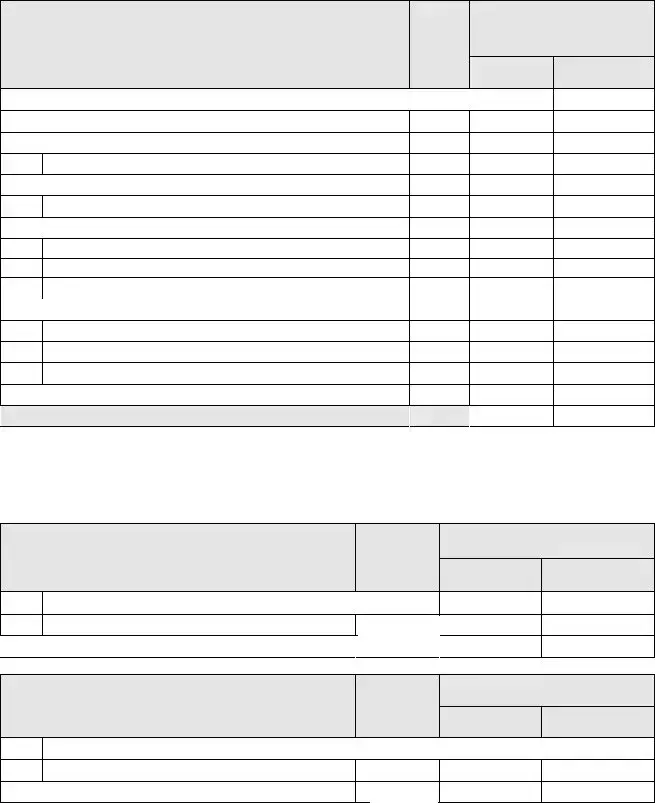
B. LIABILITIES:
DESCRIPTION OF ITEM(S). List a description of each separate debt owed by you (and/or your spouse, if this is a petition for dissolution of marriage). LIST ONLY LAST 4 DIGITS OF ACCOUNT NUMBERS. Check the line next to any debt(s) for which you believe you should be responsible.
Mortgages on real estate: First mortgage on home
Second mortgage on home
Other mortgages
Auto loans
Charge/credit card accounts
Other
____Check here if additional pages are attached.
Total Debts (add next column)
Nonmarital
Current (check correct column) Amount
Owed
Petitioner Respondent
$
$
C. CONTINGENT ASSETS AND LIABILITIES:
INSTRUCTIONS: If you have any POSSIBLE assets (income potential, accrued vacation or sick leave, bonus, inheritance, etc.) or POSSIBLE liabilities (possible lawsuits, future unpaid taxes, contingent tax liabilities, debts assumed by another), you must list them here.
Contingent Assets
Check the line next to any contingent asset(s) which you are requesting the judge award to you.
Total Contingent Assets
Contingent Liabilities
Check the line next to any contingent debt(s) for which you believe you should be responsible.
Nonmarital
Possible (check correct column)
Value
Petitioner Respondent
$
$
Nonmarital
Possible (check correct column)
Amount
Owed Petitioner Respondent $
Total Contingent Liabilities |
$ |
Florida Family Law Rules of Procedure Form 12.902(b), Family Law Financial Affidavit (Short Form) (10/21)

SECTION IV. CHILD SUPPORT GUIDELINES WORKSHEET
(Florida Family Law Rules of Procedure Form 12.902(e), Child Support Guidelines Worksheet, MUST be filed with the court at or prior to a hearing to establish or modify child support. This requirement cannot be waived by the parties.)
[Check one only]
____ A Child Support Guidelines Worksheet IS or WILL BE filed in this case. This case involves the
establishment or modification of child support.
____ A Child Support Guidelines Worksheet IS NOT being filed in this case. The establishment or
modification of child support is not an issue in this case.
I certify that a copy of this document was [check all used]: ( )
() hand delivered to the person(s) listed below on {date} ________________________________.
Other party or his/her attorney:
Name:
Address:
City, State, Zip:
Telephone Number:
Fax Number:
Under penalties of perjury, I declare that I have read this document and the facts stated in it are true.
Dated:
Signature of Party
Printed Name:
Address:
City, State, Zip:
Telephone Number:
Fax Number:
IF A NONLAWYER HELPED YOU FILL OUT THIS FORM, HE/SHE MUST FILL IN THE BLANKS BELOW: [fill in all blanks] This form was prepared for the: {choose only one} ( ) Petitioner ( ) Respondent This form was completed with the assistance of:
{name of individual} |
, |
{name of business} |
, |
{address} |
, |
{city} __________________, {state} ____, {zip code} ______, {telephone number} |
. |
Florida Family Law Rules of Procedure Form 12.902(b), Family Law Financial Affidavit (Short Form) (10/21)
| Fact Name | Description |
|---|---|
| Purpose | The Florida Financial Affidavit Short form is used to disclose financial information in family law cases, particularly during divorce proceedings. |
| Governing Law | This form is governed by Florida Statutes, specifically Chapter 61, which pertains to dissolution of marriage and related matters. |
| Eligibility | The Short form is intended for individuals with relatively simple financial situations, typically those with fewer assets and income. |
| Required Information | Users must provide details about income, expenses, assets, and liabilities on the form. |
| Filing Requirements | The completed form must be filed with the court and served to the other party involved in the case. |
| Signature | The form requires the signature of the individual completing it, affirming that the information is accurate to the best of their knowledge. |
| Updates | Parties must update the financial affidavit if there are significant changes in their financial situation during the proceedings. |
| Confidentiality | Financial affidavits may be subject to confidentiality rules, protecting sensitive financial information from public disclosure. |
| Consequences of Inaccuracy | Providing false information on the affidavit can lead to legal penalties, including potential sanctions from the court. |
Filling out the Florida Financial Affidavit Short 12.902(b) form is an important step in various legal proceedings, particularly those involving family law matters. This form requires you to provide detailed information about your financial situation. Completing it accurately ensures that the court has a clear understanding of your financial circumstances.
Once you have filled out the form, the next step is to submit it to the appropriate court. Be mindful of any deadlines associated with your case, as timely submission is crucial. Additionally, be prepared to provide any supporting documents that may be required to validate the information on your affidavit.
The Florida Financial Affidavit Short 12.902(b) form is a legal document used in family law cases, particularly during divorce or child support proceedings. This form helps to provide a clear picture of an individual’s financial situation. It includes details about income, expenses, assets, and liabilities. Completing this form accurately is crucial, as it can significantly impact court decisions regarding alimony, child support, and division of property.
Typically, both parties involved in a divorce or child support case must complete a financial affidavit. If you are seeking support or if the court requires a financial disclosure, you will need to fill out this form. Even if you believe your finances are straightforward, providing this information is essential for transparency and fairness in the legal process.
The form requires detailed information about your financial situation, including:
Accurate and honest reporting is essential. Any discrepancies may lead to complications in your case.
Failing to submit the Florida Financial Affidavit Short 12.902(b) form can have serious consequences. The court may interpret this as a lack of cooperation or transparency, which could negatively affect your case. You might face delays in proceedings or even sanctions. It is crucial to meet all deadlines and requirements set by the court to ensure your rights and interests are protected.
Filling out the Florida Financial Affidavit Short 12.902(b) form can be a daunting task. Many individuals make mistakes that can affect their financial disclosures. One common error is failing to provide accurate income information. It’s crucial to include all sources of income, whether from employment, investments, or other means. Omitting any income can lead to complications in legal proceedings.
Another mistake often made is not updating the affidavit with current financial information. People sometimes use outdated figures from previous months or years. Financial situations can change rapidly, so it’s important to ensure that the information reflects your current status. This helps avoid any discrepancies that might arise later.
Additionally, some individuals neglect to include all necessary documentation. Supporting documents, such as pay stubs, tax returns, and bank statements, should accompany the affidavit. Without these, the affidavit may be considered incomplete, which could delay the process or lead to further inquiries.
Many also fail to sign and date the form. It’s a simple step, but forgetting to do so can render the affidavit invalid. Always double-check that you have signed and dated the form before submission to avoid unnecessary setbacks.
Another frequent oversight involves rounding numbers. While it might seem easier to round off figures, it’s essential to provide precise amounts. This ensures that your financial picture is clear and accurate, which is critical in legal matters.
Some individuals may not fully understand the implications of their disclosures. Misrepresenting financial information, whether intentional or not, can have serious consequences. It’s vital to be honest and transparent about your financial situation to maintain credibility.
Finally, people sometimes forget to review the entire form before submission. Taking the time to carefully read through each section can help catch any errors or omissions. A thorough review can save time and prevent potential issues down the line.
The Florida Financial Affidavit Short (12.902(b)) form is a crucial document used in various legal proceedings, especially in family law cases such as divorce or child support. It provides a snapshot of an individual's financial situation, including income, expenses, assets, and liabilities. However, it is often accompanied by other forms and documents that help to provide a comprehensive view of the financial circumstances involved. Below are four commonly used forms that complement the Florida Financial Affidavit Short.
Understanding these additional forms and documents is essential for anyone navigating the legal landscape in Florida. They provide a clearer picture of financial obligations and rights, ensuring that all parties are fairly represented and informed throughout the process.
The Florida Financial Affidavit Short 12.902(b) form is a crucial document used in family law cases, particularly during divorce proceedings. It provides a concise overview of an individual's financial situation. There are several other documents that serve similar purposes in the realm of financial disclosure. Here are four documents that share similarities with the Florida Financial Affidavit Short 12.902(b):
Each of these documents plays a vital role in ensuring transparency and fairness in financial matters, particularly during legal proceedings. Understanding their similarities can help individuals navigate the complexities of family law more effectively.
Filling out the Florida Financial Affidavit Short 12.902(b) form can be a crucial step in various legal proceedings, particularly in family law cases. To help ensure accuracy and compliance, consider the following dos and don'ts.
By following these guidelines, you can help ensure that your financial affidavit is completed correctly and effectively. This attention to detail can make a significant difference in your legal proceedings.
The Florida Financial Affidavit Short 12.902(b) form is often misunderstood. Here are ten common misconceptions about this form:
This form can be used in various family law matters, including child support and alimony cases, not just divorce.
All parties involved in financial disputes must complete the form, regardless of income level.
Submitting this form is often a requirement in court proceedings, making it essential for compliance.
You only need to report relevant financial details, not every single asset or liability.
Many jurisdictions allow electronic filing, making the process more convenient.
Gathering the necessary financial documents beforehand can save time and ensure accuracy.
The short version is simplified and designed for less complex financial situations.
Providing false information on this form can lead to serious legal consequences.
You can amend the affidavit if your financial situation changes or if you discover errors.
Unmarried couples can also use this form in cases involving child support or property disputes.
The Florida Financial Affidavit Short 12.902(b) form is an important document used in family law cases, particularly in divorce proceedings. Below are key takeaways regarding its completion and use.