In Florida, the Hold Harmless Agreement form serves as a crucial legal tool designed to protect parties from liability in various situations. This form is often used in contracts, particularly in real estate, construction, and event planning. By signing this agreement, one party agrees to assume the risk of certain actions or events, thereby shielding the other party from potential legal claims or damages. The document outlines specific responsibilities and clarifies the extent of liability, ensuring that all involved parties understand their rights and obligations. It is essential for individuals and businesses to grasp the implications of this agreement, as it can significantly impact financial responsibilities and legal protections. Whether you are renting property, hiring contractors, or organizing an event, understanding the Hold Harmless Agreement is vital to navigating potential risks and safeguarding your interests.
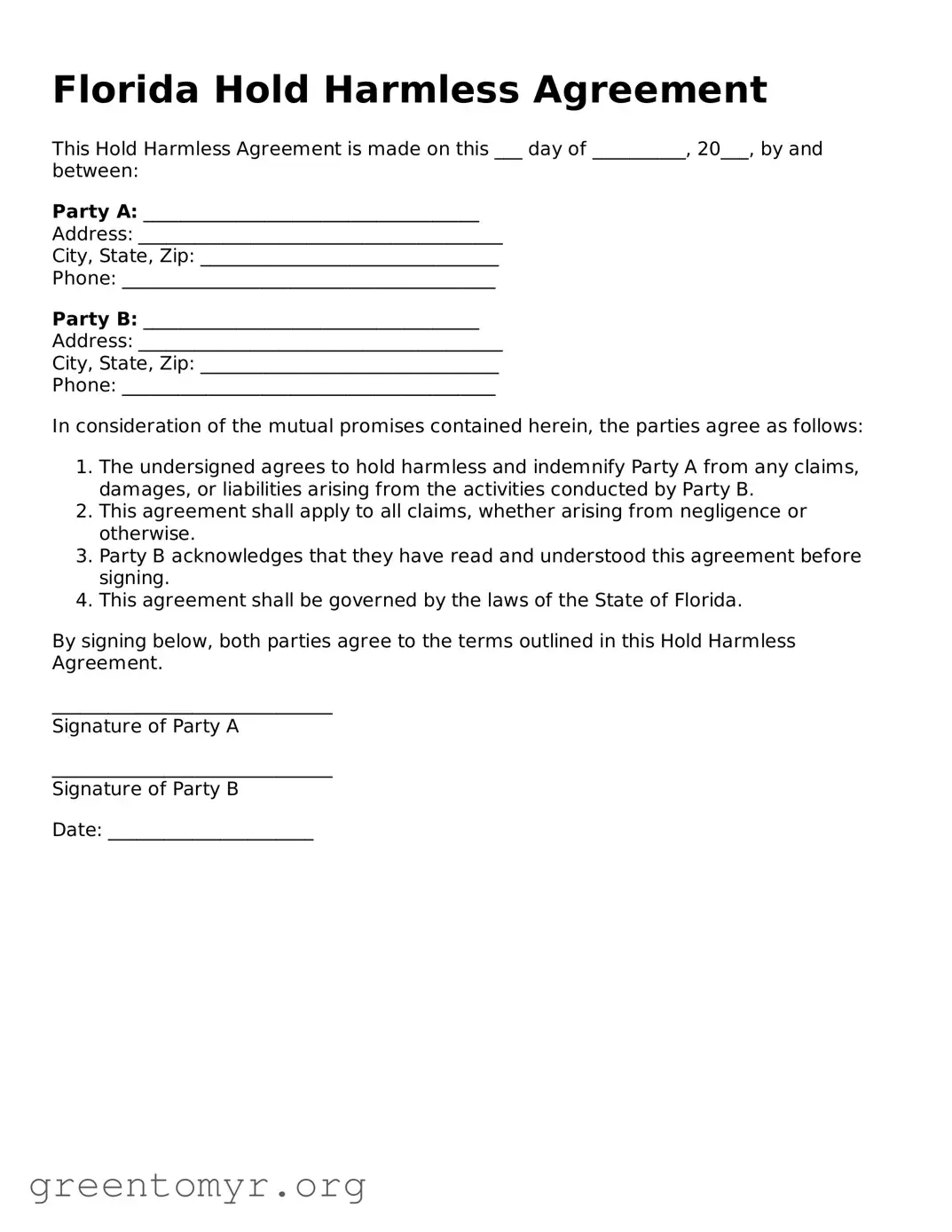
Florida Hold Harmless Agreement
This Hold Harmless Agreement is made on this ___ day of __________, 20___, by and between:
Party A: ____________________________________
Address: _______________________________________
City, State, Zip: ________________________________
Phone: ________________________________________
Party B: ____________________________________
Address: _______________________________________
City, State, Zip: ________________________________
Phone: ________________________________________
In consideration of the mutual promises contained herein, the parties agree as follows:
By signing below, both parties agree to the terms outlined in this Hold Harmless Agreement.
______________________________
Signature of Party A
______________________________
Signature of Party B
Date: ______________________
| Fact Name | Detail |
|---|---|
| Definition | A Florida Hold Harmless Agreement is a legal document that protects one party from liability for certain risks or damages. |
| Purpose | The primary purpose is to ensure that one party does not hold the other responsible for injuries or damages that may occur during a specific activity. |
| Common Uses | These agreements are often used in construction contracts, rental agreements, and event planning. |
| Governing Law | The agreement is governed by the laws of the State of Florida, specifically Florida Statutes Chapter 720. |
| Mutual vs. Unilateral | Hold Harmless Agreements can be mutual, where both parties agree to protect each other, or unilateral, where only one party is protected. |
| Enforceability | For the agreement to be enforceable, it must be clear, specific, and voluntarily signed by both parties. |
| Limitations | These agreements typically do not protect against gross negligence or willful misconduct. |
| Indemnification | Often, these agreements include indemnification clauses, requiring one party to compensate the other for certain losses. |
| Legal Review | It is advisable to have a legal professional review the agreement to ensure it meets all legal requirements and adequately protects your interests. |
| Duration | The duration of the agreement can vary, and it should be clearly stated in the document to avoid confusion. |
After obtaining the Florida Hold Harmless Agreement form, the next steps involve carefully filling it out to ensure all necessary information is accurately provided. Following these steps will help in completing the form correctly.
A Florida Hold Harmless Agreement is a legal document that protects one party from liability or claims arising from the actions or negligence of another party. This agreement is often used in various situations, such as rental agreements, construction contracts, or any arrangement where one party may be at risk of being held responsible for damages or injuries incurred by another party.
Individuals or businesses may seek a Hold Harmless Agreement to mitigate risks associated with their activities. For instance:
A typical Hold Harmless Agreement includes several essential elements:
Yes, Hold Harmless Agreements are generally enforceable in Florida, provided they meet certain legal requirements. The agreement must be clear, specific, and voluntarily entered into by all parties. However, it is important to note that some limitations exist. For example, a Hold Harmless Agreement cannot protect a party from liability for gross negligence or willful misconduct.
Creating a Hold Harmless Agreement can be straightforward. Here are the steps you can follow:
Yes, a Hold Harmless Agreement can be modified, but changes must be made in writing and signed by all parties involved. It is advisable to clearly outline the modifications to avoid any confusion or disputes in the future. Always ensure that both parties agree to the new terms to maintain the agreement's enforceability.
If a claim arises, the first step is to review the terms of the Hold Harmless Agreement to determine its applicability. Notify the other party involved and consult with a legal professional to understand your rights and obligations. They can guide you through the process of addressing the claim and help protect your interests.
When filling out the Florida Hold Harmless Agreement form, many individuals overlook critical details that can lead to significant problems. One common mistake is failing to provide accurate information. It is essential to ensure that names, addresses, and other identifying details are correct. Errors in this section can invalidate the agreement or create confusion in the future.
Another frequent error involves not understanding the implications of the agreement. Many signers do not fully grasp what they are agreeing to. This lack of understanding can result in unintended liabilities. It is crucial to read the entire document carefully and, if necessary, seek clarification before signing.
People often neglect to specify the scope of the agreement. A vague description of the activities or circumstances covered can lead to disputes later on. Clearly defining the terms helps protect all parties involved. Ambiguity can create loopholes that may be exploited.
Additionally, individuals sometimes forget to include dates. Omitting the date can lead to questions about when the agreement was made, which may affect its enforceability. Always include the date of signing to ensure clarity and legal integrity.
Another mistake is not having the agreement witnessed or notarized when required. In some cases, a witness or notarization may be necessary for the agreement to be valid. Failing to meet these requirements can render the agreement unenforceable.
People also tend to overlook the importance of reviewing the agreement with all parties involved. Failing to discuss the terms with everyone can lead to misunderstandings. Open communication is vital to ensure that all parties are on the same page and agree to the terms outlined.
Moreover, individuals may forget to keep a copy of the signed agreement. It is essential to retain a copy for personal records. Without it, proving the terms of the agreement can become challenging in the event of a dispute.
Finally, many individuals rush through the process. Taking the time to carefully complete the form can prevent mistakes. It is advisable to approach the agreement with caution and diligence to avoid pitfalls that could have lasting consequences.
When entering into agreements that involve liability and risk, it is essential to have various supporting documents in place. These documents help clarify responsibilities and protect parties involved. Below is a list of forms and documents commonly used alongside the Florida Hold Harmless Agreement.
Having these documents prepared and in place can greatly enhance clarity and security in various agreements. They work together to establish clear expectations and protect the interests of all parties involved.
A Hold Harmless Agreement is a legal document that protects one party from liability for certain actions or events. Several other documents serve similar purposes. Here are four documents that share similarities with a Hold Harmless Agreement:
When filling out the Florida Hold Harmless Agreement form, it is important to approach the process with care. Here are some guidelines to help ensure that the form is completed accurately and effectively.
By following these guidelines, you can help protect yourself and ensure that the Hold Harmless Agreement serves its intended purpose.
The Florida Hold Harmless Agreement is often misunderstood. Here are seven common misconceptions about this legal form:
Understanding these misconceptions is vital for anyone considering a Hold Harmless Agreement in Florida. Proper knowledge can help ensure that the agreement serves its intended purpose effectively.
Filling out and using the Florida Hold Harmless Agreement form requires careful attention to detail. Here are some key takeaways to consider: