When it comes to buying or selling a horse in Florida, having a Horse Bill of Sale form is essential for both parties involved in the transaction. This document serves as a legal record that outlines the specifics of the sale, providing clarity and protection for the buyer and seller alike. Key elements typically included in this form are the identification details of the horse, such as its breed, age, and registration number, if applicable. Additionally, the form captures the names and contact information of both the buyer and seller, ensuring that all parties can be easily reached if any issues arise after the sale. Payment terms are also clearly stated, detailing the purchase price and any conditions regarding deposits or financing. Furthermore, the Horse Bill of Sale often includes a section for warranties or disclosures, where the seller can specify any known health issues or limitations of the horse. By utilizing this form, individuals can ensure a smooth transaction while protecting their rights and interests in the process.
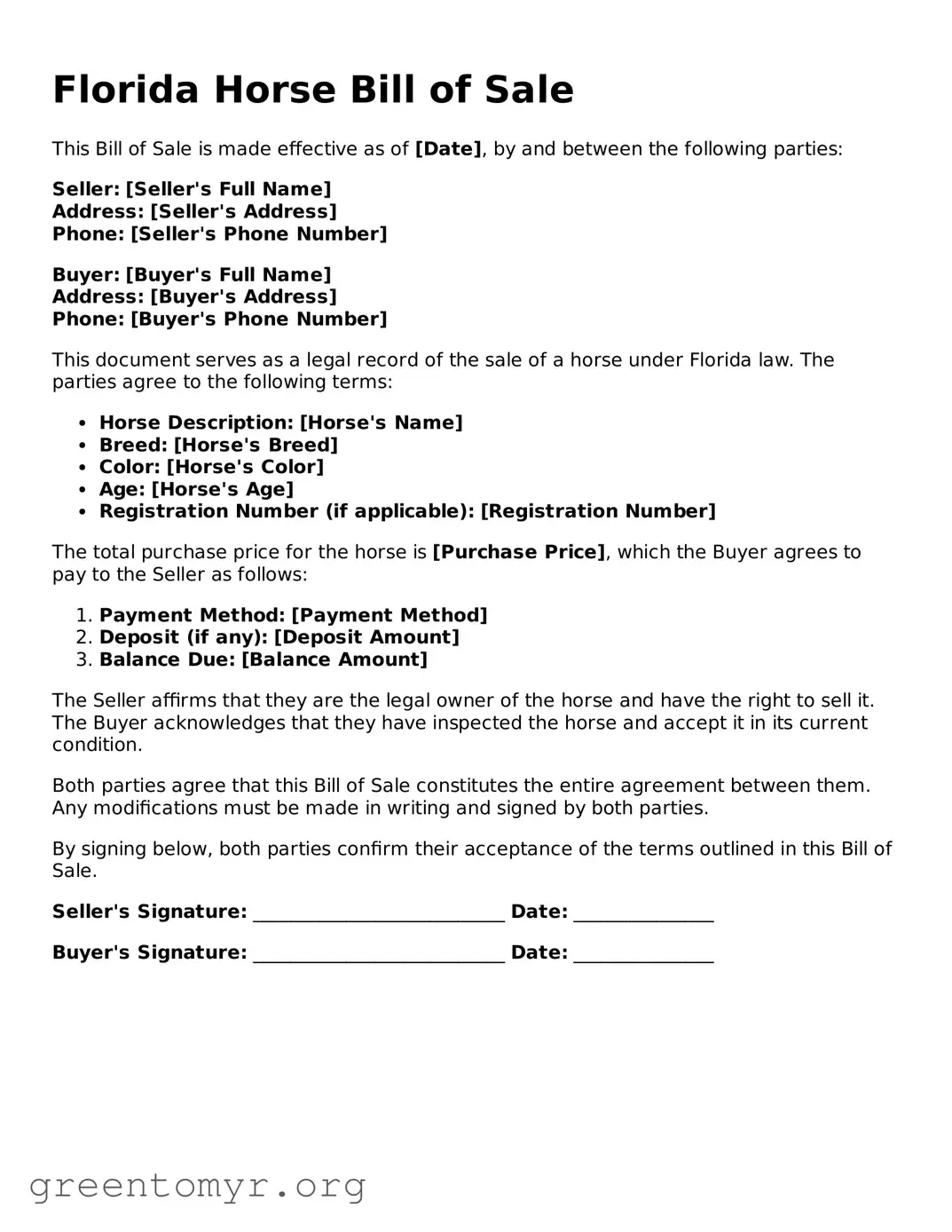
Florida Horse Bill of Sale
This Bill of Sale is made effective as of [Date], by and between the following parties:
Seller: [Seller's Full Name]
Address: [Seller's Address]
Phone: [Seller's Phone Number]
Buyer: [Buyer's Full Name]
Address: [Buyer's Address]
Phone: [Buyer's Phone Number]
This document serves as a legal record of the sale of a horse under Florida law. The parties agree to the following terms:
The total purchase price for the horse is [Purchase Price], which the Buyer agrees to pay to the Seller as follows:
The Seller affirms that they are the legal owner of the horse and have the right to sell it. The Buyer acknowledges that they have inspected the horse and accept it in its current condition.
Both parties agree that this Bill of Sale constitutes the entire agreement between them. Any modifications must be made in writing and signed by both parties.
By signing below, both parties confirm their acceptance of the terms outlined in this Bill of Sale.
Seller's Signature: ___________________________ Date: _______________
Buyer's Signature: ___________________________ Date: _______________
| Fact Name | Description |
|---|---|
| Purpose | The Florida Horse Bill of Sale form serves as a legal document that records the sale and transfer of ownership of a horse. |
| Governing Law | This form is governed by Florida Statutes, specifically Chapter 673, which pertains to the Uniform Commercial Code. |
| Parties Involved | The form requires the names and addresses of both the seller and the buyer to ensure clarity in the transaction. |
| Details of the Horse | Essential information about the horse, such as breed, age, color, and registration number, must be included to identify the animal being sold. |
| Consideration | The sale price must be clearly stated to outline the financial terms of the transaction. |
| Signatures | Both parties must sign the form to validate the agreement and confirm the transfer of ownership. |
Filling out the Florida Horse Bill of Sale form is an essential step in transferring ownership of a horse. This document provides important details about the transaction and serves as a record for both the buyer and seller. After completing the form, ensure that both parties retain a copy for their records.
A Florida Horse Bill of Sale is a legal document that records the sale and transfer of ownership of a horse. It serves as proof of the transaction and outlines the details of the sale, including the buyer, seller, horse description, and sale price.
A Bill of Sale is important for several reasons:
The Bill of Sale should include the following details:
While a Bill of Sale is not legally required in Florida for the sale of a horse, it is highly recommended. Having a written document helps clarify the terms of the sale and can prevent misunderstandings later on.
Yes, you can create your own Bill of Sale. Ensure it includes all necessary information and is signed by both parties. Templates are available online, but customizing the document to fit your specific transaction is advisable.
Notarization is not required for a Bill of Sale in Florida. However, having it notarized can provide an additional layer of security and authenticity, particularly for high-value transactions.
If health issues arise after the sale, the Bill of Sale will determine the responsibilities of both parties. If warranties or guarantees were included, they may dictate the outcome. Without such provisions, the buyer typically assumes responsibility for the horse’s care post-sale.
To transfer registration, contact the breed association or registry where the horse is registered. You will likely need to submit the Bill of Sale along with a transfer form and any applicable fees. Ensure all paperwork is completed promptly to avoid complications.
If the Bill of Sale is lost, you can create a new one if both parties agree on the terms. It’s wise to keep copies of all important documents in a secure location to prevent such issues in the future.
Filling out the Florida Horse Bill of Sale form can be a straightforward process, yet many individuals encounter pitfalls that can lead to complications. One common mistake is failing to provide complete information about the horse. Details such as the horse's name, breed, age, and color are crucial for identifying the animal and ensuring a smooth transaction. Omitting any of these details can create confusion later on.
Another frequent error is neglecting to include the seller's and buyer's contact information. Both parties must have clear and accurate contact details to facilitate communication. If either party needs to reach out after the sale, missing information could hinder that process.
Many people also overlook the importance of including the purchase price in the bill of sale. This figure is essential not only for the transaction but also for any potential tax implications. Without a stated price, there may be disputes about the value of the horse or the legitimacy of the sale.
Additionally, some individuals fail to sign the document. A bill of sale is not legally binding unless it is signed by both the seller and the buyer. This oversight can lead to disputes over ownership and the terms of the sale.
Using vague language is another mistake to avoid. Clearly stating the terms of the sale, including any warranties or guarantees, helps protect both parties. Ambiguity can lead to misunderstandings and legal issues down the line.
Another common error involves not providing a clear description of any included equipment or accessories. If the sale includes tack, trailers, or other items, listing them in the bill of sale ensures that both parties understand what is included in the transaction.
Some individuals may forget to keep a copy of the completed bill of sale. Retaining a copy is essential for record-keeping and can serve as proof of ownership in the future. Without this documentation, it may be challenging to resolve any disputes that arise.
Lastly, failing to check for errors before submitting the form can lead to significant issues. Simple typos or incorrect information can complicate the sale and may even require the creation of a new document. Taking the time to review the form thoroughly can prevent these headaches.
When buying or selling a horse in Florida, several documents may accompany the Horse Bill of Sale. These documents help clarify ownership, ensure proper transfer, and protect both parties involved in the transaction. Below is a list of forms that are often used alongside the Horse Bill of Sale.
Having these documents prepared and organized can make the transaction smoother and provide peace of mind for both the buyer and seller. Always ensure that all paperwork is completed accurately to avoid any future disputes.
When filling out the Florida Horse Bill of Sale form, it is important to follow specific guidelines to ensure accuracy and legality. Here are seven things to consider:
The Florida Horse Bill of Sale form is an important document for anyone involved in the buying or selling of horses in Florida. However, there are several misconceptions surrounding this form that can lead to confusion. Here are nine common misunderstandings:
Understanding these misconceptions can help ensure a smoother transaction when buying or selling a horse in Florida. Always take the time to complete the bill of sale accurately and thoughtfully.
When filling out and using the Florida Horse Bill of Sale form, there are several important points to consider. Here are key takeaways to ensure a smooth transaction:
Following these key points can help facilitate a successful horse sale in Florida.