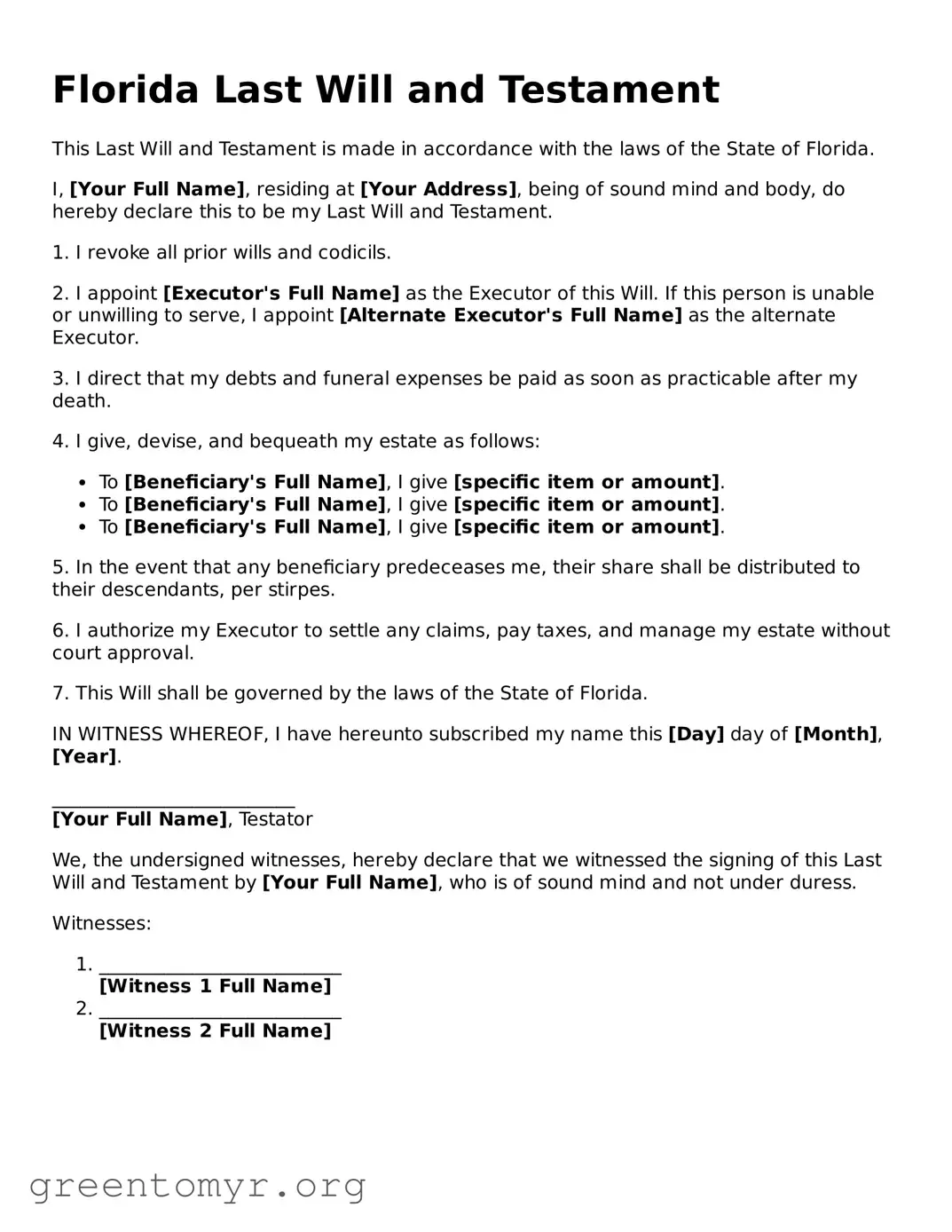
Creating a Last Will and Testament is a crucial step in ensuring that your wishes are honored after your passing. In Florida, this legal document outlines how your assets will be distributed, who will care for your minor children, and who will execute your final wishes. The Florida Last Will and Testament form is designed to be straightforward, allowing individuals to specify their desires clearly. It includes sections for naming beneficiaries, appointing an executor, and designating guardians for dependents. Additionally, the form must be signed in the presence of witnesses to be valid, reflecting the importance of ensuring that your intentions are properly documented and recognized. Understanding the components of this form can help individuals navigate the estate planning process with confidence, ensuring that their legacy is preserved according to their wishes.
Florida Last Will and Testament
This Last Will and Testament is made in accordance with the laws of the State of Florida.
I, [Your Full Name], residing at [Your Address], being of sound mind and body, do hereby declare this to be my Last Will and Testament.
1. I revoke all prior wills and codicils.
2. I appoint [Executor's Full Name] as the Executor of this Will. If this person is unable or unwilling to serve, I appoint [Alternate Executor's Full Name] as the alternate Executor.
3. I direct that my debts and funeral expenses be paid as soon as practicable after my death.
4. I give, devise, and bequeath my estate as follows:
5. In the event that any beneficiary predeceases me, their share shall be distributed to their descendants, per stirpes.
6. I authorize my Executor to settle any claims, pay taxes, and manage my estate without court approval.
7. This Will shall be governed by the laws of the State of Florida.
IN WITNESS WHEREOF, I have hereunto subscribed my name this [Day] day of [Month], [Year].
__________________________
[Your Full Name], Testator
We, the undersigned witnesses, hereby declare that we witnessed the signing of this Last Will and Testament by [Your Full Name], who is of sound mind and not under duress.
Witnesses:
| Fact Name | Description |
|---|---|
| Governing Law | The Florida Last Will and Testament is governed by Florida Statutes, Chapter 732. |
| Age Requirement | To create a valid will in Florida, the individual must be at least 18 years old. |
| Witness Requirement | A will must be signed by at least two witnesses who are present at the same time. |
| Signature Requirement | The testator (the person making the will) must sign the will at the end of the document. |
| Revocation | A will can be revoked by creating a new will or by physically destroying the original document. |
| Self-Proving Wills | Florida allows for self-proving wills, which can simplify the probate process. |
Filling out the Florida Last Will and Testament form is an important step in ensuring your wishes are followed regarding your estate. Once you have completed the form, it will need to be signed and witnessed according to Florida law to be considered valid.
A Last Will and Testament is a legal document that outlines how a person's assets and affairs should be handled after their death. In Florida, this document allows individuals to specify their wishes regarding the distribution of their property, the care of minor children, and the appointment of an executor to manage the estate.
In Florida, any person who is at least 18 years old and of sound mind can create a Last Will and Testament. This means they must understand the nature of the document and the consequences of their decisions. Additionally, individuals must not be under undue influence or duress when making their will.
To ensure a will is valid in Florida, it must meet several requirements:
Yes, you can change or revoke your will at any time while you are alive. To make changes, you can create a new will or add a codicil, which is an amendment to the existing will. If you want to revoke your will entirely, you can do so by destroying it or by stating your intention to revoke it in writing.
If you die without a will, your estate will be distributed according to Florida's intestacy laws. This means that your assets will be allocated based on a predetermined hierarchy, typically favoring your closest relatives. However, this process may not reflect your personal wishes, which is why having a will is important.
To ensure your will is executed properly, consider the following steps:
While you do not need a lawyer to create a will in Florida, it is highly recommended. A lawyer can help ensure that your will meets all legal requirements and accurately reflects your wishes. They can also provide guidance on complex issues, such as tax implications or guardianship for minor children.
A handwritten will, also known as a holographic will, can be valid in Florida if it meets certain criteria. The entire will must be written in the testator's handwriting, and it must be signed by the testator. However, having a formal will that complies with Florida's requirements is generally a safer option.
Creating a Last Will and Testament is an important step in ensuring that your wishes are honored after you pass away. However, many people make mistakes when filling out this crucial document, particularly in Florida. One common error is not being specific about the distribution of assets. Vague language can lead to confusion and disputes among beneficiaries. Clearly outlining who receives what can help prevent misunderstandings.
Another frequent mistake is failing to update the will after major life changes. Events such as marriage, divorce, or the birth of a child can significantly impact your wishes. If you don’t revise your will accordingly, it may not reflect your current intentions. Regularly reviewing and updating your will is essential to ensure it remains relevant.
Many individuals also overlook the importance of witnesses. In Florida, a will must be signed in the presence of at least two witnesses who are not beneficiaries. Failing to have the required witnesses can render the will invalid. This step is crucial, so make sure to include the right people when signing.
Some people mistakenly believe that they can create a will without legal assistance. While it is possible to draft your own will, it is often beneficial to consult with an attorney. Legal professionals can provide guidance and ensure that the document complies with Florida laws, reducing the risk of future complications.
Another mistake involves not signing the will correctly. In Florida, the testator—the person creating the will—must sign the document at the end. If this step is skipped or done incorrectly, the will may not be valid. Always double-check that your signature is in place before considering the will complete.
Additionally, failing to include a self-proving affidavit can complicate the probate process. A self-proving affidavit is a statement signed by the witnesses affirming that they witnessed the signing of the will. Including this can streamline the probate process, making it easier for your loved ones to carry out your wishes.
Another common oversight is not addressing digital assets. In today’s digital age, many people have online accounts, cryptocurrencies, and digital files that should be included in their estate plan. Ignoring these assets can lead to complications and potential losses for your heirs.
Lastly, some individuals forget to communicate their wishes to family members. Even with a well-drafted will, it’s essential to have open conversations about your plans. This can help ensure that your loved ones understand your intentions and reduce the likelihood of disputes after your passing.
When preparing a Florida Last Will and Testament, several other documents may also be beneficial to ensure your wishes are clearly articulated and legally binding. These forms help manage your estate, make healthcare decisions, and provide for your loved ones. Here’s a list of important documents to consider:
By considering these documents alongside your Florida Last Will and Testament, you can create a comprehensive plan that addresses various aspects of your estate and healthcare decisions. This thoughtful approach can provide peace of mind for you and your loved ones.
When filling out the Florida Last Will and Testament form, it's important to approach the task with care. Here are some key do's and don'ts to keep in mind:
Understanding the Florida Last Will and Testament form is crucial for effective estate planning. However, several misconceptions can lead to confusion. Below is a list of common misunderstandings.
Addressing these misconceptions can lead to better estate planning and ensure that individuals' wishes are honored after their passing.
When filling out and using the Florida Last Will and Testament form, there are several important points to keep in mind. These takeaways can help ensure that your will is valid and reflects your wishes.
Following these steps can help prevent confusion or disputes after your passing.