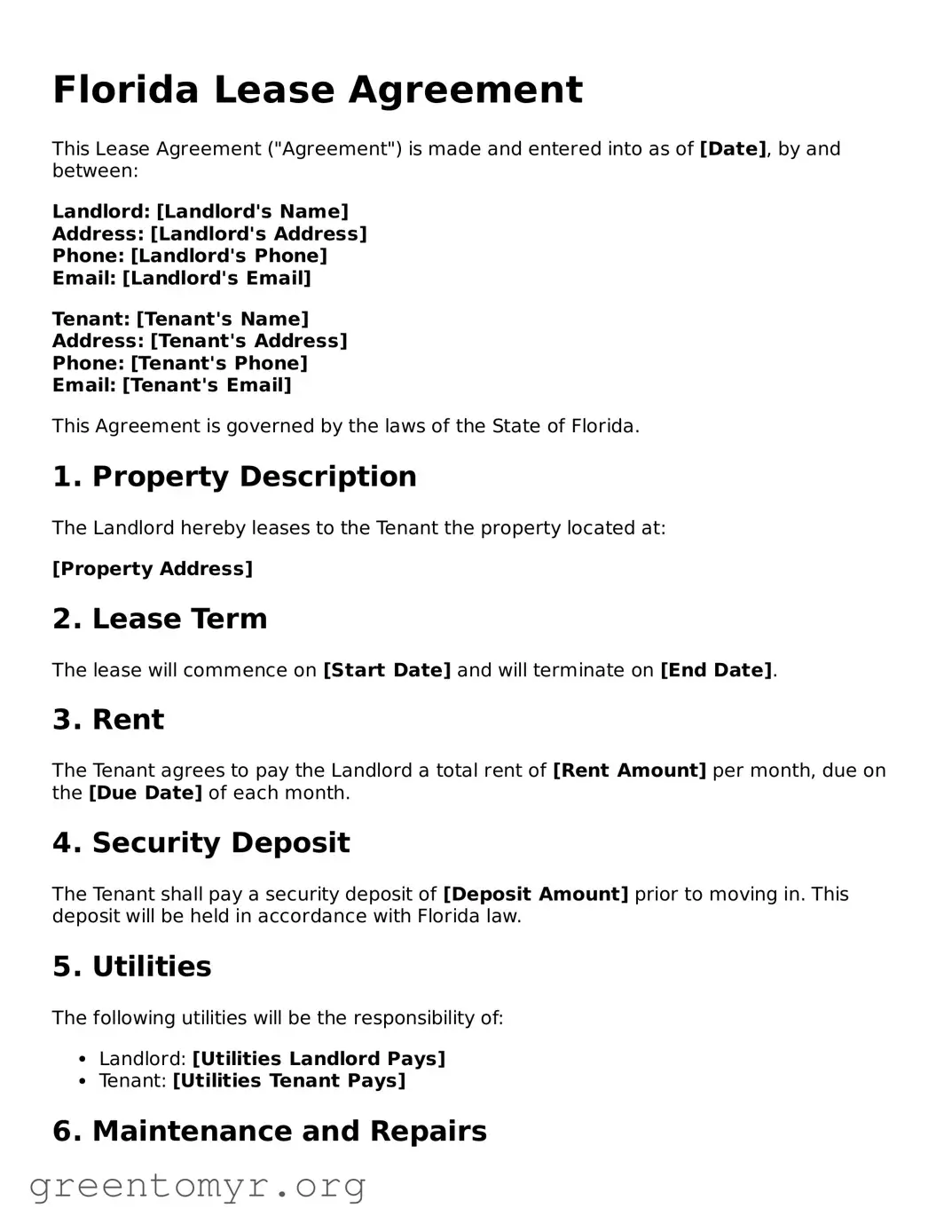
When renting a property in Florida, having a comprehensive lease agreement is crucial for both landlords and tenants. This legal document outlines the terms and conditions of the rental arrangement, ensuring clarity and protection for both parties. Key aspects of the Florida Lease Agreement include the rental amount, payment due dates, and the duration of the lease. It also specifies the responsibilities of each party regarding maintenance, utilities, and property rules. Security deposits, late fees, and termination clauses are typically addressed as well, providing guidelines for what happens if either party fails to meet their obligations. By understanding these elements, both landlords and tenants can navigate their rental relationship with confidence and security.
Florida Lease Agreement
This Lease Agreement ("Agreement") is made and entered into as of [Date], by and between:
Landlord: [Landlord's Name]
Address: [Landlord's Address]
Phone: [Landlord's Phone]
Email: [Landlord's Email]
Tenant: [Tenant's Name]
Address: [Tenant's Address]
Phone: [Tenant's Phone]
Email: [Tenant's Email]
This Agreement is governed by the laws of the State of Florida.
1. Property Description
The Landlord hereby leases to the Tenant the property located at:
[Property Address]
2. Lease Term
The lease will commence on [Start Date] and will terminate on [End Date].
3. Rent
The Tenant agrees to pay the Landlord a total rent of [Rent Amount] per month, due on the [Due Date] of each month.
4. Security Deposit
The Tenant shall pay a security deposit of [Deposit Amount] prior to moving in. This deposit will be held in accordance with Florida law.
5. Utilities
The following utilities will be the responsibility of:
6. Maintenance and Repairs
The Tenant agrees to maintain the property in a clean and sanitary condition. Any necessary repairs should be reported to the Landlord immediately.
7. Termination
Either party may terminate this Agreement by providing written notice at least [Notice Period] days prior to the intended termination date.
8. Governing Law
This Agreement shall be governed by and construed in accordance with the laws of the State of Florida.
9. Signatures
By signing below, both parties agree to the terms and conditions outlined in this Lease Agreement.
Landlord Signature: ___________________________ Date: ________________
Tenant Signature: ___________________________ Date: ________________
| Fact Name | Description |
|---|---|
| Governing Law | The Florida Lease Agreement is governed by Florida Statutes, particularly Chapter 83, which covers landlord-tenant relationships. |
| Written Agreement | While verbal agreements are valid, having a written lease is strongly recommended for clarity and legal protection. |
| Duration | The lease can be for a fixed term, such as one year, or on a month-to-month basis, depending on the agreement between the parties. |
| Security Deposit | Landlords may require a security deposit, which is typically limited to one or two months' rent under Florida law. |
| Notice Period | For month-to-month leases, either party must provide at least 15 days' notice before terminating the agreement. |
| Maintenance Responsibilities | The lease should clearly outline maintenance responsibilities for both the landlord and tenant to avoid disputes. |
| Rent Payment | The lease must specify the rent amount, due date, and acceptable payment methods to ensure timely payments. |
| Late Fees | Landlords can charge late fees, but these must be reasonable and specified in the lease agreement. |
| Pet Policy | The lease should state whether pets are allowed, along with any associated fees or restrictions. |
| Termination Conditions | Conditions for lease termination should be included, detailing what constitutes a breach of the agreement. |
Filling out the Florida Lease Agreement form is a straightforward process that requires attention to detail. Once completed, this form will serve as a binding contract between the landlord and tenant, outlining the terms of the lease.
A Florida Lease Agreement form is a legal document that outlines the terms and conditions under which a landlord rents property to a tenant in the state of Florida. This document typically includes details such as the duration of the lease, rental amount, security deposit, and responsibilities of both parties.
Essential components of a Florida Lease Agreement include:
While oral agreements can be legally binding, a written Florida Lease Agreement is highly recommended. A written document provides clarity and serves as evidence in case of disputes. Florida law does not mandate a written lease for agreements lasting less than one year; however, having a written lease protects the rights of both parties.
Lease terms in Florida can vary widely. Common terms include:
The choice of lease term often depends on the preferences of both the landlord and the tenant.
To terminate a lease in Florida, the landlord or tenant must provide written notice to the other party. The notice period typically depends on the lease type:
It is important to follow the terms outlined in the lease to avoid potential legal issues.
Generally, a landlord cannot increase rent during the term of a fixed lease unless the lease agreement specifically allows for it. For month-to-month leases, landlords may increase rent by providing proper notice, typically 15 days, before the next rental period begins.
In Florida, landlords must adhere to specific rules concerning security deposits. They are required to return the deposit within 15 days after the tenant vacates the property, unless there are deductions for damages or unpaid rent. If deductions are made, the landlord must provide an itemized list of these deductions within 30 days.
If a tenant breaks the lease early, they may be liable for rent until the property is re-rented or until the end of the lease term, depending on the lease agreement. Landlords are generally required to make reasonable efforts to re-rent the property. Tenants should review their lease for specific terms regarding early termination.
Yes, Florida has specific laws that govern lease agreements. The Florida Residential Landlord and Tenant Act outlines the rights and responsibilities of both landlords and tenants. It is advisable for both parties to familiarize themselves with these laws to ensure compliance and protect their rights.
Filling out a Florida Lease Agreement form can be a straightforward process, but many people make common mistakes that can lead to complications down the road. One frequent error is failing to include all necessary details about the property. It’s important to provide the complete address and any specific identifiers, such as unit numbers or complex names. Omitting these details can create confusion later on.
Another mistake often seen is not specifying the lease term clearly. Whether it’s a month-to-month agreement or a fixed-term lease, clarity is crucial. If the lease term is not stated explicitly, it can lead to misunderstandings regarding the duration of the tenancy.
Additionally, some individuals neglect to outline the rent payment details adequately. This includes the amount due, the due date, and acceptable payment methods. Without this information, tenants may miss payments or landlords may face difficulties in collecting rent.
Many people also overlook the importance of including maintenance responsibilities in the agreement. Clearly defining who is responsible for repairs and maintenance can prevent disputes later. If this section is vague or missing, it can lead to frustration for both landlords and tenants.
Security deposits are another area where mistakes commonly occur. Failing to specify the amount of the deposit and the conditions under which it may be withheld can create legal challenges. It’s essential to follow Florida law regarding security deposits to avoid potential issues.
Some individuals forget to include the rules and regulations governing the property. This might cover noise restrictions, pet policies, or any other community guidelines. Clearly stating these rules helps ensure that everyone understands their rights and responsibilities.
Finally, many people neglect to sign and date the agreement. A lease is not legally binding until all parties have signed it. Without signatures, the agreement may not hold up in court, leaving either party vulnerable to disputes.
By being mindful of these common mistakes, both landlords and tenants can create a clear and effective lease agreement. Taking the time to fill out the form accurately can lead to a smoother rental experience for everyone involved.
When entering into a lease agreement in Florida, several additional forms and documents may be necessary to ensure a clear understanding between landlords and tenants. These documents help to outline responsibilities, rights, and expectations, fostering a smoother rental experience. Below are five commonly used forms that often accompany the Florida Lease Agreement.
Utilizing these additional forms and documents can greatly enhance the leasing process. They provide clarity and protect the interests of both landlords and tenants, ultimately contributing to a more positive rental experience.
Rental Agreement: Similar to a lease agreement, a rental agreement outlines the terms under which a tenant can occupy a property. However, rental agreements are typically for shorter durations, often month-to-month, while lease agreements usually cover a longer period, such as a year.
Sublease Agreement: A sublease agreement allows a tenant to rent out their leased property to another person. This document includes the terms and conditions of the subleasing arrangement, similar to how a lease agreement governs the primary tenancy.
Property Management Agreement: This document is between a property owner and a management company. It outlines the responsibilities of the management company, much like a lease agreement specifies the obligations of both the landlord and tenant.
Tenancy Agreement: A tenancy agreement is another term for a lease or rental agreement. It serves the same purpose of defining the rights and responsibilities of both parties, ensuring clarity in the rental arrangement.
When filling out the Florida Lease Agreement form, it's important to approach the task with care. Here are five things you should and shouldn't do:
Understanding the Florida Lease Agreement form is crucial for both landlords and tenants. However, several misconceptions can lead to confusion. Here are eight common misconceptions:
While it is highly recommended to have a written lease, Florida law allows for oral leases in certain situations, especially for month-to-month rentals. However, having a written document provides clarity and protection for both parties.
Both landlords and tenants can propose modifications to the lease. Any changes must be agreed upon and documented in writing to be enforceable.
Not all lease agreements automatically renew. The terms of renewal should be clearly stated in the lease. If not, tenants may need to vacate the property at the end of the lease term.
Florida law regulates security deposits, including how they must be held and returned. Landlords must inform tenants within 30 days of receiving the deposit about where it is held and the conditions for its return.
Landlords must provide reasonable notice before entering a rental property, typically 24 hours. This rule helps protect tenants' privacy and rights.
While many terms can be negotiated, some legal requirements must be adhered to. For instance, the lease must comply with local housing laws and regulations.
There are valid reasons for breaking a lease, such as unsafe living conditions or domestic violence. Tenants should be aware of their rights and any potential penalties for breaking the lease.
While written leases are generally enforceable, they must comply with state laws and regulations. If a lease contains illegal provisions, those specific terms may not be enforceable.
By understanding these misconceptions, both landlords and tenants can better navigate their rights and responsibilities under Florida law.
When filling out and using the Florida Lease Agreement form, consider the following key takeaways: