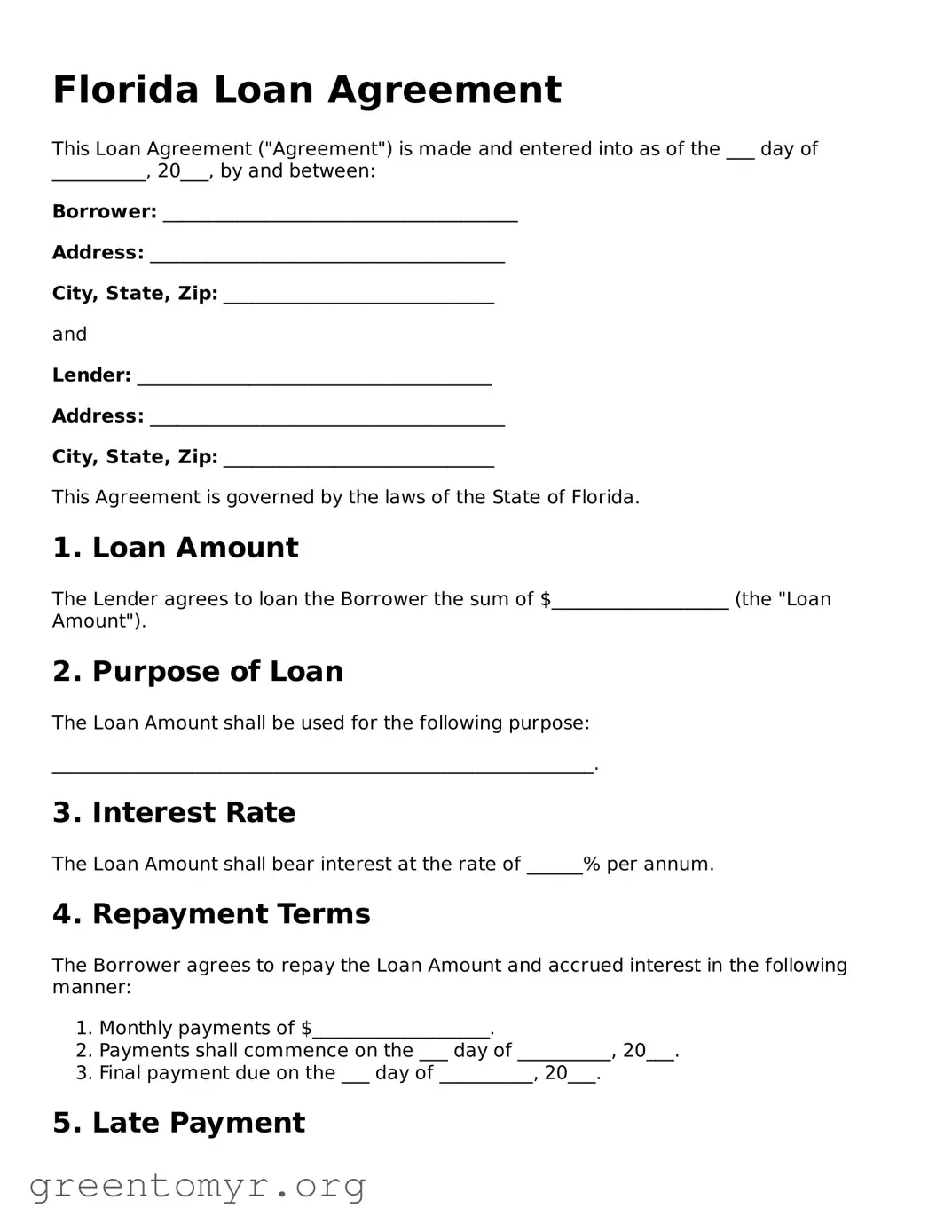
The Florida Loan Agreement form serves as a crucial document in the lending process, outlining the terms and conditions under which a borrower receives funds from a lender. This form typically includes essential details such as the loan amount, interest rate, repayment schedule, and any collateral involved. It is designed to protect the interests of both parties by clearly delineating responsibilities and expectations. Additionally, the form may address late payment penalties, default conditions, and the rights of both the borrower and lender in the event of disputes. By providing a structured framework for the loan transaction, this agreement aims to foster transparency and trust, ensuring that both parties are aware of their obligations throughout the duration of the loan. Understanding the components of the Florida Loan Agreement is vital for anyone engaging in borrowing or lending activities within the state.
Florida Loan Agreement
This Loan Agreement ("Agreement") is made and entered into as of the ___ day of __________, 20___, by and between:
Borrower: ______________________________________
Address: ______________________________________
City, State, Zip: _____________________________
and
Lender: ______________________________________
Address: ______________________________________
City, State, Zip: _____________________________
This Agreement is governed by the laws of the State of Florida.
1. Loan Amount
The Lender agrees to loan the Borrower the sum of $___________________ (the "Loan Amount").
2. Purpose of Loan
The Loan Amount shall be used for the following purpose:
__________________________________________________________.
3. Interest Rate
The Loan Amount shall bear interest at the rate of ______% per annum.
4. Repayment Terms
The Borrower agrees to repay the Loan Amount and accrued interest in the following manner:
5. Late Payment
If any payment is not received by the Lender within ___ days of the due date, a late fee of $___________________ shall be applied.
6. Prepayment
The Borrower may prepay the Loan Amount in full or in part without penalty.
7. Default
In the event of default, the Lender may declare the entire unpaid balance immediately due and payable. Default shall include:
8. Governing Law
This Agreement shall be governed by and construed in accordance with the laws of the State of Florida.
9. Signatures
By signing below, both parties agree to the terms of this Loan Agreement.
Borrower Signature: ____________________________
Date: ______________________________________
Lender Signature: _____________________________
Date: ______________________________________
| Fact Name | Description |
|---|---|
| Purpose | The Florida Loan Agreement form is used to outline the terms and conditions of a loan between a lender and a borrower. |
| Governing Law | This agreement is governed by the laws of the State of Florida, ensuring compliance with local regulations. |
| Loan Amount | The form specifies the total amount of money being loaned, which is a crucial detail for both parties. |
| Interest Rate | It includes the interest rate applicable to the loan, which can be fixed or variable. |
| Repayment Terms | The agreement outlines the repayment schedule, including due dates and payment amounts. |
| Default Clauses | It contains provisions that explain what happens if the borrower defaults on the loan. |
| Signatures | Both parties must sign the agreement, indicating their acceptance of the terms outlined within. |
| Amendments | The form may include clauses regarding how amendments to the agreement can be made in the future. |
After obtaining the Florida Loan Agreement form, you’ll need to complete it carefully. This form is essential for outlining the terms of the loan between the lender and the borrower. Follow these steps to ensure that all necessary information is filled out correctly.
Once you have completed these steps, review the form for accuracy before submitting it. Make sure both parties retain a copy for their records.
A Florida Loan Agreement form is a legal document that outlines the terms and conditions of a loan between a lender and a borrower in the state of Florida. This form serves as a written record of the loan, detailing important aspects such as the loan amount, interest rate, repayment schedule, and any collateral involved. By having a formal agreement, both parties can avoid misunderstandings and ensure that their rights and responsibilities are clearly defined.
When drafting a Florida Loan Agreement, several essential elements should be included to ensure clarity and enforceability. These components typically encompass:
While it is not legally required to have a lawyer draft a Florida Loan Agreement, seeking legal advice can be beneficial. A legal professional can help ensure that the agreement complies with state laws and adequately protects your interests. If the loan amount is significant or if the terms are complex, consulting with a lawyer may provide peace of mind and reduce the risk of future disputes.
If a borrower defaults on a loan, the consequences can vary based on the terms outlined in the Loan Agreement. Generally, the lender may take several actions, including:
Understanding the default provisions in the agreement is crucial for both parties. Clear communication and adherence to the terms can help prevent defaults and foster a positive lending relationship.
Filling out a Florida Loan Agreement form can be a straightforward process, but many people make common mistakes that can lead to complications down the line. One frequent error is not providing accurate personal information. Borrowers often rush through this section, which can result in misspellings or incorrect details. Such inaccuracies can delay the loan approval process or even lead to a denial.
Another common mistake is failing to read the terms and conditions thoroughly. Many individuals skim through the fine print, missing critical details about interest rates, repayment schedules, and penalties for late payments. Understanding these terms is essential to avoid unexpected financial burdens later.
Some borrowers neglect to include all necessary documentation. The Loan Agreement form typically requires supporting documents such as proof of income, identification, and credit history. Omitting these can slow down the approval process or lead to outright rejection.
Additionally, people often underestimate the importance of providing a clear and realistic loan amount. Borrowers may request more than they need or fail to justify their requested amount adequately. This can raise red flags for lenders and complicate the approval process.
Another mistake involves not considering the loan's purpose. When filling out the form, it’s vital to specify how the funds will be used. Lenders want to understand the rationale behind the loan request, and failing to articulate this can lead to skepticism about the borrower’s intentions.
Some individuals also forget to check the box indicating whether the loan is secured or unsecured. This distinction is crucial, as it affects the terms of the loan and the lender's risk assessment. Misclassifying the loan type can lead to misunderstandings and potential disputes.
Another error is not signing the form correctly. Borrowers may overlook the signature requirement or fail to date the agreement. A missing signature can render the entire document invalid, causing delays in processing.
Moreover, individuals sometimes do not keep a copy of the completed Loan Agreement. This oversight can create confusion later, especially if questions arise regarding the terms or if disputes occur. Keeping a personal copy is essential for record-keeping and future reference.
People often miscalculate their repayment capabilities. When filling out the form, it’s crucial to assess one's financial situation realistically. Borrowers may overestimate their ability to repay, leading to financial strain and potential default.
Lastly, many individuals do not seek advice before submitting the Loan Agreement. Consulting with a financial advisor or legal expert can provide valuable insights and help avoid common pitfalls. Taking this extra step can make a significant difference in the loan process.
When entering into a loan agreement in Florida, several other forms and documents may be required to ensure a smooth transaction. These documents help clarify the terms of the loan, protect the interests of both parties, and comply with state regulations. Below is a list of common forms that accompany a Florida Loan Agreement.
Having these documents in place can significantly enhance the clarity and security of a loan transaction. By understanding each form's purpose, both borrowers and lenders can navigate the process more effectively and protect their interests throughout the loan agreement.
A Loan Agreement is a crucial document in the realm of finance, but it shares similarities with several other important documents. Each of these documents serves a unique purpose while often containing overlapping elements. Below are eight documents that are comparable to a Loan Agreement:
Understanding these documents can help borrowers and lenders navigate their financial responsibilities more effectively. Each document plays a vital role in the lending process, ensuring clarity and protection for all parties involved.
When filling out the Florida Loan Agreement form, it is important to follow certain guidelines to ensure accuracy and compliance. Here are five things you should and shouldn't do:
By following these guidelines, you can help ensure that your Loan Agreement is completed correctly and efficiently.
When it comes to the Florida Loan Agreement form, many people have misconceptions that can lead to confusion. Here are nine common misunderstandings:
Understanding these misconceptions can help you navigate the loan process more effectively and make informed decisions.
When filling out and using the Florida Loan Agreement form, consider the following key takeaways:
Review the completed form carefully before finalizing the agreement. This helps ensure all information is accurate and complete.