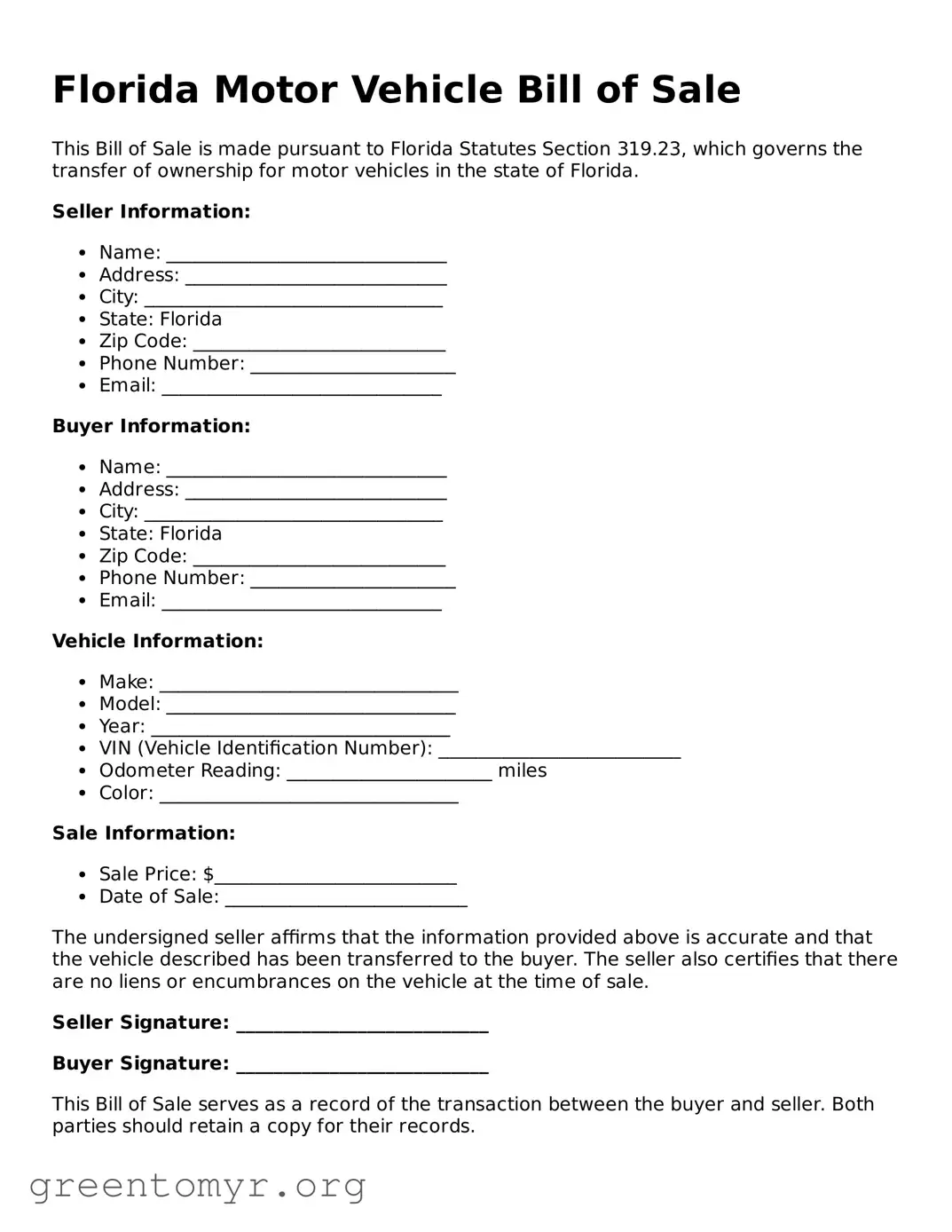
When buying or selling a vehicle in Florida, one essential document often comes into play: the Motor Vehicle Bill of Sale form. This form serves as a crucial record of the transaction, capturing important details such as the vehicle's make, model, year, and Vehicle Identification Number (VIN). Additionally, it outlines the sale price and includes spaces for both the buyer's and seller's information, ensuring that all parties are clearly identified. Signatures from both the buyer and seller are required, providing a level of authenticity and agreement to the terms outlined. This document not only protects the interests of both parties but also plays a vital role in the vehicle registration process with the Florida Department of Highway Safety and Motor Vehicles. Understanding the components and significance of the Bill of Sale can help facilitate a smooth transaction, making it a key element for anyone involved in buying or selling a vehicle in the Sunshine State.
Florida Motor Vehicle Bill of Sale
This Bill of Sale is made pursuant to Florida Statutes Section 319.23, which governs the transfer of ownership for motor vehicles in the state of Florida.
Seller Information:
Buyer Information:
Vehicle Information:
Sale Information:
The undersigned seller affirms that the information provided above is accurate and that the vehicle described has been transferred to the buyer. The seller also certifies that there are no liens or encumbrances on the vehicle at the time of sale.
Seller Signature: ___________________________
Buyer Signature: ___________________________
This Bill of Sale serves as a record of the transaction between the buyer and seller. Both parties should retain a copy for their records.
| Fact Name | Description |
|---|---|
| Purpose | The Florida Motor Vehicle Bill of Sale form is used to document the sale of a vehicle between a buyer and a seller. |
| Governing Law | This form is governed by Florida Statutes, specifically Chapter 319, which covers the transfer of motor vehicle ownership. |
| Required Information | The form must include details such as the vehicle identification number (VIN), make, model, year, and the sale price. |
| Signatures | Both the buyer and seller must sign the Bill of Sale to validate the transaction. |
| Notarization | While notarization is not required, it is recommended for added legal protection and to verify identities. |
| Use in Registration | The completed Bill of Sale is often required when registering the vehicle with the Florida Department of Highway Safety and Motor Vehicles. |
| Record Keeping | It is advisable for both parties to keep a copy of the Bill of Sale for their records after the transaction is completed. |
Once you have the Florida Motor Vehicle Bill of Sale form in hand, you’re ready to begin the process of filling it out. This form is essential for documenting the sale of a vehicle and ensuring that both the buyer and seller have a clear record of the transaction. Follow these steps carefully to complete the form accurately.
After completing the form, keep a copy for your records. The buyer will need this document for vehicle registration and title transfer. Make sure both parties understand their responsibilities moving forward to ensure a smooth transition.
A Florida Motor Vehicle Bill of Sale is a legal document that records the transfer of ownership of a motor vehicle from one party to another. This form provides essential details about the vehicle and the parties involved, ensuring that both the buyer and seller have a clear understanding of the transaction.
The Bill of Sale serves several important purposes:
A typical Florida Motor Vehicle Bill of Sale includes the following information:
While a Bill of Sale is not always mandatory for vehicle registration, it is highly recommended. The Florida Department of Highway Safety and Motor Vehicles may request it as proof of ownership during the registration process, especially for used vehicles. Having this document can help streamline the registration process.
Yes, you can create your own Bill of Sale as long as it includes all the necessary information. However, using a standardized form can help ensure that you don’t miss any critical details. You can find templates online or obtain one from local DMV offices.
In Florida, notarization is not required for a Bill of Sale to be valid. However, having the document notarized can add an extra layer of security and legitimacy to the transaction, especially if there are any disputes in the future.
If the vehicle has a lien, it’s crucial to disclose this on the Bill of Sale. The seller should ensure that the lien is paid off and released before the sale. This protects the buyer from potential issues regarding ownership and ensures a clear title transfer.
Once the Bill of Sale is signed by both parties, each should keep a copy for their records. If you need an official copy later, you can create a duplicate using the original document as a reference. It’s a good practice to store these documents safely for future reference.
If you lose your Bill of Sale, you can recreate it by gathering all relevant information about the transaction. Both parties can sign a new Bill of Sale, which can serve as a replacement. If necessary, consult with a legal professional for guidance on how to proceed.
Filling out the Florida Motor Vehicle Bill of Sale form can be straightforward, but several common mistakes can lead to complications. One frequent error is omitting essential information. Buyers and sellers must ensure that all required fields are completed, including the vehicle identification number (VIN), make, model, year, and the purchase price. Leaving any of these fields blank can create issues when registering the vehicle.
Another common mistake involves incorrect VIN entry. The VIN is a unique identifier for each vehicle, and even a single incorrect digit can lead to problems. It is crucial to double-check the VIN against the vehicle's title or registration documents to ensure accuracy. Errors in the VIN can delay the transfer of ownership and may lead to legal complications.
People often forget to include the date of the sale. This date is important for both parties as it establishes when the transaction took place. Without a clear date, issues may arise regarding the timing of the sale, especially if there are disputes over the vehicle's condition or ownership in the future.
Failing to sign the form is another mistake that can occur. Both the buyer and the seller must provide their signatures to validate the transaction. Without signatures, the document may not be considered legally binding. It is advisable for both parties to review the form together before signing to ensure all information is correct and complete.
Lastly, not keeping a copy of the completed Bill of Sale is a mistake many make. Both the buyer and seller should retain a copy for their records. This document serves as proof of the transaction and can be useful for future reference, especially if there are questions regarding ownership or if the vehicle is involved in any legal matters.
When purchasing or selling a vehicle in Florida, the Motor Vehicle Bill of Sale form is a crucial document. However, it is often accompanied by other important forms and documents that help facilitate a smooth transaction. Understanding these additional documents can help ensure that both parties are protected and that the transfer of ownership is clear and lawful.
These documents work together to ensure that the sale of a vehicle is legitimate and that both the buyer and seller have the necessary protections in place. Being informed about these additional forms can help make the vehicle transaction process smoother and more efficient.
When filling out the Florida Motor Vehicle Bill of Sale form, it’s important to follow certain guidelines to ensure accuracy and compliance. Here are some dos and don’ts to keep in mind:
Many individuals have misunderstandings regarding the Florida Motor Vehicle Bill of Sale form. Below are six common misconceptions, along with clarifications for each.
While it is possible to transfer ownership without a Bill of Sale, having one provides essential documentation that can protect both the buyer and seller in the event of disputes.
In Florida, notarization is not a requirement for the Bill of Sale. However, having it notarized can add an extra layer of security and verification.
Both the buyer and seller should sign the Bill of Sale to ensure that both parties acknowledge the transaction and its terms.
The Bill of Sale is not a substitute for a title. It is a record of the sale, while the title is the legal document that proves ownership.
A Bill of Sale is beneficial for both used and new vehicle transactions. It documents the sale and can be useful for tax purposes and future reference.
The Bill of Sale does not need to include a warranty unless the seller chooses to offer one. The document can simply state that the vehicle is sold "as-is."
When filling out and using the Florida Motor Vehicle Bill of Sale form, keep these key takeaways in mind: