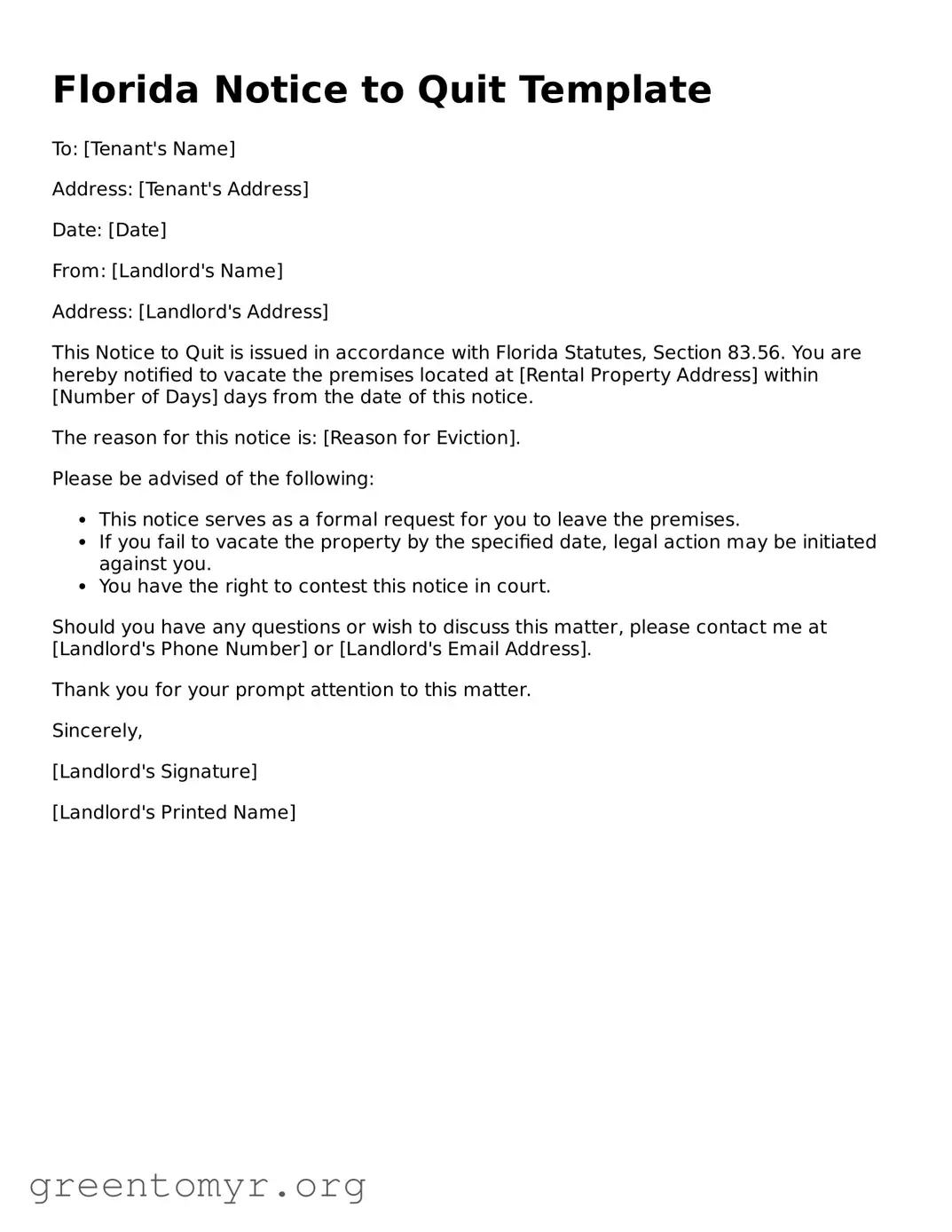
The Florida Notice to Quit form serves as a crucial document in the landlord-tenant relationship, particularly when a landlord seeks to terminate a lease agreement. This form notifies tenants of the intention to end their tenancy, outlining the reasons for the eviction and providing a specific timeframe for the tenant to vacate the premises. Typically, the notice includes essential details such as the address of the rental property, the date of the notice, and the grounds for eviction, which may range from non-payment of rent to lease violations. Understanding the requirements and implications of this form is vital for both landlords and tenants, as it sets in motion the legal process of eviction if the tenant fails to comply. Properly completing and serving the Notice to Quit can significantly impact the outcome of any subsequent legal proceedings, making it an important document in Florida's rental landscape.
Florida Notice to Quit Template
To: [Tenant's Name]
Address: [Tenant's Address]
Date: [Date]
From: [Landlord's Name]
Address: [Landlord's Address]
This Notice to Quit is issued in accordance with Florida Statutes, Section 83.56. You are hereby notified to vacate the premises located at [Rental Property Address] within [Number of Days] days from the date of this notice.
The reason for this notice is: [Reason for Eviction].
Please be advised of the following:
Should you have any questions or wish to discuss this matter, please contact me at [Landlord's Phone Number] or [Landlord's Email Address].
Thank you for your prompt attention to this matter.
Sincerely,
[Landlord's Signature]
[Landlord's Printed Name]
| Fact Name | Description |
|---|---|
| Purpose | The Florida Notice to Quit form is used to inform a tenant that they must vacate the rental property. |
| Governing Law | This form is governed by Florida Statutes, specifically Chapter 83, which covers residential tenancies. |
| Delivery Methods | The notice can be delivered in person, via certified mail, or by posting it on the property. |
| Notice Period | The notice period varies based on the reason for eviction, typically ranging from 3 to 30 days. |
| Content Requirements | The form must clearly state the reason for eviction and the deadline for vacating the premises. |
| Tenant Rights | Tenants have the right to contest the eviction in court if they believe the notice is unjustified. |
| Legal Assistance | It is advisable for both landlords and tenants to seek legal advice when dealing with eviction notices. |
| Form Availability | The Florida Notice to Quit form can be obtained online or through local legal aid organizations. |
Once you have the Florida Notice to Quit form, it's important to fill it out accurately. This form is a critical step in the eviction process. Ensure you have all necessary information at hand before you begin.
After filling out the form, ensure it is delivered properly to the tenant. This step is essential for moving forward with the eviction process if necessary. Keep a record of how and when the notice was served, as this information may be important later.
The Florida Notice to Quit form is a document used by landlords to inform tenants that they must vacate the rental property. This notice is typically issued when a tenant has violated the terms of their lease agreement or has not paid rent. It serves as a formal request for the tenant to leave the premises within a specified timeframe.
A landlord may issue a Notice to Quit in several situations, including:
Each situation may have different requirements regarding the notice period, so it is important to refer to state laws for specific guidelines.
The amount of notice required can vary based on the reason for the eviction. Generally, the following notice periods apply:
Landlords should ensure they comply with these timelines to avoid legal complications.
Yes, a tenant can contest a Notice to Quit. If a tenant believes the notice is unjust or that they have rectified the issue (such as paying overdue rent), they may respond to the landlord. If necessary, tenants can also seek legal advice or representation to dispute the notice in court.
After a Notice to Quit is issued, the tenant has the specified time to vacate the property. If they do not leave, the landlord may initiate eviction proceedings through the court system. This process typically involves filing a complaint and may require a court hearing.
No, a Notice to Quit is not the same as an eviction notice. The Notice to Quit is the initial step that informs the tenant they must leave. If the tenant does not comply, the landlord can then proceed with an eviction notice, which is part of the legal process to remove the tenant from the property.
When it comes to filling out the Florida Notice to Quit form, many people unknowingly make mistakes that can complicate their situation. Understanding these common pitfalls can save time, money, and unnecessary stress. Here are seven mistakes to watch out for.
First, one of the most frequent errors is failing to include the correct date. The notice must clearly indicate when it was issued. If this date is missing or incorrect, it can lead to confusion about the timeline, potentially giving the tenant more time to respond than intended.
Another common mistake is not providing the tenant’s full name. It may seem simple, but using an incomplete name can create issues with identification. Always ensure that you use the tenant's legal name as it appears on the lease agreement to avoid any disputes.
Many individuals also overlook the importance of specifying the reason for the eviction. Whether it's for non-payment of rent or lease violations, clarity is crucial. If the reason isn’t clearly stated, it could weaken your case in court.
Additionally, some people forget to include the proper address of the rental property. This is vital information. Without it, the notice may be deemed invalid. Always double-check that the property address is accurate and complete.
Another mistake involves not following the required notice period. Florida law dictates specific timeframes for different types of notices. Failing to adhere to these timelines can result in delays or even dismissal of the eviction process.
Moreover, not signing the notice can render it ineffective. A signature is a crucial element that shows the notice is legitimate. Always ensure that the form is signed and dated before delivering it to the tenant.
Lastly, many forget to keep a copy of the completed Notice to Quit for their records. This is essential for future reference and can be invaluable if the situation escalates to court. Documentation is key in any legal matter, so always maintain a thorough record.
By being aware of these common mistakes, you can navigate the eviction process more smoothly and effectively. Attention to detail can make all the difference in achieving a favorable outcome.
The Florida Notice to Quit form serves as a crucial step in the eviction process, notifying tenants of the need to vacate the premises. However, several other documents are often used in conjunction with this form to ensure a smooth legal process. Below are some of the key documents that may accompany the Notice to Quit.
Understanding these documents is vital for both landlords and tenants. Each plays a significant role in the eviction process, ensuring that all parties are informed and that legal protocols are followed. Proper use of these documents can help prevent disputes and facilitate a more efficient resolution.
The Notice to Quit form serves as an important legal document in the context of landlord-tenant relationships. It provides a formal way for landlords to notify tenants that they must vacate the premises. Several other documents share similarities with the Notice to Quit form, primarily in their purpose of conveying important information regarding tenancy and property rights. Below is a list of ten documents that are similar to the Notice to Quit form:
When filling out the Florida Notice to Quit form, it’s important to follow certain guidelines to ensure your document is clear and effective. Here’s a list of what you should and shouldn’t do:
Following these guidelines will help you create a valid and enforceable Notice to Quit.
Misconceptions about the Florida Notice to Quit form can lead to confusion and missteps in the eviction process. Here are seven common misunderstandings:
The Notice to Quit is not the same as an eviction notice. It is a preliminary step that informs a tenant they must leave the property.
A Notice to Quit can only be issued for specific reasons, such as non-payment of rent or lease violations, not just any arbitrary reason.
Receiving a Notice to Quit does not strip tenants of their rights. They still have the opportunity to respond and contest the notice.
The Notice to Quit can be delivered by mail or posted on the property, not just in person. However, proper delivery methods must be followed.
The Notice to Quit is not final. It is a request for the tenant to vacate, and further legal action may be necessary if the tenant does not comply.
Not all Notices to Quit are identical. They can vary based on the reason for eviction and the specific terms of the lease.
Tenants are not required to leave immediately upon receiving the Notice to Quit. They typically have a set period to respond or vacate the premises.
Understanding these misconceptions can help both landlords and tenants navigate the eviction process more effectively.
When dealing with the Florida Notice to Quit form, it's important to understand its purpose and how to use it effectively. Here are some key takeaways: