Content Navigation

The Florida Real Estate Purchase Agreement is a crucial document for anyone looking to buy or sell property in the Sunshine State. This form outlines the terms and conditions of the transaction, ensuring that both parties understand their rights and obligations. Key aspects include the purchase price, financing details, and contingencies that must be met before the sale can proceed. Additionally, it addresses important elements such as the closing date, property disclosures, and any included fixtures or appliances. By clearly defining these terms, the agreement serves to protect both the buyer and the seller, minimizing the risk of disputes and misunderstandings. Understanding this form is essential for a smooth real estate transaction in Florida.

Florida Real Estate Purchase Agreement Example

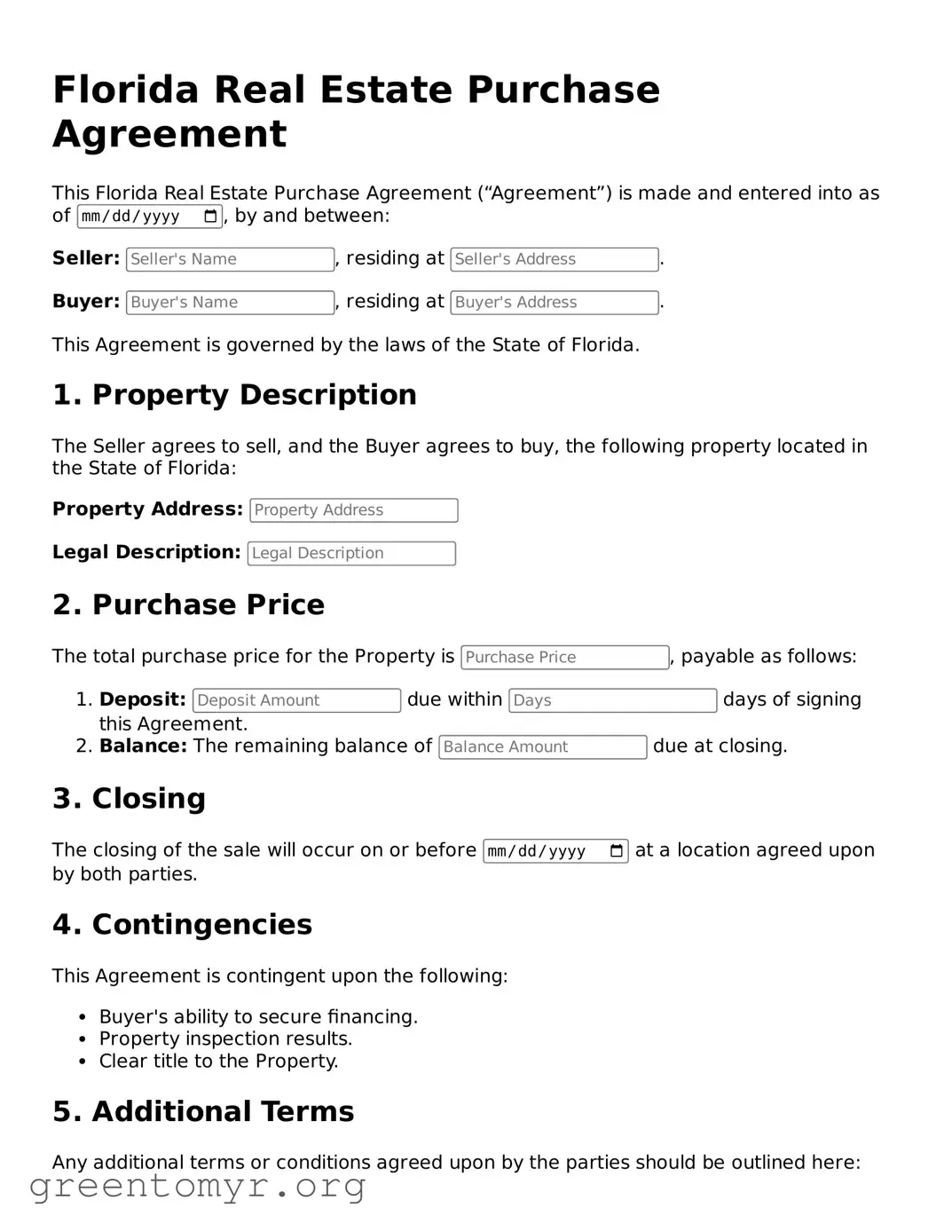
Florida Real Estate Purchase Agreement

This Florida Real Estate Purchase Agreement (“Agreement”) is made and entered into as of , by and between:

Seller: , residing at .

Buyer: , residing at .

This Agreement is governed by the laws of the State of Florida.

1. Property Description

The Seller agrees to sell, and the Buyer agrees to buy, the following property located in the State of Florida:

Property Address:

Legal Description:

2. Purchase Price

The total purchase price for the Property is , payable as follows:

  1. Deposit: due within days of signing this Agreement.
  2. Balance: The remaining balance of due at closing.

3. Closing

The closing of the sale will occur on or before at a location agreed upon by both parties.

4. Contingencies

This Agreement is contingent upon the following:

  • Buyer's ability to secure financing.
  • Property inspection results.
  • Clear title to the Property.

5. Additional Terms

Any additional terms or conditions agreed upon by the parties should be outlined here:

6. Signatures

By signing below, both parties agree to the terms outlined in this Agreement.

Seller's Signature: _______________________ Date:

Buyer's Signature: _______________________ Date:

This Agreement constitutes the entire understanding between the parties and supersedes all prior negotiations, agreements, or understandings.

PDF Form Features

Fact Name Description
Governing Law The Florida Real Estate Purchase Agreement is governed by Florida state law.
Parties Involved The agreement involves at least two parties: the buyer and the seller.
Property Description A detailed description of the property being sold must be included.
Purchase Price The total purchase price for the property must be clearly stated.
Earnest Money Deposit The agreement typically requires an earnest money deposit to secure the transaction.
Closing Date A specific closing date should be outlined in the agreement.
Contingencies Common contingencies may include financing, inspection, and appraisal conditions.
Disclosures Sellers are required to disclose any known issues with the property.
Signatures Both parties must sign the agreement for it to be legally binding.

Guide to Using Florida Real Estate Purchase Agreement

Filling out the Florida Real Estate Purchase Agreement form is a crucial step in the home buying process. Once completed, this form will serve as a binding contract between the buyer and seller, outlining the terms of the sale. It's important to ensure that all information is accurate and clearly stated to avoid any misunderstandings down the line.

  1. Obtain the form: Start by acquiring the Florida Real Estate Purchase Agreement form. This can typically be found online or through a real estate agent.
  2. Fill in the date: Write the date when the agreement is being filled out at the top of the form.
  3. Identify the parties: Clearly list the full names and addresses of both the buyer(s) and seller(s).
  4. Property description: Provide a detailed description of the property being purchased, including the address and any relevant legal descriptions.
  5. Purchase price: State the agreed-upon purchase price for the property.
  6. Earnest money deposit: Specify the amount of the earnest money deposit and indicate how it will be held.
  7. Financing details: Outline the terms of financing, including whether the buyer will be obtaining a mortgage or paying cash.
  8. Closing date: Indicate the proposed closing date for the transaction.
  9. Contingencies: List any contingencies that must be met for the sale to proceed, such as home inspections or financing approval.
  10. Signatures: Ensure that all parties sign and date the agreement to make it legally binding.

After completing the form, both the buyer and seller should review it carefully to ensure accuracy. Once both parties are satisfied with the terms, the agreement can be submitted for further processing, which typically involves additional steps such as inspections, appraisals, and finalizing financing arrangements.

Get Answers on Florida Real Estate Purchase Agreement

What is a Florida Real Estate Purchase Agreement?

The Florida Real Estate Purchase Agreement is a legally binding document that outlines the terms and conditions under which a buyer agrees to purchase a property from a seller. This agreement serves to protect the interests of both parties and provides a clear framework for the transaction. It typically includes details such as the purchase price, financing terms, and contingencies that must be met before the sale can be finalized.

What key components should be included in the agreement?

A comprehensive Florida Real Estate Purchase Agreement should include the following essential components:

  1. Identification of Parties: Clearly state the names and contact information of the buyer(s) and seller(s).
  2. Property Description: Provide a detailed description of the property, including the address and any relevant legal descriptions.
  3. Purchase Price: Specify the total purchase price and any deposits required.
  4. Financing Terms: Outline how the buyer intends to finance the purchase, including any contingencies related to obtaining a mortgage.
  5. Contingencies: List any conditions that must be satisfied for the sale to proceed, such as inspections or appraisals.
  6. Closing Date: Indicate the expected date for the closing of the sale.
  7. Signatures: Ensure that both parties sign and date the agreement to make it enforceable.

How does a buyer protect themselves in this agreement?

Buyers can safeguard their interests by including specific contingencies in the agreement. Common contingencies might involve:

  • Home inspections to identify potential issues with the property.
  • Financing contingencies to ensure that the buyer can secure a mortgage.
  • Appraisal contingencies to confirm the property’s value aligns with the purchase price.

These provisions allow buyers to back out of the agreement without penalty if certain conditions are not met.

What happens if the seller fails to fulfill the agreement?

If a seller does not meet the obligations outlined in the purchase agreement, the buyer may have several options. These can include:

  • Seeking specific performance, which is a legal remedy that compels the seller to complete the sale.
  • Requesting damages for any losses incurred due to the seller’s breach.
  • Terminating the agreement and recovering any deposits made.

It's important for buyers to consult with a legal professional to understand their rights and potential remedies in such situations.

Can the agreement be modified after it is signed?

Yes, a Florida Real Estate Purchase Agreement can be modified after it is signed, but both parties must agree to the changes. Any amendments should be documented in writing and signed by both the buyer and seller to ensure clarity and enforceability. Verbal agreements or informal changes may not hold up legally.

What role does a real estate agent play in this process?

A real estate agent can be invaluable during the entire process of drafting and negotiating the purchase agreement. They typically assist in:

  • Providing market insights and comparable property data.
  • Drafting the agreement to ensure that it meets legal standards and includes necessary contingencies.
  • Facilitating communication between the buyer and seller.
  • Guiding both parties through the closing process.

Having a knowledgeable agent can help streamline the transaction and reduce potential pitfalls.

Is it necessary to have a lawyer review the agreement?

While it is not legally required to have a lawyer review the Florida Real Estate Purchase Agreement, it is highly advisable. A legal expert can provide insights into the terms, ensure that the agreement complies with state laws, and help protect the parties' interests. Especially for first-time buyers or sellers, having legal guidance can prevent misunderstandings and disputes down the line.

How can disputes arising from the agreement be resolved?

Disputes related to the Florida Real Estate Purchase Agreement can be resolved through several methods, including:

  • Mediation: A neutral third party helps facilitate a resolution between the parties.
  • Arbitration: A binding decision is made by an arbitrator, which both parties agree to accept.
  • Lawsuit: If other methods fail, parties may resort to litigation to resolve the dispute in court.

Choosing the appropriate method often depends on the nature of the dispute and the preferences of the parties involved.

Common mistakes

When filling out the Florida Real Estate Purchase Agreement form, many individuals make common mistakes that can lead to complications down the line. Understanding these pitfalls can help ensure a smoother transaction. One frequent error is not providing accurate property descriptions. It's essential to include the correct address, legal description, and any relevant details about the property. Missing or incorrect information can lead to confusion and potential legal issues.

Another mistake often encountered is failing to specify the purchase price clearly. The agreement should state the total amount the buyer is willing to pay for the property. Omitting this detail can create misunderstandings between the buyer and seller, resulting in disputes later on. Additionally, buyers sometimes neglect to include earnest money details. This deposit shows the seller that the buyer is serious about the purchase. Not mentioning the amount or the timeline for payment can weaken the offer.

Buyers may also overlook the importance of contingencies. Contingencies are conditions that must be met for the sale to proceed. Common contingencies include financing, inspections, and appraisal. If these are not clearly outlined, the buyer may find themselves in a difficult position if issues arise after the agreement is signed.

Another common error is not paying attention to the closing date. The agreement should specify when the closing will take place. If this date is left blank or not mutually agreed upon, it can lead to delays and frustration for both parties. Furthermore, buyers sometimes forget to address the terms of possession. Clarifying when the buyer can take possession of the property is crucial to avoid misunderstandings about when they can move in.

Buyers may also fail to read and understand all the terms of the agreement. It’s vital to review each section carefully. Misunderstandings can arise from overlooked clauses or conditions. Additionally, some individuals neglect to include necessary signatures. All parties involved must sign the agreement for it to be legally binding. Missing a signature can invalidate the entire contract.

Lastly, people often forget to consult with a real estate professional or attorney. While the form may seem straightforward, having an expert review the agreement can help identify potential issues and ensure that everything is in order. Avoiding these common mistakes can make the process of buying or selling real estate in Florida much more manageable.

Documents used along the form

When engaging in a real estate transaction in Florida, several forms and documents may accompany the Florida Real Estate Purchase Agreement. Each of these documents serves a specific purpose and helps ensure a smooth process for both buyers and sellers. Below is a list of common documents you may encounter.

  • Seller's Disclosure Statement: This document requires the seller to disclose any known issues or defects with the property. It helps buyers make informed decisions.
  • Lead-Based Paint Disclosure: For homes built before 1978, this form informs buyers about potential lead-based paint hazards, ensuring they are aware of any risks.
  • Title Commitment: This document outlines the terms of the title insurance policy and confirms the seller's ownership of the property, protecting the buyer from future claims.
  • Closing Statement: This statement details all financial transactions involved in the closing process, including fees, credits, and the final amount due from the buyer.
  • Property Survey: A survey provides an accurate representation of the property's boundaries and any easements or encroachments, helping to avoid disputes later.
  • Home Inspection Report: This report summarizes the findings of a professional inspection of the property, identifying any repairs or maintenance needed.
  • Financing Addendum: If the buyer is obtaining a mortgage, this document outlines the terms of the financing, including interest rates and loan conditions.
  • Contingency Addendum: This form specifies any conditions that must be met for the sale to proceed, such as the sale of the buyer's current home.
  • Earnest Money Agreement: This agreement details the amount of money the buyer will put down to show serious intent to purchase, which is typically held in escrow.

Understanding these documents can help you navigate the real estate process more effectively. Each form plays a crucial role in protecting the interests of both parties and ensuring a successful transaction. Always consider seeking professional guidance to address any questions or concerns you may have.

Similar forms

  • Lease Agreement: This document outlines the terms under which a property is rented. Similar to a purchase agreement, it specifies the parties involved, the property description, payment terms, and duration of the agreement.
  • Sales Contract: A sales contract is used in various transactions, including real estate. Like the purchase agreement, it details the obligations of both the buyer and seller, including the price and conditions of the sale.
  • Option to Purchase Agreement: This document gives a potential buyer the right to purchase a property at a later date. It shares similarities with a purchase agreement by defining the property, purchase price, and terms under which the option can be exercised.
  • Listing Agreement: A listing agreement is between a property owner and a real estate agent. It outlines the terms of the agent's representation, similar to how a purchase agreement outlines the terms of the sale between buyer and seller.
  • Counteroffer: A counteroffer is a response to an initial offer, changing some terms. It operates similarly to a purchase agreement, as it must clearly state the terms and conditions for acceptance by both parties.
  • Escrow Agreement: This document establishes the terms under which a neutral third party holds funds or documents until certain conditions are met. Like a purchase agreement, it involves the transfer of property and details the responsibilities of all parties involved.

Dos and Don'ts

When filling out the Florida Real Estate Purchase Agreement form, it is important to adhere to certain guidelines to ensure a smooth transaction. Below are some key dos and don'ts to consider:

  • Do read the entire agreement carefully before filling it out.
  • Do provide accurate information regarding the property and parties involved.
  • Do seek clarification on any terms or sections that are unclear.
  • Do keep a copy of the completed agreement for your records.
  • Don't leave any fields blank; ensure all required information is filled in.
  • Don't rush through the form; take your time to avoid mistakes.
  • Don't use abbreviations or shorthand that may cause confusion.
  • Don't sign the agreement until you fully understand all terms.

Misconceptions

Understanding the Florida Real Estate Purchase Agreement is crucial for anyone involved in a property transaction. However, several misconceptions can lead to confusion. Here are nine common misunderstandings:

  1. The agreement is only for buyers. Many believe that the purchase agreement serves only the buyer's interests. In reality, it protects both parties by outlining their rights and obligations.
  2. It is a binding contract immediately upon signing. While signing the agreement indicates intent, it may not be binding until certain conditions are met, such as the acceptance of an offer or contingencies being resolved.
  3. All agreements are the same. Some think that all real estate purchase agreements are identical. In fact, they can vary significantly based on local laws, the specifics of the transaction, and the parties involved.
  4. Verbal agreements are sufficient. Many assume that verbal agreements are enough. However, real estate transactions typically require written contracts to be enforceable.
  5. Only lawyers can draft these agreements. While legal expertise can be beneficial, real estate agents often use standard forms that comply with Florida law, making them accessible for buyers and sellers.
  6. Contingencies are optional. Some believe contingencies, such as financing or inspection, are not necessary. In fact, they are crucial for protecting buyers from unforeseen issues.
  7. The agreement covers all aspects of the transaction. It’s a common misconception that the purchase agreement includes every detail. Certain aspects, like closing costs or specific repairs, may need separate negotiation.
  8. Once signed, it cannot be changed. Many think that a signed agreement is final. Amendments can be made, but both parties must agree to any changes in writing.
  9. It guarantees a successful closing. Signing the agreement does not guarantee a successful transaction. Issues can arise during the closing process that may delay or derail the sale.

Being aware of these misconceptions can help buyers and sellers navigate the Florida real estate market more effectively. Knowledge is power when it comes to making informed decisions.

Key takeaways

When engaging in a real estate transaction in Florida, understanding the Real Estate Purchase Agreement form is essential. Here are key takeaways to consider:

  • Clarity is Crucial: Ensure all terms are clearly defined. Ambiguities can lead to disputes.
  • Include Essential Details: The agreement should specify the purchase price, property description, and closing date.
  • Contingencies Matter: Include contingencies such as financing or inspection. These protect buyers from unexpected issues.
  • Review Deadlines: Pay attention to deadlines for inspections, financing, and other contingencies. Missing these can jeopardize the deal.
  • Understand Earnest Money: This deposit shows the buyer's commitment. Know how much is required and the conditions for its return.
  • Title and Ownership: Ensure the title is clear. This means there are no liens or disputes over ownership.
  • Disclosures are Important: Sellers must disclose known issues with the property. This protects both parties and promotes transparency.
  • Legal Review is Wise: Consider having a lawyer review the agreement. They can spot potential issues and ensure compliance with state laws.
  • Negotiation is Key: Don’t hesitate to negotiate terms. The agreement is a starting point, and adjustments can be made to suit both parties.

By keeping these points in mind, both buyers and sellers can navigate the Florida Real Estate Purchase Agreement more effectively, leading to a smoother transaction process.