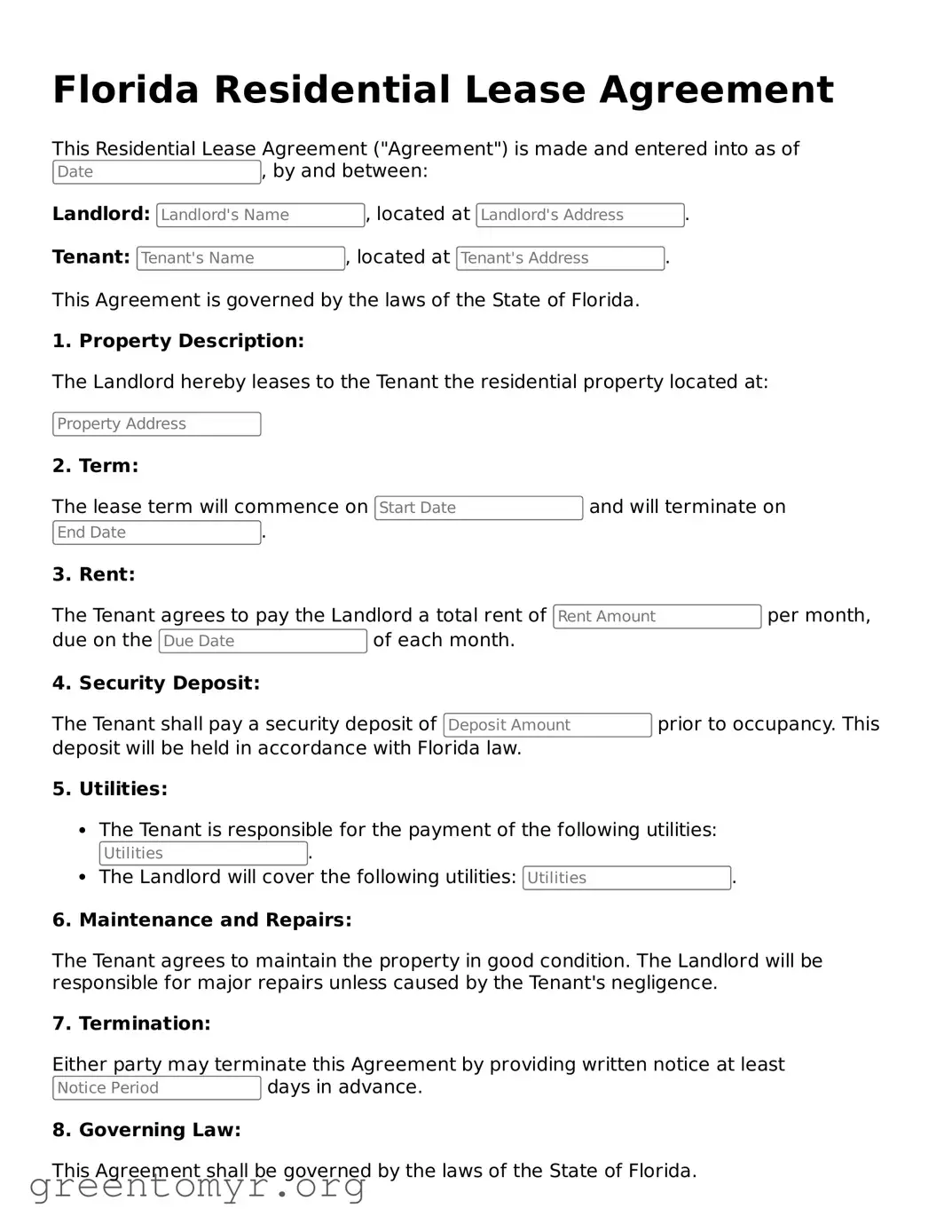
When renting a property in Florida, a Residential Lease Agreement is a crucial document that outlines the terms and conditions between landlords and tenants. This agreement serves as a roadmap for the rental relationship, detailing important aspects such as the duration of the lease, the monthly rent amount, and the security deposit requirements. It also specifies the responsibilities of both parties, including maintenance obligations and rules regarding pets or alterations to the property. Furthermore, the agreement includes provisions for terminating the lease, ensuring both landlords and tenants understand their rights and responsibilities. By clearly defining these elements, the Florida Residential Lease Agreement helps to prevent misunderstandings and disputes, creating a more harmonious living arrangement. Understanding this document is essential for anyone entering into a rental agreement in the Sunshine State.
Florida Residential Lease Agreement
This Residential Lease Agreement ("Agreement") is made and entered into as of , by and between:
Landlord: , located at .
Tenant: , located at .
This Agreement is governed by the laws of the State of Florida.
1. Property Description:
The Landlord hereby leases to the Tenant the residential property located at:
2. Term:
The lease term will commence on and will terminate on .
3. Rent:
The Tenant agrees to pay the Landlord a total rent of per month, due on the of each month.
4. Security Deposit:
The Tenant shall pay a security deposit of prior to occupancy. This deposit will be held in accordance with Florida law.
5. Utilities:
6. Maintenance and Repairs:
The Tenant agrees to maintain the property in good condition. The Landlord will be responsible for major repairs unless caused by the Tenant's negligence.
7. Termination:
Either party may terminate this Agreement by providing written notice at least days in advance.
8. Governing Law:
This Agreement shall be governed by the laws of the State of Florida.
IN WITNESS WHEREOF, the parties have executed this Agreement as of the date first above written.
Landlord Signature: ___________________________
Date: ___________________________
Tenant Signature: ___________________________
Date: ___________________________
| Fact Name | Description |
|---|---|
| Purpose | The Florida Residential Lease Agreement is used to outline the terms and conditions between a landlord and tenant for renting a residential property. |
| Governing Law | This agreement is governed by Florida Statutes, particularly Chapter 83, which covers residential tenancies. |
| Duration | The lease can be for a fixed term, such as one year, or it can be a month-to-month agreement, depending on the needs of both parties. |
| Security Deposit | Landlords may require a security deposit, which typically cannot exceed two months' rent, and must be handled according to state regulations. |
| Maintenance Responsibilities | The lease should specify the responsibilities of both the landlord and tenant regarding property maintenance and repairs. |
| Termination Notice | For month-to-month leases, either party must provide written notice, usually 15 days before the next rent due date, to terminate the lease. |
Filling out the Florida Residential Lease Agreement form is an important step in establishing the terms of a rental arrangement. By carefully completing this form, both landlords and tenants can ensure that their rights and responsibilities are clearly defined. Here’s how to do it.
Once you have completed the form, keep a copy for your records. It's a good idea to review it with the other party to ensure everything is understood and agreed upon before moving forward.
A Florida Residential Lease Agreement is a legal document that outlines the terms and conditions between a landlord and a tenant for renting a residential property. It details the rights and responsibilities of both parties, including rent amount, duration of the lease, and rules regarding the property. This agreement helps to protect both the landlord's and tenant's interests.
Key components of a Florida Residential Lease Agreement typically include:
Lease agreements in Florida can vary in length. They can be short-term, such as month-to-month, or long-term, typically lasting one year. The duration is agreed upon by both the landlord and tenant and is specified in the lease document. It's important to consider your needs when deciding on the lease term.
Generally, a landlord cannot increase rent during the lease term unless the lease agreement specifically allows for it. If the lease is month-to-month, the landlord must provide proper notice, usually 30 days, before implementing any rent increase. Always check the lease terms for specific rules regarding rent adjustments.
If a tenant needs to break the lease early, they may be subject to penalties as outlined in the lease agreement. Common consequences include losing the security deposit or paying rent until a new tenant is found. It’s essential to communicate with the landlord and review the lease terms to understand the options available.
While verbal agreements can be legally binding, having a written lease agreement is highly recommended. A written document provides clear evidence of the terms agreed upon, reducing the risk of misunderstandings. It also helps protect both parties in case of disputes. Always ensure that both landlord and tenant sign the lease.
Filling out the Florida Residential Lease Agreement form can be straightforward, but many individuals make common mistakes that can lead to misunderstandings or legal issues. One frequent error is failing to include all necessary parties in the agreement. Both the landlord and tenant must be clearly identified. Omitting a party can create confusion regarding responsibilities and rights.
Another mistake is neglecting to specify the lease term. It is essential to indicate whether the lease is for a fixed period or month-to-month. Without this information, disputes may arise over the duration of the tenancy and the notice required for termination.
Many people also overlook the importance of detailing the rental amount and payment schedule. Clearly stating the monthly rent, due date, and acceptable payment methods helps prevent future disagreements. Failure to do so can lead to misunderstandings about when payments are due and how they should be made.
Inadequate descriptions of the property can be problematic as well. It is crucial to provide a clear address and any specific details about the unit being rented. This ensures that both parties have a mutual understanding of what is being leased and can help avoid disputes over property boundaries or conditions.
Another common error involves not addressing maintenance responsibilities. The lease should outline who is responsible for repairs and maintenance, whether it’s the landlord or the tenant. This clarification helps both parties know their obligations and can prevent conflicts later on.
People often forget to include provisions for security deposits. Clearly stating the amount, conditions for its return, and any deductions that may apply can prevent misunderstandings. Without this information, disputes over the security deposit can become contentious.
Lastly, failing to include any applicable rules or regulations can lead to confusion. If there are specific rules regarding pets, smoking, or noise, these should be clearly articulated in the lease. This helps ensure that both parties understand the expectations and can lead to a more harmonious living situation.
When entering into a residential lease agreement in Florida, several additional forms and documents may be necessary to ensure a smooth rental experience for both landlords and tenants. These documents serve various purposes, from outlining specific terms to providing essential information about the property and its management. Below is a list of commonly used forms alongside the Florida Residential Lease Agreement.
Understanding these additional forms and documents can significantly enhance the leasing experience. They provide clarity and protect the rights of both landlords and tenants, fostering a respectful and professional relationship throughout the duration of the lease.
When filling out the Florida Residential Lease Agreement form, it is crucial to approach the task with care. Here are nine important dos and don'ts to keep in mind:
By following these guidelines, you can help ensure that the lease agreement is completed accurately and effectively, protecting the interests of all parties involved.
Understanding the Florida Residential Lease Agreement is essential for both landlords and tenants. However, several misconceptions can lead to confusion. Here are seven common misunderstandings:
Being aware of these misconceptions can help both landlords and tenants navigate their agreements more effectively. It is always wise to seek clarity on any terms that seem unclear.
When filling out and using the Florida Residential Lease Agreement form, there are several important points to consider: