When buying or selling a tractor in Florida, having the right documentation is essential. The Florida Tractor Bill of Sale form serves as a critical tool in this process, providing a clear record of the transaction between the buyer and seller. This form includes vital information such as the names and addresses of both parties, a detailed description of the tractor, and the sale price. Additionally, it outlines any warranties or conditions related to the sale, ensuring both parties understand their rights and responsibilities. Properly completing this form not only protects both the buyer and seller but also helps facilitate a smooth transfer of ownership. Without it, you risk potential disputes or misunderstandings down the line. Understanding the importance of this document can save you time and stress in the long run.
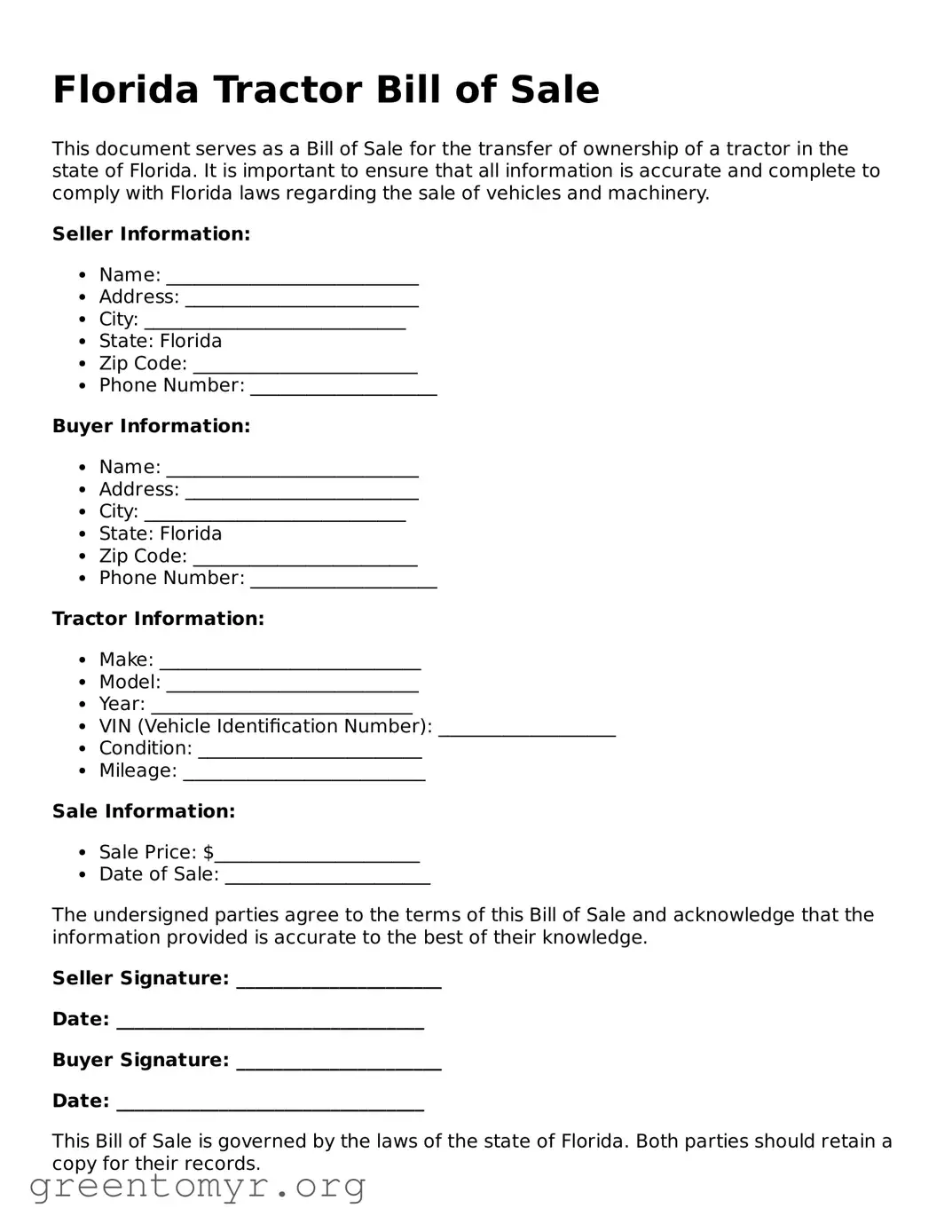
Florida Tractor Bill of Sale
This document serves as a Bill of Sale for the transfer of ownership of a tractor in the state of Florida. It is important to ensure that all information is accurate and complete to comply with Florida laws regarding the sale of vehicles and machinery.
Seller Information:
Buyer Information:
Tractor Information:
Sale Information:
The undersigned parties agree to the terms of this Bill of Sale and acknowledge that the information provided is accurate to the best of their knowledge.
Seller Signature: ______________________
Date: _________________________________
Buyer Signature: ______________________
Date: _________________________________
This Bill of Sale is governed by the laws of the state of Florida. Both parties should retain a copy for their records.
| Fact Name | Description |
|---|---|
| Purpose | The Florida Tractor Bill of Sale form is used to document the sale of a tractor between a buyer and a seller. |
| Legal Requirement | While not legally required, a bill of sale is recommended for protecting both parties in the transaction. |
| Governing Law | This form is governed by Florida Statutes, specifically Section 319.23, which outlines vehicle title and registration requirements. |
| Information Included | The form typically includes details such as the names and addresses of both parties, the tractor's make, model, and VIN, and the sale price. |
| Signatures | Both the buyer and seller must sign the bill of sale to validate the transaction. |
| Notarization | Notarization is not required but can add an extra layer of security and authenticity to the document. |
| Record Keeping | It is advisable for both parties to keep a copy of the signed bill of sale for their records. |
| Transfer of Ownership | The bill of sale serves as proof of ownership transfer and may be needed for registration purposes. |
| Use for Taxes | This document can be used for tax purposes, as it provides evidence of the sale price and date. |
| Availability | The Florida Tractor Bill of Sale form can be obtained online or from legal stationery stores. |
Filling out the Florida Tractor Bill of Sale form is a straightforward process that ensures both the buyer and seller have a clear record of the transaction. Once completed, this document can serve as proof of ownership transfer and may be required for registration purposes.
After completing the form, ensure that both parties keep a copy for their records. This will help in any future transactions or legal matters related to the tractor.
A Florida Tractor Bill of Sale is a legal document that records the sale of a tractor from one party to another. This document serves as proof of the transaction and includes important details about the tractor, the buyer, and the seller.
The bill of sale typically includes the following information:
While a bill of sale is not legally required for all transactions in Florida, it is highly recommended. This document provides proof of ownership and can be useful for registration and tax purposes. It also protects both the buyer and seller in case of disputes.
To complete the bill of sale, follow these steps:
Yes, you can use a generic bill of sale form, but it is advisable to use one specifically designed for tractors. A specialized form will ensure that all necessary information is included and that it complies with Florida laws.
Notarization is not required for a Florida Tractor Bill of Sale. However, having the document notarized can add an extra layer of security and authenticity, which may be beneficial in case of disputes.
After completing the transaction, both the buyer and seller should keep a copy of the bill of sale for their records. The buyer may also need to present the bill of sale when registering the tractor with the Florida Department of Highway Safety and Motor Vehicles.
You can obtain a Florida Tractor Bill of Sale form from various sources, including:
Filling out the Florida Tractor Bill of Sale form can seem straightforward, but there are common mistakes that individuals often make. These errors can lead to complications down the line, so it is essential to be aware of them. Understanding these pitfalls can help ensure that the transaction goes smoothly and that all parties are protected.
One frequent mistake is not providing complete information about the tractor. It is crucial to include details such as the make, model, year, and Vehicle Identification Number (VIN). Omitting any of this information can create confusion and make it difficult to establish ownership later.
Another common error is neglecting to include the sale price. The bill of sale should clearly state the agreed-upon amount. Without this, it may be challenging to resolve disputes regarding the value of the tractor in the future.
People also often forget to include the date of the sale. This detail is important for record-keeping and can affect the transfer of ownership. A missing date can lead to complications if either party needs to reference the transaction later.
In addition, signatures are a critical component of the bill of sale. Failing to have both the buyer's and seller's signatures can render the document invalid. Each party should ensure that they sign the form before any exchange of money or the tractor occurs.
Some individuals overlook the importance of providing contact information. Including phone numbers and addresses for both parties can facilitate communication should any issues arise after the sale. This information should be accurate and up-to-date.
Another mistake is not keeping a copy of the bill of sale. It is essential for both the buyer and seller to retain a copy for their records. This document serves as proof of the transaction and can be important for future reference.
People sometimes fail to check for errors after completing the form. Simple typos or incorrect information can lead to significant issues. Taking a moment to review the document before finalizing it can save time and trouble later.
Additionally, some may not realize that the bill of sale should comply with Florida state requirements. Each state has specific regulations governing the sale of vehicles and equipment. Familiarizing oneself with these rules can prevent problems during the registration process.
Finally, not understanding the implications of the bill of sale can lead to misunderstandings. This document is not just a receipt; it serves as a legal record of the transaction. Both parties should be aware of their rights and responsibilities as outlined in the bill of sale.
By avoiding these common mistakes, individuals can ensure a smoother transaction when completing the Florida Tractor Bill of Sale form. Taking the time to be thorough and attentive can protect both buyers and sellers in the long run.
When purchasing or selling a tractor in Florida, several important documents often accompany the Tractor Bill of Sale. These forms help ensure that the transaction is clear, legal, and protects both parties involved. Here’s a list of common documents you might encounter:
Having these documents ready can facilitate a smooth transaction and provide peace of mind for both the buyer and seller. Always ensure that all paperwork is completed accurately to avoid any future complications.
The Tractor Bill of Sale form serves as a vital document in the transaction of agricultural equipment. It shares similarities with several other forms that facilitate the sale of various types of property. Below are four documents that are similar to the Tractor Bill of Sale, along with explanations of their similarities.
When filling out the Florida Tractor Bill of Sale form, it’s essential to be careful and thorough. Here are some important do's and don'ts to keep in mind:
When it comes to the Florida Tractor Bill of Sale form, several misconceptions can create confusion for buyers and sellers alike. Understanding the facts can help ensure a smoother transaction. Here are six common misconceptions:
By dispelling these misconceptions, both buyers and sellers can navigate the process of purchasing or selling a tractor in Florida with greater confidence and clarity.
When filling out and using the Florida Tractor Bill of Sale form, keep these key points in mind:
By following these guidelines, you can ensure a smooth and legal transaction when buying or selling a tractor in Florida.