In the Sunshine State, planning for the future often includes considering how to manage your property after you pass away. One tool that has gained popularity among Florida residents is the Transfer-on-Death Deed (TOD Deed). This simple yet powerful legal document allows property owners to designate beneficiaries who will automatically receive their real estate upon their death, bypassing the often lengthy and costly probate process. By filling out the TOD Deed form, you can maintain control of your property during your lifetime while ensuring a smooth transition for your loved ones. It’s important to understand that this deed does not affect your ownership rights while you are alive; you can sell, mortgage, or otherwise manage the property as you wish. Additionally, the form must be properly executed and recorded to be effective, so attention to detail is key. With the right information and a little planning, you can provide peace of mind for yourself and your family, making the TOD Deed an invaluable part of your estate planning toolkit.
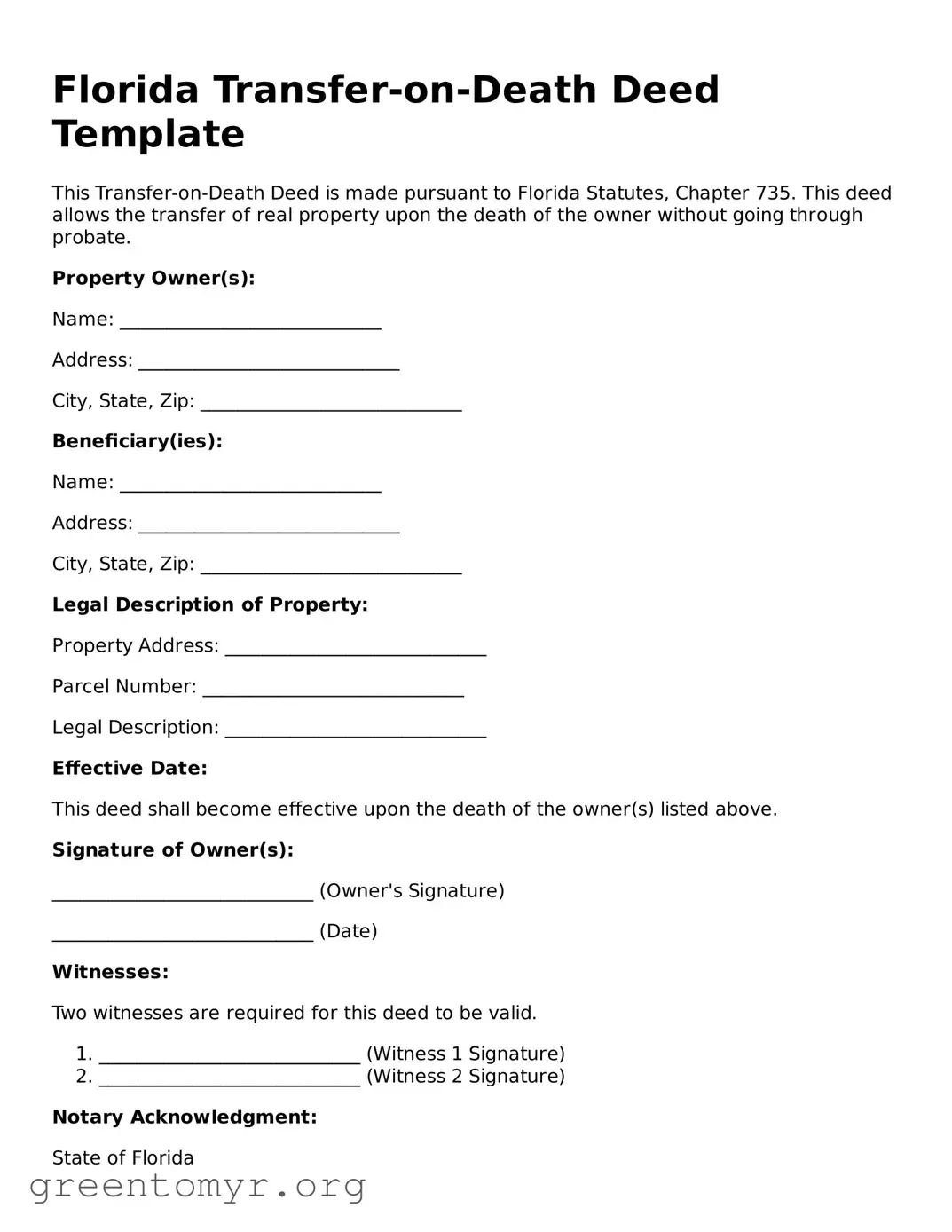
Florida Transfer-on-Death Deed Template
This Transfer-on-Death Deed is made pursuant to Florida Statutes, Chapter 735. This deed allows the transfer of real property upon the death of the owner without going through probate.
Property Owner(s):
Name: ____________________________
Address: ____________________________
City, State, Zip: ____________________________
Beneficiary(ies):
Name: ____________________________
Address: ____________________________
City, State, Zip: ____________________________
Legal Description of Property:
Property Address: ____________________________
Parcel Number: ____________________________
Legal Description: ____________________________
Effective Date:
This deed shall become effective upon the death of the owner(s) listed above.
Signature of Owner(s):
____________________________ (Owner's Signature)
____________________________ (Date)
Witnesses:
Two witnesses are required for this deed to be valid.
Notary Acknowledgment:
State of Florida
County of ____________________________
On this ____ day of ____________, 20__, before me, a Notary Public, personally appeared ____________________________, known to me to be the person(s) described in this deed.
____________________________ (Notary Public Signature)
My Commission Expires: ____________________________
By signing this document, the owner(s) confirm their intent to transfer the property as described above upon their death.
| Fact Name | Details |
|---|---|
| Definition | A Transfer-on-Death Deed allows an individual to transfer real property to a beneficiary upon their death without going through probate. |
| Governing Law | The Florida Transfer-on-Death Deed is governed by Florida Statutes, specifically Section 732.4015. |
| Eligibility | Any individual who owns real property in Florida can create a Transfer-on-Death Deed. |
| Beneficiary Designation | Multiple beneficiaries can be named, and the deed can specify whether they take equal shares or different proportions. |
| Revocation | A Transfer-on-Death Deed can be revoked at any time before the death of the owner by executing a new deed or a written revocation. |
| Effect on Creditors | The property transferred via a Transfer-on-Death Deed is still subject to the owner's debts and creditors during their lifetime. |
| Recording Requirement | To be effective, the Transfer-on-Death Deed must be recorded in the county where the property is located before the owner's death. |
| Tax Implications | There are no immediate tax implications for the transfer, but beneficiaries may be subject to taxes upon the owner's death. |
After you complete the Florida Transfer-on-Death Deed form, you will need to file it with the appropriate county clerk's office. This step is crucial to ensure that the deed is legally recognized and that your wishes regarding property transfer are honored.
A Florida Transfer-on-Death Deed (TOD Deed) is a legal document that allows property owners to designate a beneficiary who will automatically receive the property upon the owner's death. This deed helps avoid the probate process, simplifying the transfer of property to heirs. It is important to note that the property owner retains full control over the property during their lifetime, and they can revoke or change the deed at any time before death.
Any individual who owns real property in Florida can utilize a Transfer-on-Death Deed. This includes single individuals, married couples, and joint owners. However, it is essential to ensure that the beneficiary named in the deed is legally capable of inheriting the property. This means that the beneficiary must be a natural person, as corporations and other entities cannot be designated as beneficiaries under this law.
Creating a Transfer-on-Death Deed involves several steps:
Yes, a Transfer-on-Death Deed can be revoked or changed at any time before the property owner's death. To revoke the deed, the owner must execute a new deed that explicitly states the revocation or file a formal revocation document with the county clerk's office. If the owner wishes to change the beneficiary, they can do so by creating a new TOD Deed that replaces the previous one. It is advisable to consult with a legal expert to ensure that the changes are executed correctly.
If the designated beneficiary passes away before the property owner, the Transfer-on-Death Deed becomes void. In such cases, the property will not automatically transfer to the deceased beneficiary's heirs. The property owner should consider naming an alternate beneficiary in the deed to avoid complications. It is wise to regularly review and update the deed as family circumstances change, ensuring that the intended beneficiaries are accurately reflected.
Filling out a Florida Transfer-on-Death (TOD) Deed can be a straightforward process, but many people make common mistakes that can lead to complications down the road. Understanding these pitfalls can save you time, money, and stress.
One frequent mistake is not properly identifying the property. The deed must clearly describe the property being transferred. Failing to include the correct legal description can create confusion and may even invalidate the deed. Always double-check the property details against official records to ensure accuracy.
Another error involves not naming beneficiaries correctly. When listing beneficiaries, it’s essential to use their full legal names. Nicknames or incomplete names can lead to disputes or challenges when the time comes to transfer the property. Additionally, if you name multiple beneficiaries, consider how you want the property to be divided among them.
People often overlook the importance of signing the deed in front of a notary. A Transfer-on-Death Deed must be signed by the owner and notarized to be valid. Skipping this step can result in the deed being rejected, so make sure to have it properly executed.
Some individuals mistakenly think that they can fill out the form without understanding its implications. A TOD deed transfers property automatically upon death, but it doesn’t allow for changes in ownership during the owner’s lifetime. If you want flexibility, you may need to consider other options.
Additionally, failing to record the deed with the county clerk is a significant oversight. Even if you complete the deed correctly, it must be filed to take effect. Not recording it means that the deed has no legal standing, and the property may not transfer as intended.
Finally, people often neglect to inform their beneficiaries about the deed. It’s crucial to communicate your intentions and provide a copy of the deed to those involved. Without this information, beneficiaries may be unaware of their rights and responsibilities, leading to confusion and potential disputes after your passing.
By being aware of these common mistakes, you can navigate the process of completing a Florida Transfer-on-Death Deed more effectively. Taking the time to ensure accuracy and clarity can make a significant difference for your loved ones in the future.
When dealing with a Florida Transfer-on-Death Deed, several other documents may come into play to ensure a smooth transition of property ownership. Understanding these documents can help streamline the process and clarify the intentions of the property owner.
Having these documents in order can help ensure that your wishes are honored and that your loved ones are taken care of after your passing. It's always wise to consult with a legal professional to ensure all documents are properly prepared and executed.
The Transfer-on-Death Deed (TODD) form allows individuals to transfer real estate to beneficiaries upon their death without going through probate. It shares similarities with several other legal documents. Here are four documents that are similar to the Transfer-on-Death Deed:
When filling out the Florida Transfer-on-Death Deed form, it is crucial to follow certain guidelines to ensure the document is valid and effective. Here are some dos and don’ts to consider:
Adhering to these guidelines will help ensure that your Transfer-on-Death Deed is executed correctly, providing peace of mind for you and your beneficiaries.
Understanding the Florida Transfer-on-Death Deed form can be challenging, especially with the many misconceptions surrounding it. Here are eight common myths and the facts that dispel them.
While primarily used for real estate, the Transfer-on-Death Deed can also be used to transfer other types of property, depending on state laws.
The Transfer-on-Death Deed can help avoid probate for the property it covers, but other assets not included may still go through probate.
In Florida, you can revoke or change the Transfer-on-Death Deed at any time before your death, as long as you follow the proper procedures.
The owner of the property can designate a beneficiary without needing consent from other potential heirs.
Entities such as trusts or corporations can also utilize the Transfer-on-Death Deed to transfer property.
While it’s important to understand the implications, the Transfer-on-Death Deed form itself is relatively straightforward and user-friendly.
While it can simplify the transfer process, beneficiaries may still face tax liabilities based on the property’s value.
Although the deed provides a clear intention to transfer property, circumstances such as changes in law or disputes can affect the outcome.
By addressing these misconceptions, you can better navigate the process of using a Transfer-on-Death Deed in Florida.
When considering the Florida Transfer-on-Death Deed, it is essential to understand several key aspects to ensure a smooth process. Here are some important takeaways:
By understanding these elements, property owners can make informed decisions regarding their estate planning in Florida.