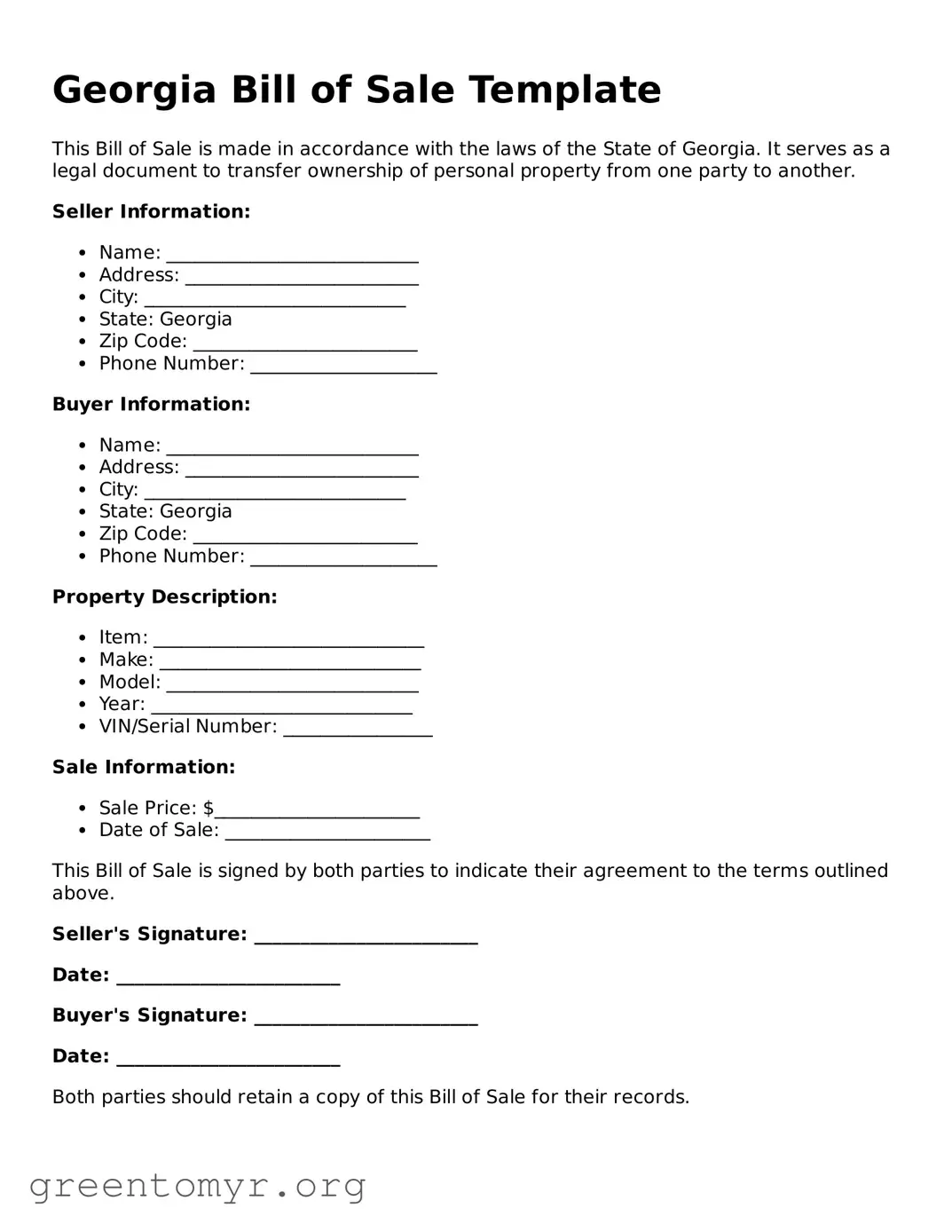
The Georgia Bill of Sale form serves as an important document for individuals engaging in the sale or transfer of personal property. This form provides a clear record of the transaction, detailing essential information such as the names and addresses of both the buyer and seller, a description of the item being sold, and the sale price. It may also include terms regarding warranties or conditions of the sale, ensuring that both parties understand their rights and responsibilities. The form can be used for various types of property, including vehicles, boats, and other personal belongings. By documenting the sale, the Bill of Sale helps protect both the buyer and seller in the event of disputes or misunderstandings. Additionally, having a properly completed Bill of Sale can be crucial for registering vehicles or transferring titles, making it a vital part of the buying and selling process in Georgia.
Georgia Bill of Sale Template
This Bill of Sale is made in accordance with the laws of the State of Georgia. It serves as a legal document to transfer ownership of personal property from one party to another.
Seller Information:
Buyer Information:
Property Description:
Sale Information:
This Bill of Sale is signed by both parties to indicate their agreement to the terms outlined above.
Seller's Signature: ________________________
Date: ________________________
Buyer's Signature: ________________________
Date: ________________________
Both parties should retain a copy of this Bill of Sale for their records.
| Fact Name | Description |
|---|---|
| Purpose | The Georgia Bill of Sale form is used to document the transfer of ownership of personal property between a seller and a buyer. |
| Governing Law | This form is governed by Georgia state law, specifically under the Uniform Commercial Code (UCC) provisions related to sales. |
| Types of Property | The form can be used for various types of personal property, including vehicles, boats, and equipment. |
| Notarization | While notarization is not required for all transactions, having the Bill of Sale notarized can add an extra layer of authenticity. |
| Tax Implications | Sales tax may apply to the transaction, and both parties should keep a copy of the Bill of Sale for tax purposes. |
| Buyer and Seller Information | The form must include the names and addresses of both the buyer and the seller to ensure clear identification. |
| As-Is Condition | The Bill of Sale can include a clause stating that the property is sold "as-is," limiting the seller's liability for defects. |
After obtaining the Georgia Bill of Sale form, it is essential to fill it out accurately to ensure a smooth transaction. This document will be used to record the sale of personal property, such as a vehicle or other items. Follow the steps below to complete the form correctly.
A Georgia Bill of Sale is a legal document that serves as proof of the transfer of ownership of personal property from one party to another. This document is particularly important when buying or selling items such as vehicles, boats, or other significant assets. It outlines the details of the transaction, including the parties involved, the description of the item, and the sale price.
A Bill of Sale is not always legally required in Georgia, but it is highly recommended for transactions involving valuable items. For vehicles, a Bill of Sale is necessary for the buyer to register the vehicle in their name. Additionally, having a Bill of Sale can protect both the buyer and seller by providing a clear record of the transaction.
A comprehensive Georgia Bill of Sale should include the following information:
Yes, a Bill of Sale is a legally binding document in Georgia, provided it contains the necessary elements and is signed by both parties. It serves as evidence of the transaction and can be used in court if disputes arise. However, for certain transactions, such as those involving vehicles, additional documentation may be required for proper registration.
Absolutely. You can create your own Bill of Sale in Georgia as long as it includes all the required information. Many templates are available online that can help guide you in drafting a Bill of Sale that meets your needs. However, ensuring that the document complies with state laws is essential to avoid any potential issues later on.
Notarization is not required for a Bill of Sale in Georgia; however, it is often recommended. Having the document notarized can add an extra layer of authenticity and may be beneficial if a dispute arises. Notarization can also help ensure that both parties fully understand the terms of the agreement.
After the transaction is complete, both the buyer and the seller should keep a copy of the Bill of Sale for their records. The buyer may need to present the document when registering the item, especially in the case of vehicles. Keeping the Bill of Sale in a safe place ensures that both parties have proof of the transaction in case any issues arise in the future.
Filling out the Georgia Bill of Sale form can be straightforward, but there are common mistakes that individuals often make. One frequent error is failing to include all required information. The form typically asks for details such as the buyer's and seller's names, addresses, and signatures. Omitting any of this information can lead to complications later.
Another mistake is not providing a complete description of the item being sold. It is essential to include specific details such as the make, model, year, and Vehicle Identification Number (VIN) for vehicles. A vague description can create confusion and disputes in the future.
Many people also overlook the importance of accurate dates. It is crucial to enter the correct date of the transaction. Errors in the date can affect the legality of the sale and may lead to issues with registration or ownership transfer.
Some individuals forget to have both parties sign the form. A Bill of Sale is not valid unless it is signed by both the buyer and the seller. This signature serves as a confirmation of the agreement and protects both parties.
Another common oversight is not keeping a copy of the completed form. After filling out the Bill of Sale, it is advisable for both parties to retain a copy for their records. This can be useful for future reference or in case of disputes.
People sometimes fail to check for typos or incorrect information before submitting the form. Simple mistakes can lead to significant issues down the line. Taking a moment to review the completed form can prevent unnecessary complications.
Additionally, individuals may not be aware of the specific requirements for notarization. In some cases, a Bill of Sale may need to be notarized to be considered valid. Not understanding these requirements can lead to problems when trying to register the item.
Finally, some individuals do not understand the implications of the Bill of Sale. It is not just a receipt; it is a legal document that transfers ownership. Misunderstanding this can lead to unintended consequences regarding liability and ownership rights.
When engaging in a transaction involving the sale of personal property in Georgia, a Bill of Sale form is often a key document. However, several other forms and documents may accompany it to ensure a smooth and legally sound process. Here are some commonly used forms that complement the Georgia Bill of Sale:
Using these forms alongside the Georgia Bill of Sale can enhance clarity and protect the interests of both buyers and sellers. Each document serves a unique purpose, contributing to a transparent and efficient transaction process.
The Bill of Sale form is a crucial document in various transactions, particularly those involving the transfer of ownership. It shares similarities with several other documents that also serve to confirm ownership or transfer of goods. Here are eight documents that are similar to a Bill of Sale:
When filling out the Georgia Bill of Sale form, it's essential to follow specific guidelines to ensure accuracy and legality. Here are nine things to keep in mind:
Understanding the Georgia Bill of Sale form is crucial for anyone involved in buying or selling personal property. However, several misconceptions can lead to confusion. Here are seven common misunderstandings:
Clearing up these misconceptions can help ensure that transactions are smooth and legally sound.
When filling out and using the Georgia Bill of Sale form, there are several important points to keep in mind: