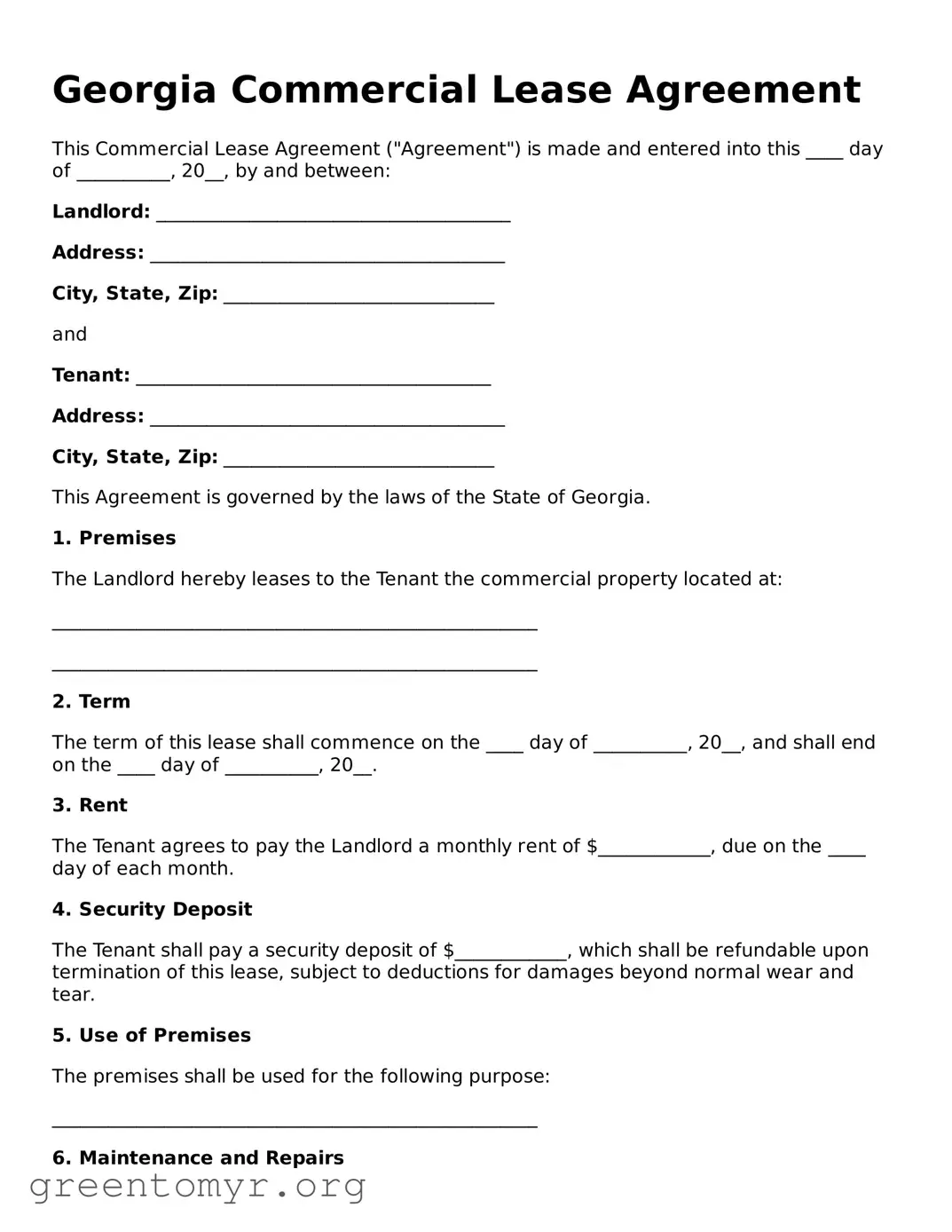
The Georgia Commercial Lease Agreement form is a crucial document for anyone entering into a commercial leasing arrangement in the state. This form outlines the essential terms and conditions of the lease, ensuring that both landlords and tenants understand their rights and responsibilities. Key aspects include the lease duration, rental payment details, and the specific use of the property. Additionally, the agreement addresses maintenance obligations, security deposits, and renewal options, providing clarity on what is expected from both parties throughout the lease term. Understanding these elements is vital for a successful commercial relationship, as they help prevent disputes and foster a cooperative environment. Whether you are a seasoned business owner or a first-time tenant, familiarity with this form can significantly impact your leasing experience.
Georgia Commercial Lease Agreement
This Commercial Lease Agreement ("Agreement") is made and entered into this ____ day of __________, 20__, by and between:
Landlord: ______________________________________
Address: ______________________________________
City, State, Zip: _____________________________
and
Tenant: ______________________________________
Address: ______________________________________
City, State, Zip: _____________________________
This Agreement is governed by the laws of the State of Georgia.
1. Premises
The Landlord hereby leases to the Tenant the commercial property located at:
____________________________________________________
____________________________________________________
2. Term
The term of this lease shall commence on the ____ day of __________, 20__, and shall end on the ____ day of __________, 20__.
3. Rent
The Tenant agrees to pay the Landlord a monthly rent of $____________, due on the ____ day of each month.
4. Security Deposit
The Tenant shall pay a security deposit of $____________, which shall be refundable upon termination of this lease, subject to deductions for damages beyond normal wear and tear.
5. Use of Premises
The premises shall be used for the following purpose:
____________________________________________________
6. Maintenance and Repairs
The Tenant agrees to maintain the premises in good condition and to notify the Landlord of any necessary repairs.
7. Alterations
The Tenant shall not make any alterations to the premises without the prior written consent of the Landlord.
8. Termination
This Agreement may be terminated by either party with a written notice of ____ days.
9. Governing Law
This Agreement shall be governed by the laws of the State of Georgia.
10. Signatures
By signing below, both parties agree to the terms outlined in this Agreement.
Landlord Signature: ___________________________
Date: ______________________________________
Tenant Signature: ____________________________
Date: ______________________________________
| Fact Name | Description |
|---|---|
| Governing Law | The Georgia Commercial Lease Agreement is governed by the laws of the State of Georgia. |
| Lease Duration | Commercial leases in Georgia can vary in duration, typically ranging from one year to several years. |
| Security Deposit | Landlords may require a security deposit, which is often equivalent to one or two months' rent. |
| Maintenance Responsibilities | Both landlords and tenants have specific maintenance responsibilities outlined in the lease agreement. |
| Termination Clause | The lease agreement should include a termination clause detailing the conditions under which the lease can be ended. |
Filling out the Georgia Commercial Lease Agreement form is a straightforward process that requires attention to detail. This form serves as a binding contract between a landlord and a tenant, outlining the terms of the lease. It is essential to complete it accurately to ensure that both parties understand their rights and responsibilities.
A Georgia Commercial Lease Agreement is a legally binding document that outlines the terms and conditions under which a landlord leases commercial property to a tenant. This agreement typically includes details about the rental amount, duration of the lease, responsibilities of both parties, and any specific provisions related to the use of the property. It serves to protect the interests of both landlords and tenants by clearly defining their rights and obligations.
Several essential elements should be included in a Georgia Commercial Lease Agreement to ensure clarity and legal enforceability. These components typically include:
Yes, a Georgia Commercial Lease Agreement can be modified after it has been signed, but such modifications must be done in writing and agreed upon by both parties. It is essential to document any changes to avoid misunderstandings in the future. Common modifications might include changes to the rental amount, lease term extensions, or alterations to the property. Both parties should carefully review any amendments to ensure they align with their intentions and legal requirements.
If a tenant encounters issues with their lease, the first step is to review the lease agreement thoroughly to understand their rights and obligations. Common issues may include disputes over rent payments, maintenance responsibilities, or property use. If the problem cannot be resolved through direct communication with the landlord, the tenant may consider the following steps:
When filling out the Georgia Commercial Lease Agreement form, many individuals make critical mistakes that can lead to misunderstandings or disputes later on. One common error is failing to provide accurate and complete information about the parties involved. It’s essential to include the full legal names of both the landlord and the tenant. Omitting or misspelling names can create confusion and complicate the enforcement of the lease.
Another frequent mistake is neglecting to specify the terms of the lease clearly. This includes the duration of the lease, the rental amount, and any provisions for renewal. If these details are vague or missing, it can lead to disagreements down the line. Clarity is key. Both parties should understand their obligations and rights from the outset.
People often overlook the importance of including maintenance and repair responsibilities in the agreement. This section should outline who is responsible for maintaining the property and handling repairs. Without this information, disputes may arise regarding who must fix issues that come up during the lease period. A well-defined maintenance clause can prevent many headaches.
Finally, many individuals fail to read the entire agreement thoroughly before signing. Skimming through the document can lead to missed clauses or conditions that could significantly impact the lease. It’s crucial to take the time to understand every part of the lease, even if it seems tedious. Doing so can help avoid surprises and ensure that both parties are on the same page.
When entering into a commercial lease agreement in Georgia, several additional forms and documents may be necessary to ensure clarity and legal compliance. These documents help outline the terms of the lease, protect the interests of both parties, and facilitate a smoother transaction. Below is a list of commonly used forms associated with the Georgia Commercial Lease Agreement.
Understanding these additional forms and documents can significantly enhance the leasing process. Each plays a crucial role in protecting the interests of both landlords and tenants, ensuring that all parties are aware of their rights and responsibilities throughout the duration of the lease.
A Commercial Lease Agreement is a critical document in the realm of real estate, particularly for businesses. Several other documents share similarities with this agreement, each serving specific purposes in the leasing process. Here are four documents that are similar to the Commercial Lease Agreement:
When filling out the Georgia Commercial Lease Agreement form, attention to detail is crucial. Here are some key dos and don’ts to keep in mind:
When it comes to commercial lease agreements in Georgia, there are several misconceptions that can lead to confusion for both landlords and tenants. Understanding these misunderstandings is crucial for making informed decisions and fostering positive landlord-tenant relationships. Below are some common misconceptions about the Georgia Commercial Lease Agreement form.
By addressing these misconceptions, both landlords and tenants can approach their commercial lease agreements with greater confidence and understanding. Clarity in these agreements leads to better relationships and fewer disputes in the long run.
When dealing with the Georgia Commercial Lease Agreement form, several important points should be kept in mind. Understanding these key aspects can help ensure a smooth leasing process.