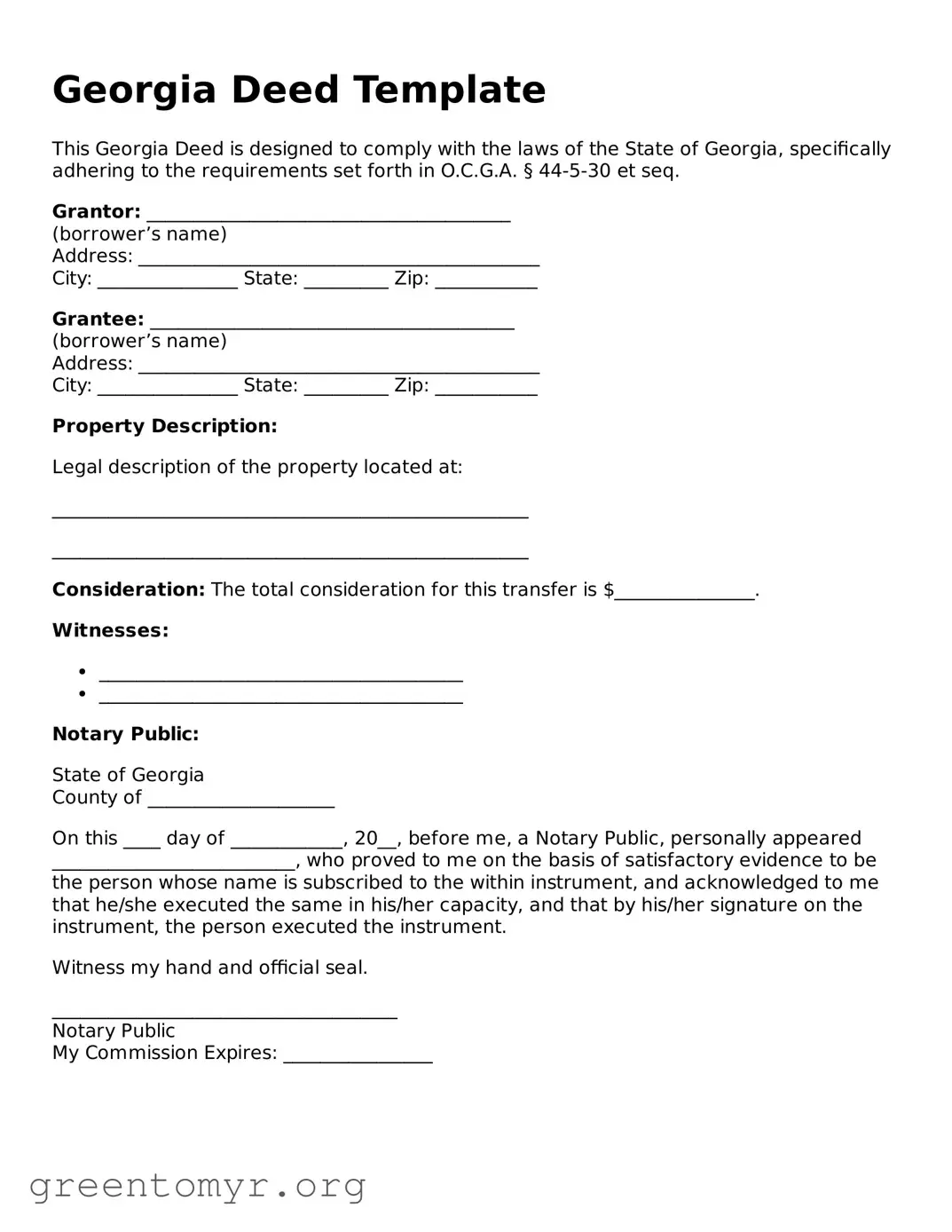
The Georgia Deed form is an essential legal document used in real estate transactions within the state. It serves as a written record that transfers ownership of property from one party to another, ensuring that the transaction is legally binding and recognized by the state. This form includes critical details such as the names of the grantor (the person selling or giving the property) and the grantee (the person receiving the property), a description of the property being transferred, and any relevant terms or conditions of the sale. Additionally, the deed must be signed by the grantor, and in some cases, it may require notarization to enhance its validity. Understanding the nuances of this form is crucial for anyone involved in buying or selling real estate in Georgia, as it lays the groundwork for property rights and responsibilities. By ensuring that all necessary information is accurately captured, the Georgia Deed form helps protect the interests of both parties and facilitates a smooth transfer of ownership.
Georgia Deed Template
This Georgia Deed is designed to comply with the laws of the State of Georgia, specifically adhering to the requirements set forth in O.C.G.A. § 44-5-30 et seq.
Grantor: _______________________________________
(borrower’s name)
Address: ___________________________________________
City: _______________ State: _________ Zip: ___________
Grantee: _______________________________________
(borrower’s name)
Address: ___________________________________________
City: _______________ State: _________ Zip: ___________
Property Description:
Legal description of the property located at:
___________________________________________________
___________________________________________________
Consideration: The total consideration for this transfer is $_______________.
Witnesses:
Notary Public:
State of Georgia
County of ____________________
On this ____ day of ____________, 20__, before me, a Notary Public, personally appeared __________________________, who proved to me on the basis of satisfactory evidence to be the person whose name is subscribed to the within instrument, and acknowledged to me that he/she executed the same in his/her capacity, and that by his/her signature on the instrument, the person executed the instrument.
Witness my hand and official seal.
_____________________________________
Notary Public
My Commission Expires: ________________
| Fact Name | Description |
|---|---|
| Governing Law | The Georgia Deed form is governed by the laws of the State of Georgia, specifically under Title 44 of the Official Code of Georgia Annotated. |
| Types of Deeds | In Georgia, common types of deeds include warranty deeds, quitclaim deeds, and special warranty deeds, each serving different purposes. |
| Signature Requirements | All parties involved in the deed must sign the document for it to be valid. Witnesses are not required, but notarization is recommended. |
| Filing Process | After execution, the deed must be filed with the county clerk’s office in the county where the property is located. |
| Property Description | The deed must include a legal description of the property, which clearly identifies the boundaries and location. |
| Transfer Tax | Georgia imposes a transfer tax on the sale of real estate, which is typically paid at the time of recording the deed. |
| Revocation | Once a deed is executed and recorded, it cannot be revoked without the consent of all parties involved. |
Once you have your Georgia Deed form ready, it’s time to fill it out accurately. This document is essential for transferring property ownership, so it’s important to ensure that all information is correct. Follow these steps to complete the form properly.
After completing these steps, your deed will be recorded, and the transfer of ownership will be officially recognized. Keep a copy for your records, and ensure that the grantee receives their copy as well.
A Georgia Deed form is a legal document used to transfer ownership of real property in the state of Georgia. It outlines the details of the transaction, including the names of the parties involved, a description of the property, and any conditions or covenants related to the transfer. This document is essential for ensuring that the transfer is recognized by law and is recorded in the appropriate county office.
In Georgia, there are several types of Deed forms, each serving a different purpose. The most common types include:
Completing a Georgia Deed form involves several key steps:
While it is not legally required to have a lawyer prepare a Georgia Deed form, it is often recommended. A lawyer can ensure that the deed is correctly drafted and that all legal requirements are met. This can help prevent future disputes or complications regarding the property ownership. If you choose to complete the deed on your own, be sure to follow all guidelines carefully.
When recording a Georgia Deed, there are several costs to consider:
You can obtain a Georgia Deed form from several sources:
Filling out the Georgia Deed form can be straightforward, but several common mistakes can lead to delays or complications. One frequent error is failing to provide complete and accurate names for all parties involved. Ensure that the names of the grantor and grantee are spelled correctly and match their legal identification. Omitting a middle name or using a nickname can create issues later.
Another common mistake is neglecting to include a proper legal description of the property. A vague or incorrect description can result in disputes or difficulties in the transfer process. It is essential to use the exact description found in the property’s previous deed or in public records. Double-checking this information can save time and prevent future legal challenges.
People often overlook the need for signatures on the deed. Both the grantor and the grantee must sign the document. If a signature is missing, the deed may be considered invalid. Additionally, the deed must be notarized to ensure its authenticity. Failing to have the deed notarized can lead to rejection during the recording process.
Another mistake is not including the date of execution. While it may seem minor, the date is crucial for establishing the timeline of the transaction. Without it, there may be confusion regarding when the transfer took place, which can affect property rights and responsibilities.
Some individuals forget to check the recording requirements for their county. Each county in Georgia may have specific rules regarding how deeds must be submitted for recording. Failing to follow these guidelines can result in delays or additional fees. Always verify the requirements with the local county clerk’s office before submission.
Finally, people often neglect to consider tax implications. Transferring property can have tax consequences, including transfer taxes or potential capital gains taxes. Consulting with a tax professional before completing the deed can help avoid unexpected financial burdens later on. Taking these steps ensures a smoother transaction and protects all parties involved.
When transferring property in Georgia, several important documents accompany the Georgia Deed form. Each of these documents plays a vital role in ensuring that the transaction is clear and legally binding. Below is a list of commonly used forms that often accompany the deed.
Understanding these documents can significantly enhance the clarity of the property transfer process in Georgia. Each form serves a specific purpose, ensuring that both buyers and sellers are protected throughout the transaction.
Mortgage Agreement: Similar to a Deed, a mortgage agreement transfers interest in property but does so as collateral for a loan. It establishes the lender's right to claim the property if the borrower defaults on payments.
Lease Agreement: Like a Deed, a lease agreement outlines the terms under which one party can use another's property. It details the rights and responsibilities of both the landlord and tenant, although it typically covers a shorter time frame.
Quitclaim Deed: This document, while also a type of Deed, specifically transfers whatever interest the grantor has in the property without guaranteeing that it is free of claims. It is often used between family members or in divorce settlements.
Bill of Sale: A bill of sale documents the transfer of ownership of personal property, much like a Deed does for real estate. It provides proof of the transaction and includes details about the items being sold.
When filling out the Georgia Deed form, attention to detail is crucial. Here’s a list of things you should and shouldn’t do to ensure your deed is completed correctly.
By following these guidelines, you can help ensure that your Georgia Deed form is completed accurately and effectively.
Many people have misunderstandings about the Georgia Deed form. Here are some common misconceptions and clarifications:
In reality, there are different types of deeds, such as warranty deeds and quitclaim deeds. Each serves a unique purpose and offers different levels of protection.
While lawyers can assist, many people successfully prepare deeds on their own or with the help of legal document preparers.
Recording a deed is important. It protects your ownership rights and provides public notice of the property transfer.
While a deed is a legal document, certain circumstances allow for changes or corrections to be made, as long as proper procedures are followed.
Some transfers, such as those between spouses or through inheritance, may not require a formal deed in Georgia.
Deeds can also be used for gifting property, transferring ownership to a family member, or placing property in a trust.
Property transfers must be documented in writing to be legally binding. Verbal agreements are not sufficient.
While recording a deed provides some protection, it can still be challenged in court under certain conditions.
Understanding these misconceptions can help you navigate property transactions in Georgia more effectively.
When filling out and using the Georgia Deed form, there are several important points to keep in mind. Understanding these key takeaways can help ensure that the process goes smoothly and that the deed is valid.