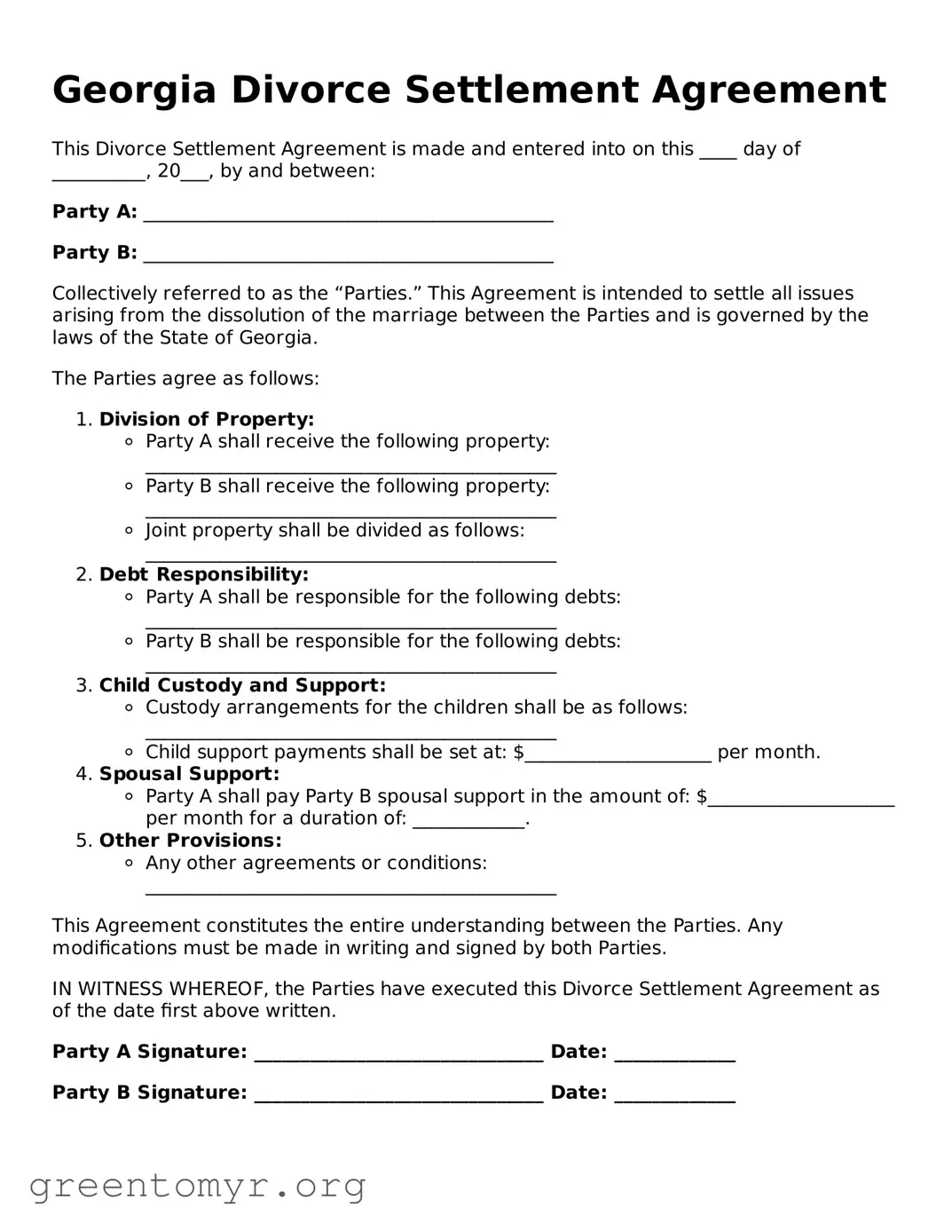
When navigating the complexities of divorce in Georgia, a Divorce Settlement Agreement form serves as a crucial document for couples seeking to finalize their separation. This form outlines the terms of the divorce, addressing key issues such as the division of marital property, child custody arrangements, and spousal support. It is designed to ensure that both parties reach a mutual understanding and agreement on these critical aspects, thereby minimizing potential disputes in the future. Additionally, the form typically includes provisions for the care and support of any children involved, detailing visitation rights and child support obligations. Completing this agreement accurately is essential, as it will be submitted to the court for approval, making it a binding contract that governs the parties' post-divorce relationship. Understanding the nuances of this form can significantly impact the outcome of the divorce process, making it vital for individuals to approach it with care and attention to detail.
Georgia Divorce Settlement Agreement
This Divorce Settlement Agreement is made and entered into on this ____ day of __________, 20___, by and between:
Party A: ____________________________________________
Party B: ____________________________________________
Collectively referred to as the “Parties.” This Agreement is intended to settle all issues arising from the dissolution of the marriage between the Parties and is governed by the laws of the State of Georgia.
The Parties agree as follows:
This Agreement constitutes the entire understanding between the Parties. Any modifications must be made in writing and signed by both Parties.
IN WITNESS WHEREOF, the Parties have executed this Divorce Settlement Agreement as of the date first above written.
Party A Signature: _______________________________ Date: _____________
Party B Signature: _______________________________ Date: _____________
| Fact Name | Description |
|---|---|
| Governing Law | The Georgia Divorce Settlement Agreement is governed by the Official Code of Georgia Annotated (O.C.G.A.) § 19-6-1 et seq. |
| Purpose | This form outlines the terms agreed upon by both spouses regarding the division of assets, debts, and other matters related to the divorce. |
| Mutual Agreement | Both parties must voluntarily agree to the terms laid out in the settlement agreement for it to be valid. |
| Filing Requirement | The completed agreement must be filed with the court as part of the divorce proceedings. |
| Child Custody Provisions | If children are involved, the agreement must include provisions for child custody and support. |
| Asset Division | The form should detail how marital property and debts will be divided between the spouses. |
| Legal Review | It is advisable for both parties to seek legal counsel to review the agreement before signing. |
| Modification | Once signed, the agreement can only be modified by mutual consent or court order. |
| Enforceability | The agreement is legally binding once it is approved by the court. |
Completing the Georgia Divorce Settlement Agreement form is a crucial step in the divorce process. This document outlines the terms agreed upon by both parties regarding the division of assets, debts, and other important matters. After filling out the form, it will need to be submitted to the court for approval, ensuring that both parties are in agreement on the terms laid out.
A Georgia Divorce Settlement Agreement is a legal document that outlines the terms of a divorce between two parties. It covers various aspects such as the division of property, child custody, child support, and alimony. This agreement is crucial as it helps ensure that both parties have a clear understanding of their rights and responsibilities after the divorce is finalized.
This agreement is essential because it provides a structured resolution to the issues that arise during a divorce. By having a written document, both parties can avoid future disputes regarding the terms of their separation. Additionally, a well-crafted agreement can expedite the divorce process and may even reduce the need for court intervention.
Creating a Divorce Settlement Agreement typically involves the following steps:
Yes, modifications can be made to a Divorce Settlement Agreement after it has been signed, but both parties must agree to the changes. It’s advisable to document any modifications in writing and have both parties sign the revised agreement. If the changes are significant, you may want to file the modified agreement with the court to ensure it is enforceable.
If one party fails to comply with the terms outlined in the Divorce Settlement Agreement, the other party has several options. They can first try to resolve the issue through direct communication. If that doesn’t work, they may need to seek legal assistance to enforce the agreement. This could involve going back to court to request enforcement or modification of the terms.
While it is not legally required to have an attorney when creating a Divorce Settlement Agreement, having legal representation is highly recommended. An attorney can provide valuable guidance, ensure that all legal requirements are met, and help protect your rights. They can also help navigate any complex issues that may arise during the divorce process.
The Georgia Divorce Settlement Agreement form can typically be found online through state court websites or legal resource platforms. Local courthouses may also provide the necessary forms. It’s important to ensure that you are using the most current version of the form, as requirements may change. If in doubt, consulting with a legal professional can provide clarity and ensure you have the right documents.
When completing the Georgia Divorce Settlement Agreement form, individuals may encounter several common mistakes that can lead to complications in the divorce process. One frequent error is failing to provide complete and accurate personal information. This includes names, addresses, and contact details for both parties. Incomplete information can delay proceedings and may require additional legal steps to correct.
Another mistake is neglecting to address all assets and liabilities. It is crucial to list all property, debts, and financial obligations. Omitting any assets or liabilities can result in disputes later on. Both parties should ensure that the agreement reflects a comprehensive view of their financial situation.
People often overlook the importance of detailing custody arrangements when children are involved. A clear outline of custody, visitation, and child support is necessary. Vague language can lead to misunderstandings and conflicts in the future. It is essential to be specific about the terms to avoid potential disputes.
Additionally, some individuals may not consider tax implications when dividing assets. Failing to account for how certain assets will be taxed can lead to unexpected financial burdens after the divorce is finalized. Consulting with a financial advisor may be beneficial in this case.
Another common error is not having the agreement reviewed by a legal professional. While individuals may feel confident in their understanding of the form, legal language and implications can be complex. A review can help identify potential issues and ensure that the agreement is enforceable.
Moreover, people sometimes forget to include a section for future modifications. Life circumstances can change, and it is important to outline how modifications to the agreement can be made. This can save time and resources if changes are necessary down the line.
Lastly, many individuals fail to keep copies of the signed agreement. After the document is finalized, retaining a copy is essential for future reference. This ensures that both parties have access to the terms agreed upon, which can help prevent disputes.
When navigating a divorce in Georgia, several key documents may accompany the Divorce Settlement Agreement to ensure a comprehensive resolution of all related issues. Each of these forms plays a crucial role in the overall process, addressing various aspects of the divorce settlement.
Each of these documents contributes to a clearer understanding of the divorce proceedings. They help ensure that both parties' rights and responsibilities are addressed, leading to a smoother transition during a challenging time.
When filling out the Georgia Divorce Settlement Agreement form, it is crucial to approach the process with care. Here are six important dos and don'ts to consider:
Many people have misunderstandings about the Georgia Divorce Settlement Agreement form. Here are five common misconceptions:
Some believe that a Divorce Settlement Agreement is only required when children are part of the divorce. However, this form is essential for all divorces, regardless of whether children are involved. It outlines the terms of the divorce, including asset division and spousal support.
Many think that the agreement becomes legally binding only after it is filed. In reality, once both parties sign the agreement, it is enforceable. Filing with the court is a necessary step to make it part of the official court record, but the agreement holds weight as soon as it is executed.
There is a belief that once the Divorce Settlement Agreement is signed, it cannot be changed. While it is true that modifications require both parties' consent, changes can be made if both agree to the new terms. This flexibility allows for adjustments as circumstances evolve.
Some people think the agreement only addresses financial issues like alimony and property division. However, it can also include provisions for child custody, visitation, and support. This comprehensive approach ensures that all relevant issues are addressed in one document.
Many individuals assume they can navigate the process without legal help. While it is possible to complete the form independently, having legal representation can provide valuable insights and help avoid potential pitfalls. An attorney can ensure that the agreement is fair and complies with Georgia law.
When navigating the Georgia Divorce Settlement Agreement form, it is essential to understand its purpose and the implications of the information provided. Here are some key takeaways:
Filling out the Georgia Divorce Settlement Agreement form can be a straightforward process if approached methodically. Understanding the form's components and implications is vital for a smooth divorce experience.