When planning for the future, understanding the Georgia Durable Power of Attorney form is crucial. This legal document allows you to designate someone you trust to make decisions on your behalf when you cannot do so yourself. Whether due to illness, injury, or other circumstances, having a durable power of attorney ensures that your financial and healthcare matters are managed according to your wishes. The form covers essential areas such as the powers granted to your agent, the duration of those powers, and any limitations you wish to impose. Additionally, it is important to note that this form remains effective even if you become incapacitated, providing peace of mind for both you and your loved ones. By clearly outlining your preferences, you can avoid potential conflicts and ensure that your affairs are handled smoothly. Understanding the nuances of this form can empower you to make informed decisions that protect your interests.
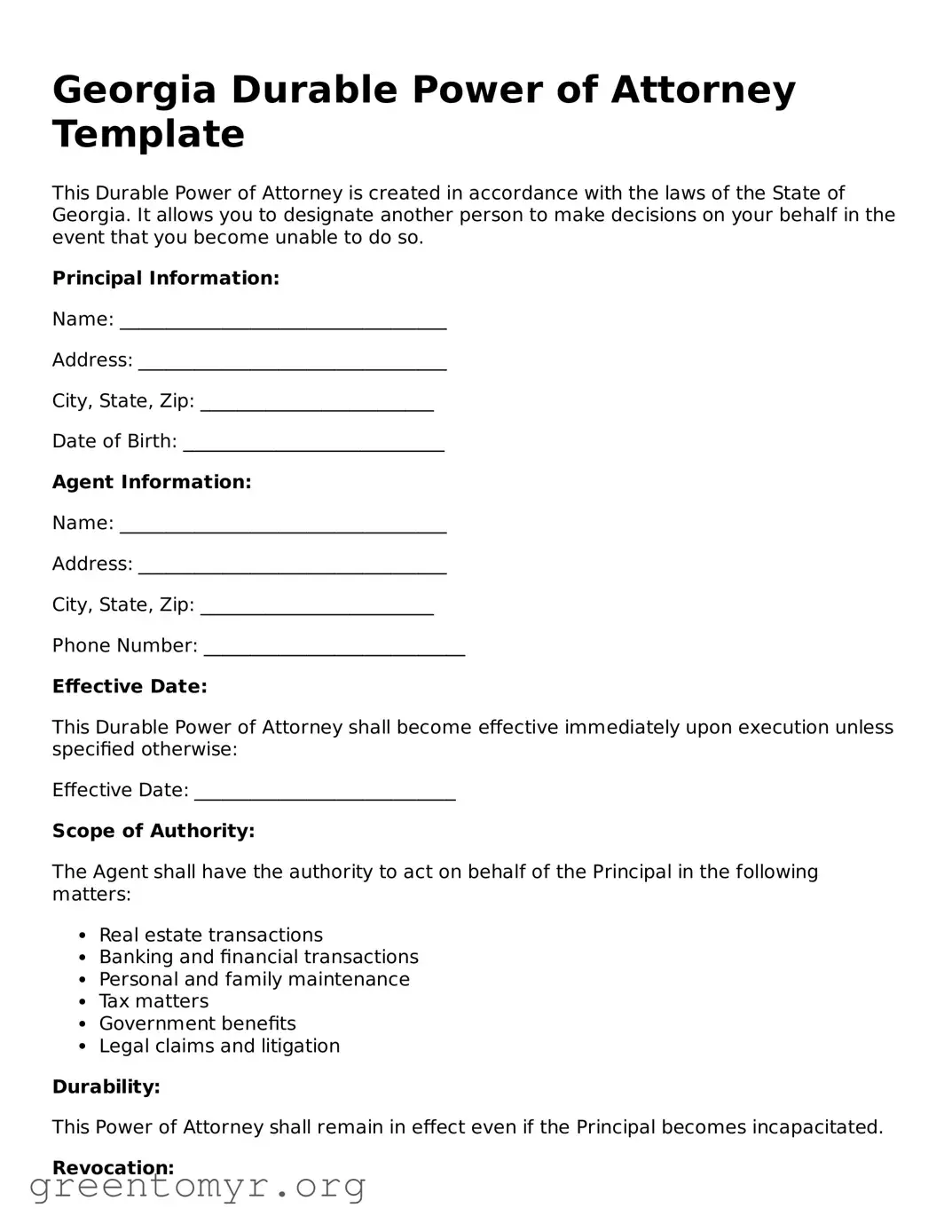
Georgia Durable Power of Attorney Template
This Durable Power of Attorney is created in accordance with the laws of the State of Georgia. It allows you to designate another person to make decisions on your behalf in the event that you become unable to do so.
Principal Information:
Name: ___________________________________
Address: _________________________________
City, State, Zip: _________________________
Date of Birth: ____________________________
Agent Information:
Name: ___________________________________
Address: _________________________________
City, State, Zip: _________________________
Phone Number: ____________________________
Effective Date:
This Durable Power of Attorney shall become effective immediately upon execution unless specified otherwise:
Effective Date: ____________________________
Scope of Authority:
The Agent shall have the authority to act on behalf of the Principal in the following matters:
Durability:
This Power of Attorney shall remain in effect even if the Principal becomes incapacitated.
Revocation:
The Principal may revoke this Durable Power of Attorney at any time by providing written notice to the Agent.
Signature:
By signing below, the Principal acknowledges that they understand the purpose and effect of this Durable Power of Attorney.
Principal's Signature: ______________________
Date: _____________________________________
Witnesses:
Two witnesses are required to sign below:
Witness 1 Signature: ______________________
Witness 1 Name: __________________________
Date: _____________________________________
Witness 2 Signature: ______________________
Witness 2 Name: __________________________
Date: _____________________________________
Notary Public:
State of Georgia
County of _________________________________
Subscribed and sworn to before me this _____ day of __________, 20__.
Notary Public Signature: ____________________
My Commission Expires: _____________________
| Fact Name | Description |
|---|---|
| Definition | A Durable Power of Attorney in Georgia allows an individual to designate someone else to make financial or legal decisions on their behalf, even if they become incapacitated. |
| Governing Law | The Durable Power of Attorney in Georgia is governed by the Georgia Uniform Power of Attorney Act, found in O.C.G.A. § 10-6B-1 et seq. |
| Durability | This form remains effective even if the principal becomes incapacitated, which distinguishes it from a regular power of attorney. |
| Revocation | The principal can revoke the Durable Power of Attorney at any time, as long as they are competent to do so. |
Filling out the Georgia Durable Power of Attorney form is an important step in designating someone to make decisions on your behalf if you become unable to do so. This guide will help you navigate the process smoothly, ensuring that your intentions are clearly communicated.
A Durable Power of Attorney (DPOA) is a legal document that allows you to appoint someone to manage your financial and legal affairs if you become unable to do so yourself. This document remains effective even if you become incapacitated. It provides peace of mind, knowing that someone you trust can make decisions on your behalf.
You can choose any competent adult to be your agent. This person is often a family member, friend, or trusted advisor. It’s important to select someone who understands your wishes and will act in your best interest. You should discuss your decision with them beforehand to ensure they are willing to take on this responsibility.
In a Durable Power of Attorney, you can grant a wide range of powers to your agent, including:
You can customize the powers based on your needs. It’s important to clearly outline what your agent can and cannot do to avoid any confusion later.
To create a Durable Power of Attorney in Georgia, follow these steps:
Once completed, keep the original document in a safe place and provide copies to your agent and any relevant financial institutions.
Yes, you can revoke a Durable Power of Attorney at any time as long as you are mentally competent. To revoke it, you should create a written notice stating that you are revoking the previous DPOA. Make sure to sign and date this notice and provide copies to your agent and any institutions that had the original DPOA on file. It’s important to communicate your decision clearly to avoid any confusion.
Filling out the Georgia Durable Power of Attorney form can be straightforward, but many people make common mistakes that can lead to complications. One frequent error is not clearly identifying the principal. The principal is the person granting authority. If their name is misspelled or incomplete, it can create confusion and invalidate the document.
Another mistake involves the selection of the agent. The agent is the person designated to act on behalf of the principal. Some individuals choose someone who may not be trustworthy or capable. It’s essential to select someone who understands the responsibilities involved and can be relied upon to make decisions in the principal's best interest.
People often overlook the importance of specifying the powers granted. The form allows for a range of powers, from financial decisions to healthcare choices. Failing to clearly outline these powers can lead to misunderstandings. It’s best to be as specific as possible to avoid any ambiguity.
Additionally, not signing the document correctly is a common pitfall. The principal must sign the form in the presence of a notary public. If the signature is missing or improperly witnessed, the form may not hold up in court. Always ensure that all signatures are complete and correctly placed.
Some individuals neglect to date the form. A date is crucial as it indicates when the authority begins. Without a date, there could be disputes about when the powers take effect. It’s a simple step that can save a lot of trouble later.
Another mistake is failing to review the form after completion. It’s easy to overlook errors in the rush to finalize the document. Taking the time to carefully review the entire form can catch mistakes before they become issues.
People sometimes forget to inform the agent about their role. The agent should be aware that they have been designated to act on behalf of the principal. Open communication ensures that the agent is prepared to take action when necessary.
Not considering alternate agents is another oversight. Life is unpredictable, and the chosen agent may not always be available. It’s wise to name an alternate agent to step in if needed. This provides an additional layer of security for the principal’s wishes.
Finally, individuals may fail to keep copies of the completed form. It’s important to have multiple copies for both the principal and the agent. This ensures that everyone involved has access to the document when needed. Keeping a copy in a safe place can help avoid confusion down the line.
When establishing a Georgia Durable Power of Attorney, it's essential to consider other documents that may complement this important legal tool. Each of these forms serves a specific purpose, ensuring that your wishes are respected and your affairs are managed according to your preferences. Here’s a list of commonly used documents alongside the Durable Power of Attorney:
Each of these documents plays a vital role in comprehensive estate planning. By considering them alongside your Durable Power of Attorney, you can create a robust framework that addresses your health, financial, and personal preferences. This approach not only protects your interests but also alleviates potential burdens on your loved ones.
The Durable Power of Attorney (DPOA) is a crucial legal document that allows someone to make decisions on your behalf when you are unable to do so. However, it shares similarities with several other documents. Here’s a list of ten documents that are akin to the DPOA, highlighting their similarities:
Understanding these documents can empower you to make informed decisions about your legal and financial future. Each serves a unique purpose, but they all revolve around the essential theme of delegating authority to another individual.
When filling out the Georgia Durable Power of Attorney form, it’s important to follow certain guidelines to ensure the document is valid and meets your needs. Here are ten things you should and shouldn't do:
Understanding the Georgia Durable Power of Attorney form is essential for anyone looking to designate someone to make decisions on their behalf. However, several misconceptions can lead to confusion. Here are eight common misunderstandings:
Being informed about these misconceptions can help individuals make better decisions regarding their Durable Power of Attorney in Georgia.
When considering a Georgia Durable Power of Attorney, it is essential to understand its significance and the process involved. Here are some key takeaways to keep in mind:
Understanding these key points can help you navigate the process of creating and utilizing a Durable Power of Attorney effectively.