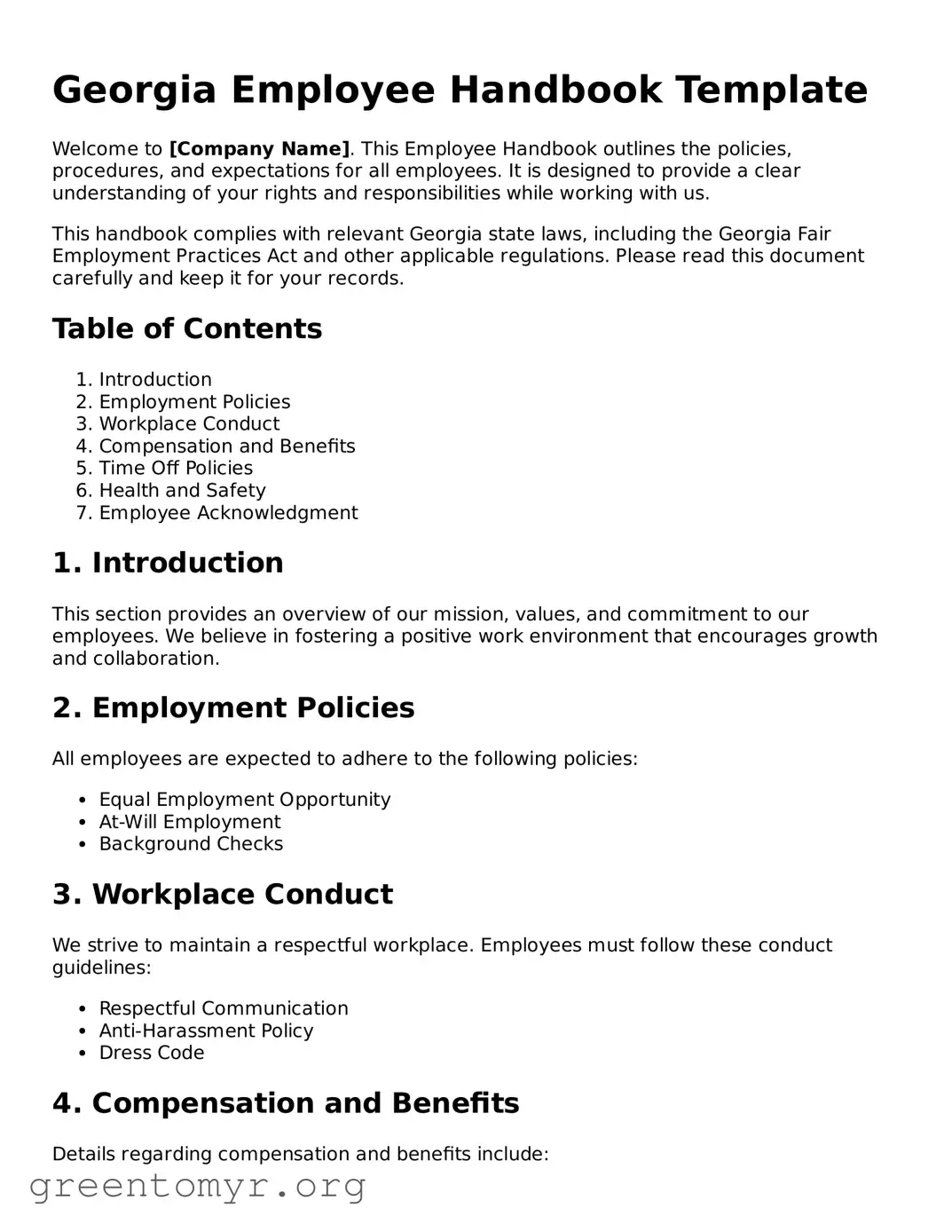
The Georgia Employee Handbook form serves as a vital resource for both employers and employees, outlining essential policies and expectations within the workplace. This document typically includes sections on workplace conduct, attendance, and disciplinary procedures, ensuring that employees understand their rights and responsibilities. Additionally, it addresses important topics such as anti-discrimination policies, harassment prevention, and employee benefits, which are crucial for fostering a safe and inclusive work environment. By clearly delineating the procedures for reporting grievances and the consequences of policy violations, the handbook promotes transparency and accountability. Employers must regularly update this form to reflect changes in state and federal laws, as well as organizational policies. This proactive approach not only helps in compliance but also builds trust and clarity among employees, making it imperative for businesses in Georgia to prioritize the creation and distribution of an effective employee handbook.
Georgia Employee Handbook Template
Welcome to [Company Name]. This Employee Handbook outlines the policies, procedures, and expectations for all employees. It is designed to provide a clear understanding of your rights and responsibilities while working with us.
This handbook complies with relevant Georgia state laws, including the Georgia Fair Employment Practices Act and other applicable regulations. Please read this document carefully and keep it for your records.
Table of Contents
1. Introduction
This section provides an overview of our mission, values, and commitment to our employees. We believe in fostering a positive work environment that encourages growth and collaboration.
2. Employment Policies
All employees are expected to adhere to the following policies:
3. Workplace Conduct
We strive to maintain a respectful workplace. Employees must follow these conduct guidelines:
4. Compensation and Benefits
Details regarding compensation and benefits include:
5. Time Off Policies
Employees are entitled to various types of leave. The following policies apply:
6. Health and Safety
Your health and safety are paramount. We adhere to the following safety guidelines:
7. Employee Acknowledgment
Please sign below to acknowledge that you have received and read the Employee Handbook:
Employee Name: [Employee Name]
Employee Signature: [Employee Signature]
Date: [Date]
Thank you for being a valued member of our team!
| Fact Name | Details |
|---|---|
| Purpose | The Georgia Employee Handbook serves as a guide for employees, outlining company policies, procedures, and expectations. |
| Legal Requirement | While not legally required, having an employee handbook is recommended to clarify workplace policies and protect the company. |
| Governing Laws | The handbook should comply with federal laws such as the Fair Labor Standards Act and state laws like the Georgia Wage and Hour Law. |
| Updates | Regular updates to the handbook are essential to reflect changes in laws or company policies, ensuring ongoing compliance and relevance. |
Filling out the Georgia Employee Handbook form is an important step in ensuring that you understand your rights and responsibilities as an employee. After completing the form, you will likely submit it to your HR department or supervisor for review. This process helps establish clear communication regarding workplace policies and procedures.
The Georgia Employee Handbook form is a document that outlines the policies, procedures, and expectations for employees within a company. It serves as a guide for both employers and employees, ensuring that everyone is on the same page regarding workplace standards and practices.
An Employee Handbook is crucial for several reasons:
All employees should receive a copy of the Employee Handbook, including new hires and existing staff. This ensures that everyone is aware of the company’s policies and procedures. It's also a good idea to keep a signed acknowledgment of receipt in each employee's personnel file.
The Employee Handbook should be reviewed and updated regularly, at least once a year. Changes in laws, company policies, or workplace culture may necessitate updates. Keeping the handbook current helps avoid confusion and ensures compliance with regulations.
A comprehensive Employee Handbook should include:
While the Employee Handbook can provide guidance on company policies, it is not a legally binding contract. However, it can be referenced in legal matters if it demonstrates the company's commitment to certain practices. It's essential to ensure that the handbook is clear and consistent to avoid misunderstandings.
If employees have questions about the Employee Handbook, they should reach out to their supervisor or the HR department. Open communication is encouraged to clarify any uncertainties regarding policies or procedures.
Yes, having employees sign an acknowledgment of receipt is highly recommended. This serves as proof that they have received and understood the handbook. It can be valuable in case of disputes or misunderstandings in the future.
If an employee violates a policy outlined in the handbook, the company should follow its disciplinary procedures. This may include verbal warnings, written warnings, or even termination, depending on the severity of the violation. Consistency in enforcement is key to maintaining fairness.
Employers can ensure understanding by conducting training sessions when the handbook is introduced or updated. Encouraging questions and discussions during these sessions can also help clarify policies. Regular reminders about key policies can reinforce their importance.
Filling out the Georgia Employee Handbook form can seem straightforward, but many people make common mistakes that can lead to confusion later. One frequent error is failing to read the instructions carefully. Each section of the form has specific requirements, and overlooking these can result in incomplete or incorrect submissions.
Another common mistake is not providing accurate personal information. Employees often forget to double-check their names, addresses, or contact numbers. This can create issues when the company tries to reach out for important updates or notifications.
Some individuals skip the section regarding emergency contacts. This is a crucial part of the form. In case of an emergency, having the right contacts on file can make all the difference. Always ensure that this section is filled out completely.
People also tend to overlook the importance of signing and dating the form. A signature confirms that the employee has read and understood the handbook. Without this, the form may be considered invalid, which could lead to misunderstandings about workplace policies.
Another mistake is failing to ask questions. If something on the form is unclear, it’s important to seek clarification. Ignoring uncertainties can lead to incorrect information being submitted, which may cause problems down the line.
Some employees neglect to keep a copy of the completed form. Having a personal record is essential for reference. This can help if there are any disputes about what was agreed upon or understood.
Additionally, individuals might forget to update their information if there are changes in their circumstances. Whether it’s a new address or a change in emergency contacts, keeping the information current is vital.
In some cases, people fail to review the employee handbook itself. Understanding the policies and procedures outlined in the handbook is key to ensuring compliance and knowing one’s rights and responsibilities at work.
Lastly, rushing through the form can lead to careless mistakes. Taking the time to fill it out thoughtfully can save a lot of hassle in the future. It’s always better to take a moment to ensure everything is correct than to deal with the consequences of errors later.
When creating or updating an employee handbook in Georgia, it’s essential to consider several other forms and documents that complement it. These documents help clarify policies, protect the rights of employees, and ensure compliance with state and federal regulations. Below is a list of forms that are commonly used alongside the Georgia Employee Handbook.
Incorporating these forms into your employee management practices can enhance communication, streamline processes, and foster a positive work environment. Each document plays a vital role in supporting both the organization and its employees, making them essential components of effective human resources management.
The Employee Handbook serves as a crucial resource for both employers and employees, outlining policies, procedures, and expectations within the workplace. Here are nine documents that share similarities with the Employee Handbook:
When filling out the Georgia Employee Handbook form, it is important to follow certain guidelines to ensure accuracy and completeness. Here is a list of things you should and shouldn't do:
Understanding the Georgia Employee Handbook form is essential for both employers and employees. However, several misconceptions can lead to confusion and misinterpretation. Below is a list of common misconceptions about this important document.
By dispelling these misconceptions, employers and employees can better understand the significance of the Georgia Employee Handbook form and its role in fostering a positive workplace environment.
When filling out and using the Georgia Employee Handbook form, it is essential to keep several key points in mind. These takeaways will help ensure that the handbook serves its intended purpose effectively.
By adhering to these guidelines, the Georgia Employee Handbook can be a valuable resource for both employers and employees.