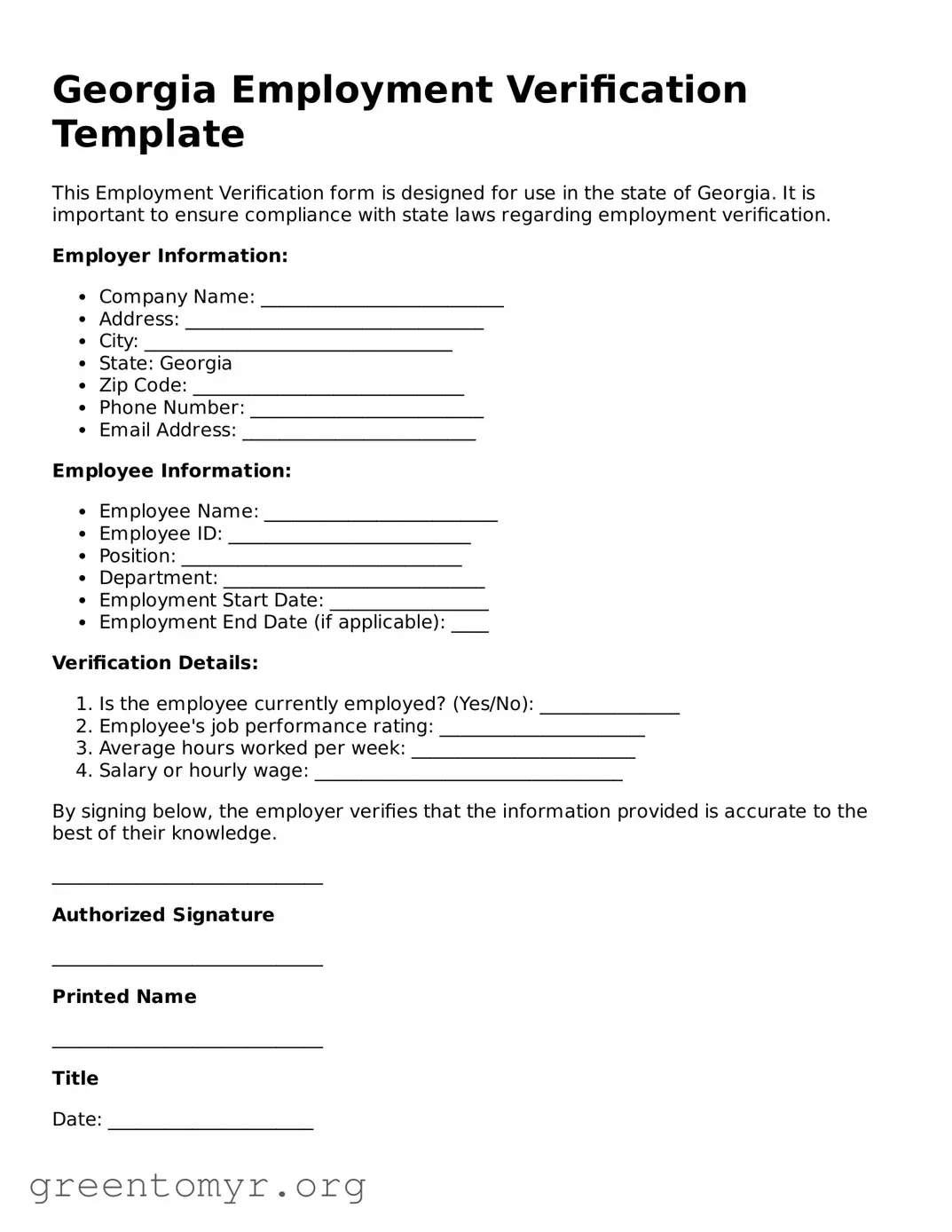
The Georgia Employment Verification form plays a crucial role in the employment process, serving as an essential document for both employers and employees. This form is primarily used to confirm an individual's employment status, including details such as job title, dates of employment, and salary information. Employers often require this verification when a potential employee is applying for loans, housing, or other financial services, making it a vital tool in establishing trust and credibility. Additionally, the form can help ensure compliance with various regulations, safeguarding both the employer's and employee's interests. Understanding the nuances of this form is important, as it can vary slightly depending on the specific needs of the employer or the requirements of the situation. Properly completing and submitting the Georgia Employment Verification form can streamline processes and facilitate smoother interactions between parties involved in the employment relationship.
Georgia Employment Verification Template
This Employment Verification form is designed for use in the state of Georgia. It is important to ensure compliance with state laws regarding employment verification.
Employer Information:
Employee Information:
Verification Details:
By signing below, the employer verifies that the information provided is accurate to the best of their knowledge.
_____________________________
Authorized Signature
_____________________________
Printed Name
_____________________________
Title
Date: ______________________
| Fact Name | Details |
|---|---|
| Purpose | The Georgia Employment Verification form is used to confirm an employee's work status and eligibility for employment. |
| Governing Law | This form is governed by Georgia state law, specifically the Georgia Fair Employment Practices Act. |
| Who Completes It | Employers are responsible for completing the form and providing it to the relevant authorities when requested. |
| Required Information | The form requires basic information such as the employee's name, position, and dates of employment. |
| Submission Process | Employers must submit the completed form to the Georgia Department of Labor or other designated agencies as needed. |
| Confidentiality | Information on the form is considered confidential and should be handled in accordance with privacy laws. |
| Retention Period | Employers are advised to retain the form for at least three years after the employee's termination. |
| Updates | The form may be updated periodically, so employers should ensure they are using the most current version. |
After obtaining the Georgia Employment Verification form, you will need to complete it accurately to ensure that the information provided is clear and verifiable. Follow these steps to fill out the form properly.
The Georgia Employment Verification form is a document used by employers in Georgia to verify the employment status of individuals. It is often required for various purposes, such as applying for loans, housing, or government assistance. This form provides essential information about an employee’s job title, duration of employment, and salary, ensuring that the information is accurate and up-to-date.
Typically, employers are responsible for completing the Employment Verification form. However, employees may need to request this verification for their own purposes, such as applying for a mortgage or rental agreement. It is important for employees to communicate their needs clearly to their employer or HR department to ensure timely processing of the form.
The form generally requires the following information:
Employers may also include additional details, such as job responsibilities or performance evaluations, if relevant.
To request an Employment Verification, you should reach out to your employer or HR department. It is advisable to do this in writing, specifying your reason for the request and any deadlines you may have. This ensures that your request is documented and can be processed efficiently. Be polite and professional in your communication.
The processing time for an Employment Verification form can vary. Generally, employers aim to complete the verification within a few business days. However, if the request is made during a busy period or if additional information is needed, it may take longer. It’s always a good idea to follow up politely if you haven’t received a response within a week.
Yes, the Employment Verification form can be used for various purposes, including applying for loans, housing, or government benefits. However, it is essential to ensure that the information on the form is accurate and tailored to the specific requirements of the entity requesting the verification. Always check if additional documentation is needed for your particular situation.
If your employer refuses to complete the Employment Verification form, it is important to understand their reasons. Sometimes, employers have policies regarding confidentiality or may require a formal request. You can discuss the matter with your HR department or seek a written explanation for the refusal. If necessary, consider seeking legal advice to understand your rights in this situation.
Typically, there is no fee for obtaining an Employment Verification from your employer. However, some third-party services that provide employment verification may charge a fee. It is wise to clarify any potential costs upfront before proceeding with such services.
If you notice an error on your Employment Verification form, it is crucial to address it immediately. Contact your employer or HR department as soon as possible to request a correction. Provide any necessary documentation to support your claim. Ensuring that the information is accurate is essential, as errors can lead to complications in your applications or requests.
Filling out the Georgia Employment Verification form can seem straightforward, but many individuals make common mistakes that can delay the verification process. One significant error is providing inaccurate personal information. This includes misspellings of names or incorrect Social Security numbers. Such inaccuracies can lead to confusion and may result in the form being rejected or returned for corrections.
Another frequent mistake involves omitting essential details about employment. Applicants often forget to include the start and end dates of employment, job titles, or the nature of their job responsibilities. This omission can hinder the verification process, as employers and agencies rely on this information to confirm a person's work history.
Many people also fail to sign and date the form. A signature is not just a formality; it serves as a declaration that the information provided is accurate and truthful. Without a signature, the form may be considered incomplete, causing unnecessary delays in processing.
Additionally, individuals sometimes overlook the requirement to provide contact information for their previous employers. This can create challenges for the verification process, as the person verifying the employment may need to reach out to past employers for confirmation. Without this information, the process may stall or require additional follow-up.
Finally, some applicants neglect to double-check their forms before submission. Simple mistakes, such as typos or missing information, can easily be caught with a thorough review. Taking the time to proofread the form can save applicants from potential setbacks and ensure a smoother verification process.
When dealing with employment verification in Georgia, several other forms and documents often accompany the Employment Verification form. These documents help clarify employment status, verify income, and ensure compliance with various regulations. Here’s a list of commonly used forms that may be needed:
Gathering these documents alongside the Georgia Employment Verification form can streamline the verification process. Each form serves a specific purpose and helps create a comprehensive picture of an employee's work history and qualifications.
When filling out the Georgia Employment Verification form, it is important to follow certain guidelines to ensure accuracy and compliance. Below is a list of things you should and shouldn't do:
This form is often associated with onboarding, but it can also be used for current employees when verifying employment status for various reasons, such as loans or background checks.
While employers typically complete the form, employees can request it and provide necessary information to facilitate the process.
The time it takes to verify employment can vary. Factors include the employer's responsiveness and the complexity of the request.
Each state may have different requirements and forms. The Georgia Employment Verification form is specific to Georgia and may differ from those in other states.
Providing false information can lead to serious legal issues for both the employer and the employee, including potential liability for fraud.
Employees may request verification for previous employers as well. This can be important for job applications or other needs.
While pay stubs provide proof of income, the Employment Verification form offers formal confirmation of employment status, which is often required by lenders or other entities.
Employers are encouraged to use this form to maintain accurate records and comply with verification requests. It can also protect them legally.
When dealing with the Georgia Employment Verification form, it’s essential to understand its purpose and how to fill it out correctly. Here are some key takeaways to consider:
Understanding these key points can make the process of filling out and using the Georgia Employment Verification form smoother and more efficient.