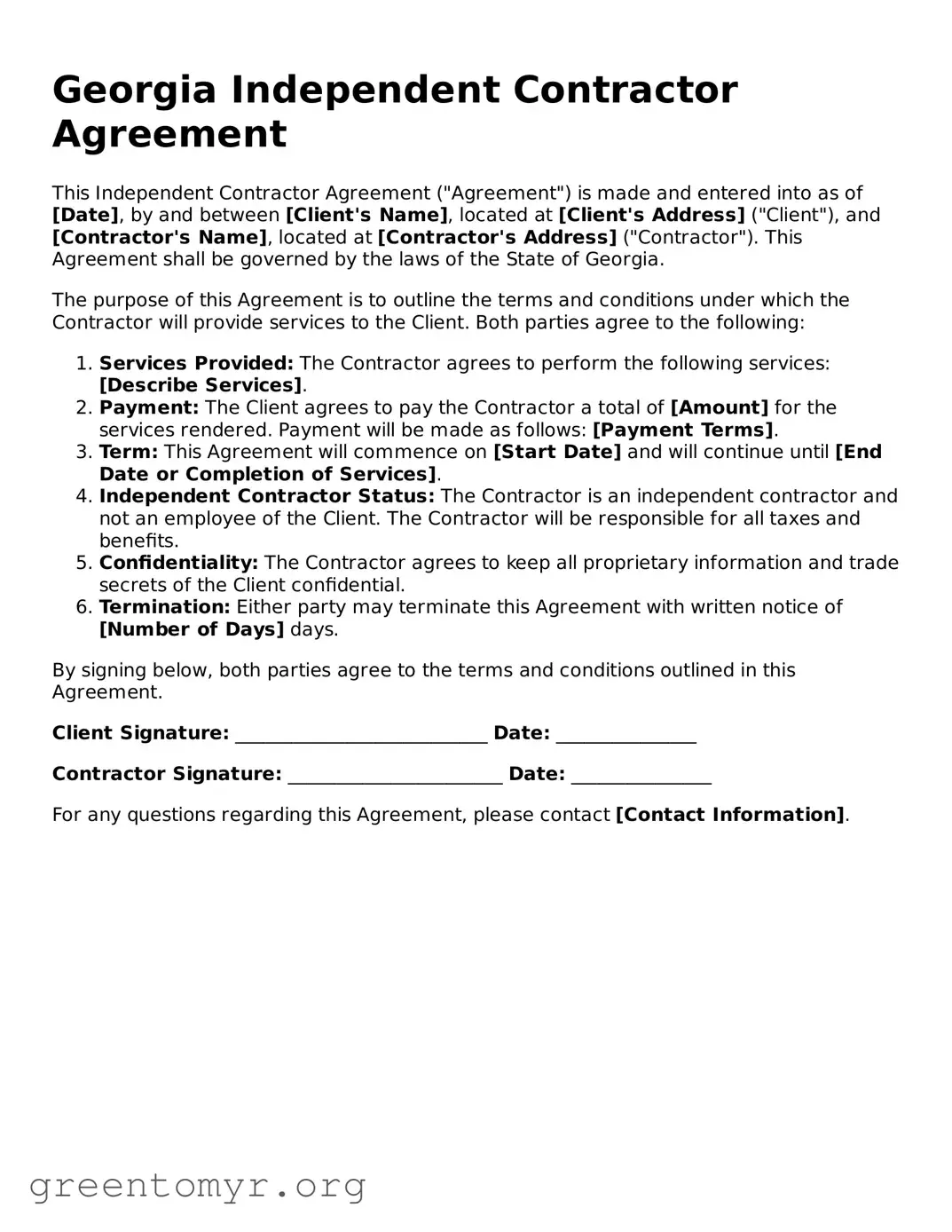
In Georgia, the Independent Contractor Agreement form serves as a crucial tool for both businesses and freelancers, outlining the terms of their working relationship. This document typically includes essential details such as the scope of work, payment terms, and deadlines, ensuring that both parties have a clear understanding of their obligations. By defining the nature of the relationship, the form helps to clarify that the contractor operates independently, without the same benefits or obligations that come with traditional employment. Additionally, it often addresses confidentiality, intellectual property rights, and termination clauses, providing a comprehensive framework that protects the interests of both the contractor and the hiring entity. Understanding the nuances of this agreement is vital for anyone engaged in freelance work or hiring independent contractors in Georgia, as it not only sets expectations but also minimizes the potential for disputes down the line.
Georgia Independent Contractor Agreement
This Independent Contractor Agreement ("Agreement") is made and entered into as of [Date], by and between [Client's Name], located at [Client's Address] ("Client"), and [Contractor's Name], located at [Contractor's Address] ("Contractor"). This Agreement shall be governed by the laws of the State of Georgia.
The purpose of this Agreement is to outline the terms and conditions under which the Contractor will provide services to the Client. Both parties agree to the following:
By signing below, both parties agree to the terms and conditions outlined in this Agreement.
Client Signature: ___________________________ Date: _______________
Contractor Signature: _______________________ Date: _______________
For any questions regarding this Agreement, please contact [Contact Information].
| Fact Name | Details |
|---|---|
| Definition | The Georgia Independent Contractor Agreement outlines the terms between a business and a contractor for services rendered. |
| Purpose | This agreement clarifies the relationship, ensuring both parties understand their rights and obligations. |
| Governing Law | The agreement is governed by the laws of the State of Georgia. |
| Payment Terms | It specifies how and when the contractor will be compensated for their work. |
| Scope of Work | The document details the specific services to be provided by the contractor. |
| Duration | The agreement may outline the length of the contract, including start and end dates. |
| Termination Clause | It often includes terms under which either party can terminate the agreement. |
| Confidentiality | The agreement may contain clauses that protect sensitive information shared during the project. |
Completing the Georgia Independent Contractor Agreement form requires attention to detail and accuracy. Following the steps outlined below will help ensure that all necessary information is provided correctly.
After completing the form, review it carefully for any errors or omissions. Make sure both parties have copies for their records. This will help in maintaining clear communication and understanding of the agreement.
A Georgia Independent Contractor Agreement is a legal document that outlines the terms and conditions between a business and an independent contractor. It specifies the scope of work, payment terms, and other important details to clarify the relationship and expectations of both parties.
Any business that hires independent contractors should use this agreement. It helps protect both the business and the contractor by clearly defining the working relationship. This is especially important in industries where misclassification can lead to legal issues.
The agreement should include the following key elements:
The agreement protects the business by ensuring that the contractor understands their obligations and responsibilities. It also protects the contractor by providing clear terms regarding payment and work expectations. In case of disputes, the agreement serves as a reference point for resolving issues.
Yes, the terms of the agreement can be modified. However, any changes should be documented in writing and signed by both parties. This ensures that both sides are aware of and agree to the new terms.
While it is not strictly necessary, having a lawyer review the agreement is highly recommended. A legal professional can ensure that the document complies with Georgia laws and adequately protects your interests.
If either party fails to follow the terms of the agreement, the other party may pursue legal action for breach of contract. This could lead to financial penalties or other remedies, depending on the severity of the breach.
While verbal agreements can be legally binding, they are difficult to enforce. It is always best to have a written agreement to avoid misunderstandings and provide clear evidence of the terms agreed upon.
The validity of the agreement typically lasts until the work is completed or until one party decides to terminate it, as outlined in the document. It’s important to specify the duration within the agreement to avoid confusion.
You can obtain a Georgia Independent Contractor Agreement form from various online legal services, law firms, or business resource websites. Ensure that the form you choose is tailored to comply with Georgia laws and your specific needs.
When filling out the Georgia Independent Contractor Agreement form, individuals often overlook critical details that can lead to misunderstandings or disputes down the line. One common mistake is failing to clearly define the scope of work. Without a precise description, both parties may have different expectations about what is to be delivered. It’s essential to articulate tasks, deadlines, and any specific requirements to avoid confusion.
Another frequent error is neglecting to include payment terms. This section should specify the rate of pay, payment schedule, and any conditions for payment. If these details are vague or missing, it can lead to disputes over compensation. Clear financial terms help ensure that both parties are on the same page regarding remuneration.
People also often forget to address the issue of taxes. Independent contractors are responsible for their own taxes, but failing to mention this in the agreement can create confusion. It’s important to clarify that the contractor will handle their own tax obligations, which helps set clear expectations from the outset.
Additionally, many individuals do not include a termination clause. This clause outlines the conditions under which either party can terminate the agreement. Without it, one party may feel trapped in an unsatisfactory situation, leading to potential legal complications. A well-defined termination clause protects both parties and provides a clear exit strategy.
Another mistake is using vague language throughout the agreement. Ambiguities can lead to different interpretations, which may result in conflicts. Clear, straightforward language is key. Each term should be well-defined to ensure that both parties understand their rights and responsibilities.
Some individuals forget to include confidentiality provisions. If sensitive information will be shared during the course of the work, it’s vital to include terms that protect this information. A confidentiality clause helps safeguard proprietary data and ensures that both parties respect each other’s privacy.
Another common oversight is failing to specify the relationship between the parties. The agreement should clearly state that the contractor is not an employee. This distinction is crucial for tax purposes and liability issues. Clearly defining the relationship helps avoid misclassification, which can have serious legal and financial implications.
Additionally, many people overlook the importance of signatures. An unsigned agreement is not legally binding. Both parties must sign and date the document to ensure that it is enforceable. This step is often rushed or forgotten, which can render the entire agreement ineffective.
Lastly, individuals sometimes forget to keep a copy of the signed agreement. After all parties have signed, it’s essential to retain a copy for future reference. This document serves as a record of the terms agreed upon and can be invaluable if disputes arise later.
When entering into an agreement with an independent contractor in Georgia, several other forms and documents can complement the Independent Contractor Agreement. These documents help clarify the relationship, outline responsibilities, and ensure compliance with applicable laws. Below are five important forms that you might consider using alongside the Independent Contractor Agreement.
Using these additional forms can enhance your agreement with an independent contractor, ensuring that both parties are on the same page and protecting your interests. Taking the time to prepare these documents can lead to a smoother working relationship and help prevent potential disputes in the future.
When filling out the Georgia Independent Contractor Agreement form, it’s important to be thorough and accurate. Here are some key dos and don’ts to keep in mind:
Misconceptions about the Georgia Independent Contractor Agreement can lead to confusion and mismanagement. Here are ten common misunderstandings:
This is incorrect. While independent contractors do not enjoy the same protections as employees, they are still covered by certain laws, such as those related to discrimination and safety regulations.
While it is highly recommended to have a written agreement, it is not legally required in every situation. Verbal agreements can also be binding, though they are harder to enforce.
This misconception is false. Independent contractors have the right to negotiate terms, including payment, deadlines, and scope of work.
This is true, but it is often misunderstood. Independent contractors must pay self-employment taxes, but they can also deduct business expenses to reduce their taxable income.
This is misleading. Each agreement can vary significantly based on the nature of the work, the relationship between the parties, and specific legal requirements.
While it is common for independent contractors to not receive benefits, some may negotiate for them. This can include health insurance or retirement contributions.
This is not accurate. Both parties can agree to modify the terms of the contract at any time, as long as the changes are documented and accepted by both parties.
This is incorrect. Independent contractors often work with multiple clients simultaneously, which is one of the benefits of this work arrangement.
In reality, independent contractors typically have more control over how they complete their work compared to employees, as long as they meet the agreed-upon deliverables.
This is a misconception. Each state has its own regulations and requirements for independent contractor agreements, making it essential to use the correct form for Georgia.
When utilizing the Georgia Independent Contractor Agreement form, several key points should be considered to ensure clarity and legal compliance. Here are some essential takeaways:
By paying attention to these aspects, both parties can foster a productive working relationship and minimize potential disputes.