The Georgia Lease Agreement form serves as a vital document in the rental process, establishing the terms and conditions between landlords and tenants. This legally binding contract outlines essential details such as the duration of the lease, the rental amount, and the responsibilities of both parties. It also includes provisions regarding security deposits, maintenance obligations, and the rules governing the use of the property. By clearly defining these aspects, the lease agreement aims to protect the interests of both landlords and tenants, ensuring a mutual understanding of expectations. Additionally, the form may address topics such as late payment penalties, termination clauses, and procedures for resolving disputes. Understanding the nuances of this agreement is crucial for anyone involved in a rental situation in Georgia, as it lays the foundation for a successful landlord-tenant relationship.
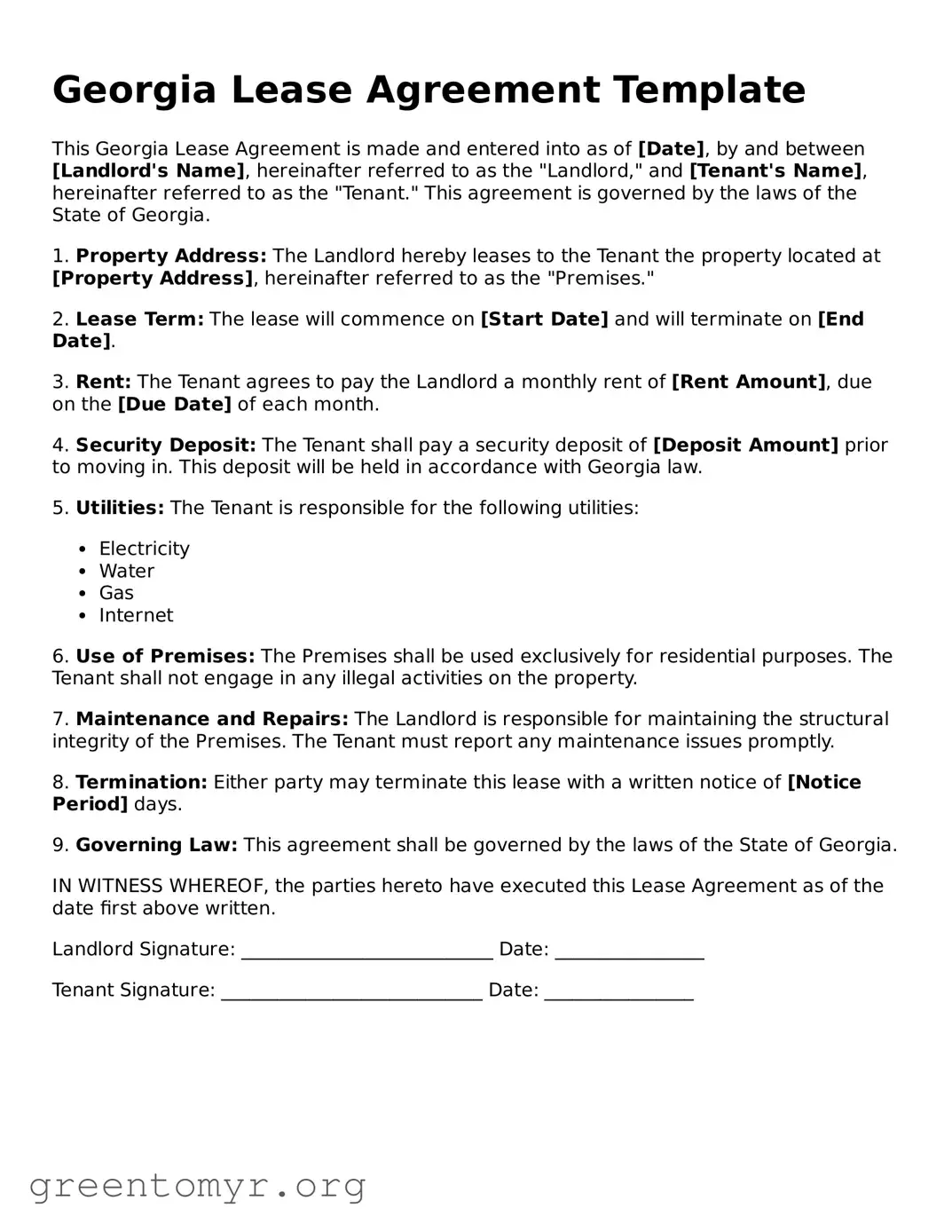
Georgia Lease Agreement Template
This Georgia Lease Agreement is made and entered into as of [Date], by and between [Landlord's Name], hereinafter referred to as the "Landlord," and [Tenant's Name], hereinafter referred to as the "Tenant." This agreement is governed by the laws of the State of Georgia.
1. Property Address: The Landlord hereby leases to the Tenant the property located at [Property Address], hereinafter referred to as the "Premises."
2. Lease Term: The lease will commence on [Start Date] and will terminate on [End Date].
3. Rent: The Tenant agrees to pay the Landlord a monthly rent of [Rent Amount], due on the [Due Date] of each month.
4. Security Deposit: The Tenant shall pay a security deposit of [Deposit Amount] prior to moving in. This deposit will be held in accordance with Georgia law.
5. Utilities: The Tenant is responsible for the following utilities:
6. Use of Premises: The Premises shall be used exclusively for residential purposes. The Tenant shall not engage in any illegal activities on the property.
7. Maintenance and Repairs: The Landlord is responsible for maintaining the structural integrity of the Premises. The Tenant must report any maintenance issues promptly.
8. Termination: Either party may terminate this lease with a written notice of [Notice Period] days.
9. Governing Law: This agreement shall be governed by the laws of the State of Georgia.
IN WITNESS WHEREOF, the parties hereto have executed this Lease Agreement as of the date first above written.
Landlord Signature: ___________________________ Date: ________________
Tenant Signature: ____________________________ Date: ________________
| Fact Name | Description |
|---|---|
| Governing Law | The Georgia Lease Agreement is governed by the laws of the State of Georgia. |
| Parties Involved | The lease agreement typically involves a landlord and a tenant. |
| Property Description | The form requires a clear description of the rental property, including the address. |
| Lease Term | The lease must specify the duration, which can be fixed-term or month-to-month. |
| Rent Amount | The agreement should clearly state the amount of rent due and the payment schedule. |
| Security Deposit | Georgia law regulates the amount and handling of security deposits. |
| Maintenance Responsibilities | The lease outlines the responsibilities of both the landlord and tenant regarding property maintenance. |
| Termination Conditions | It details the conditions under which the lease can be terminated by either party. |
Filling out the Georgia Lease Agreement form is an important step in establishing a rental relationship between a landlord and tenant. Once the form is completed, both parties will have a clear understanding of their rights and responsibilities. Follow these steps to ensure the form is filled out correctly.
A Georgia Lease Agreement form is a legal document that outlines the terms and conditions under which a landlord rents property to a tenant in the state of Georgia. This document serves to protect the rights of both parties involved. It typically includes details such as the rental amount, duration of the lease, security deposit requirements, and the responsibilities of both the landlord and the tenant.
When drafting a Georgia Lease Agreement, it is essential to include several key components to ensure clarity and legal compliance. These components typically include:
Tenants can take several steps to protect their rights when entering into a lease agreement in Georgia. First, it is crucial to read the lease thoroughly before signing. Understanding all terms and conditions helps prevent misunderstandings later. Second, tenants should document the condition of the property before moving in, taking photos if necessary. This documentation can be invaluable if disputes arise regarding security deposits or damages. Lastly, maintaining open communication with the landlord can help resolve issues amicably, ensuring a positive rental experience.
While Georgia law does not require a lease agreement to be in writing for a lease term of less than one year, having a written agreement is highly recommended. For leases longer than one year, a written document is mandatory. Additionally, all lease agreements must comply with Georgia's landlord-tenant laws, which include provisions regarding security deposits, eviction procedures, and habitability standards. It is also advisable to include a clause addressing any applicable local ordinances that may affect the lease.
Filling out the Georgia Lease Agreement form can be a straightforward process, but many individuals make common mistakes that can lead to complications down the line. One frequent error is failing to include all required information. Landlords and tenants must provide their full names, addresses, and contact information. Omitting even one detail can create confusion and hinder communication.
Another mistake is not clearly defining the rental property. The address should be complete and accurate. If the property is part of a larger complex, including unit numbers and specific identifiers is crucial. This clarity helps avoid disputes regarding which property is being rented.
People often overlook the importance of specifying the lease term. Whether it’s a month-to-month agreement or a fixed-term lease, the duration should be clearly stated. Without this information, misunderstandings about the rental period can arise, leading to potential conflicts.
Additionally, many tenants and landlords neglect to outline payment details. The lease should specify the rent amount, due date, and acceptable payment methods. Without these details, confusion regarding payment schedules can occur, resulting in late fees or eviction notices.
Security deposits are another area where mistakes frequently happen. The lease agreement must state the amount of the security deposit and the conditions under which it may be withheld. Failing to address this can lead to disputes over the return of the deposit when the lease ends.
Another common error is not including maintenance responsibilities. Both parties should understand who is responsible for repairs and maintenance. Clearly outlining these responsibilities can prevent disagreements and ensure that the property is well-maintained.
Some individuals forget to include rules regarding pets. If pets are allowed, specific conditions should be outlined in the lease. Conversely, if pets are prohibited, this must be clearly stated to avoid any misunderstandings later.
Another mistake involves not addressing early termination clauses. Life circumstances can change, and having a clear understanding of the terms for breaking the lease early is important for both parties. This section should cover any penalties or notice requirements.
Many people also fail to read the entire lease agreement thoroughly before signing. Understanding all terms and conditions is vital. Skimming through can lead to unexpected obligations or restrictions that could have been avoided.
Finally, neglecting to keep a copy of the signed lease agreement is a significant mistake. Both parties should retain a copy for their records. This ensures that everyone has access to the terms agreed upon, which can be crucial in case of disputes.
When entering into a lease agreement in Georgia, several other forms and documents may be necessary to ensure a smooth rental experience. Below is a list of commonly used documents that complement the Georgia Lease Agreement.
Using these documents along with the Georgia Lease Agreement can help clarify expectations and protect the rights of both landlords and tenants. It’s important to have all necessary paperwork in order to avoid any misunderstandings during the rental process.
Rental Agreement: This document outlines the terms under which a tenant may occupy a property, similar to a lease but often for shorter durations and less formal in nature.
Sublease Agreement: A sublease allows a tenant to rent out a portion or all of the leased property to another individual, maintaining many of the same terms as the original lease.
Property Management Agreement: This document establishes the relationship between a property owner and a management company, detailing responsibilities that may overlap with lease agreements.
Rental Application: Often a precursor to a lease agreement, this document collects information from prospective tenants to assess their suitability for renting a property.
Eviction Notice: While fundamentally different in purpose, this document can be seen as a follow-up to a lease agreement, outlining the legal steps taken when a tenant breaches the lease terms.
Lease Addendum: This document modifies or adds to the original lease agreement, addressing specific issues or changes that arise during the lease term.
Option to Purchase Agreement: This document provides a tenant with the right to purchase the leased property under specified conditions, often integrated into the lease agreement itself.
Commercial Lease Agreement: Similar to residential leases, these agreements govern the rental of commercial properties, with specific terms tailored to business use.
When filling out the Georgia Lease Agreement form, it’s essential to approach the task with care. A well-completed lease can prevent misunderstandings and legal issues down the line. Here’s a list of things you should and shouldn’t do:
By following these guidelines, you can ensure a smoother leasing experience in Georgia. Always remember that a lease is a binding contract, and taking the time to complete it properly can save you from future complications.
Understanding the Georgia Lease Agreement form is crucial for both landlords and tenants. However, several misconceptions can lead to confusion. Here are six common misconceptions:
This is incorrect. The lease agreement outlines the terms of the rental, while a rental application is a request for approval to rent the property.
Not true. Lease agreements can vary significantly based on the specific terms negotiated between the landlord and tenant.
This misconception is misleading. While leases are binding, both parties can agree to modify the terms in writing.
This is false. Tenants can also propose terms, and it is common for both parties to negotiate the agreement.
This is a misunderstanding. Most lease agreements include details about security deposits, including the amount and conditions for return.
This is risky. While verbal agreements can be made, having a written lease is essential for clarity and legal protection.
Being aware of these misconceptions can help both landlords and tenants navigate their agreements more effectively.
When filling out and using the Georgia Lease Agreement form, it is important to keep several key points in mind. These takeaways will help ensure that both landlords and tenants understand their rights and responsibilities under the lease.
By adhering to these guidelines, both landlords and tenants can foster a clear understanding of their agreement, which can help prevent misunderstandings and conflicts down the line.