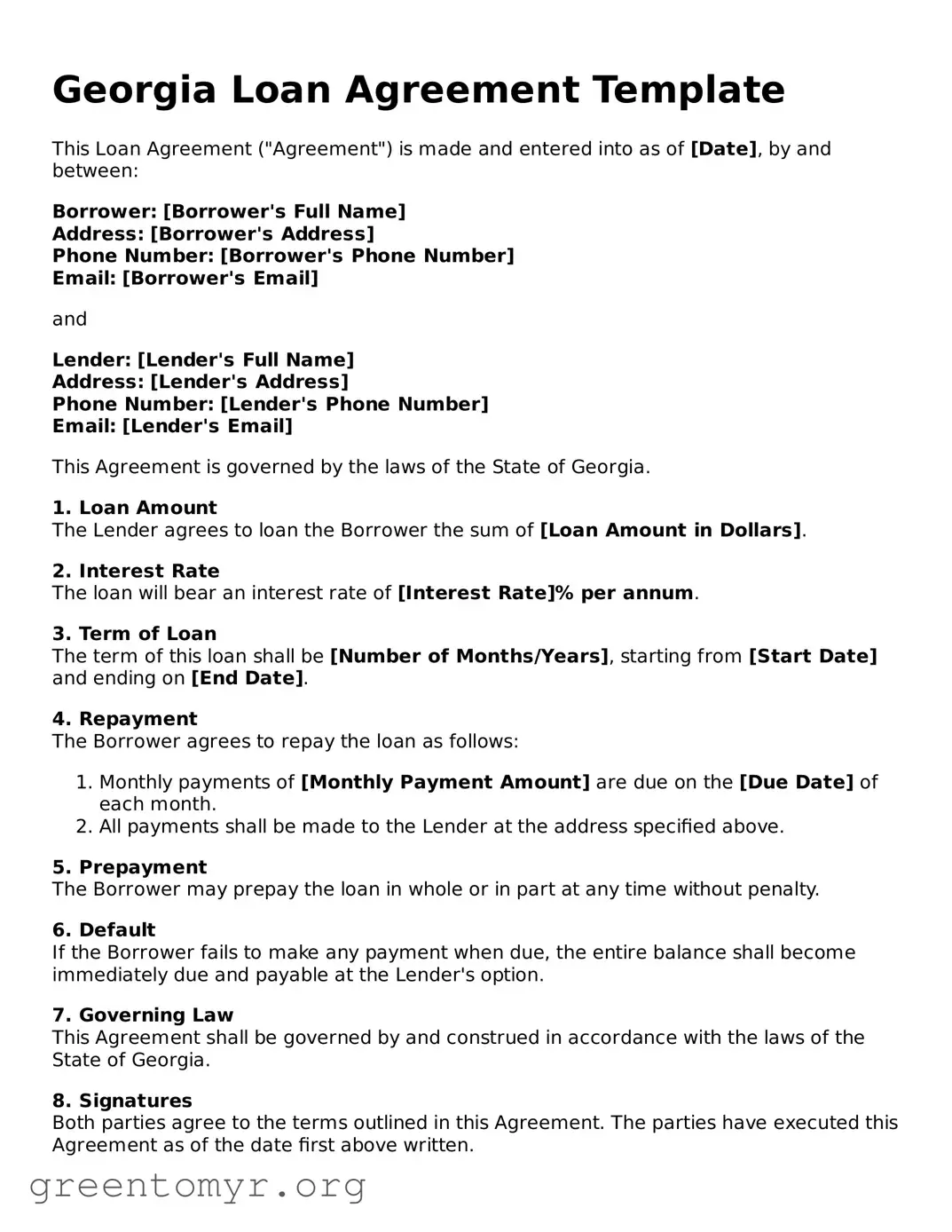
The Georgia Loan Agreement form is a crucial document for individuals and businesses seeking to formalize a loan arrangement in the state of Georgia. This form outlines the specific terms and conditions of the loan, including the principal amount, interest rate, repayment schedule, and any applicable fees. It serves to protect both the lender and the borrower by clearly defining the obligations and rights of each party involved. Additionally, the agreement may include provisions for default, collateral, and dispute resolution, ensuring that all parties are aware of their responsibilities. Understanding the components of this form is essential for anyone looking to engage in a loan transaction, as it provides a legal framework that governs the lending relationship and helps prevent misunderstandings or conflicts down the line.
Georgia Loan Agreement Template
This Loan Agreement ("Agreement") is made and entered into as of [Date], by and between:
Borrower: [Borrower's Full Name]
Address: [Borrower's Address]
Phone Number: [Borrower's Phone Number]
Email: [Borrower's Email]
and
Lender: [Lender's Full Name]
Address: [Lender's Address]
Phone Number: [Lender's Phone Number]
Email: [Lender's Email]
This Agreement is governed by the laws of the State of Georgia.
1. Loan Amount
The Lender agrees to loan the Borrower the sum of [Loan Amount in Dollars].
2. Interest Rate
The loan will bear an interest rate of [Interest Rate]% per annum.
3. Term of Loan
The term of this loan shall be [Number of Months/Years], starting from [Start Date] and ending on [End Date].
4. Repayment
The Borrower agrees to repay the loan as follows:
5. Prepayment
The Borrower may prepay the loan in whole or in part at any time without penalty.
6. Default
If the Borrower fails to make any payment when due, the entire balance shall become immediately due and payable at the Lender's option.
7. Governing Law
This Agreement shall be governed by and construed in accordance with the laws of the State of Georgia.
8. Signatures
Both parties agree to the terms outlined in this Agreement. The parties have executed this Agreement as of the date first above written.
_____________________________
Borrower's Signature
Date: [Date]
_____________________________
Lender's Signature
Date: [Date]
| Fact Name | Description |
|---|---|
| Governing Law | The Georgia Loan Agreement is governed by the laws of the State of Georgia. |
| Purpose | This form is used to outline the terms of a loan between a lender and a borrower. |
| Parties Involved | The agreement involves at least two parties: the lender and the borrower. |
| Loan Amount | The specific amount of money being borrowed must be clearly stated in the agreement. |
| Interest Rate | The form should specify the interest rate applicable to the loan. |
| Repayment Terms | Details about how and when the borrower will repay the loan must be included. |
| Default Conditions | The agreement outlines what constitutes a default and the consequences thereof. |
Completing the Georgia Loan Agreement form is a crucial step in securing your loan. Ensure you have all necessary information at hand before starting. Follow these steps carefully to fill out the form accurately.
After completing the form, review all entries for accuracy. Any errors or omissions could delay the processing of your loan. Once you are satisfied, submit the form as directed.
The Georgia Loan Agreement form is a legal document used to outline the terms and conditions of a loan between a lender and a borrower. This form specifies the amount of money being borrowed, the interest rate, repayment schedule, and any collateral involved. It serves as a binding contract that protects both parties by clearly detailing their rights and responsibilities.
Any individual or business in Georgia looking to lend or borrow money can utilize the Georgia Loan Agreement form. This includes personal loans between friends or family, business loans, and even loans between organizations. It’s essential that both parties understand the terms before signing to ensure a smooth transaction.
To fill out the Georgia Loan Agreement form, you will need to provide the following information:
While notarization is not always required for a loan agreement to be legally binding, it is highly recommended. Having the document notarized adds an extra layer of authenticity and can help prevent disputes in the future. A notary public verifies the identities of the signers and witnesses the signing, which can be beneficial in case of any legal issues.
If the borrower defaults on the loan, the lender has several options depending on the terms outlined in the agreement. These may include:
It's crucial for both parties to understand the consequences of defaulting before entering into the agreement.
Yes, the terms of the Georgia Loan Agreement can be modified after signing, but this requires mutual consent from both the lender and the borrower. Any changes should be documented in writing and signed by both parties to ensure clarity and prevent misunderstandings. It's advisable to keep a record of all modifications for future reference.
When filling out the Georgia Loan Agreement form, many people overlook important details that can lead to complications down the line. One common mistake is failing to provide accurate personal information. This includes your full name, address, and Social Security number. Inaccuracies can delay the processing of your loan and may even result in denial.
Another frequent error is not reading the terms and conditions carefully. Many borrowers sign the agreement without fully understanding their obligations. This can lead to unexpected fees or penalties later. Always take the time to review the entire document before signing.
Additionally, some individuals forget to include all required documentation. Lenders often require proof of income, identification, and other financial information. Missing these documents can stall the approval process and create frustration.
It's also important to note that some people underestimate the significance of their credit score. A low credit score can affect your loan terms, including interest rates. Before applying, check your credit report and address any discrepancies.
Another mistake is neglecting to consider the loan amount. Borrowers sometimes request more money than they actually need. This can lead to higher repayments and unnecessary debt. Assess your financial situation carefully before deciding on the loan amount.
Furthermore, many individuals fail to ask questions about the loan. If something is unclear, don’t hesitate to seek clarification. Ignoring uncertainties can lead to misunderstandings that may cost you later.
Lastly, not keeping a copy of the signed agreement is a common oversight. Always retain a copy for your records. This can be invaluable if disputes arise in the future.
When engaging in a loan transaction in Georgia, several forms and documents may accompany the Loan Agreement. These documents serve various purposes, from establishing the terms of the loan to providing necessary disclosures. Understanding each document's role can help ensure a smooth transaction.
Each of these documents plays a critical role in the loan process, ensuring that both the lender and borrower understand their rights and obligations. Properly executed, they contribute to a clear and enforceable agreement that protects the interests of all parties involved.
A Loan Agreement is a crucial document in the borrowing process, outlining the terms and conditions between the lender and the borrower. Several other documents share similarities with a Loan Agreement, each serving distinct but related purposes. Below is a list of documents that are similar to a Loan Agreement:
When filling out the Georgia Loan Agreement form, it’s essential to approach the process with care. Here are some important do’s and don’ts to keep in mind:
By following these guidelines, you can help ensure that your loan agreement is completed correctly and efficiently.
When it comes to the Georgia Loan Agreement form, several misconceptions can lead to confusion. Understanding these myths can help borrowers and lenders navigate the process more effectively. Here are four common misconceptions:
By dispelling these misconceptions, you can approach the Georgia Loan Agreement with greater confidence and clarity. Always ensure you understand the terms before signing any document.
When filling out and using the Georgia Loan Agreement form, it is essential to understand the following key points:
These takeaways will help ensure a clear understanding and effective use of the loan agreement.