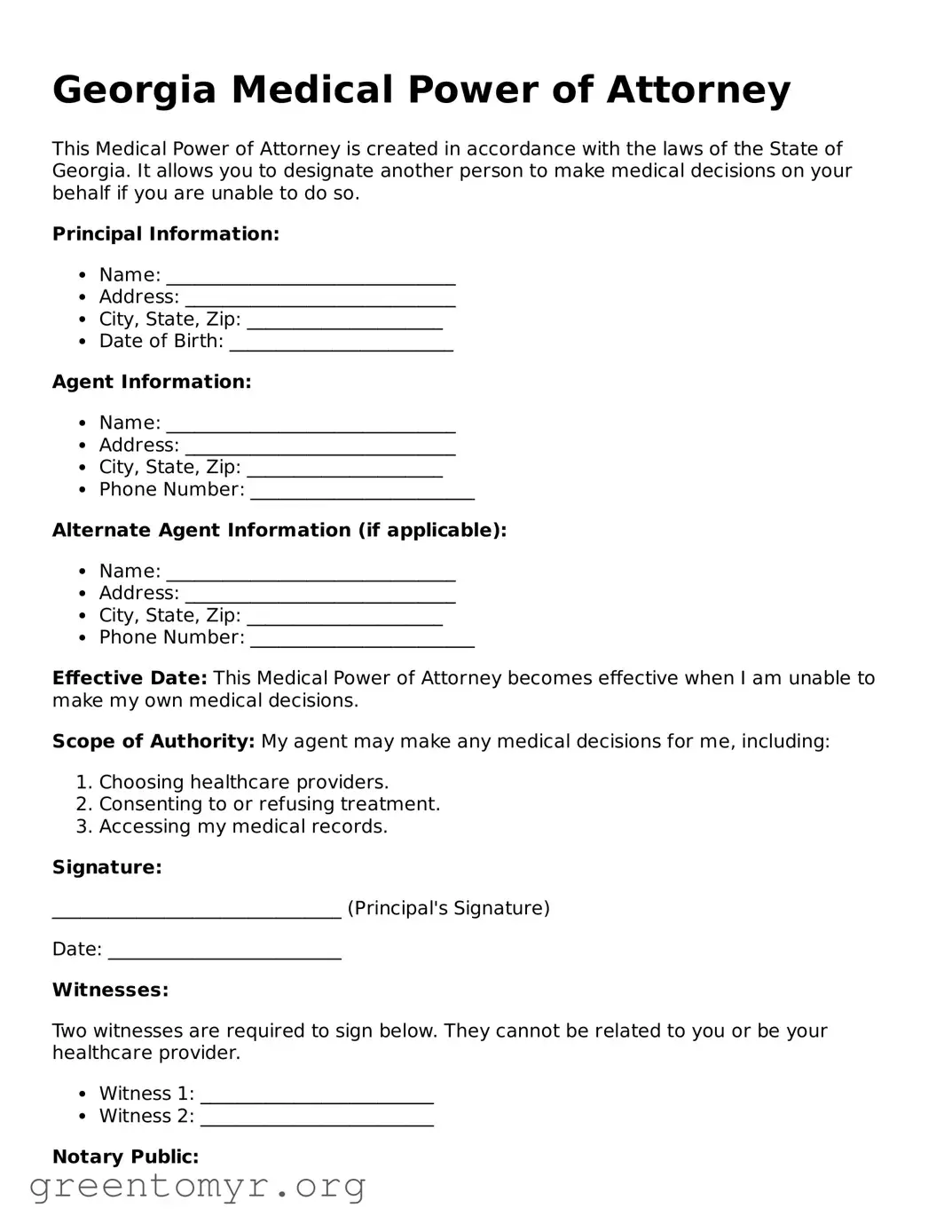
The Georgia Medical Power of Attorney form is an essential legal document that allows individuals to designate a trusted person to make healthcare decisions on their behalf in the event they become unable to do so. This form is particularly important for those who want to ensure their medical preferences are honored, even when they cannot communicate them directly. It covers a wide range of healthcare decisions, from routine medical care to end-of-life treatment options. By completing this form, individuals can specify their wishes regarding life-sustaining treatments, organ donation, and other critical healthcare matters. The appointed agent, often a family member or close friend, gains the authority to consult with medical professionals and make decisions that align with the individual's values and desires. This document not only provides peace of mind but also helps to alleviate the burden on loved ones during difficult times. Understanding the key components and the process for creating a Georgia Medical Power of Attorney can empower individuals to take control of their healthcare decisions, ensuring that their choices are respected and upheld when it matters most.
Georgia Medical Power of Attorney
This Medical Power of Attorney is created in accordance with the laws of the State of Georgia. It allows you to designate another person to make medical decisions on your behalf if you are unable to do so.
Principal Information:
Agent Information:
Alternate Agent Information (if applicable):
Effective Date: This Medical Power of Attorney becomes effective when I am unable to make my own medical decisions.
Scope of Authority: My agent may make any medical decisions for me, including:
Signature:
_______________________________ (Principal's Signature)
Date: _________________________
Witnesses:
Two witnesses are required to sign below. They cannot be related to you or be your healthcare provider.
Notary Public:
State of Georgia
County of ___________________________
Subscribed and sworn before me on this _____ day of __________, 20__.
_______________________________ (Notary Public Signature)
My Commission Expires: _______________
| Fact Name | Description |
|---|---|
| Definition | A Georgia Medical Power of Attorney form allows an individual to appoint someone to make healthcare decisions on their behalf if they become unable to do so. |
| Governing Law | This form is governed by the Official Code of Georgia Annotated (O.C.G.A.) § 31-36. |
| Eligibility | Any adult who is at least 18 years old can create a Medical Power of Attorney in Georgia. |
| Revocation | The principal can revoke the Medical Power of Attorney at any time, as long as they are mentally competent to do so. |
| Witness Requirements | The form must be signed in the presence of two witnesses or a notary public, ensuring that the principal is making the decision voluntarily. |
Filling out a Georgia Medical Power of Attorney form is an important step in ensuring that your healthcare decisions are made according to your wishes. After completing the form, you will need to sign it and have it witnessed or notarized, depending on your preference. This process helps to ensure that your designated agent can act on your behalf when necessary.
A Medical Power of Attorney is a legal document that allows you to appoint someone to make healthcare decisions on your behalf if you become unable to do so. This person, known as your agent or proxy, will have the authority to discuss your medical treatment options and make decisions based on your wishes and best interests.
In Georgia, you can appoint any adult as your agent, as long as they are willing and able to make healthcare decisions for you. This can be a family member, a close friend, or even a trusted advisor. However, certain individuals, such as your healthcare provider or an employee of your healthcare facility, may not serve as your agent to avoid conflicts of interest.
Creating a Medical Power of Attorney in Georgia involves a few key steps:
Once completed, keep the document in a safe place and provide copies to your agent and healthcare providers.
Yes, you can change or revoke your Medical Power of Attorney at any time as long as you are mentally competent. To revoke it, simply create a new document that explicitly states your intention to revoke the previous one. Inform your agent and any healthcare providers of the change to avoid confusion.
If you do not have a Medical Power of Attorney and become incapacitated, your family may face challenges in making medical decisions on your behalf. In such cases, the court may appoint a guardian or conservator, which can be a lengthy and emotional process. Having a Medical Power of Attorney in place ensures your wishes are honored and can ease the burden on your loved ones.
While Georgia does not require a specific form, it is advisable to use a standardized Medical Power of Attorney form that meets state requirements. This helps ensure that the document is legally valid and recognized by healthcare providers. You can find templates through legal websites or consult an attorney for assistance.
Your agent can make a wide range of healthcare decisions on your behalf, including:
It’s important to communicate your values and preferences to your agent to ensure they make decisions that align with your wishes.
No, you do not need an attorney to create a Medical Power of Attorney in Georgia. However, consulting with an attorney can provide peace of mind and ensure that the document is properly drafted and executed. This can be especially beneficial if your situation is complex or if you have specific concerns about your healthcare preferences.
Filling out a Georgia Medical Power of Attorney form is an important task that allows individuals to designate someone to make healthcare decisions on their behalf. However, many people make common mistakes that can lead to confusion or even legal issues. Understanding these pitfalls can help ensure that your wishes are respected when it matters most.
One frequent mistake is not clearly identifying the agent. It’s essential to provide the full name and contact information of the person you are appointing. Without this information, healthcare providers may struggle to know who is authorized to make decisions for you.
Another common error is failing to specify the powers granted to the agent. While many people assume their agent will have broad authority, it’s best to outline specific powers. This clarity helps avoid misunderstandings about what decisions the agent can make.
Some individuals neglect to date the form. A lack of a date can lead to questions about the validity of the document. Always include the date you sign the form to ensure that it is clear when your wishes were documented.
Not having witnesses or a notary public present during the signing can also invalidate the form. Georgia law requires that the Medical Power of Attorney be signed in front of two witnesses or a notary. Skipping this step can render the document ineffective.
Another mistake is using outdated forms. Laws can change, and using an old version of the Medical Power of Attorney form may not comply with current legal standards. Always check for the most recent version before filling out the document.
Some people forget to discuss their wishes with their chosen agent. It’s crucial to have an open conversation about your healthcare preferences. This ensures that your agent understands your values and can make decisions that align with your wishes.
Additionally, individuals sometimes fail to provide copies of the completed form to relevant parties. Once the form is filled out and signed, share copies with your healthcare provider, agent, and family members. This step helps everyone understand your wishes and avoids confusion during critical moments.
Another oversight is not reviewing the form periodically. Life circumstances can change, and so can your preferences. Regularly reviewing and updating your Medical Power of Attorney ensures that it reflects your current wishes.
Finally, many individuals overlook the importance of revoking previous powers of attorney. If you create a new Medical Power of Attorney, it’s vital to formally revoke any prior documents. This prevents conflicting instructions and ensures that only the most recent document is honored.
By being aware of these common mistakes, you can take the necessary steps to create a valid and effective Georgia Medical Power of Attorney. This document is an essential part of planning for your healthcare, and getting it right is crucial for ensuring your wishes are honored.
When preparing a Georgia Medical Power of Attorney, it is often helpful to consider additional forms and documents that can complement this important legal tool. Each document serves a unique purpose and can help clarify your wishes regarding medical care and decision-making.
Utilizing these additional forms can help create a comprehensive plan for your healthcare decisions. By clearly outlining your preferences, you can ease the burden on your loved ones during difficult times.
When filling out the Georgia Medical Power of Attorney form, it is important to follow certain guidelines to ensure the document is valid and effective. Here is a list of things you should and shouldn't do:
Understanding the Georgia Medical Power of Attorney form is crucial for making informed decisions about healthcare. However, several misconceptions can lead to confusion. Below is a list of common misunderstandings regarding this important legal document.
A Medical Power of Attorney and a Living Will serve different purposes. A Medical Power of Attorney designates someone to make healthcare decisions on your behalf, while a Living Will outlines your preferences for medical treatment in specific situations.
People of all ages can benefit from having a Medical Power of Attorney. Unexpected medical emergencies can happen to anyone, making it essential to have a trusted person designated to make decisions if you cannot.
While the Georgia Medical Power of Attorney is specific to Georgia law, it may still be recognized in other states. However, it's advisable to check the regulations of the state where you are receiving care.
You can revoke a Medical Power of Attorney verbally or in writing. However, it is best to document the revocation in writing to avoid any confusion or disputes later on.
Your designated agent must act in accordance with your wishes and best interests. The authority granted to them is limited to the medical decisions you allow.
While consulting a lawyer can be beneficial, it is not necessary to have a lawyer to fill out a Medical Power of Attorney form. Many resources and templates are available to assist individuals in completing the form correctly.
In Georgia, a Medical Power of Attorney does not need to be notarized to be valid. However, it must be signed by you and two witnesses who are not related to you or your agent.
By addressing these misconceptions, individuals can better understand the importance of a Medical Power of Attorney and ensure that their healthcare preferences are respected.
Filling out and using the Georgia Medical Power of Attorney form is an important step in ensuring your healthcare decisions are respected. Here are some key takeaways to consider: