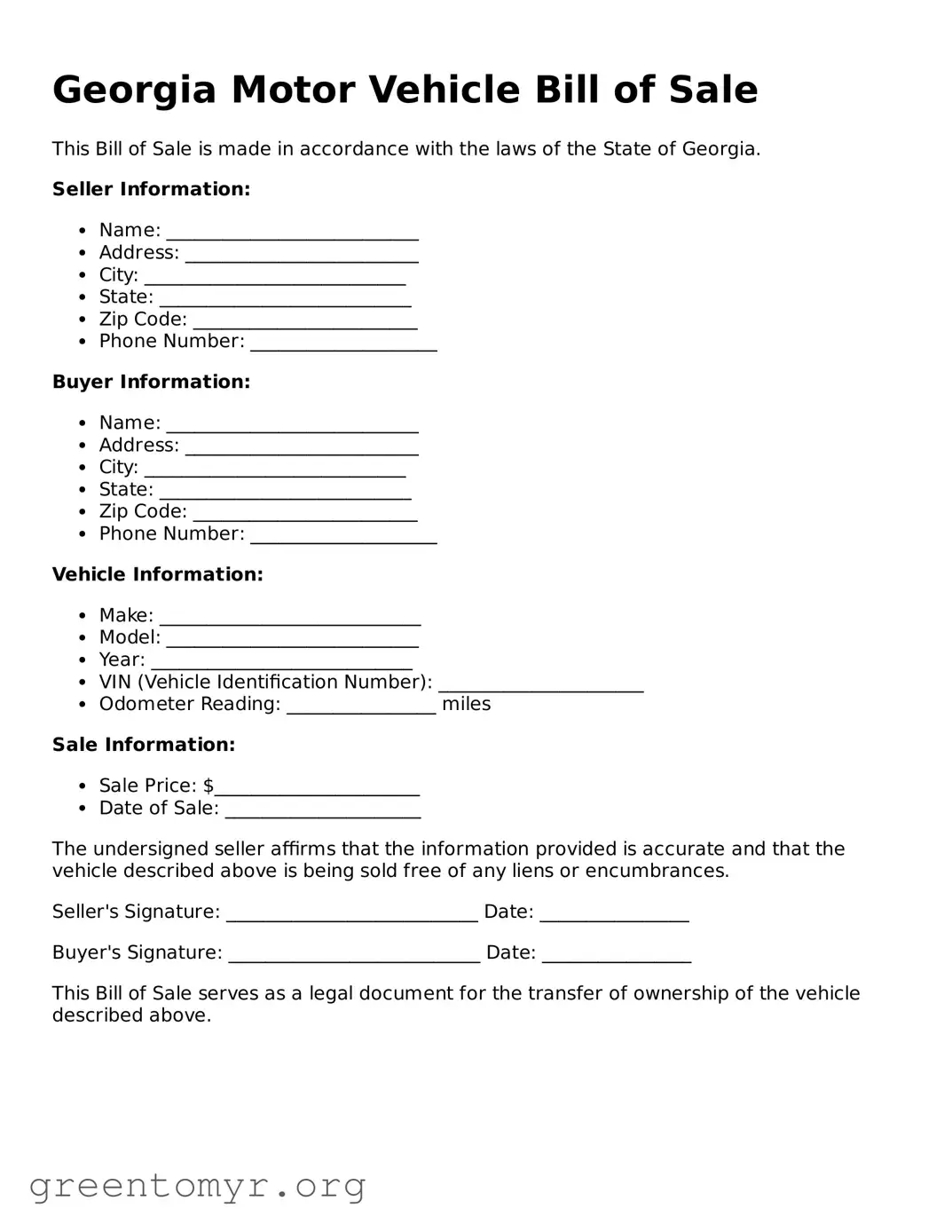
When buying or selling a vehicle in Georgia, having the right documentation is crucial for a smooth transaction. One essential document in this process is the Motor Vehicle Bill of Sale form. This form serves as a legal record of the sale and outlines important details about the vehicle, including its make, model, year, and Vehicle Identification Number (VIN). It also captures the names and addresses of both the seller and the buyer, ensuring that both parties are clearly identified. Additionally, the form typically includes the sale price, the date of the transaction, and any relevant disclosures regarding the vehicle's condition. By completing this form, both the buyer and seller can protect their interests and ensure a transparent exchange, making it an indispensable part of vehicle transactions in Georgia.
Georgia Motor Vehicle Bill of Sale
This Bill of Sale is made in accordance with the laws of the State of Georgia.
Seller Information:
Buyer Information:
Vehicle Information:
Sale Information:
The undersigned seller affirms that the information provided is accurate and that the vehicle described above is being sold free of any liens or encumbrances.
Seller's Signature: ___________________________ Date: ________________
Buyer's Signature: ___________________________ Date: ________________
This Bill of Sale serves as a legal document for the transfer of ownership of the vehicle described above.
| Fact Name | Description |
|---|---|
| Purpose | The Georgia Motor Vehicle Bill of Sale is used to document the sale of a motor vehicle between a buyer and a seller. |
| Governing Law | This form is governed by the Official Code of Georgia Annotated (O.C.G.A.) § 10-1-200. |
| Required Information | Essential details include the vehicle's make, model, year, Vehicle Identification Number (VIN), and the sale price. |
| Signatures | Both the buyer and seller must sign the form to validate the transaction. |
| Notarization | While notarization is not required, it is recommended for added legal protection. |
| Record Keeping | Both parties should retain a copy of the Bill of Sale for their records. |
| Use for Title Transfer | The Bill of Sale is often required when transferring the vehicle title at the Department of Motor Vehicles (DMV). |
| Applicable Fees | There may be fees associated with title transfer and registration that vary by county. |
After obtaining the Georgia Motor Vehicle Bill of Sale form, you will need to fill it out accurately. This document serves as a record of the sale between the buyer and the seller. Make sure to have all necessary information on hand before you begin.
A Georgia Motor Vehicle Bill of Sale is a legal document that records the sale of a vehicle between a buyer and a seller. It includes important details such as the vehicle's make, model, year, Vehicle Identification Number (VIN), sale price, and the names and addresses of both parties. This document serves as proof of ownership transfer and is often required for vehicle registration.
Yes, in Georgia, a Bill of Sale is typically required when registering a vehicle. It provides evidence that the buyer has purchased the vehicle and is essential for completing the registration process. Ensure that both the buyer and seller sign the document to validate the transaction.
You can create your own Bill of Sale as long as it contains all necessary information. However, using a standard form is often recommended for clarity and completeness. The Georgia Department of Revenue provides templates that can be used to ensure compliance with state requirements.
When completing a Bill of Sale in Georgia, include the following details:
Including this information helps prevent disputes and ensures a smooth transaction.
After the transaction, both the buyer and seller should keep a copy of the Bill of Sale for their records. It is advisable for both parties to sign two copies—one for the buyer and one for the seller. If you lose your copy, you may need to contact the other party to obtain a duplicate or create a new Bill of Sale if necessary.
Filling out the Georgia Motor Vehicle Bill of Sale form can seem straightforward, but many people make common mistakes that can lead to complications down the line. One frequent error is failing to include all necessary details about the vehicle. It's essential to provide accurate information such as the make, model, year, and Vehicle Identification Number (VIN). Omitting any of these details can create confusion and potentially invalidate the sale.
Another mistake is not including the full names and addresses of both the buyer and seller. This information is crucial for establishing a clear record of the transaction. Incomplete names or incorrect addresses can lead to issues with title transfer or future correspondence regarding the vehicle.
Many individuals also overlook the importance of signatures. Both parties must sign the Bill of Sale to make it legally binding. Without signatures, the document may not hold up if disputes arise later. It's advisable to ensure that both the buyer and seller are present to sign the form at the time of the sale.
People often forget to date the Bill of Sale. Including the date of the transaction is vital for record-keeping and can help establish timelines for ownership. A missing date can lead to complications, especially if there are questions about when the sale occurred.
Another common oversight is neglecting to indicate the sale price. The form should clearly state the amount paid for the vehicle. This information is not just for the buyer and seller; it is also important for tax purposes and can affect future resale value.
In some cases, sellers may not disclose existing liens on the vehicle. If there is a lien, it should be noted on the Bill of Sale. Failing to do so can result in legal issues for the buyer, who may unknowingly purchase a vehicle that is not free and clear of debt.
Some individuals also misunderstand the difference between a Bill of Sale and a title transfer. While the Bill of Sale documents the transaction, it does not replace the need for a title transfer. Buyers should ensure that the title is properly signed over to them at the time of sale.
Lastly, people sometimes forget to keep a copy of the completed Bill of Sale for their records. Having a copy is essential for both parties. It serves as proof of the transaction and can be helpful for future reference, especially if any issues arise regarding the vehicle.
The Georgia Motor Vehicle Bill of Sale form is a crucial document for anyone buying or selling a vehicle in Georgia. However, several other forms and documents are often used in conjunction with this bill of sale to ensure a smooth transaction. Below is a list of these essential documents.
Using these documents alongside the Georgia Motor Vehicle Bill of Sale can help facilitate a successful vehicle transaction. Each form plays a vital role in ensuring that both the buyer and seller are protected and that the transfer of ownership is conducted legally and efficiently.
When filling out the Georgia Motor Vehicle Bill of Sale form, attention to detail is crucial. This document serves as a record of the transaction between the buyer and the seller, and getting it right can save you from future headaches. Here are some essential dos and don’ts to keep in mind:
By following these guidelines, you can ensure that the Bill of Sale is filled out correctly and serves its purpose effectively. A well-completed form not only protects both parties but also streamlines the process of vehicle ownership transfer.
Many people have misunderstandings about the Georgia Motor Vehicle Bill of Sale form. Here are eight common misconceptions:
Understanding these misconceptions can help ensure a smooth vehicle transfer process in Georgia.
When filling out and using the Georgia Motor Vehicle Bill of Sale form, keep the following key takeaways in mind: