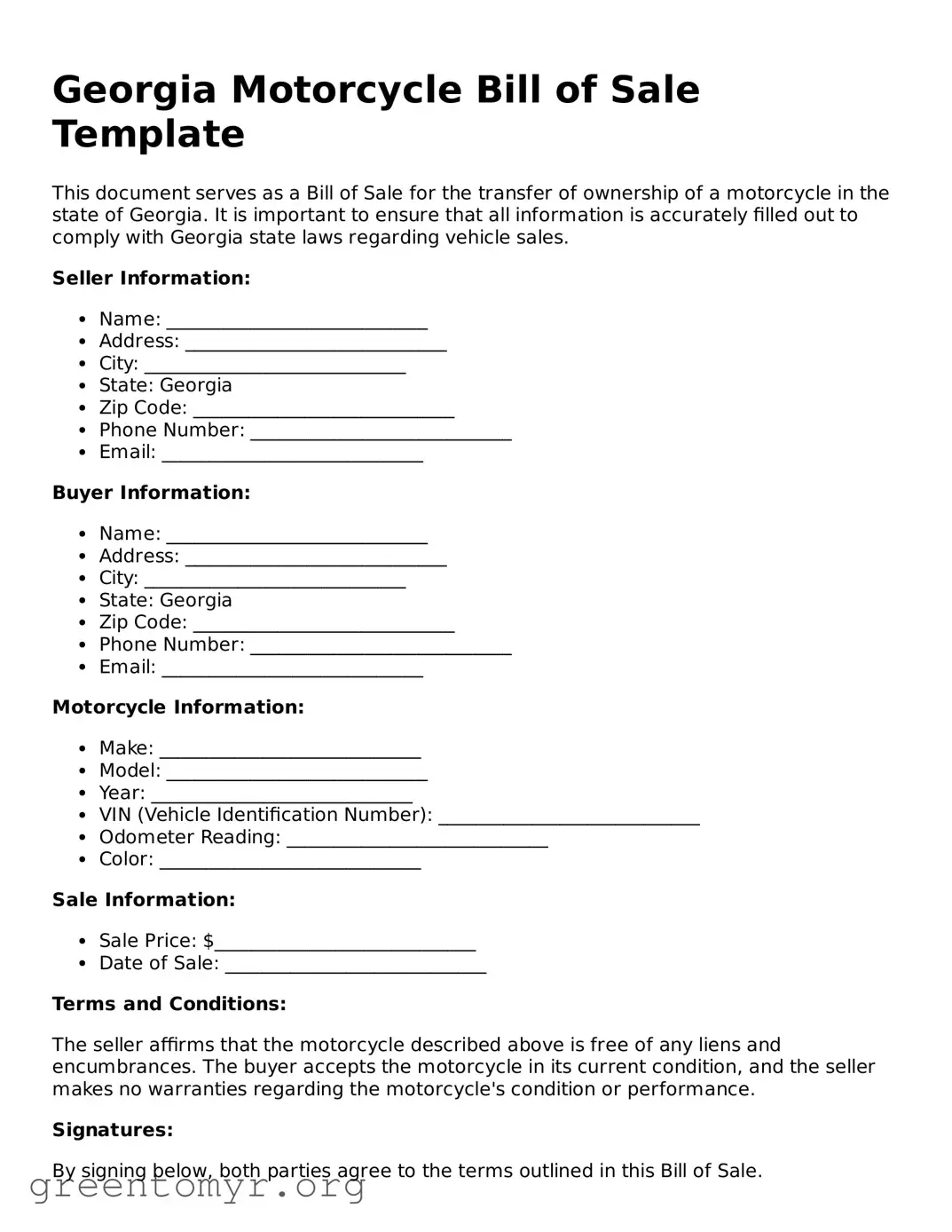
When buying or selling a motorcycle in Georgia, having a properly executed Motorcycle Bill of Sale form is essential. This document serves as a legal record of the transaction, outlining important details such as the motorcycle's make, model, year, and Vehicle Identification Number (VIN). It also includes the names and addresses of both the buyer and seller, along with the sale price and date of the transaction. By completing this form, both parties can protect their interests and ensure a smooth transfer of ownership. Additionally, the Motorcycle Bill of Sale may be required for registration purposes with the Georgia Department of Revenue. Without this form, the process can become complicated, potentially leading to disputes or difficulties in proving ownership. Understanding the key elements of this document will help facilitate a successful sale or purchase, making it a vital tool for anyone involved in the motorcycle market in Georgia.
Georgia Motorcycle Bill of Sale Template
This document serves as a Bill of Sale for the transfer of ownership of a motorcycle in the state of Georgia. It is important to ensure that all information is accurately filled out to comply with Georgia state laws regarding vehicle sales.
Seller Information:
Buyer Information:
Motorcycle Information:
Sale Information:
Terms and Conditions:
The seller affirms that the motorcycle described above is free of any liens and encumbrances. The buyer accepts the motorcycle in its current condition, and the seller makes no warranties regarding the motorcycle's condition or performance.
Signatures:
By signing below, both parties agree to the terms outlined in this Bill of Sale.
______________________________
Seller's Signature
______________________________
Buyer's Signature
Date: ____________________________
| Fact Name | Description |
|---|---|
| Purpose | The Georgia Motorcycle Bill of Sale form serves as a legal document to record the sale and transfer of ownership of a motorcycle. |
| Governing Law | This form is governed by the Official Code of Georgia Annotated (O.C.G.A.) § 40-2-20. |
| Buyer and Seller Information | It requires the full names, addresses, and contact information of both the buyer and the seller to ensure proper identification. |
| Motorcycle Details | Details about the motorcycle, including make, model, year, and Vehicle Identification Number (VIN), must be included for clarity. |
| Sale Price | The sale price of the motorcycle should be clearly stated to document the transaction value. |
| Date of Sale | The date when the sale takes place is crucial for establishing the timeline of ownership transfer. |
| Signatures | Both parties must sign the form to validate the transaction and confirm their agreement to the sale. |
Once you have the Georgia Motorcycle Bill of Sale form in front of you, it's important to complete it accurately. This form serves as a record of the transaction between the buyer and seller. After filling it out, both parties should keep a copy for their records. Here are the steps to fill out the form properly.
A Georgia Motorcycle Bill of Sale is a legal document that records the sale of a motorcycle between a buyer and a seller. This document serves as proof of ownership transfer and includes important details about the transaction, such as the motorcycle's make, model, year, Vehicle Identification Number (VIN), and the sale price. It protects both parties by documenting the agreement and can be useful for future reference or legal purposes.
While a Bill of Sale is not legally required for every motorcycle sale in Georgia, it is highly recommended. Having a Bill of Sale provides clear evidence of the transaction and can help prevent disputes. Additionally, when registering the motorcycle with the Georgia Department of Revenue, a Bill of Sale may be required to prove ownership and facilitate the registration process.
A comprehensive Georgia Motorcycle Bill of Sale should include the following information:
Including all these details helps ensure that the document is complete and legally binding.
To complete a Georgia Motorcycle Bill of Sale, follow these steps:
Once completed, both parties should keep a copy for their records.
Using a Bill of Sale from another state is possible, but it may not meet Georgia's specific requirements. It is advisable to use a Georgia-specific Bill of Sale to ensure compliance with state laws. If using an out-of-state form, verify that it includes all necessary information and signatures. When in doubt, consult local regulations or legal resources.
After completing the Bill of Sale, the following steps should be taken:
Completing these steps helps ensure a smooth transition of ownership and compliance with state laws.
When completing the Georgia Motorcycle Bill of Sale form, individuals often encounter pitfalls that can lead to complications down the road. Awareness of these common mistakes can make a significant difference in ensuring a smooth transaction. Here are ten frequent errors to avoid.
First, many people neglect to include all necessary information about the motorcycle. Essential details such as the Vehicle Identification Number (VIN), make, model, and year must be accurately documented. Omitting any of this information can create confusion and hinder the registration process.
Second, failing to provide accurate buyer and seller information is another common mistake. Each party's full name, address, and contact information should be clearly stated. Incomplete or incorrect details can lead to disputes or difficulties in future communications.
Another frequent error involves not signing the form. Both the buyer and seller must sign the Bill of Sale to validate the transaction. Without these signatures, the document may not be legally binding, which can cause issues when attempting to register the motorcycle.
Additionally, many individuals overlook the importance of the date of sale. This date is crucial for establishing the timeline of ownership transfer. Without it, there may be uncertainties regarding when the transaction occurred, potentially complicating future ownership claims.
Another mistake is using vague language in the description of the motorcycle. Clear and specific descriptions help prevent misunderstandings. Phrases like “good condition” or “as-is” can lead to disputes later on, so it’s best to be precise.
Some individuals fail to include the purchase price of the motorcycle. This figure is essential for both parties and is often required for tax purposes. Leaving this blank can lead to complications with state authorities.
Moreover, neglecting to provide a bill of sale copy to both parties is a common oversight. Each party should retain a copy for their records. This documentation serves as proof of the transaction and can be vital in case of future disputes.
Another mistake is not checking for any outstanding liens on the motorcycle. Sellers should ensure that the motorcycle is free of any financial obligations before completing the sale. Buyers should verify this information to avoid purchasing a vehicle with hidden debts.
Lastly, many people do not familiarize themselves with state-specific regulations regarding motorcycle sales. Each state may have unique requirements for Bill of Sale forms. Ignoring these can lead to problems during the registration process.
By being mindful of these common mistakes, individuals can facilitate a smoother and more secure transaction when completing the Georgia Motorcycle Bill of Sale form. Attention to detail is essential in protecting both parties' interests.
When buying or selling a motorcycle in Georgia, several forms and documents may be necessary to ensure a smooth transaction. Each document serves a specific purpose, providing essential information and legal protection for both parties involved. Below is a list of commonly used forms that often accompany the Georgia Motorcycle Bill of Sale.
Having the right forms and documents in place can significantly ease the process of buying or selling a motorcycle in Georgia. It is always advisable to review each document carefully and ensure that all necessary information is included. This way, both buyers and sellers can protect their interests and comply with state regulations.
The Motorcycle Bill of Sale form serves as an important document in the transfer of ownership for a motorcycle. It shares similarities with several other documents that facilitate the sale or transfer of various types of property. Below are four documents that are comparable to the Motorcycle Bill of Sale:
Each of these documents plays a crucial role in the transfer process, providing necessary information to protect the interests of both buyers and sellers.
When filling out the Georgia Motorcycle Bill of Sale form, it's important to follow certain guidelines to ensure accuracy and compliance. Here are five things you should and shouldn't do:
When dealing with the Georgia Motorcycle Bill of Sale form, several misconceptions can arise. Understanding these misconceptions can help ensure a smoother transaction process. Below is a list of ten common misunderstandings:
By addressing these misconceptions, buyers and sellers can navigate the process of transferring motorcycle ownership more effectively.
When filling out and using the Georgia Motorcycle Bill of Sale form, consider the following key takeaways: