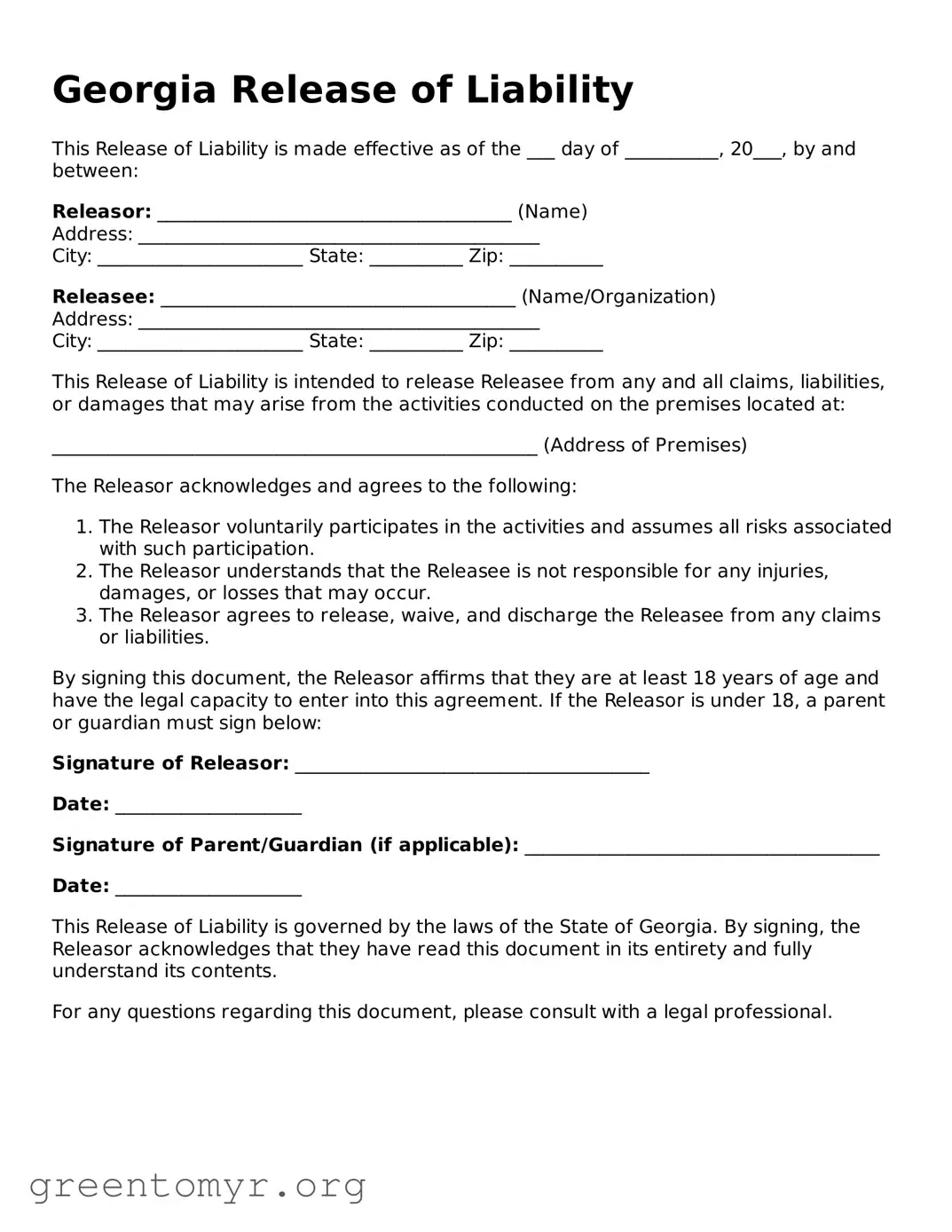
The Georgia Release of Liability form serves as an important tool for individuals and organizations seeking to protect themselves from potential legal claims. This form is commonly used in various situations, such as recreational activities, sports events, or any scenario where there is a risk of injury. By signing the form, participants acknowledge the inherent risks involved and agree to waive their right to hold the provider or organizer responsible for any injuries that may occur. It typically outlines the specific activities covered, the responsibilities of both parties, and any limitations on liability. Understanding the nuances of this form can help ensure that all parties involved are aware of their rights and responsibilities, fostering a safer environment for participation. Whether you are a business owner, event organizer, or participant, knowing how to properly use the Georgia Release of Liability form can provide peace of mind and clarity in your interactions.
Georgia Release of Liability
This Release of Liability is made effective as of the ___ day of __________, 20___, by and between:
Releasor: ______________________________________ (Name)
Address: ___________________________________________
City: ______________________ State: __________ Zip: __________
Releasee: ______________________________________ (Name/Organization)
Address: ___________________________________________
City: ______________________ State: __________ Zip: __________
This Release of Liability is intended to release Releasee from any and all claims, liabilities, or damages that may arise from the activities conducted on the premises located at:
____________________________________________________ (Address of Premises)
The Releasor acknowledges and agrees to the following:
By signing this document, the Releasor affirms that they are at least 18 years of age and have the legal capacity to enter into this agreement. If the Releasor is under 18, a parent or guardian must sign below:
Signature of Releasor: ______________________________________
Date: ____________________
Signature of Parent/Guardian (if applicable): ______________________________________
Date: ____________________
This Release of Liability is governed by the laws of the State of Georgia. By signing, the Releasor acknowledges that they have read this document in its entirety and fully understand its contents.
For any questions regarding this document, please consult with a legal professional.
| Fact Name | Description |
|---|---|
| Purpose | The Georgia Release of Liability form is used to protect individuals or organizations from legal claims related to injuries or damages that may occur during an activity. |
| Governing Law | This form is governed by the laws of the State of Georgia, specifically under O.C.G.A. § 51-1-1 et seq. |
| Parties Involved | The form typically involves two parties: the releasor (the person participating in the activity) and the releasee (the organization or individual conducting the activity). |
| Voluntary Participation | Signing the form indicates that the releasor voluntarily chooses to participate in the activity, fully aware of the risks involved. |
| Scope of Release | The release usually covers all claims for injuries or damages arising from the activity, including negligence, unless specifically excluded. |
| Minors | If the participant is a minor, a parent or legal guardian must sign the form on their behalf to ensure legal validity. |
| Legal Enforceability | For the release to be enforceable, it must be clear, specific, and not violate public policy or statutory regulations. |
Filling out the Georgia Release of Liability form is an important step in ensuring that all parties understand their rights and responsibilities. Once you have completed the form, you will need to submit it to the appropriate party, whether that be a business, organization, or individual. Here are the steps to help you fill out the form accurately.
A Georgia Release of Liability form is a legal document that protects an individual or organization from being held responsible for injuries or damages that may occur during a specific activity or event. By signing this form, participants acknowledge the risks involved and agree not to hold the organizers liable for any accidents or injuries that may happen.
This form is commonly used in various situations, including:
Using this form helps ensure that all parties understand the potential risks and agree to the terms before participating.
Yes, a Release of Liability form can be enforceable in Georgia, provided it meets certain conditions. The form must be clear and specific about the risks involved. It should also be signed voluntarily by the participant, without any coercion. Courts typically uphold these forms unless they are found to be overly broad or vague. Always ensure that the language used is straightforward and understandable.
Minors cannot legally enter into contracts, including a Release of Liability form, on their own. However, a parent or legal guardian can sign the form on behalf of the minor. This parental consent is crucial to ensure that the organization is protected while allowing minors to participate in activities. Always check local laws for any additional requirements regarding minors and liability waivers.
Completing the Georgia Release of Liability form requires careful attention to detail. One common mistake is failing to provide accurate personal information. Individuals often overlook the importance of including their full name, address, and contact information. Incomplete or incorrect details can lead to complications in the event of a claim.
Another frequent error is neglecting to read the entire document before signing. Some individuals may rush through the process, missing critical sections that outline their rights and responsibilities. Understanding the content is essential, as it ensures that individuals are fully aware of what they are agreeing to.
People sometimes forget to date the form. A signature without a date can create confusion about when the agreement was made. This oversight may affect the enforceability of the release in certain situations, potentially complicating matters later on.
In addition, individuals may not realize the importance of having witnesses sign the form. Depending on the circumstances, a witness may be required to validate the agreement. Failing to include a witness can lead to disputes regarding the authenticity of the document.
Another mistake involves not understanding the scope of the release. Some individuals may sign the form without fully comprehending what activities or liabilities they are releasing. This lack of clarity can result in unintended consequences, especially if an incident occurs.
Lastly, people may overlook the need for a legal guardian's signature if they are signing on behalf of a minor. This step is crucial to ensure that the release is valid. Without the proper authorization, the form may not hold up in legal situations.
When engaging in activities that may pose risks, it is common to use a variety of forms and documents to ensure clarity and protection for all parties involved. The Georgia Release of Liability form is often accompanied by other important documents that serve specific purposes. Below is a list of such forms, each designed to address different aspects of liability, consent, or agreements.
Each of these documents plays a vital role in safeguarding individuals and organizations during various activities. By understanding their purposes and how they interrelate, participants can navigate the complexities of liability and consent with greater confidence.
A Release of Liability form serves a specific purpose in protecting one party from legal claims made by another. However, there are several other documents that share similarities in function or intent. Here’s a list of nine documents that resemble a Release of Liability form:
Each of these documents serves to inform individuals of risks and protect parties from potential legal claims, making them valuable tools in various contexts.
When filling out the Georgia Release of Liability form, it is important to approach the task with care. Below is a list of things to do and avoid to ensure the form is completed accurately and effectively.
By following these guidelines, individuals can ensure that their Release of Liability form is completed properly, helping to protect their interests and clarify their intentions.
When it comes to the Georgia Release of Liability form, several misconceptions can lead to confusion. Understanding these common misunderstandings can help individuals make informed decisions. Below are five prevalent misconceptions:
By addressing these misconceptions, individuals can better navigate the complexities of liability waivers and make more informed choices regarding their activities and participation in events.
Filling out and using the Georgia Release of Liability form is an important process for protecting oneself from potential legal claims. Here are some key takeaways to consider:
Understanding these points can help ensure that the Release of Liability form is used effectively and appropriately.