Content Navigation

The Georgia Residential Lease Agreement form serves as a crucial document in the rental process, establishing clear expectations between landlords and tenants. This legally binding contract outlines essential details such as the duration of the lease, rental payment terms, and security deposit requirements. It also specifies the responsibilities of both parties, covering maintenance obligations, utility payments, and rules regarding property use. Additionally, the agreement addresses potential issues such as late fees, eviction procedures, and the conditions under which the lease may be terminated. By detailing these aspects, the form aims to protect the interests of both landlords and tenants while promoting a harmonious rental relationship.

Georgia Residential Lease Agreement Example

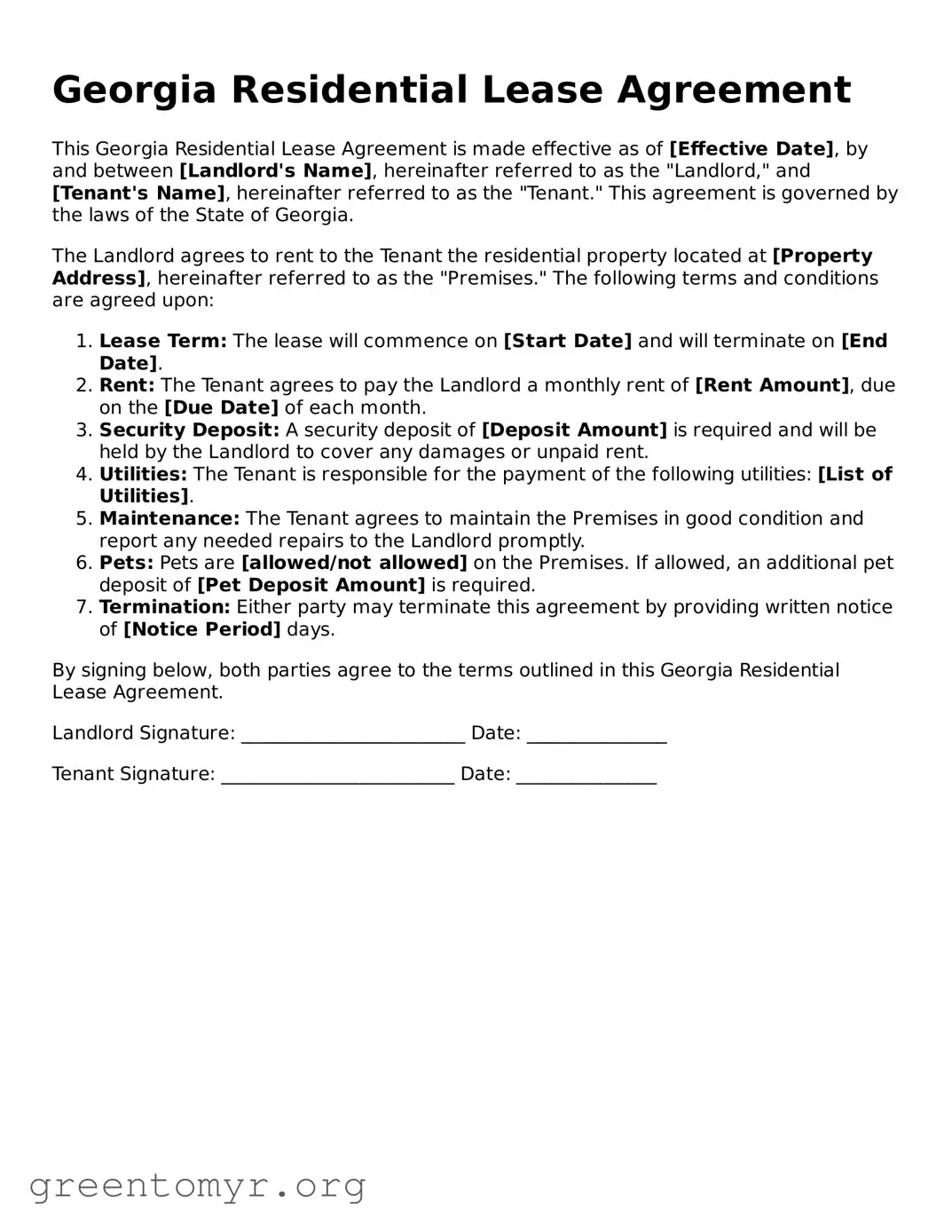
Georgia Residential Lease Agreement

This Georgia Residential Lease Agreement is made effective as of [Effective Date], by and between [Landlord's Name], hereinafter referred to as the "Landlord," and [Tenant's Name], hereinafter referred to as the "Tenant." This agreement is governed by the laws of the State of Georgia.

The Landlord agrees to rent to the Tenant the residential property located at [Property Address], hereinafter referred to as the "Premises." The following terms and conditions are agreed upon:

  1. Lease Term: The lease will commence on [Start Date] and will terminate on [End Date].
  2. Rent: The Tenant agrees to pay the Landlord a monthly rent of [Rent Amount], due on the [Due Date] of each month.
  3. Security Deposit: A security deposit of [Deposit Amount] is required and will be held by the Landlord to cover any damages or unpaid rent.
  4. Utilities: The Tenant is responsible for the payment of the following utilities: [List of Utilities].
  5. Maintenance: The Tenant agrees to maintain the Premises in good condition and report any needed repairs to the Landlord promptly.
  6. Pets: Pets are [allowed/not allowed] on the Premises. If allowed, an additional pet deposit of [Pet Deposit Amount] is required.
  7. Termination: Either party may terminate this agreement by providing written notice of [Notice Period] days.

By signing below, both parties agree to the terms outlined in this Georgia Residential Lease Agreement.

Landlord Signature: ________________________ Date: _______________

Tenant Signature: _________________________ Date: _______________

PDF Form Features

Fact Name Description
Governing Law The Georgia Residential Lease Agreement is governed by the Official Code of Georgia Annotated (O.C.G.A.) Title 44, Chapter 7.
Parties Involved The agreement typically involves a landlord (lessor) and a tenant (lessee).
Property Description The lease must include a clear description of the rental property, including the address.
Lease Term The lease specifies the duration of the tenancy, which can be month-to-month or for a fixed term.
Rent Amount The agreement must state the monthly rent amount and the due date for payment.
Security Deposit Georgia law allows landlords to collect a security deposit, which must be specified in the lease.
Maintenance Responsibilities The lease outlines the responsibilities of both the landlord and tenant regarding property maintenance.
Termination Notice Notice requirements for terminating the lease are defined, typically requiring 30 days' notice for month-to-month leases.
Subleasing The agreement may include terms regarding subleasing the property, which may require landlord approval.
Dispute Resolution Provisions for resolving disputes between the landlord and tenant may be included, such as mediation or arbitration options.

Guide to Using Georgia Residential Lease Agreement

Completing the Georgia Residential Lease Agreement form requires careful attention to detail. Each section must be filled out accurately to ensure that both the landlord and tenant understand their rights and responsibilities. Below are the steps to guide you through the process of filling out the form.

  1. Obtain the Form: Acquire a copy of the Georgia Residential Lease Agreement form. This can typically be found online or obtained from a local real estate office.
  2. Fill in the Parties' Information: Start by entering the names and addresses of both the landlord and the tenant. Make sure to provide accurate and complete information.
  3. Specify the Property: Clearly describe the rental property, including the address and any specific unit number if applicable.
  4. Lease Term: Indicate the length of the lease. Specify whether it is a month-to-month agreement or a fixed-term lease, such as one year.
  5. Rent Amount: Enter the total rent amount due each month. Be clear about the payment method and due date.
  6. Security Deposit: State the amount of the security deposit required, if any, and outline the conditions for its return.
  7. Utilities: Specify which utilities are included in the rent and which are the tenant's responsibility.
  8. Signatures: Both the landlord and tenant must sign and date the agreement. Ensure that each party receives a copy of the signed document.

After filling out the form, review it carefully to confirm that all information is correct. Both parties should retain a copy for their records, ensuring clarity in the rental relationship moving forward.

Get Answers on Georgia Residential Lease Agreement

What is a Georgia Residential Lease Agreement?

A Georgia Residential Lease Agreement is a legal document that outlines the terms and conditions between a landlord and a tenant for renting a residential property. This agreement specifies the rights and responsibilities of both parties, ensuring clarity and protection throughout the rental period.

What key elements should be included in the lease agreement?

Several important elements should be included in a Georgia Residential Lease Agreement:

  1. Names of Parties: Clearly state the names of the landlord and tenant.
  2. Property Description: Include the address and details of the rental property.
  3. Lease Term: Specify the duration of the lease, whether it’s a fixed term or month-to-month.
  4. Rent Amount: State the monthly rent and payment due date.
  5. Security Deposit: Outline the amount and terms for the security deposit.
  6. Maintenance Responsibilities: Define who is responsible for property maintenance and repairs.

How long is a typical lease term in Georgia?

Lease terms in Georgia can vary widely. Most commonly, leases are either:

  • 12 months: This is the standard duration for many rental agreements.
  • Month-to-month: This arrangement allows for more flexibility, with either party able to terminate the lease with proper notice.

Ultimately, the length of the lease should be mutually agreed upon by both the landlord and tenant.

What happens if a tenant wants to break the lease early?

If a tenant wishes to break the lease early, they should first review the lease agreement for any specific terms regarding early termination. Generally, tenants may be responsible for:

  • Paying rent until a new tenant is found.
  • Forfeiting the security deposit.
  • Paying an early termination fee, if specified in the lease.

It’s advisable for tenants to communicate openly with the landlord to discuss options and potential solutions.

Are there any specific laws governing lease agreements in Georgia?

Yes, Georgia has specific laws that govern residential lease agreements. These laws cover various aspects, including:

  • Security deposits: There are limits on how much can be charged and regulations on returning the deposit.
  • Eviction processes: Landlords must follow legal procedures to evict a tenant.
  • Habitability standards: Landlords are required to maintain the property in a livable condition.

Both landlords and tenants should familiarize themselves with these laws to ensure compliance and avoid disputes.

Can a landlord raise the rent during the lease term?

Typically, a landlord cannot raise the rent during the lease term unless the lease agreement explicitly allows for it. If the lease is month-to-month, the landlord can increase the rent by providing proper notice, usually 30 days in advance. For fixed-term leases, any rent increase would take effect only after the lease expires, unless otherwise stated in the agreement.

Common mistakes

Filling out the Georgia Residential Lease Agreement can seem straightforward, but there are common mistakes that many people make. One frequent error is not providing accurate personal information. This includes names, addresses, and contact details. If the information is incorrect, it can lead to confusion or legal issues down the line.

Another mistake is failing to specify the lease term clearly. The lease agreement should state the start and end dates of the lease. Omitting this information can create uncertainty for both landlords and tenants regarding their obligations.

People often overlook the importance of detailing the rental amount and payment terms. It’s essential to include the monthly rent, the due date, and acceptable payment methods. Without this information, disputes may arise over how and when rent should be paid.

Additionally, many individuals neglect to address security deposits properly. The lease should clearly outline the amount of the deposit, the conditions under which it may be withheld, and the timeline for its return. Failing to include these details can lead to misunderstandings when the lease ends.

Another common oversight is not including information about maintenance responsibilities. It’s crucial to clarify who is responsible for repairs and maintenance of the property. This can prevent conflicts and ensure that both parties know their obligations.

Some people also forget to include terms regarding pets. If the landlord has specific rules about pets, these should be clearly stated in the lease. This helps avoid any surprises or issues later on, especially if a tenant decides to get a pet after moving in.

Finally, many individuals skip the section on rules and regulations. It’s important to outline any community rules or property-specific regulations in the lease. This ensures that tenants understand what is expected of them while living in the property.

Documents used along the form

When entering into a rental agreement in Georgia, it is important to consider additional forms and documents that may be necessary to ensure a smooth leasing process. Each of these documents serves a specific purpose and can help clarify the rights and responsibilities of both landlords and tenants.

  • Rental Application: This form is typically completed by prospective tenants. It collects essential information such as employment history, rental history, and references. Landlords use this information to assess the suitability of an applicant for their property.
  • Move-In Inspection Checklist: This document is used to record the condition of the rental property at the time of move-in. Both the landlord and tenant should complete this checklist together to document any existing damages or issues, which helps prevent disputes when the tenant moves out.
  • Lease Addendum: An addendum is an additional document that modifies or adds to the original lease agreement. It can cover topics such as pet policies, maintenance responsibilities, or alterations to the property. This ensures that all parties are clear on any specific terms that may not be included in the main lease.
  • Notice to Quit: This document is used when a landlord needs to inform a tenant that they must vacate the premises. It is often required by law to provide a written notice before initiating eviction proceedings, outlining the reasons for the notice and the timeframe for the tenant to respond.

Understanding these documents can significantly enhance the leasing experience for both parties involved. Properly preparing and utilizing these forms can help prevent misunderstandings and ensure that the rental relationship is based on clear communication and mutual respect.

Similar forms

A Residential Lease Agreement is a crucial document in the landlord-tenant relationship, but it shares similarities with several other legal documents. Each of these documents serves a specific purpose in outlining rights and responsibilities. Below are six documents that are similar to a Residential Lease Agreement:

  • Rental Agreement: Like a lease, a rental agreement outlines the terms under which a tenant can occupy a property. However, it is typically month-to-month, offering more flexibility than a standard lease.
  • Commercial Lease Agreement: This document is used for leasing commercial properties. It contains similar terms regarding rent, duration, and responsibilities but is tailored to meet the needs of businesses.
  • Sublease Agreement: A sublease agreement allows a tenant to rent out their leased space to another person. This document must align with the original lease terms and requires the landlord's approval.
  • Lease Option Agreement: This document gives a tenant the right to purchase the property at the end of the lease term. It combines elements of a lease and a purchase agreement, allowing tenants to build equity while renting.
  • Roommate Agreement: When multiple tenants share a rental unit, a roommate agreement clarifies each person's responsibilities regarding rent, utilities, and shared spaces. It complements the lease by addressing specifics not covered in the primary document.
  • Property Management Agreement: This document outlines the relationship between a property owner and a property management company. It details the responsibilities of the management company in handling tenant relations, maintenance, and rent collection, similar to how a lease outlines tenant obligations.

Understanding these documents can help tenants and landlords navigate their rights and responsibilities more effectively. Each one plays a vital role in the broader context of property rental and management.

Dos and Don'ts

When filling out the Georgia Residential Lease Agreement form, it’s important to be thorough and accurate. Here are some guidelines to help you navigate the process effectively.

  • Do read the entire lease agreement carefully before signing.
  • Do ensure all personal information is accurate, including names and addresses.
  • Do clarify any unclear terms with the landlord or property manager.
  • Do keep a copy of the signed lease for your records.
  • Don't rush through the form; take your time to fill it out correctly.
  • Don't leave any sections blank unless instructed to do so.
  • Don't ignore any additional fees or charges outlined in the agreement.
  • Don't sign the lease until you fully understand all terms and conditions.

By following these guidelines, you can help ensure that your lease agreement is filled out properly, protecting both your rights as a tenant and the interests of the landlord.

Misconceptions

Understanding the Georgia Residential Lease Agreement is crucial for both landlords and tenants. However, several misconceptions can lead to confusion and misunderstandings. Here is a list of common misconceptions about this form, along with clarifications for each.

  • All lease agreements are the same. Many people believe that all lease agreements follow the same format and terms. In reality, each lease can be tailored to the specific needs of the landlord and tenant.
  • Verbal agreements are sufficient. Some individuals think that a verbal agreement is enough to establish a lease. However, having a written lease is essential for clarity and legal protection.
  • Security deposits are non-refundable. There is a misconception that all security deposits are non-refundable. In Georgia, landlords must return the deposit within a specified timeframe unless there are valid deductions.
  • Landlords can enter the property anytime. Many tenants believe that landlords have unrestricted access to the rental property. In fact, landlords must provide notice before entering, except in emergencies.
  • Lease agreements are only for one year. Some people think that leases must be for a year or longer. In Georgia, leases can be for any duration, including month-to-month agreements.
  • All utilities are included in the rent. It is often assumed that rent includes all utilities. However, the lease should specify which utilities, if any, are covered by the landlord.
  • Tenants can make changes without permission. Tenants may believe they can make alterations to the property without consent. In reality, any changes typically require written approval from the landlord.
  • Lease agreements are not enforceable. Some individuals think that lease agreements cannot be enforced legally. However, a properly executed lease is a binding contract and can be enforced in court.
  • Only landlords can terminate a lease. There is a belief that only landlords have the right to terminate a lease. In fact, tenants also have rights to terminate under certain conditions, such as breach of contract by the landlord.

Addressing these misconceptions can help both landlords and tenants navigate their agreements more effectively and avoid potential disputes.

Key takeaways

When filling out and using the Georgia Residential Lease Agreement form, several important considerations come into play. Understanding these key points can help ensure a smooth rental experience for both landlords and tenants.

  • Understand the Lease Duration: Clearly define the length of the lease, whether it’s a fixed term or month-to-month.
  • Identify All Parties: Ensure that all tenants and landlords are correctly named in the agreement to avoid future disputes.
  • Detail Rent Payment Terms: Specify the amount of rent, due dates, and acceptable payment methods to prevent confusion.
  • Outline Security Deposit Requirements: Include the amount of the security deposit and the conditions for its return.
  • Clarify Maintenance Responsibilities: Clearly state who is responsible for repairs and maintenance to avoid misunderstandings.
  • Include Pet Policies: If pets are allowed, detail any associated fees or restrictions to manage expectations.
  • Address Termination Procedures: Specify how either party can terminate the lease, including notice periods and acceptable reasons.
  • Consider Local Laws: Familiarize yourself with Georgia rental laws to ensure compliance and protect your rights.
  • Review and Sign: Both parties should thoroughly review the agreement before signing to ensure mutual understanding.

By paying attention to these key takeaways, both landlords and tenants can foster a positive rental relationship and mitigate potential conflicts.