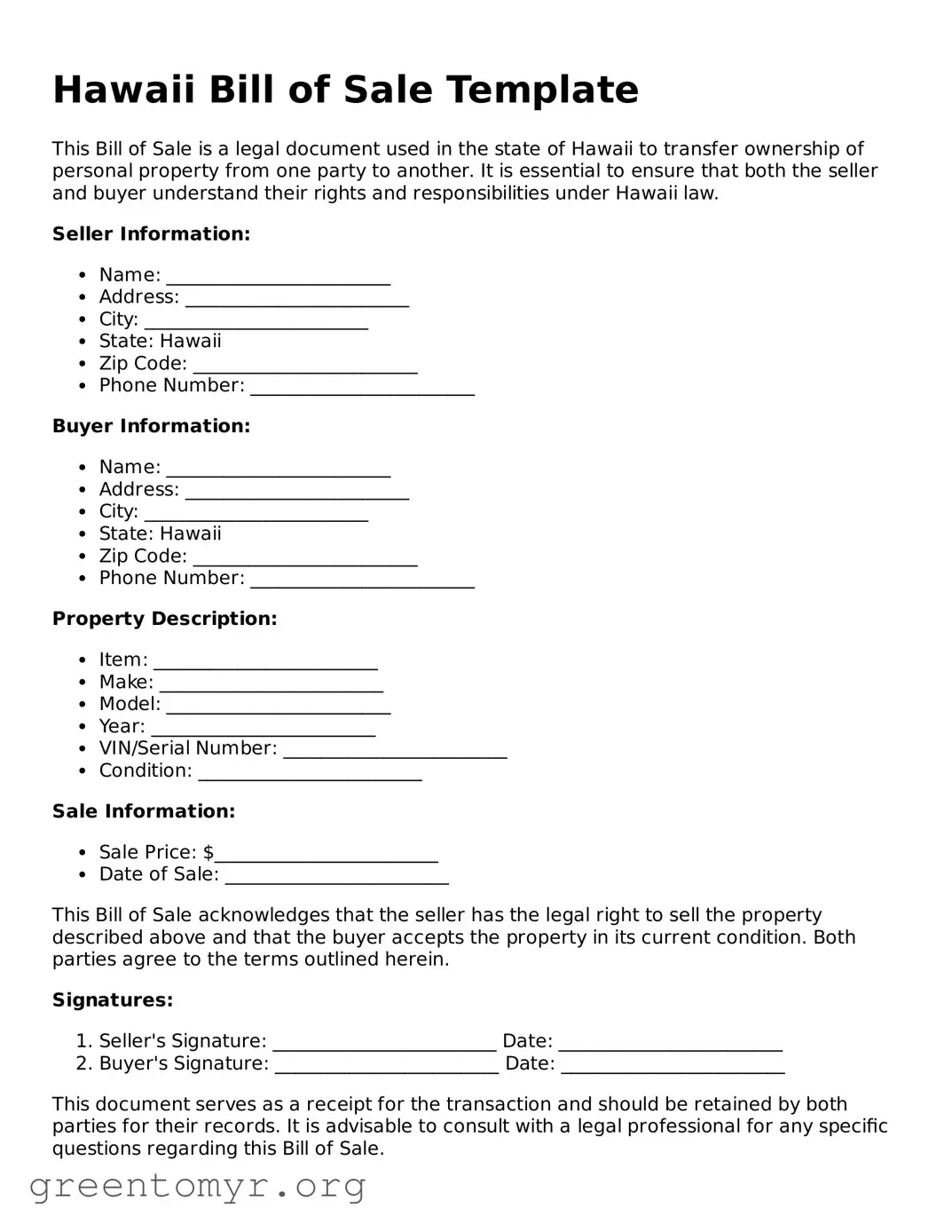
When buying or selling personal property in Hawaii, having a Bill of Sale form is essential. This document serves as a written record of the transaction, providing proof of ownership and the details of the sale. It typically includes important information such as the names and addresses of both the buyer and seller, a description of the item being sold, and the sale price. In Hawaii, the Bill of Sale can also be used for various types of property, including vehicles, boats, and equipment. By using this form, both parties can protect themselves and ensure a smooth transfer of ownership. It’s a simple yet vital tool that helps avoid misunderstandings and provides clarity in the transaction process.
Hawaii Bill of Sale Template
This Bill of Sale is a legal document used in the state of Hawaii to transfer ownership of personal property from one party to another. It is essential to ensure that both the seller and buyer understand their rights and responsibilities under Hawaii law.
Seller Information:
Buyer Information:
Property Description:
Sale Information:
This Bill of Sale acknowledges that the seller has the legal right to sell the property described above and that the buyer accepts the property in its current condition. Both parties agree to the terms outlined herein.
Signatures:
This document serves as a receipt for the transaction and should be retained by both parties for their records. It is advisable to consult with a legal professional for any specific questions regarding this Bill of Sale.
| Fact Name | Description |
|---|---|
| Definition | A Hawaii Bill of Sale is a legal document that records the transfer of ownership of personal property from one person to another. |
| Governing Law | The Hawaii Bill of Sale is governed by Hawaii Revised Statutes, Chapter 490, which covers the Uniform Commercial Code. |
| Types of Property | This form can be used for various types of personal property, including vehicles, boats, and equipment. |
| Requirement for Sale | A Bill of Sale is not always required for personal property sales in Hawaii, but it is highly recommended for documentation. |
| Signatures | Both the seller and buyer must sign the Bill of Sale to make it valid. |
| Notarization | While notarization is not mandatory, having the document notarized can provide additional legal protection. |
| Consideration | The Bill of Sale should state the consideration, or payment amount, involved in the sale. |
| As-Is Condition | Buyers should be aware that the Bill of Sale often includes an "as-is" clause, meaning the seller is not responsible for defects. |
| Record Keeping | Both parties should keep a copy of the Bill of Sale for their records, as it serves as proof of the transaction. |
| Use in Title Transfer | A Bill of Sale may be required when transferring the title of a vehicle or boat to the new owner. |
Filling out the Hawaii Bill of Sale form is a straightforward process that ensures the transfer of ownership for personal property is documented properly. Once completed, this form can be presented to relevant authorities or used for personal records. Here’s how to fill it out step by step.
A Hawaii Bill of Sale form is a legal document that records the transfer of ownership of personal property from one party to another. This form is essential for documenting the sale of items such as vehicles, boats, and other valuable goods. It serves as proof of the transaction and outlines the details of the sale, including the buyer, seller, and a description of the item being sold.
While a Bill of Sale is not required for every transaction, it is highly recommended for significant purchases. For example, when buying or selling a vehicle, a Bill of Sale provides essential protection for both parties. It can help resolve disputes and clarify the terms of the sale. For smaller items, a simple receipt may suffice, but having a Bill of Sale can still be beneficial.
A comprehensive Bill of Sale should include the following information:
Including this information helps ensure that the document is clear and legally binding.
Yes, a Bill of Sale is legally binding in Hawaii as long as it includes the necessary information and is signed by both parties. It acts as a contract between the buyer and seller, outlining the terms of the sale. However, to ensure enforceability, both parties should keep a copy of the signed document for their records.
You can obtain a Hawaii Bill of Sale form from various sources, including:
Make sure to choose a form that meets the requirements of your transaction and consult with a professional if you have any questions.
Filling out the Hawaii Bill of Sale form can be straightforward, but many people make common mistakes that can lead to complications down the line. One frequent error is failing to provide complete information about the buyer and seller. Both parties must include their full names, addresses, and contact information. Omitting any of these details can create confusion and may even invalidate the document.
Another common mistake is neglecting to accurately describe the item being sold. The form should include a detailed description, including make, model, year, and any identifying numbers. A vague description can lead to disputes over ownership or the condition of the item.
Many individuals also forget to include the sale price. While it may seem obvious, stating the agreed-upon price is essential for both parties. This information helps clarify the transaction and can be important for tax purposes. Leaving this section blank can raise questions later on.
Not having the document signed by both parties is another significant error. A Bill of Sale is only valid when it is signed by the seller and the buyer. Without signatures, the document lacks legal enforceability. Additionally, witnesses or notarization may be required in some cases, depending on the nature of the transaction.
People often overlook the date of the transaction as well. It is crucial to include the date when the sale takes place. This detail can be important for record-keeping and can affect the timeline of ownership transfer.
Another mistake involves failing to keep copies of the completed Bill of Sale. Both the buyer and seller should retain a copy for their records. This document serves as proof of the transaction and can be useful if any disputes arise in the future.
Lastly, individuals sometimes ignore the specific requirements that may apply to certain types of sales, such as vehicles or boats. Hawaii has unique regulations that may necessitate additional forms or information. It is vital to research and ensure compliance with local laws to avoid any legal issues.
When engaging in a sale or transfer of property in Hawaii, it’s essential to have the right documents in place. The Hawaii Bill of Sale form is a critical piece of paperwork, but it often works in conjunction with other forms. Here’s a list of documents that may be needed alongside the Bill of Sale.
Having these documents ready can streamline the selling process and ensure that both parties are protected. Always consider consulting with a professional to ensure that all necessary paperwork is in order.
The Bill of Sale form serves as a crucial document in various transactions. It is similar to several other documents that also facilitate the transfer of ownership or rights. Below are eight documents that share similarities with the Bill of Sale:
When filling out the Hawaii Bill of Sale form, it is important to follow certain guidelines to ensure accuracy and compliance. Here’s a list of things you should and shouldn't do:
Many people have misunderstandings about the Hawaii Bill of Sale form. Here are seven common misconceptions:
Understanding these misconceptions can help ensure that you use the Bill of Sale form effectively and protect your interests in any transaction.
When dealing with the Hawaii Bill of Sale form, understanding the essential components can greatly enhance the transaction experience. Here are some key takeaways:
By keeping these points in mind, individuals can navigate the process of completing and utilizing the Hawaii Bill of Sale form with greater confidence and clarity.