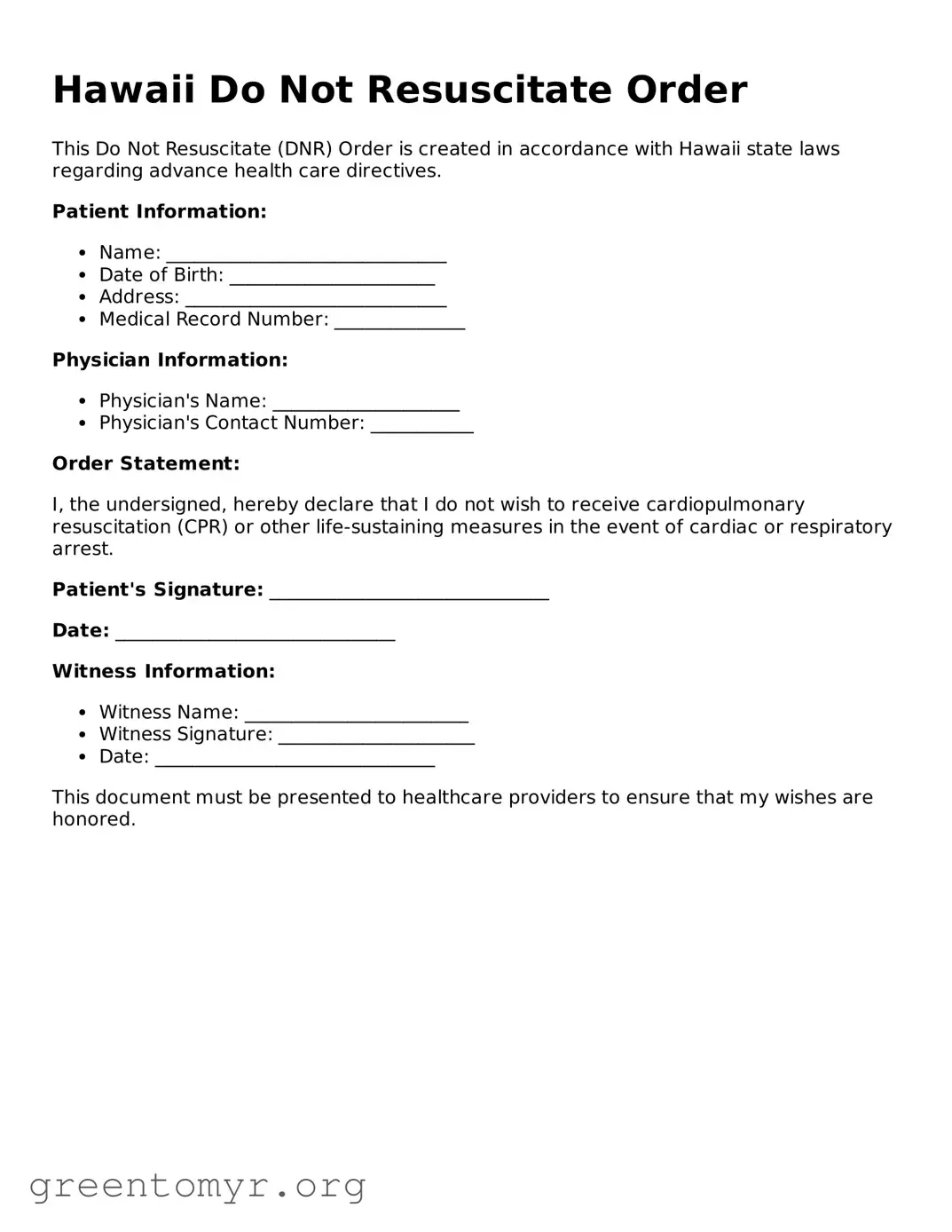
The Hawaii Do Not Resuscitate (DNR) Order form is a crucial document that allows individuals to express their wishes regarding medical treatment in the event of a life-threatening situation. This form is particularly important for those who wish to avoid aggressive resuscitation efforts, such as cardiopulmonary resuscitation (CPR) or advanced cardiac life support, in cases where they are unable to communicate their preferences. Designed to ensure that a person's medical choices are honored, the DNR Order must be completed and signed by a licensed physician, and it is essential for patients to discuss their decisions with their healthcare providers. The form includes specific sections where individuals can indicate their preferences, ensuring clarity in their wishes. Additionally, it is vital for patients to share copies of the completed DNR Order with family members and caregivers to facilitate understanding and compliance. Understanding the implications of a DNR Order can empower individuals to make informed decisions about their healthcare, providing peace of mind in difficult circumstances.
Hawaii Do Not Resuscitate Order
This Do Not Resuscitate (DNR) Order is created in accordance with Hawaii state laws regarding advance health care directives.
Patient Information:
Physician Information:
Order Statement:
I, the undersigned, hereby declare that I do not wish to receive cardiopulmonary resuscitation (CPR) or other life-sustaining measures in the event of cardiac or respiratory arrest.
Patient's Signature: ______________________________
Date: ______________________________
Witness Information:
This document must be presented to healthcare providers to ensure that my wishes are honored.
| Fact Name | Description |
|---|---|
| Definition | The Hawaii Do Not Resuscitate (DNR) Order form is a legal document that allows individuals to refuse resuscitation efforts in the event of cardiac or respiratory arrest. |
| Governing Law | The DNR Order in Hawaii is governed by Hawaii Revised Statutes § 327-1 through § 327-10. |
| Eligibility | Any adult capable of making medical decisions can complete a DNR Order, including those with terminal conditions. |
| Signature Requirement | The form must be signed by the patient and a physician to be valid. |
| Emergency Medical Services | Emergency medical personnel are required to honor a valid DNR Order in the field. |
| Revocation | A DNR Order can be revoked at any time by the patient or their authorized representative. |
| Form Accessibility | The DNR Order form is available through healthcare providers, hospitals, and online resources. |
| Storage Recommendations | It is advisable to keep the DNR Order in a visible location, such as on the refrigerator or with medical records. |
| Advance Directives | A DNR Order is a type of advance directive, which outlines an individual's preferences for medical treatment. |
Completing the Hawaii Do Not Resuscitate Order form is a straightforward process that requires careful attention to detail. This document is essential for individuals who wish to communicate their preferences regarding resuscitation efforts in a medical emergency. The following steps will guide you through the process of filling out the form accurately.
After completing the form, it is advisable to review it with your healthcare provider to ensure that it aligns with your medical care preferences. Keeping a copy accessible can facilitate communication with emergency medical personnel in the future.
A Do Not Resuscitate Order is a legal document that allows individuals to express their wishes regarding resuscitation efforts in the event of a medical emergency. In Hawaii, this order specifically instructs healthcare providers not to perform cardiopulmonary resuscitation (CPR) or other life-saving measures if a patient stops breathing or their heart stops beating. This document is designed for individuals who may be facing terminal illnesses or other serious health conditions and wish to avoid aggressive medical interventions at the end of life.
In Hawaii, a DNR Order can be completed by adults who are of sound mind and able to make informed decisions about their healthcare. This includes individuals who have a terminal condition or are in a state of irreversible coma. Additionally, a DNR can be initiated by a legal guardian or an authorized representative if the individual is unable to make decisions for themselves. It is crucial that the person completing the order understands its implications and is making the decision voluntarily.
To obtain a DNR Order form in Hawaii, you can visit the official website of the Hawaii Department of Health. The form is often available for download in a PDF format. Alternatively, healthcare providers, such as hospitals or hospice organizations, can also provide you with a copy of the form. It is important to ensure that you are using the most current version of the form, as regulations and requirements may change over time.
Before signing a DNR Order, consider the following:
Taking the time to reflect on these factors can help ensure that your DNR Order accurately reflects your preferences and provides peace of mind for both you and your family.
Yes, you can change or revoke your DNR Order at any time. If you decide to do so, it is important to communicate your wishes clearly to your healthcare providers and family members. To officially revoke the order, you may need to provide a written notice or destroy the existing document. Always ensure that your healthcare team is aware of any changes to your DNR status, as this will help avoid confusion in medical situations.
Filling out the Hawaii Do Not Resuscitate (DNR) Order form is a critical step for individuals who wish to express their preferences regarding medical treatment. However, many people make mistakes that can lead to confusion or unintended consequences. Understanding these common errors is essential for ensuring that your wishes are respected.
One significant mistake is failing to sign the form. Without a signature, the document lacks validity. It is crucial to ensure that the form is signed by the individual or their legally authorized representative. Additionally, not dating the form can create complications. A DNR order should reflect the most current wishes of the individual, so including the date is vital.
Another common error is not having the form witnessed correctly. In Hawaii, the DNR Order must be signed by two witnesses who are not related to the individual and do not stand to gain from the order. Failing to meet these requirements can render the document invalid.
People often overlook the importance of clear language. Ambiguities in the form can lead to misinterpretations by medical personnel. It is essential to use straightforward language and to clearly state the desire for a DNR order to avoid any confusion during critical moments.
Additionally, some individuals do not communicate their wishes to family members or healthcare providers. A DNR order is only effective if those involved in the individual's care are aware of it. Having open discussions about these wishes can prevent misunderstandings and ensure that everyone is on the same page.
Another mistake is neglecting to review and update the DNR order regularly. Life circumstances change, and so do medical preferences. It is advisable to revisit the form periodically to ensure it still reflects the individual’s current wishes.
Many people also fail to keep copies of the DNR order in accessible locations. It is essential to provide copies to healthcare providers, family members, and anyone involved in the individual's care. This ensures that the document can be easily accessed when needed.
Finally, some individuals do not understand the implications of a DNR order. It is vital to grasp that this order specifically addresses resuscitation efforts and does not affect other medical treatments. Misunderstanding this can lead to unintended outcomes regarding overall healthcare.
By being aware of these common mistakes, individuals can better navigate the process of completing the Hawaii Do Not Resuscitate Order form. Taking the time to ensure accuracy and clarity can significantly impact the respect and implementation of one’s healthcare wishes.
In Hawaii, the Do Not Resuscitate (DNR) Order form is an essential document for individuals who wish to communicate their preferences regarding resuscitation in case of a medical emergency. However, it often works alongside several other important forms and documents that can help clarify an individual’s healthcare wishes. Here’s a list of some commonly used documents that complement the DNR Order.
Understanding these documents can help individuals and their families navigate complex healthcare decisions. Each form serves a unique purpose, and together they can provide a comprehensive approach to ensuring that a person’s medical preferences are respected and followed. It is advisable to consult with a healthcare professional or legal advisor when completing these forms to ensure they align with personal wishes and legal requirements.
A Do Not Resuscitate (DNR) Order is an important legal document that expresses a person's wishes regarding medical treatment in the event of cardiac arrest or respiratory failure. Several other documents serve similar purposes in healthcare and end-of-life planning. Below are nine documents that share similarities with the DNR Order:
Each of these documents plays a vital role in ensuring that individuals' healthcare preferences are honored, particularly during critical moments when they may not be able to voice their wishes.
When filling out the Hawaii Do Not Resuscitate Order form, it is essential to approach the process with care and attention. Here’s a list of things you should and shouldn't do to ensure your wishes are clearly communicated.
Understanding the Hawaii Do Not Resuscitate (DNR) Order form is crucial for individuals and families making end-of-life decisions. Here are seven common misconceptions about this important document:
Being informed about the DNR process can help individuals and families navigate these important decisions with confidence.
Filling out the Hawaii Do Not Resuscitate (DNR) Order form is an important step in expressing your healthcare wishes. Here are key takeaways to consider:
Taking these steps can help ensure that your healthcare preferences are respected in critical situations.