Creating a solid foundation for workplace policies and expectations is essential for any business, especially in a unique setting like Hawaii. An Employee Handbook serves as a vital resource, outlining the rights and responsibilities of both employers and employees. This document typically covers a range of important topics, including workplace conduct, attendance policies, and procedures for addressing grievances. Additionally, it provides clarity on benefits, compensation, and safety protocols, ensuring that everyone is on the same page. For businesses operating in Hawaii, the handbook must also reflect local laws and cultural considerations, making it even more crucial to tailor the content appropriately. By having a comprehensive Employee Handbook, employers can foster a positive work environment, reduce misunderstandings, and promote compliance with state regulations.
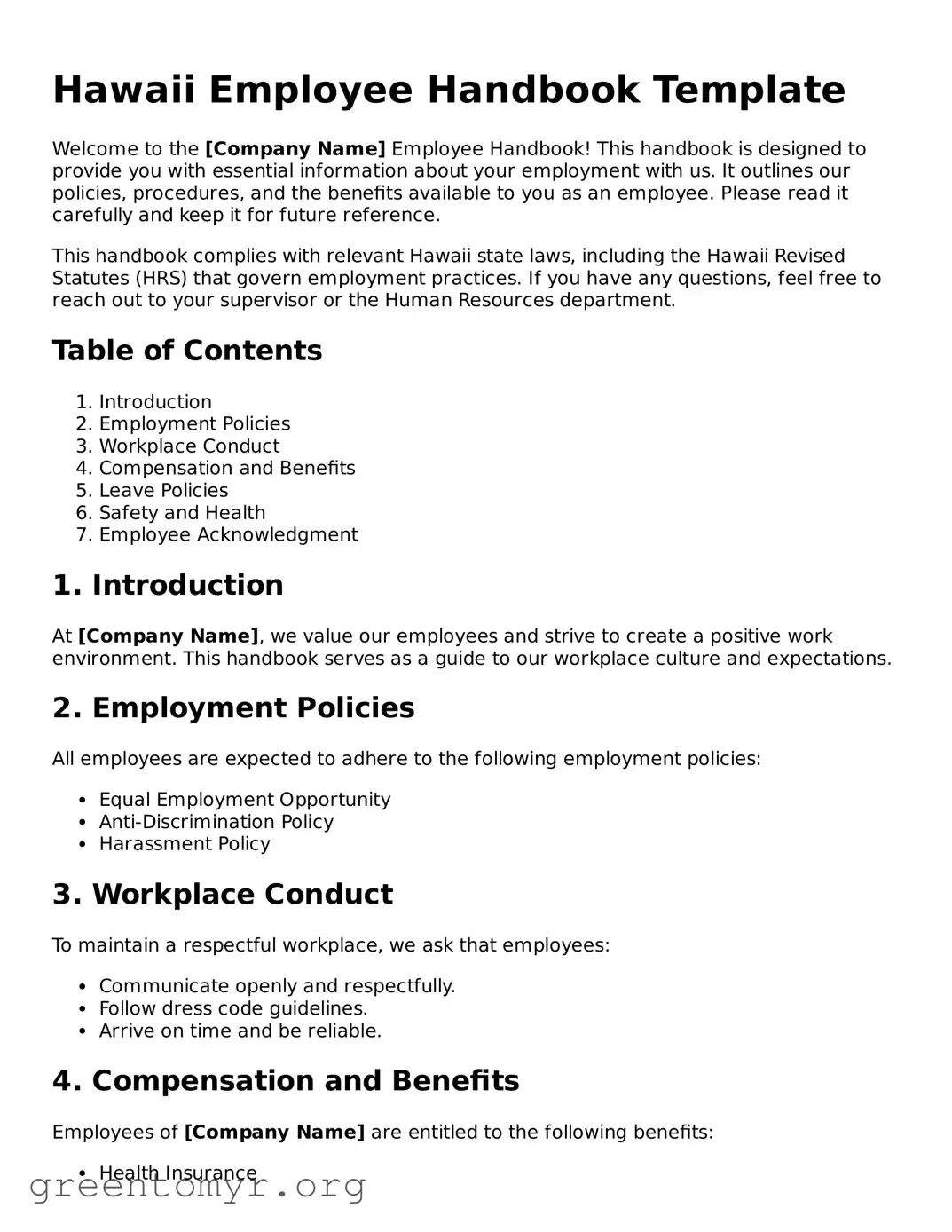
Hawaii Employee Handbook Template
Welcome to the [Company Name] Employee Handbook! This handbook is designed to provide you with essential information about your employment with us. It outlines our policies, procedures, and the benefits available to you as an employee. Please read it carefully and keep it for future reference.
This handbook complies with relevant Hawaii state laws, including the Hawaii Revised Statutes (HRS) that govern employment practices. If you have any questions, feel free to reach out to your supervisor or the Human Resources department.
Table of Contents
1. Introduction
At [Company Name], we value our employees and strive to create a positive work environment. This handbook serves as a guide to our workplace culture and expectations.
2. Employment Policies
All employees are expected to adhere to the following employment policies:
3. Workplace Conduct
To maintain a respectful workplace, we ask that employees:
4. Compensation and Benefits
Employees of [Company Name] are entitled to the following benefits:
5. Leave Policies
We recognize the importance of work-life balance. Our leave policies include:
6. Safety and Health
Your safety is our priority. Please familiarize yourself with our safety protocols:
7. Employee Acknowledgment
By signing below, you acknowledge that you have received and read the [Company Name] Employee Handbook.
Employee Name: [Employee Name]
Signature: [Employee Signature]
Date: [Date]
Thank you for being a part of [Company Name]. We look forward to a successful journey together!
| Fact Name | Description |
|---|---|
| Purpose | The Hawaii Employee Handbook serves as a guide for employees, outlining company policies, procedures, and expectations. |
| Governing Laws | The handbook is governed by Hawaii state employment laws, including but not limited to the Hawaii Revised Statutes (HRS) and the Hawaii Administrative Rules (HAR). |
| Compliance | Employers must ensure that the handbook complies with federal and state laws to avoid legal disputes and promote a fair workplace. |
| Updates | Regular updates are essential to reflect changes in laws or company policies, ensuring that employees are informed of their rights and responsibilities. |
Filling out the Hawaii Employee Handbook form is a straightforward process. Once completed, this form will provide your employer with essential information that helps ensure a smooth onboarding experience.
The Hawaii Employee Handbook form serves as a comprehensive guide for employees regarding company policies, procedures, and expectations. It outlines important information such as employee rights, benefits, workplace conduct, and safety protocols. This document helps ensure that all employees are aware of their responsibilities and the resources available to them.
All employees, both new hires and existing staff, are required to acknowledge receipt of the Hawaii Employee Handbook. This acknowledgment ensures that employees understand the policies and agree to abide by them. It is important for maintaining a consistent and informed workplace.
The Hawaii Employee Handbook is reviewed and updated annually or as needed. Changes may occur due to new laws, company policy adjustments, or feedback from employees. It is crucial for employees to stay informed about any updates to ensure compliance and understanding of current practices.
If you have questions regarding the Employee Handbook, you should reach out to your supervisor or the Human Resources department. They can provide clarification on any policies or procedures that may be unclear. Open communication is encouraged to ensure that all employees feel comfortable and informed.
While the Hawaii Employee Handbook provides guidelines and expectations, it is not a legally binding contract. It serves as a reference for policies but does not create enforceable rights. However, employees are expected to adhere to the guidelines outlined within the handbook.
The Hawaii Employee Handbook is typically available in both digital and printed formats. Employees can access the digital version through the company’s intranet or request a hard copy from Human Resources. It is advisable to review the handbook regularly to stay updated on any changes.
Completing the Hawaii Employee Handbook form is an important step for both employers and employees. However, many individuals make common mistakes that can lead to confusion or issues down the line. Understanding these pitfalls can help ensure a smoother process.
One frequent error is failing to read the entire form before filling it out. This can result in missing critical sections or instructions. It's essential to take the time to review all parts of the document to understand what is required fully.
Another mistake is providing incomplete information. Leaving blank spaces can delay processing or lead to misunderstandings. Ensure that all required fields are filled out accurately and completely.
Some individuals overlook the importance of using clear and legible handwriting. Illegible writing can create confusion and may require additional follow-up. Typewritten forms are often preferred for clarity.
Additionally, people sometimes forget to date and sign the form. Without a signature, the document may be considered invalid. Always double-check that you have included your name, date, and signature where necessary.
Using outdated or incorrect contact information is another common mistake. Ensure that all phone numbers, addresses, and email addresses are current. This helps in maintaining effective communication between the employer and employee.
Some individuals neglect to ask questions if they are unsure about any part of the form. Seeking clarification can prevent mistakes and ensure that the form is filled out correctly. It’s better to ask than to assume.
Moreover, failing to keep a copy of the completed form for personal records can lead to complications later. Always retain a copy for your reference. This can be useful if any discrepancies arise in the future.
Lastly, individuals may rush through the process, thinking it is a simple task. Taking the time to carefully complete the form can save time and prevent errors. A thorough approach will lead to a more efficient experience.
When creating an employee handbook for a business in Hawaii, several other forms and documents may be necessary to ensure compliance with local laws and to provide clear guidelines for employees. Each of these documents plays a vital role in establishing a well-structured workplace environment.
Incorporating these documents alongside the Hawaii Employee Handbook can create a comprehensive framework for managing employee relations. This approach not only fosters clarity but also ensures that both employers and employees understand their rights and responsibilities within the workplace.
When filling out the Hawaii Employee Handbook form, it's essential to follow certain guidelines to ensure accuracy and compliance. Here are some key points to consider:
When it comes to the Hawaii Employee Handbook form, several misconceptions can lead to confusion among employers and employees alike. Understanding these misconceptions is crucial for creating a clear and effective handbook. Here are five common misunderstandings:
By addressing these misconceptions, employers can create a more effective employee handbook that fosters a positive work environment and ensures compliance with Hawaii's employment laws.
When filling out and utilizing the Hawaii Employee Handbook form, several important points should be considered to ensure compliance and clarity.