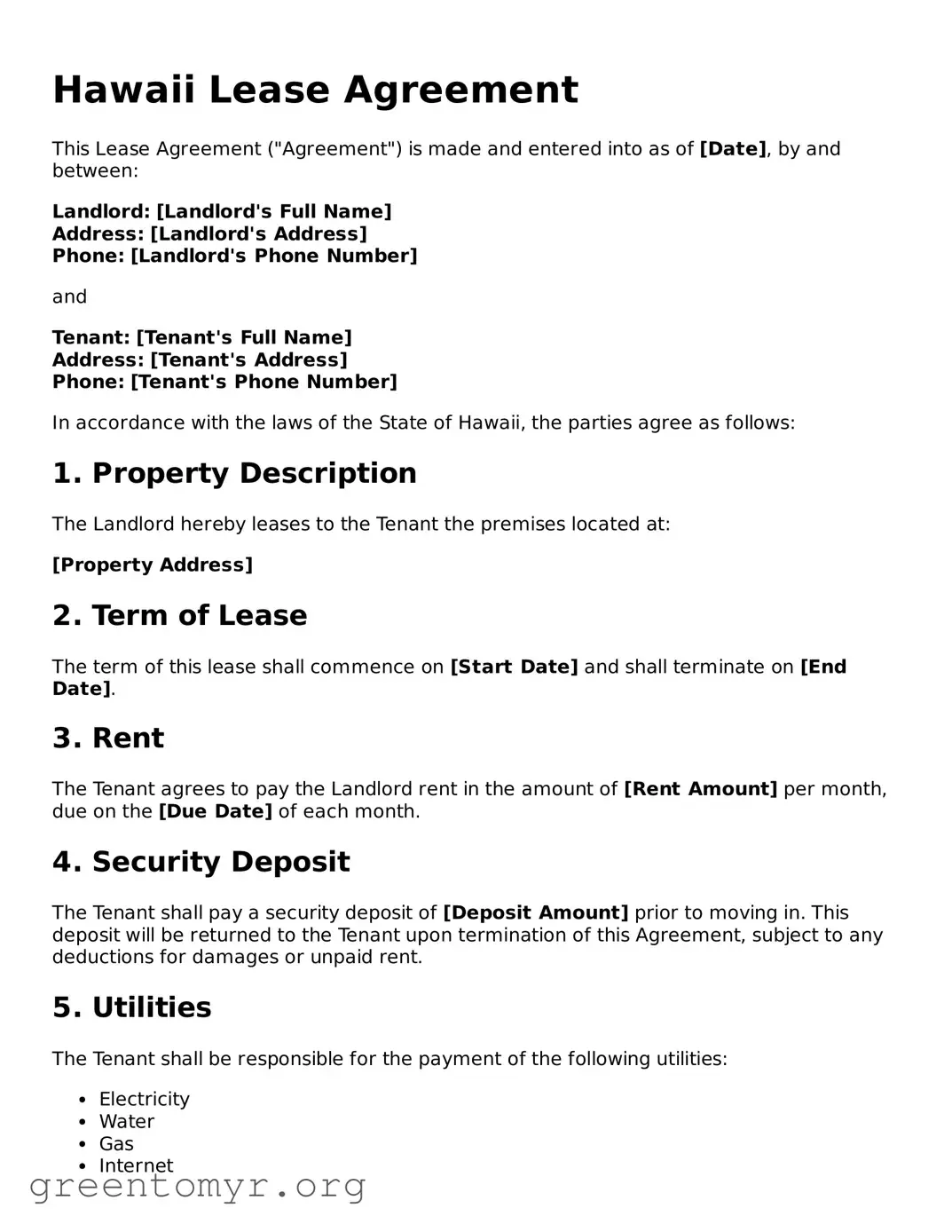
When entering into a rental arrangement in Hawaii, understanding the Hawaii Lease Agreement form is essential for both landlords and tenants. This document outlines the terms and conditions that govern the rental of residential or commercial property, ensuring that both parties are on the same page. Key aspects of the lease include the duration of the tenancy, which specifies how long the agreement will be in effect, and the rent amount, detailing what the tenant is expected to pay and when. Additionally, the form addresses security deposits, outlining the amount required and the conditions under which it may be withheld. Important clauses regarding maintenance responsibilities, rules for property use, and procedures for terminating the lease are also included. By clearly defining these elements, the Hawaii Lease Agreement form helps to prevent misunderstandings and disputes, fostering a smoother rental experience for everyone involved.
Hawaii Lease Agreement
This Lease Agreement ("Agreement") is made and entered into as of [Date], by and between:
Landlord: [Landlord's Full Name]
Address: [Landlord's Address]
Phone: [Landlord's Phone Number]
and
Tenant: [Tenant's Full Name]
Address: [Tenant's Address]
Phone: [Tenant's Phone Number]
In accordance with the laws of the State of Hawaii, the parties agree as follows:
1. Property Description
The Landlord hereby leases to the Tenant the premises located at:
[Property Address]
2. Term of Lease
The term of this lease shall commence on [Start Date] and shall terminate on [End Date].
3. Rent
The Tenant agrees to pay the Landlord rent in the amount of [Rent Amount] per month, due on the [Due Date] of each month.
4. Security Deposit
The Tenant shall pay a security deposit of [Deposit Amount] prior to moving in. This deposit will be returned to the Tenant upon termination of this Agreement, subject to any deductions for damages or unpaid rent.
5. Utilities
The Tenant shall be responsible for the payment of the following utilities:
6. Maintenance and Repairs
The Tenant agrees to keep the property in good condition and promptly report any necessary repairs to the Landlord.
7. Termination
Either party may terminate this Agreement by providing written notice of [Notice Period] days to the other party.
8. Governing Law
This Agreement shall be governed by the laws of the State of Hawaii.
9. Signatures
By signing below, both parties agree to the terms outlined in this Lease Agreement.
Landlord Signature: ___________________________ Date: ___________
Tenant Signature: ____________________________ Date: ___________
| Fact Name | Description |
|---|---|
| Governing Law | The Hawaii Lease Agreement is governed by the laws of the State of Hawaii. |
| Types of Leases | Hawaii offers various lease types, including residential, commercial, and agricultural leases. |
| Security Deposit Limits | For residential leases, the maximum security deposit is typically one month's rent, unless otherwise specified. |
| Notice Requirements | Landlords must provide tenants with written notice for lease termination, usually 45 days for month-to-month leases. |
Filling out the Hawaii Lease Agreement form is an important step in establishing a rental arrangement. It sets the groundwork for the responsibilities and expectations of both the landlord and tenant. After completing the form, it is advisable to review it thoroughly and ensure that all parties involved understand and agree to the terms laid out in the document.
A Hawaii Lease Agreement form is a legal document that outlines the terms and conditions under which a landlord rents property to a tenant in Hawaii. It includes details such as the rental amount, duration of the lease, and responsibilities of both parties.
The key components typically include:
While oral agreements can be legally binding, a written lease agreement is highly recommended in Hawaii. It provides clarity and protects the rights of both the landlord and tenant. A written document helps prevent misunderstandings and disputes over the lease terms.
In Hawaii, lease agreements can vary in duration. They can be short-term (typically month-to-month) or long-term (up to several years). The specific duration should be clearly stated in the lease agreement to avoid confusion.
A security deposit is a sum of money collected by the landlord to cover potential damages or unpaid rent. In Hawaii, the maximum amount for a security deposit is typically one month's rent for unfurnished properties and up to two months' rent for furnished properties. The landlord must return the deposit within 14 days after the lease ends, minus any deductions for damages or unpaid rent.
Yes, a tenant can break a lease in Hawaii, but it may come with penalties. The lease agreement should specify the conditions under which a tenant can terminate the lease early. Common reasons for breaking a lease include job relocation, health issues, or unsafe living conditions. Tenants should provide written notice to the landlord as per the lease terms.
If a landlord fails to maintain the property, tenants have the right to request repairs in writing. If the landlord does not respond or address the issues, tenants may have legal options, including withholding rent or terminating the lease. It is advisable to document all communication and attempts to resolve the issue.
Yes, Hawaii has specific laws that govern residential lease agreements, primarily found in the Hawaii Revised Statutes. These laws cover various aspects, including security deposits, eviction procedures, and tenant rights. It is important for both landlords and tenants to be aware of these regulations to ensure compliance and protect their rights.
A Hawaii Lease Agreement form can be obtained from various sources, including real estate offices, legal websites, and local government resources. It is important to ensure that the form is up-to-date and complies with current Hawaii laws. Consulting with a legal professional can also provide additional guidance.
Filling out a Hawaii Lease Agreement can seem straightforward, but many individuals make common mistakes that can lead to complications down the road. One frequent error is failing to include all necessary parties in the agreement. Both the landlord and tenant must be clearly identified to avoid disputes. Omitting a party can create confusion and potential legal issues.
Another mistake is not specifying the rental amount clearly. The lease should state the exact monthly rent, including any additional fees. If this information is vague or missing, it can lead to misunderstandings regarding payment expectations.
Many people overlook the importance of detailing the lease term. A clear start and end date for the lease should be included. Without this information, tenants may assume they have a longer or shorter duration than intended, which can lead to premature evictions or unwanted renewals.
It's also common to neglect the security deposit details. The lease should outline the amount of the security deposit, the conditions for its return, and any deductions that may apply. Clarity in this area helps protect both parties and ensures transparency.
Some individuals fail to include maintenance responsibilities in the agreement. Clearly stating who is responsible for repairs and maintenance can prevent disputes later. It’s essential for both landlords and tenants to understand their obligations to maintain the property.
Another mistake is not addressing the rules regarding pets. If pets are allowed, the lease should specify any restrictions, such as breed or size limits. Conversely, if pets are prohibited, this should be clearly stated to avoid future conflicts.
People often forget to include the terms for lease termination. Whether it’s a notice period or conditions for early termination, these details are crucial. Without them, misunderstandings can arise when either party wishes to end the lease.
Many lease agreements lack clarity on utilities and services. It is important to specify which utilities are included in the rent and which are the tenant's responsibility. This clarity helps avoid disputes over unexpected bills.
Finally, some individuals do not seek legal advice when drafting or reviewing the lease agreement. Consulting with a legal expert can help ensure that the lease complies with local laws and protects the rights of both parties. Taking this step can save time and money in the long run.
When entering into a lease agreement in Hawaii, there are several other forms and documents that may be necessary to ensure a smooth process. Each of these documents serves a specific purpose and helps clarify the terms of the lease. Below are some commonly used forms alongside the Hawaii Lease Agreement.
Using these documents in conjunction with the Hawaii Lease Agreement can help both landlords and tenants establish clear expectations and protect their rights throughout the leasing process.
Rental Agreement: Similar to a lease agreement, a rental agreement outlines the terms of renting a property. It typically covers the duration of the rental period, payment details, and responsibilities of both the landlord and tenant.
Sublease Agreement: This document allows a tenant to rent out their leased property to another person. It includes terms similar to a lease, such as rent amount and duration, but is between the original tenant and the new tenant.
Commercial Lease: Used for business properties, this lease agreement details the terms of renting commercial space. It shares many similarities with residential leases but often includes additional clauses relevant to business operations.
Month-to-Month Lease: This flexible agreement allows tenants to rent a property on a monthly basis without a long-term commitment. It can be terminated with short notice, similar to a standard lease but with different timeframes.
Tenancy Agreement: This is a broader term that encompasses various types of rental agreements. It specifies the rights and responsibilities of both parties, much like a lease agreement, but can vary widely in terms.
Roommate Agreement: When multiple tenants share a rental property, a roommate agreement outlines each person's responsibilities. It is similar to a lease but focuses more on shared living arrangements and responsibilities among roommates.
When filling out the Hawaii Lease Agreement form, it is essential to approach the task with care and attention to detail. Here are some key dos and don'ts to consider:
By following these guidelines, you can help ensure that your lease agreement is filled out correctly and protects your rights as a tenant. Taking the time to understand the lease will contribute to a more positive rental experience.
The Hawaii Lease Agreement form is often misunderstood. Here are seven common misconceptions that need clarification:
Many people believe that lease agreements are universally standard. In reality, lease agreements vary significantly by state and even by locality. Hawaii has specific laws and regulations that govern lease agreements, making it crucial to use the correct form.
Some individuals think that a verbal agreement is enough to establish a lease. However, having a written lease agreement is essential for legal protection and clarity. In Hawaii, a written lease helps prevent disputes and provides a clear record of the terms agreed upon.
There is a misconception that all security deposits are non-refundable. In Hawaii, landlords must return the security deposit within a specific timeframe after the lease ends, provided there are no damages beyond normal wear and tear.
Many tenants believe that lease terms can be modified informally. In Hawaii, any changes to the lease agreement must be documented in writing and signed by both parties to be enforceable.
Some tenants think that landlords can access the rental property whenever they choose. In Hawaii, landlords are required to provide reasonable notice before entering the property, except in emergencies.
There is a belief that all lease agreements have the same notice period for termination. In Hawaii, the notice period can vary based on the length of the lease and the specific terms outlined in the agreement.
Many tenants feel powerless in lease agreements. However, Hawaii law provides tenants with various rights, including the right to a habitable living environment and protection against unlawful eviction.
When dealing with the Hawaii Lease Agreement form, it’s important to understand its key elements. Here are some essential takeaways:
By following these guidelines, both landlords and tenants can create a clear and effective lease agreement that protects their rights and responsibilities.