When buying or selling a motorcycle in Hawaii, having a properly completed Motorcycle Bill of Sale form is essential. This document serves as a legal record of the transaction, providing important details about the motorcycle, such as its make, model, year, and Vehicle Identification Number (VIN). It also includes the names and addresses of both the buyer and seller, ensuring that all parties are clearly identified. The form typically outlines the purchase price and may contain information about any warranties or conditions of the sale. By documenting the transaction, this form protects the interests of both the buyer and seller, helping to prevent disputes in the future. Additionally, it may be required for registration and title transfer with the state, making it a crucial step in the motorcycle ownership process. Understanding the significance of this document can help ensure a smooth and successful transaction.
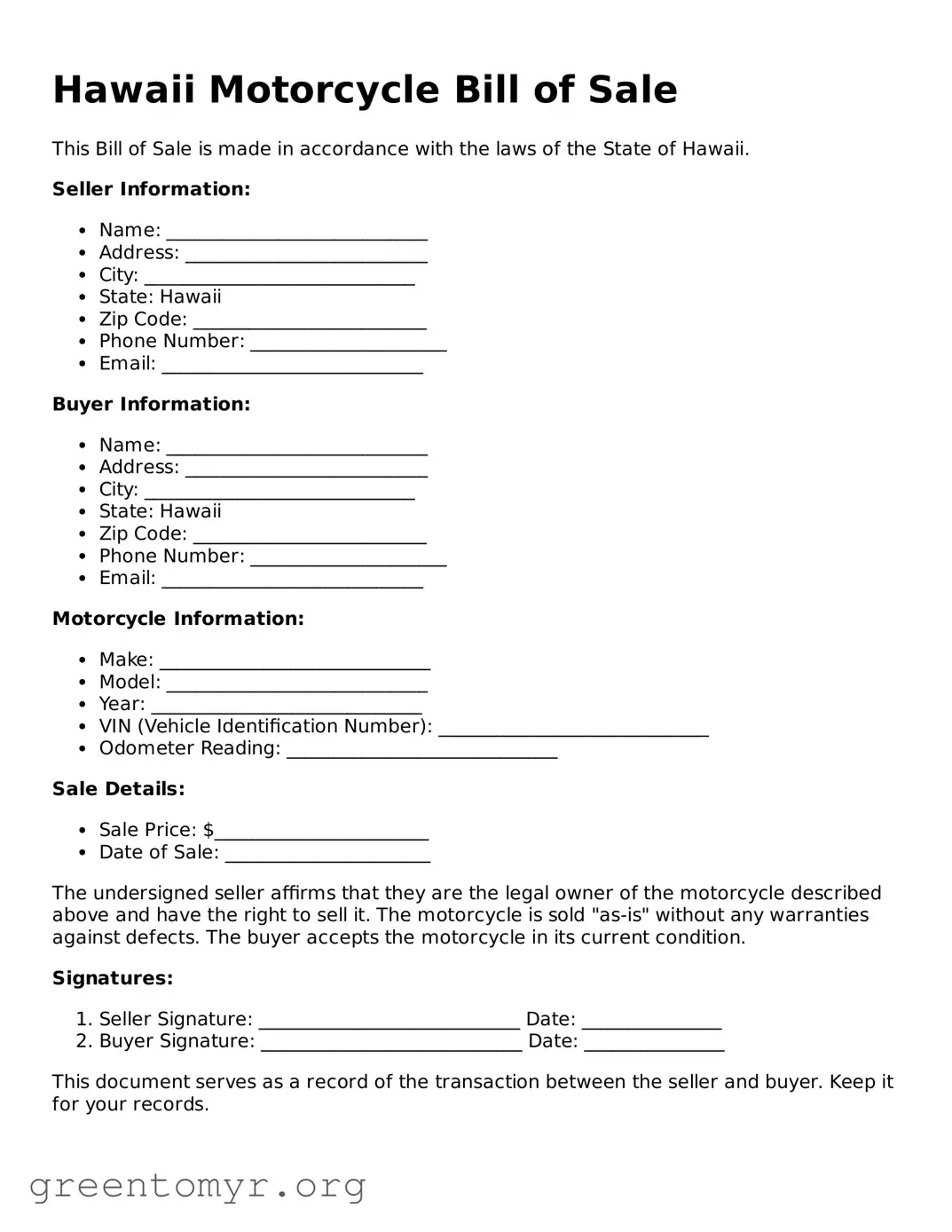
Hawaii Motorcycle Bill of Sale
This Bill of Sale is made in accordance with the laws of the State of Hawaii.
Seller Information:
Buyer Information:
Motorcycle Information:
Sale Details:
The undersigned seller affirms that they are the legal owner of the motorcycle described above and have the right to sell it. The motorcycle is sold "as-is" without any warranties against defects. The buyer accepts the motorcycle in its current condition.
Signatures:
This document serves as a record of the transaction between the seller and buyer. Keep it for your records.
| Fact Name | Description |
|---|---|
| Purpose | The Hawaii Motorcycle Bill of Sale form serves as a legal document to record the sale of a motorcycle between a buyer and a seller. |
| Governing Law | This form is governed by the Hawaii Revised Statutes, specifically under Chapter 286 regarding motor vehicle registration. |
| Required Information | Essential details include the motorcycle's make, model, year, VIN (Vehicle Identification Number), and odometer reading. |
| Buyer and Seller Information | The form requires the full names and addresses of both the buyer and the seller to ensure proper identification. |
| Sale Price | The sale price must be clearly stated on the form to document the transaction amount. |
| Signatures | Both the buyer and seller must sign the form to validate the agreement and confirm the transaction. |
| Notarization | While notarization is not mandatory, it can provide an additional layer of authenticity to the document. |
| Record Keeping | It is advisable for both parties to keep a copy of the signed Bill of Sale for their records. |
| Transfer of Ownership | The Bill of Sale is often required when registering the motorcycle in the buyer's name with the state. |
After obtaining the Hawaii Motorcycle Bill of Sale form, it is essential to complete it accurately to ensure a smooth transfer of ownership. This document serves as proof of the sale and includes important details about the motorcycle and the parties involved. Follow the steps below to fill out the form correctly.
Once completed, the form should be kept by both parties as a record of the transaction. It may be required for registration or future reference.
A Hawaii Motorcycle Bill of Sale is a legal document that serves as proof of the sale and transfer of ownership of a motorcycle in the state of Hawaii. This form captures essential details about the transaction, including the buyer's and seller's information, the motorcycle's specifications, and the sale price. It is crucial for both parties to have this document to protect their interests and ensure a smooth transfer of ownership.
Having a Bill of Sale is important for several reasons:
The Hawaii Motorcycle Bill of Sale should include the following key information:
In Hawaii, notarization of the Bill of Sale is not a strict requirement. However, having the document notarized can add an extra layer of protection and authenticity. This can be particularly beneficial if there are any disputes in the future. While it may not be necessary, it is often recommended to ensure both parties feel secure in the transaction.
Once the Bill of Sale is completed and signed by both parties, follow these steps:
Filling out the Hawaii Motorcycle Bill of Sale form can seem straightforward, but many people make common mistakes that can lead to complications down the road. One frequent error is failing to include all necessary details about the motorcycle. It’s essential to provide accurate information such as the Vehicle Identification Number (VIN), make, model, year, and odometer reading. Missing even one of these details can create confusion during the transfer of ownership.
Another mistake often encountered is not having both the buyer and seller sign the document. Both parties must sign the Bill of Sale for it to be legally binding. If only one party signs or if the signatures are missing altogether, the document may not hold up if disputes arise later. Always ensure that both parties have signed the form before finalizing the sale.
People also tend to overlook the importance of including the sale price. While it might seem trivial, documenting the amount paid for the motorcycle is crucial for tax purposes and future reference. Leaving this section blank can lead to issues with the Department of Motor Vehicles (DMV) when registering the vehicle in the buyer's name.
Lastly, some individuals forget to keep a copy of the completed Bill of Sale for their records. This document serves as proof of the transaction and can be vital if questions or disputes come up later. Both the buyer and seller should retain a signed copy to protect their interests. By avoiding these common mistakes, you can ensure a smoother transaction and a hassle-free ownership transfer.
When buying or selling a motorcycle in Hawaii, several documents complement the Motorcycle Bill of Sale form. These documents help ensure a smooth transaction and provide necessary legal protections for both parties involved.
Gathering these documents along with the Motorcycle Bill of Sale ensures a comprehensive approach to the sale or purchase of a motorcycle in Hawaii. Proper documentation safeguards both parties and facilitates a smooth transition of ownership.
The Motorcycle Bill of Sale form is an important document that serves as proof of a transaction involving a motorcycle. There are several other documents that share similarities with this form, each serving a specific purpose in the realm of vehicle transactions. Below are five documents that are comparable to the Motorcycle Bill of Sale:
When filling out the Hawaii Motorcycle Bill of Sale form, it’s important to ensure that all information is accurate and complete. Here’s a list of things you should and shouldn’t do to make the process smoother.
The Hawaii Motorcycle Bill of Sale form is an important document for motorcycle transactions. However, several misconceptions exist about its use and requirements. Here are ten common misconceptions:
Many people believe a bill of sale is only required for dealership transactions. In Hawaii, a bill of sale is recommended for all motorcycle sales, including private sales, to provide proof of the transaction.
While informal agreements may seem sufficient, using a specific Motorcycle Bill of Sale form ensures all necessary information is included and recognized by the state.
Both the buyer and the seller should sign the bill of sale. This protects both parties and confirms the transaction.
In Hawaii, the bill of sale is often required for registering the motorcycle in the new owner's name. It serves as proof of ownership.
While notarization is not always required, having the bill of sale notarized can provide additional legal protection and verification.
The Motorcycle Bill of Sale can be used for both new and used motorcycles. It documents any sale, regardless of the condition of the vehicle.
Relying on verbal agreements can lead to disputes. A written bill of sale provides clear evidence of the terms agreed upon by both parties.
While there are common elements that should be included, the format of the bill of sale can vary. It should contain essential information, but flexibility exists in its presentation.
If both parties agree, changes can be made to the bill of sale before finalizing the transaction. It's important to document any amendments clearly.
A properly completed and signed bill of sale is a legally binding document. It can be used in court to resolve disputes regarding ownership or terms of sale.
When it comes to buying or selling a motorcycle in Hawaii, the Motorcycle Bill of Sale form is an essential document. Here are some key takeaways to keep in mind:
Understanding these key points can facilitate a smoother transaction and ensure that both parties are protected during the sale of a motorcycle.