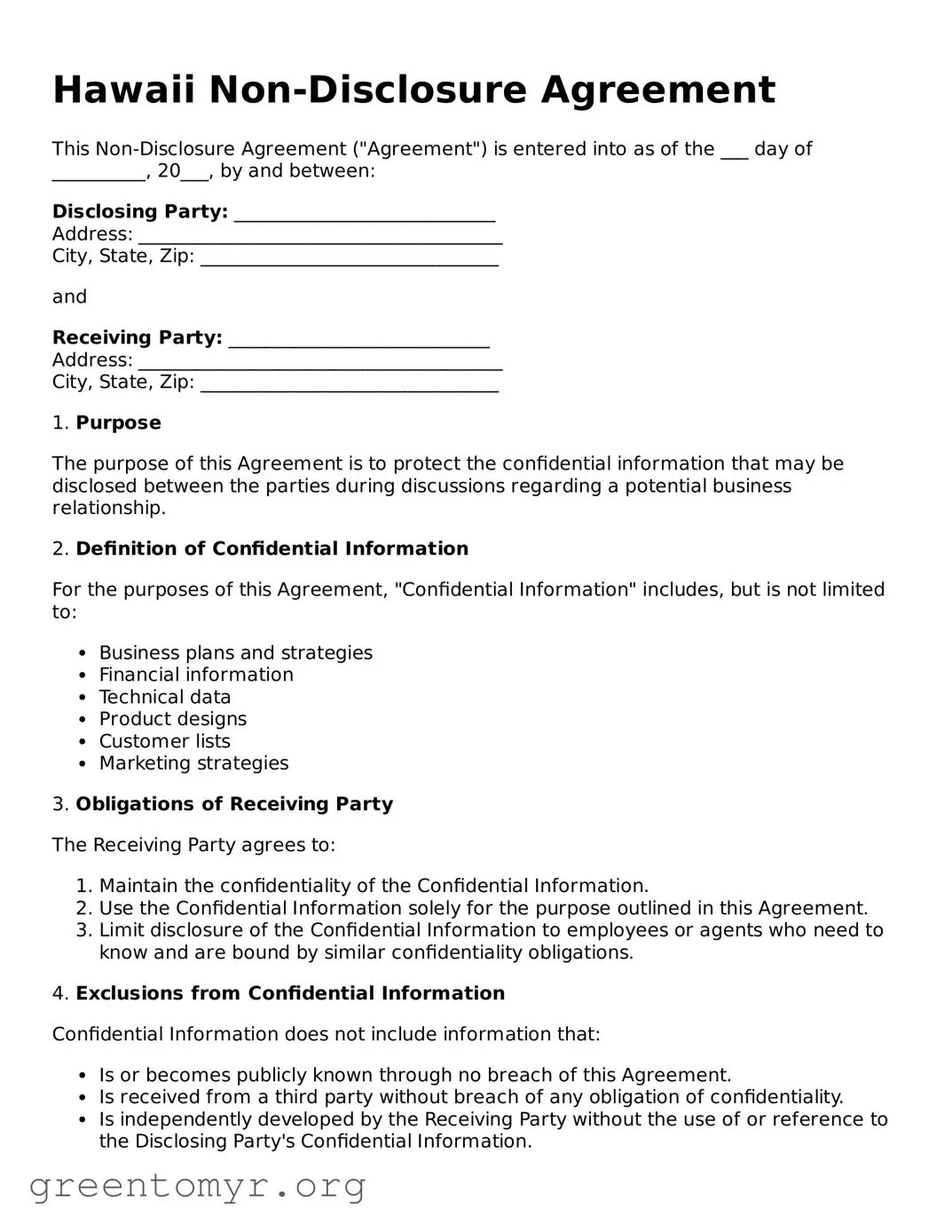
In the vibrant and diverse business landscape of Hawaii, protecting sensitive information is essential for maintaining competitive advantages and fostering trust between parties. The Hawaii Non-disclosure Agreement (NDA) serves as a critical tool for individuals and businesses alike, ensuring that confidential information remains safeguarded from unauthorized disclosure. This legally binding contract outlines the terms under which sensitive data, trade secrets, and proprietary information can be shared between parties while establishing clear expectations for confidentiality. Key components of the NDA include the definition of what constitutes confidential information, the obligations of the parties involved, and the duration of the confidentiality obligations. Additionally, the agreement addresses potential exceptions, such as information that becomes public knowledge or is independently developed. By utilizing this form, businesses can create a secure environment for collaboration, innovation, and growth, all while adhering to the unique legal standards set forth in Hawaii.
Hawaii Non-Disclosure Agreement
This Non-Disclosure Agreement ("Agreement") is entered into as of the ___ day of __________, 20___, by and between:
Disclosing Party: ____________________________
Address: _______________________________________
City, State, Zip: ________________________________
and
Receiving Party: ____________________________
Address: _______________________________________
City, State, Zip: ________________________________
1. Purpose
The purpose of this Agreement is to protect the confidential information that may be disclosed between the parties during discussions regarding a potential business relationship.
2. Definition of Confidential Information
For the purposes of this Agreement, "Confidential Information" includes, but is not limited to:
3. Obligations of Receiving Party
The Receiving Party agrees to:
4. Exclusions from Confidential Information
Confidential Information does not include information that:
5. Term
This Agreement shall commence on the date first written above and shall continue in effect for a period of ___ years unless terminated by either party with ___ days written notice.
6. Governing Law
This Agreement shall be governed by and construed in accordance with the laws of the State of Hawaii.
7. Signatures
By signing below, both parties agree to the terms outlined in this Non-Disclosure Agreement.
Disclosing Party: ____________________________
Signature: ____________________________________
Date: ________________________________________
Receiving Party: ____________________________
Signature: ____________________________________
Date: ________________________________________
| Fact Name | Description |
|---|---|
| Purpose | The Hawaii Non-disclosure Agreement (NDA) protects confidential information shared between parties. |
| Governing Law | The NDA is governed by the laws of the State of Hawaii. |
| Parties Involved | The agreement typically involves a disclosing party and a receiving party. |
| Duration | The duration of confidentiality obligations is specified in the agreement and can vary based on the nature of the information. |
| Enforcement | If breached, the disclosing party may seek legal remedies, including injunctions and damages. |
Completing the Hawaii Non-disclosure Agreement form is an important step in ensuring that confidential information remains protected. After filling out the form, it will need to be signed and dated by all parties involved, after which it can be exchanged as needed.
A Hawaii Non-disclosure Agreement is a legal contract designed to protect confidential information shared between parties. This agreement ensures that sensitive information, such as trade secrets or proprietary data, remains confidential and is not disclosed to unauthorized individuals or entities.
Any individual or business that needs to share confidential information can benefit from using an NDA. This includes:
Typically, an NDA can protect various types of information, including but not limited to:
The duration of the confidentiality obligation can vary. In most cases, NDAs specify a time frame during which the information must remain confidential. This period can range from a few years to an indefinite time, depending on the nature of the information and the agreement between the parties.
Yes, there are limitations. An NDA cannot protect information that is:
Additionally, an NDA cannot be used to prevent someone from reporting illegal activities or violations of law.
If a party breaches the NDA, the injured party may seek legal remedies. This could include:
It's important to note that the specific consequences will depend on the terms outlined in the agreement.
Creating a Non-disclosure Agreement in Hawaii can be straightforward. You can either use a template that suits your needs or consult with a legal professional to draft a custom agreement. Ensure that the NDA clearly outlines:
While it's not strictly necessary, having a lawyer review your NDA is highly recommended. A legal professional can ensure that the agreement is enforceable and tailored to your specific situation. This step can help prevent potential issues down the line and provide peace of mind that your confidential information is well protected.
Filling out a Non-disclosure Agreement (NDA) in Hawaii can be a straightforward process, but mistakes can lead to complications. One common error occurs when individuals forget to include all parties involved. An NDA should clearly state who is bound by the agreement. Omitting a party can leave sensitive information unprotected.
Another frequent mistake is neglecting to define the confidential information adequately. It is essential to specify what constitutes confidential information. Vague descriptions can lead to misunderstandings and may weaken the agreement's enforceability.
Some individuals also overlook the importance of specifying the duration of the confidentiality obligations. An NDA should indicate how long the information must remain confidential. Failing to do this can lead to disputes down the line, as parties may have different expectations regarding the timeframe.
People often forget to include the governing law clause. This section clarifies which state's laws will govern the agreement. Without this, legal issues may become more complicated, especially if parties are located in different states.
Inadequate signatures can also pose a problem. Each party must sign the NDA for it to be valid. Sometimes, individuals assume that an electronic signature is sufficient without checking state laws. Ensure that all signatures are properly obtained to avoid any issues.
Another mistake is not consulting with legal counsel. While it may seem tempting to complete the NDA without assistance, legal advice can provide clarity and ensure that the document meets all necessary requirements. An experienced attorney can help identify potential pitfalls and suggest improvements.
Finally, failing to keep a copy of the signed agreement is a significant oversight. After signing, each party should retain a copy for their records. This ensures that everyone has access to the terms of the agreement, which can be crucial if disputes arise in the future.
When entering into a Non-disclosure Agreement (NDA) in Hawaii, there are several other forms and documents that can be beneficial to have on hand. These documents help clarify the terms of the agreement, protect intellectual property, and outline the responsibilities of all parties involved. Below is a list of common forms that are often used alongside an NDA.
Having these documents in place can help create a comprehensive legal framework that protects all parties involved. It is always wise to consult with a legal expert to ensure that the agreements meet specific needs and comply with local laws.
When filling out the Hawaii Non-disclosure Agreement form, it's important to follow specific guidelines to ensure accuracy and compliance. Here’s a list of things you should and shouldn't do:
Misconceptions about the Hawaii Non-disclosure Agreement (NDA) can lead to misunderstandings about its purpose and effectiveness. Here are four common misconceptions:
Understanding these misconceptions can help individuals and businesses navigate the complexities of NDAs more effectively.
When engaging in business relationships in Hawaii, a Non-disclosure Agreement (NDA) serves as a crucial tool to protect sensitive information. Here are five key takeaways to consider when filling out and using the Hawaii Non-disclosure Agreement form:
By following these guidelines, individuals and businesses can effectively utilize the Hawaii Non-disclosure Agreement form to protect their interests while fostering trust in their professional relationships.