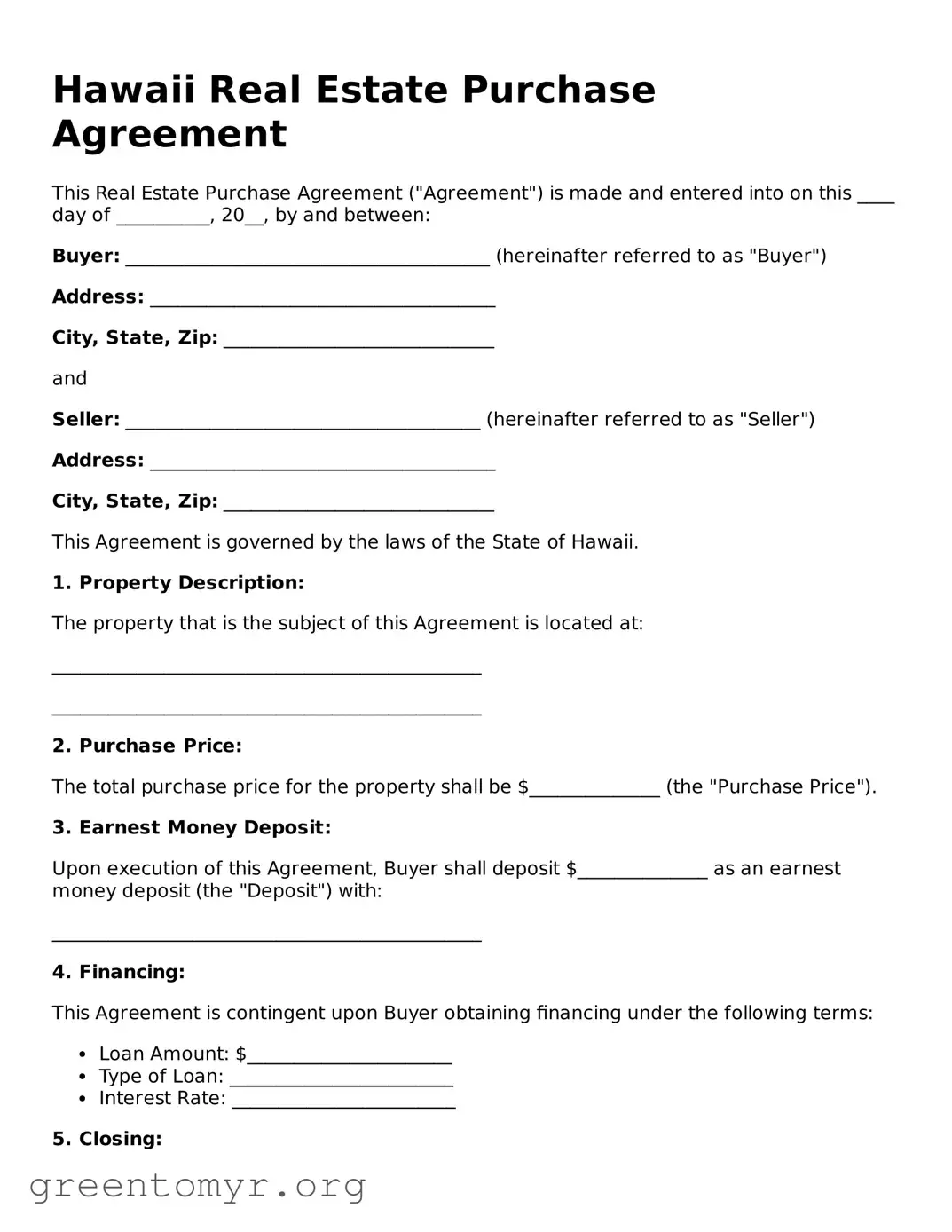
When navigating the vibrant landscape of Hawaii's real estate market, understanding the Hawaii Real Estate Purchase Agreement form is essential for both buyers and sellers. This comprehensive document outlines the terms and conditions of a property transaction, ensuring that all parties are on the same page throughout the process. Key components include the identification of the property, purchase price, and financing details, which establish the financial framework of the deal. Additionally, it covers important contingencies, such as inspection and appraisal requirements, which protect the interests of buyers. The agreement also specifies the closing timeline and any associated fees, providing clarity on the transaction's progression. By familiarizing yourself with this form, you can navigate the complexities of real estate transactions in Hawaii with greater confidence and ease.
Hawaii Real Estate Purchase Agreement
This Real Estate Purchase Agreement ("Agreement") is made and entered into on this ____ day of __________, 20__, by and between:
Buyer: _______________________________________ (hereinafter referred to as "Buyer")
Address: _____________________________________
City, State, Zip: _____________________________
and
Seller: ______________________________________ (hereinafter referred to as "Seller")
Address: _____________________________________
City, State, Zip: _____________________________
This Agreement is governed by the laws of the State of Hawaii.
1. Property Description:
The property that is the subject of this Agreement is located at:
______________________________________________
______________________________________________
2. Purchase Price:
The total purchase price for the property shall be $______________ (the "Purchase Price").
3. Earnest Money Deposit:
Upon execution of this Agreement, Buyer shall deposit $______________ as an earnest money deposit (the "Deposit") with:
______________________________________________
4. Financing:
This Agreement is contingent upon Buyer obtaining financing under the following terms:
5. Closing:
The closing of the purchase and sale of the property shall occur on or before the ____ day of __________, 20__.
6. Contingencies:
This Agreement is subject to the following contingencies:
7. Additional Terms:
______________________________________________
______________________________________________
8. Signatures:
By signing below, the parties acknowledge and agree to the terms and conditions outlined in this Agreement.
Buyer Signature: ___________________________ Date: ______________
Seller Signature: ___________________________ Date: ______________
| Fact Name | Description |
|---|---|
| Governing Law | The Hawaii Real Estate Purchase Agreement is governed by the laws of the State of Hawaii. |
| Purpose | This agreement serves as a legally binding contract between a buyer and seller for the purchase of real estate in Hawaii. |
| Essential Elements | Key components include the purchase price, property description, and terms of sale. |
| Disclosure Requirements | Hawaii law mandates that sellers disclose certain information about the property, including its condition and any known defects. |
| Contingencies | Common contingencies may include financing, inspection, and appraisal, allowing buyers to back out under specific conditions. |
Once you have the Hawaii Real Estate Purchase Agreement form in front of you, it’s time to start filling it out. This document is essential for formalizing the sale of a property, and accuracy is key. Follow the steps below to ensure you complete the form correctly.
After completing the form, it’s important to review it carefully for any errors or missing information. Once everything is in order, you can proceed with the next steps in the buying or selling process.
A Hawaii Real Estate Purchase Agreement is a legally binding document that outlines the terms and conditions under which a buyer agrees to purchase property from a seller. This agreement includes details such as the purchase price, financing arrangements, and any contingencies that must be met before the sale can be finalized.
The agreement should contain the following key elements:
Yes, common contingencies in a Hawaii Real Estate Purchase Agreement include:
The purchase price is typically negotiated between the buyer and seller. Factors influencing the price may include the property's market value, condition, location, and comparable sales in the area. A real estate agent can assist in determining a fair price based on these factors.
If either party fails to fulfill their obligations under the agreement, the other party may have legal recourse. This could include seeking damages or specific performance, which is a legal action to compel the party to complete the transaction as agreed. It is advisable to consult a legal professional in such situations.
While it is not mandatory to have a real estate agent when completing a Real Estate Purchase Agreement, having one can be beneficial. Agents provide expertise, help with negotiations, and ensure that all legal requirements are met. Buyers and sellers may choose to work independently, but they should be well-informed about the process.
Yes, the agreement can be modified after it is signed, but both parties must agree to the changes. Any modifications should be documented in writing and signed by both the buyer and seller to ensure clarity and enforceability.
If you have additional questions about the Hawaii Real Estate Purchase Agreement, consider reaching out to a real estate professional or a legal expert. They can provide guidance tailored to your specific situation and help clarify any uncertainties you may have.
Filling out the Hawaii Real Estate Purchase Agreement form can be a complex process. Many people make common mistakes that can lead to confusion or complications later on. One frequent error is failing to include all required information. Buyers and sellers need to provide complete details about the property, including the address, legal description, and any relevant disclosures. Omitting this information can delay the transaction.
Another mistake involves the use of incorrect dates. It's essential to specify the correct dates for the offer, acceptance, and closing. Misunderstandings can arise if these dates are not clear. Additionally, using inconsistent dates throughout the document can create confusion for all parties involved.
People often overlook the importance of understanding the terms of the agreement. This includes the purchase price, financing details, and any contingencies. If any of these terms are unclear or incorrectly stated, it could lead to disputes or even a failed transaction. Buyers and sellers should take the time to review these terms carefully.
Many individuals also neglect to sign the agreement properly. Each party must sign and date the document to make it legally binding. If any signatures are missing or incorrectly placed, it can invalidate the agreement. Ensuring that all parties have signed is crucial.
Another common issue is not addressing the contingencies adequately. Buyers may want to include contingencies related to inspections, financing, or appraisals. Failing to specify these can leave buyers vulnerable and without necessary protections. Clearly outlining contingencies can help prevent future problems.
Lastly, some people do not seek professional help when filling out the form. While it may seem straightforward, real estate transactions can be complicated. Consulting with a real estate agent or attorney can provide guidance and help avoid mistakes. Taking this step can lead to a smoother transaction overall.
When engaging in real estate transactions in Hawaii, several documents accompany the Real Estate Purchase Agreement to ensure clarity and legal compliance. These documents play crucial roles in outlining the terms, conditions, and obligations of all parties involved. Below is a list of common forms and documents used alongside the Real Estate Purchase Agreement.
Understanding these documents is vital for both buyers and sellers in navigating the complexities of real estate transactions in Hawaii. Each document serves a specific purpose, ensuring that all parties are informed and protected throughout the process.
When filling out the Hawaii Real Estate Purchase Agreement form, it's important to approach the task with care. Here are four key things to consider:
Understanding the Hawaii Real Estate Purchase Agreement form is crucial for anyone involved in property transactions in the state. However, several misconceptions can lead to confusion. Here are five common misconceptions:
Awareness of these misconceptions can lead to a more informed and smoother real estate transaction process in Hawaii.
When dealing with the Hawaii Real Estate Purchase Agreement form, there are several important points to keep in mind. Understanding these key takeaways can help ensure a smoother transaction process.
By following these takeaways, you can navigate the Hawaii Real Estate Purchase Agreement more effectively. Stay informed and proactive throughout the process.