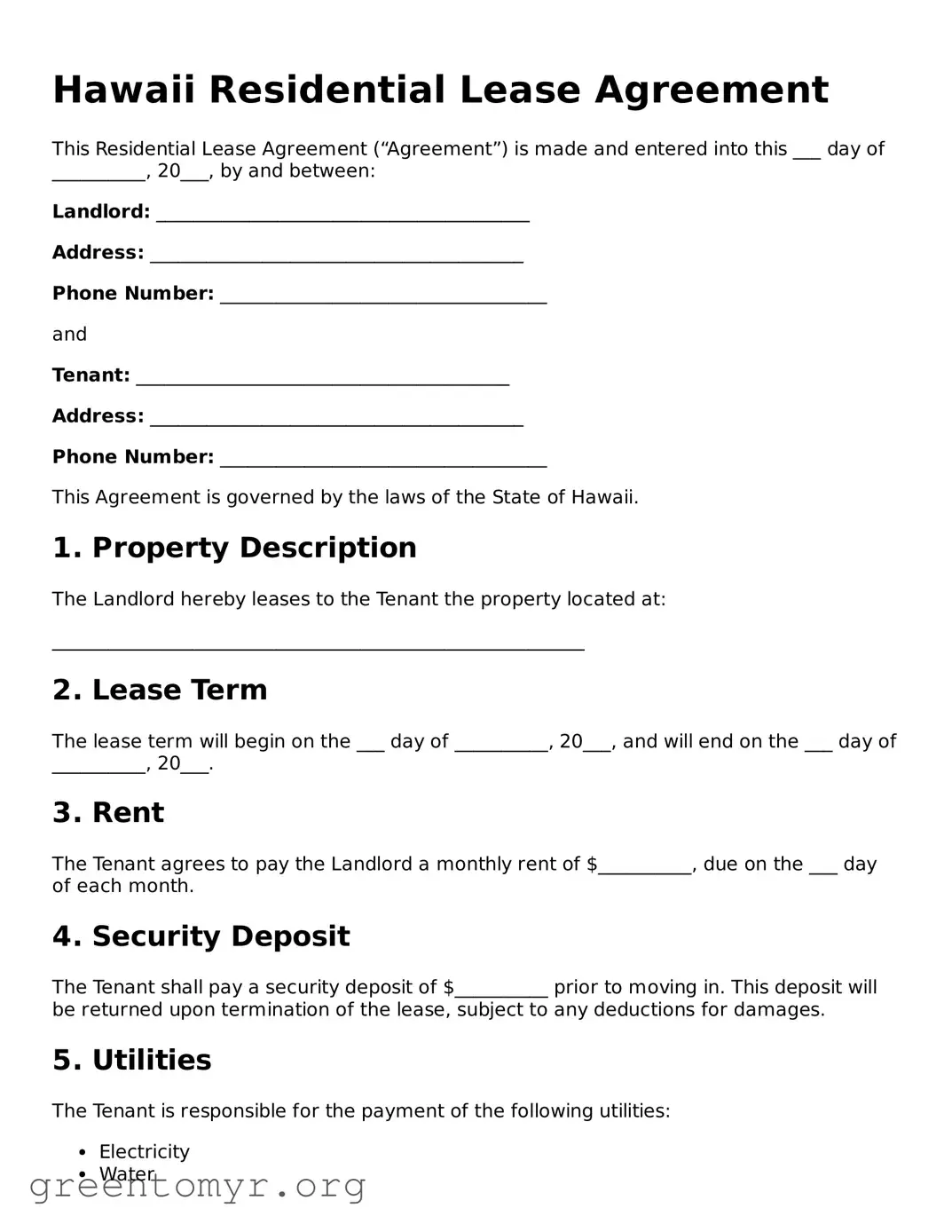
When entering into a rental agreement in Hawaii, understanding the Hawaii Residential Lease Agreement form is essential for both landlords and tenants. This document serves as a legally binding contract that outlines the terms and conditions of the rental arrangement. Key elements of the form include the duration of the lease, rental payment details, security deposit requirements, and maintenance responsibilities. It also specifies the rights and obligations of both parties, ensuring clarity and protecting interests. Additionally, the agreement may cover provisions related to pets, utilities, and termination procedures, making it a comprehensive tool for managing residential leases in the beautiful Hawaiian Islands. By familiarizing oneself with this form, both landlords and tenants can foster a positive rental experience while minimizing potential disputes.
Hawaii Residential Lease Agreement
This Residential Lease Agreement (“Agreement”) is made and entered into this ___ day of __________, 20___, by and between:
Landlord: ________________________________________
Address: ________________________________________
Phone Number: ___________________________________
and
Tenant: ________________________________________
Address: ________________________________________
Phone Number: ___________________________________
This Agreement is governed by the laws of the State of Hawaii.
1. Property Description
The Landlord hereby leases to the Tenant the property located at:
_________________________________________________________
2. Lease Term
The lease term will begin on the ___ day of __________, 20___, and will end on the ___ day of __________, 20___.
3. Rent
The Tenant agrees to pay the Landlord a monthly rent of $__________, due on the ___ day of each month.
4. Security Deposit
The Tenant shall pay a security deposit of $__________ prior to moving in. This deposit will be returned upon termination of the lease, subject to any deductions for damages.
5. Utilities
The Tenant is responsible for the payment of the following utilities:
6. Maintenance and Repairs
The Tenant agrees to keep the premises in good condition. The Landlord will be responsible for major repairs, while the Tenant will handle minor maintenance.
7. Pets
Pets are not allowed / allowed (circle one). If allowed, the Tenant must pay a non-refundable pet deposit of $__________.
8. Termination
Either party may terminate this Agreement by providing a written notice of ___ days prior to the intended termination date.
9. Governing Law
This Agreement shall be governed by and construed in accordance with the laws of the State of Hawaii.
10. Signatures
By signing below, both parties agree to the terms and conditions of this Lease Agreement.
Landlord Signature: _______________________________ Date: _____________
Tenant Signature: ________________________________ Date: _____________
| Fact Name | Description |
|---|---|
| Governing Law | The Hawaii Residential Lease Agreement is governed by Hawaii Revised Statutes, specifically Chapter 521, which covers residential landlord-tenant laws. |
| Form Purpose | This form serves as a legally binding contract between a landlord and tenant, outlining the terms of the rental arrangement. |
| Lease Duration | Typically, leases can be for a fixed term (e.g., one year) or month-to-month, depending on the agreement between the parties. |
| Security Deposit | Landlords may require a security deposit, which cannot exceed one month's rent, to cover potential damages or unpaid rent. |
| Rent Payment Terms | The agreement should specify the amount of rent, due date, and acceptable payment methods, ensuring clarity for both parties. |
| Maintenance Responsibilities | The lease outlines the responsibilities of both the landlord and tenant regarding property maintenance and repairs. |
| Termination Conditions | Conditions for lease termination must be clearly defined, including notice periods required by either party to end the lease. |
| Dispute Resolution | The form may include provisions for resolving disputes, such as mediation or arbitration, to avoid lengthy court proceedings. |
When preparing to fill out the Hawaii Residential Lease Agreement form, it’s important to gather all necessary information and documents. This will help ensure that the process is smooth and that all required details are accurately recorded. Below are the steps to guide you through filling out the form.
After completing the form, review it carefully to ensure that all information is accurate. Both parties should retain a signed copy for their records. This will help avoid any potential misunderstandings in the future.
A Hawaii Residential Lease Agreement is a legal document that outlines the terms and conditions between a landlord and a tenant for renting a residential property in Hawaii. This agreement specifies the rights and responsibilities of both parties, ensuring a clear understanding of the rental arrangement.
Important terms typically included in a Hawaii Residential Lease Agreement are:
Lease terms in Hawaii can vary. Common durations include:
Choose a term that fits your needs and circumstances.
Generally, a landlord cannot increase the rent during the lease term unless the lease agreement explicitly allows for it. After the lease ends, the landlord may adjust the rent for a new lease. Always check the agreement for specific terms regarding rent increases.
If a tenant needs to break the lease early, they should review the lease agreement for any clauses regarding early termination. Often, tenants must provide written notice and may be responsible for paying rent until a new tenant is found or until the lease expires. Open communication with the landlord can help find a solution.
Yes, Hawaii has specific laws that govern residential leases. These laws cover various aspects, including:
It's important for both landlords and tenants to be familiar with these laws to ensure compliance and protect their rights.
If a tenant faces issues with their landlord, such as maintenance problems or unfair treatment, they should first communicate directly with the landlord. If the issue remains unresolved, tenants may consider the following steps:
Understanding your rights can help you address problems effectively.
Completing the Hawaii Residential Lease Agreement form is an important step in securing a rental property. However, many individuals make common mistakes that can lead to confusion or disputes later on. Understanding these pitfalls can help ensure a smoother leasing process.
One frequent error is failing to provide accurate personal information. Landlords need to know who they are entering into a lease with. Incorrect names, addresses, or contact information can create issues in communication and responsibility. Always double-check that the details entered are correct and up-to-date.
Another mistake involves overlooking the lease term. It is crucial to specify the start and end dates of the lease clearly. Some people may assume these details are understood, but ambiguity can lead to misunderstandings. A well-defined lease term protects both the tenant and the landlord.
Many individuals also neglect to read the entire agreement before signing. Important clauses regarding rent payment, maintenance responsibilities, and rules for the property may be buried within the document. Taking the time to read and understand every section can prevent future conflicts and ensure that all parties are on the same page.
In addition, failing to discuss and clarify any special provisions can be problematic. If there are specific agreements regarding pets, utilities, or modifications to the property, these should be clearly outlined in the lease. Miscommunication about these terms can lead to disputes down the line.
Lastly, some people forget to keep a copy of the signed lease for their records. Having a personal copy is essential for reference. It serves as a reminder of the agreed-upon terms and can be invaluable in case of disputes. Always ensure that you have a copy of the completed and signed lease agreement.
When entering into a rental agreement in Hawaii, it's essential to be familiar with various forms and documents that complement the Residential Lease Agreement. These documents help clarify responsibilities, protect rights, and ensure a smooth rental experience for both landlords and tenants.
Understanding these documents can greatly enhance the rental experience. They provide clarity and structure, helping both landlords and tenants navigate their rights and responsibilities effectively.
The Residential Lease Agreement is a crucial document for landlords and tenants, outlining the terms of renting a property. Several other documents share similarities with the Residential Lease Agreement, each serving a specific purpose in the realm of property rental. Here are four such documents:
Understanding these documents can help both landlords and tenants navigate the rental process more effectively, ensuring a smoother experience for everyone involved.
When filling out the Hawaii Residential Lease Agreement form, it is essential to follow certain guidelines to ensure accuracy and compliance. Here are some key do's and don'ts to consider:
Understanding the Hawaii Residential Lease Agreement is crucial for both landlords and tenants. However, several misconceptions can lead to confusion. Here are seven common misunderstandings:
Being aware of these misconceptions can help both landlords and tenants navigate their agreements more effectively.
When filling out and using the Hawaii Residential Lease Agreement form, it is important to keep the following key takeaways in mind: