When it comes to buying or selling a trailer in Hawaii, having the right documentation is crucial to ensure a smooth transaction. One essential document in this process is the Trailer Bill of Sale form, which serves as a legal record of the sale between the buyer and the seller. This form typically includes vital information such as the names and addresses of both parties, a detailed description of the trailer, including its make, model, year, and Vehicle Identification Number (VIN), as well as the sale price. Additionally, it may contain spaces for signatures and dates, confirming that both parties agree to the terms of the sale. Understanding the importance of this form not only protects the interests of both the buyer and the seller but also facilitates the transfer of ownership, making it an indispensable part of the trailer sales process in the Aloha State. By ensuring that all necessary details are accurately captured, individuals can avoid potential disputes and ensure compliance with state regulations.
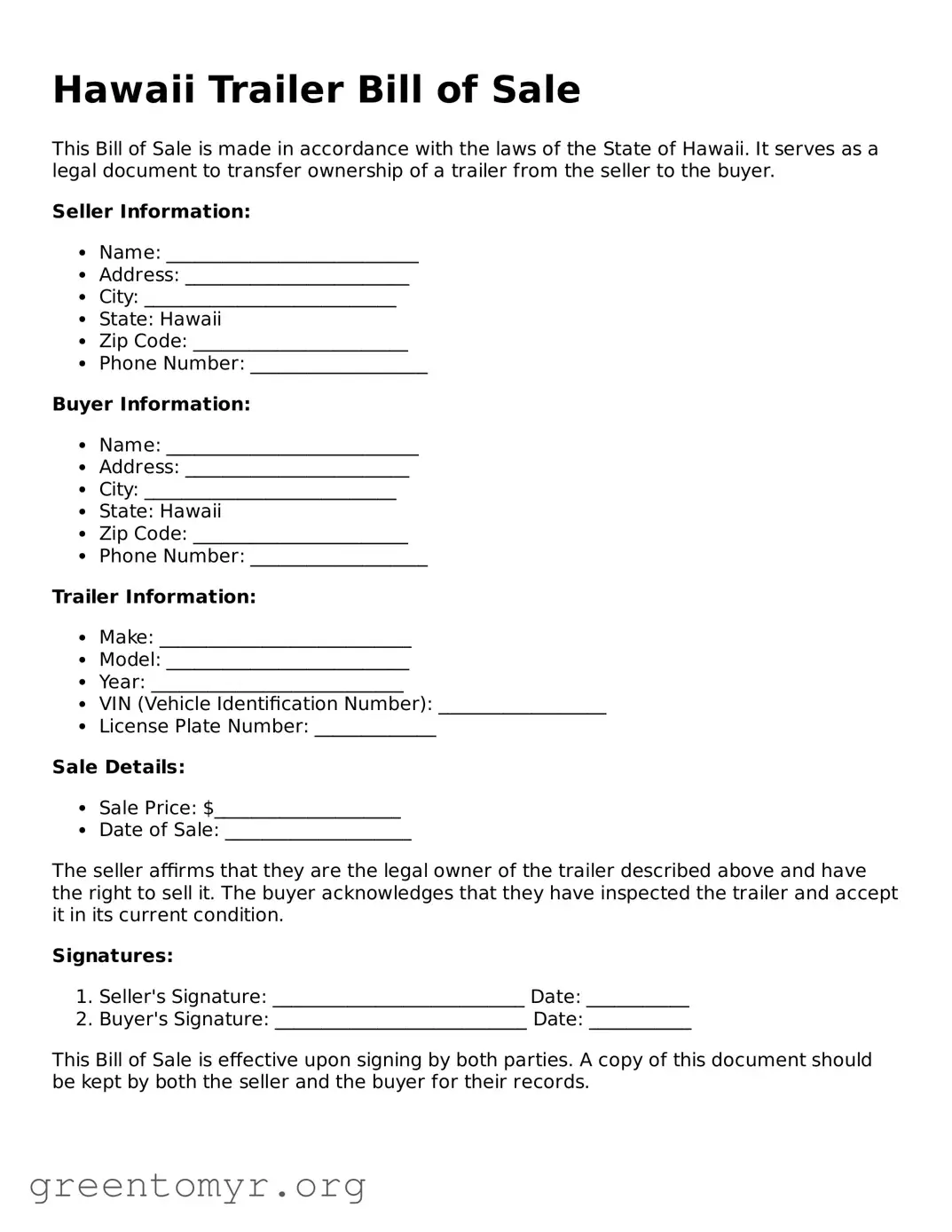
Hawaii Trailer Bill of Sale
This Bill of Sale is made in accordance with the laws of the State of Hawaii. It serves as a legal document to transfer ownership of a trailer from the seller to the buyer.
Seller Information:
Buyer Information:
Trailer Information:
Sale Details:
The seller affirms that they are the legal owner of the trailer described above and have the right to sell it. The buyer acknowledges that they have inspected the trailer and accept it in its current condition.
Signatures:
This Bill of Sale is effective upon signing by both parties. A copy of this document should be kept by both the seller and the buyer for their records.
| Fact Name | Description |
|---|---|
| Purpose | The Hawaii Trailer Bill of Sale form is used to document the sale and transfer of ownership of a trailer in Hawaii. |
| Governing Law | This form is governed by Hawaii Revised Statutes, specifically under Title 14, Chapter 286, which covers motor vehicle registration and licensing. |
| Required Information | Buyers and sellers must provide specific details such as names, addresses, trailer identification number, sale price, and date of sale. |
| Signatures | Both the seller and the buyer must sign the form to validate the transaction and complete the transfer of ownership. |
After obtaining the Hawaii Trailer Bill of Sale form, you will need to complete it with accurate information. This document will facilitate the transfer of ownership of a trailer from one party to another. Ensure that all details are filled out clearly to avoid any issues during the registration process.
The Hawaii Trailer Bill of Sale form is a legal document that serves as proof of the sale and transfer of ownership of a trailer in the state of Hawaii. This form outlines essential details about the transaction, including information about the buyer, seller, and the trailer itself.
A Trailer Bill of Sale is important for several reasons:
The form typically requires the following information:
While it is not legally required to use a Trailer Bill of Sale form for every transaction, it is highly recommended. Having a signed document can help avoid disputes in the future and facilitate the registration process with the state.
Yes, you can create your own Trailer Bill of Sale, provided it includes all necessary information. However, using a standardized form can ensure that you do not miss any important details and that the document meets state requirements.
After completing the Trailer Bill of Sale, both the buyer and seller should sign it. Each party should retain a copy for their records. The buyer may also need to present the form when registering the trailer with the state.
You can obtain a Trailer Bill of Sale form from various sources, including:
If issues arise after the sale, such as disputes over ownership or condition of the trailer, the Trailer Bill of Sale can serve as crucial evidence. It is advisable to resolve disputes amicably, but legal action may be necessary in some cases.
Notarization is not typically required for a Trailer Bill of Sale in Hawaii. However, having the document notarized can provide an additional layer of security and authenticity, especially if the transaction involves a significant amount of money.
Filling out the Hawaii Trailer Bill of Sale form can be straightforward, but many people make common mistakes that can lead to complications later on. One frequent error is not providing complete information about the trailer. Buyers and sellers should ensure that they include the trailer's make, model, year, and Vehicle Identification Number (VIN). Omitting any of these details can create confusion and may even complicate the registration process.
Another common mistake is failing to sign the form. Both the seller and the buyer must sign the bill of sale for it to be valid. If either party neglects to do this, the document may not hold up if there are any disputes in the future. It's essential to double-check that all required signatures are present before finalizing the sale.
Some individuals overlook the importance of including the sale price. This figure is crucial not just for record-keeping but also for tax purposes. Without a clearly stated price, both parties may face issues when it comes time to pay taxes on the transaction. Always make sure to write down the agreed-upon amount clearly.
Another mistake is not dating the document. A date is vital as it establishes when the transaction took place. Without a date, it may be challenging to prove the timeline of ownership, which can lead to disputes later on.
People sometimes forget to provide their contact information. Including a phone number or email address can help facilitate communication between the buyer and seller if any questions arise after the sale. This simple step can prevent misunderstandings down the line.
Some individuals fail to check for any liens on the trailer. If there are outstanding debts associated with the trailer, the buyer could face unexpected legal issues. Always verify that the title is clear before completing the sale.
Another common oversight is not keeping a copy of the bill of sale. Both parties should retain a copy for their records. This document serves as proof of the transaction and can be crucial if any issues arise later.
Sometimes, people neglect to read the form carefully. Each section of the bill of sale has specific requirements, and skipping over any part can lead to mistakes. Take the time to review the entire form before submitting it.
Lastly, some individuals may not understand the importance of notarization. While not always required, having the bill of sale notarized can provide an extra layer of protection. It verifies the identities of the parties involved and can help prevent fraud.
When completing a trailer sale in Hawaii, several documents may accompany the Trailer Bill of Sale form. Each document serves a specific purpose in ensuring a smooth transaction and compliance with state regulations. Below is a list of common forms and documents that are often used alongside the Trailer Bill of Sale.
Gathering these documents can help ensure that the trailer sale process is efficient and legally compliant. Each document plays a vital role in protecting the interests of both the buyer and the seller, fostering a transparent and secure transaction.
The Trailer Bill of Sale form serves as an important document in the transfer of ownership for a trailer. Several other documents share similar functions and purposes. Below is a list of eight documents that are comparable to the Trailer Bill of Sale, along with a brief explanation of how they relate:
When filling out the Hawaii Trailer Bill of Sale form, it is essential to follow certain guidelines to ensure a smooth transaction. Here are five things to do and five things to avoid:
Things You Should Do:
Things You Shouldn't Do:
The Hawaii Trailer Bill of Sale form is often misunderstood. Here are nine common misconceptions about it, along with clarifications to help you navigate the process more effectively.
This is incorrect. The Bill of Sale is required for both new and used trailers to document the transfer of ownership.
The seller's signature is essential. Without it, the form is invalid and does not legally transfer ownership.
While notarization is not always required, it is advisable for added legal protection and to prevent disputes.
Using a generic form may not meet Hawaii's specific requirements. It’s best to use the official Hawaii Trailer Bill of Sale form.
This form can be used for trailers being sold in Hawaii, regardless of where they were originally registered.
It is crucial for buyers to retain a copy for their records. This serves as proof of ownership and can be helpful for future transactions.
In addition to the Bill of Sale, other documents such as proof of identity and previous registration may also be required.
The form should be completed at the time of sale to ensure that all details are accurate and agreed upon by both parties.
Both the buyer and seller must provide their information. Accurate details from both parties are necessary for a valid transaction.
Understanding these misconceptions can help ensure a smooth transaction when buying or selling a trailer in Hawaii.
When it comes to buying or selling a trailer in Hawaii, understanding the Trailer Bill of Sale form is essential. Here are some key takeaways to keep in mind:
By following these guidelines, you can ensure a smooth transaction when dealing with trailers in Hawaii.