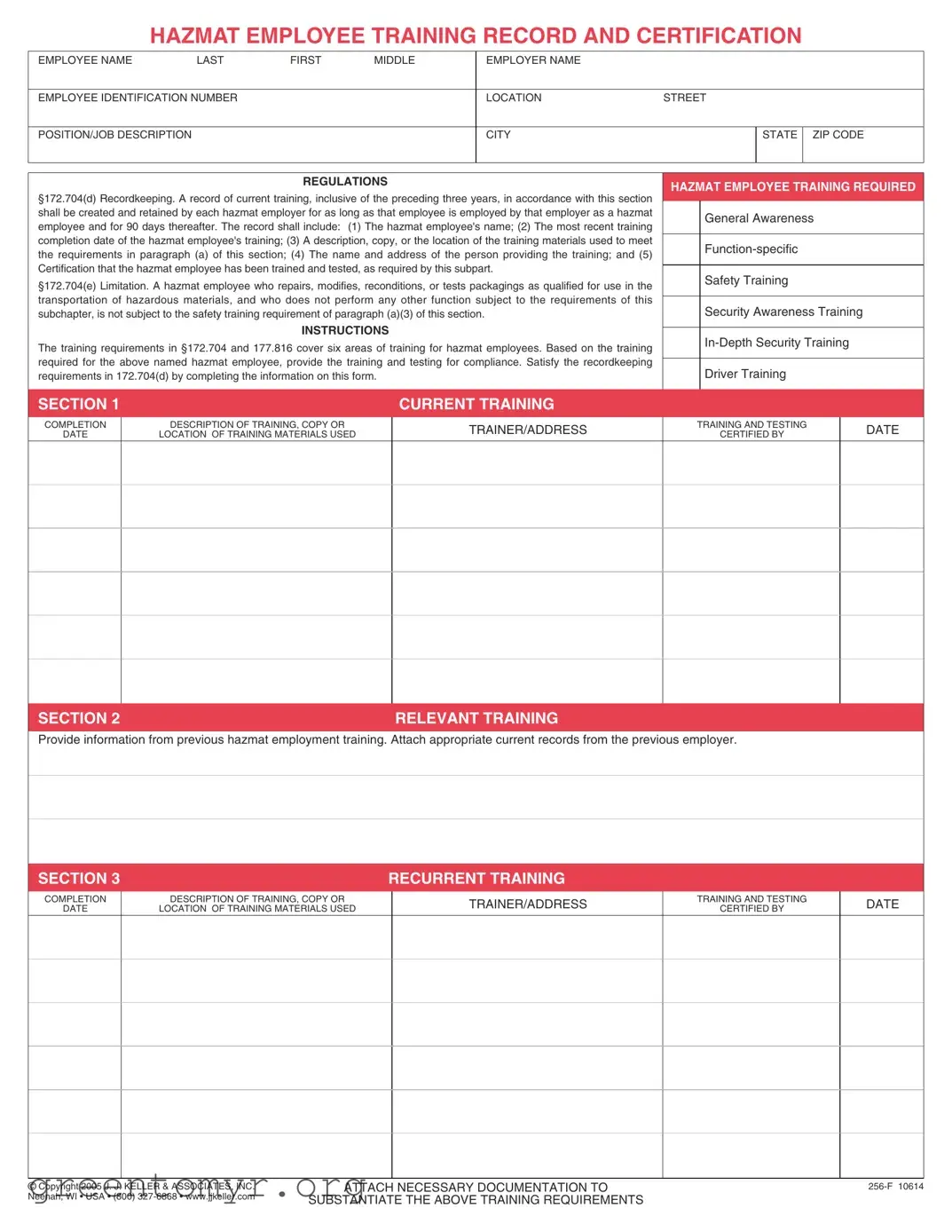
The Hazmat Employee Training Record form serves as a vital tool for employers in the hazardous materials sector, ensuring compliance with federal regulations while prioritizing employee safety. This form captures essential details about the hazmat employee, including their name, employer information, and job description, creating a comprehensive record of their training history. It requires documentation of the most recent training completion date, along with a description of the training materials used and the trainer's credentials. Employers must maintain these records for the duration of the employee's tenure and for an additional 90 days post-employment, thereby reinforcing accountability and adherence to safety standards. The form also addresses specific training requirements outlined in regulations, such as general awareness and security awareness training, which are crucial for employees handling hazardous materials. Additionally, the form includes sections for recording previous training experiences and recurrent training, ensuring that all relevant information is consolidated in one place. By fulfilling these requirements, employers not only comply with regulatory mandates but also foster a culture of safety and preparedness among their workforce.

HAZMAT EMPLOYEE TRAINING RECORD AND CERTIFICATION
EMPLOYEE NAME |
LAST |
FIRST |
MIDDLE |
EMPLOYER NAME |
|
|
|
|
|
|
|
|
|
|
|
EMPLOYEE IDENTIFICATION NUMBER |
|
|
LOCATION |
STREET |
|||
|
|
|
|
|
|
|
|
POSITION/JOB DESCRIPTION |
|
|
|
CITY |
|
STATE |
ZIP CODE |
|
|
|
|
|
|
|
|
REGULATIONS |
HAZMAT EMPLOYEE TRAINING REQUIRED |
|
|
||
¤172.704(d) Recordkeeping. A record of current training, inclusive of the preceding three years, in accordance with this section |
|
|
shall be created and retained by each hazmat employer for as long as that employee is employed by that employer as a hazmat |
|
General Awareness |
employee and for 90 days thereafter. The record shall include: (1) The hazmat employee's name; (2) The most recent training |
|
|
|
|
|
completion date of the hazmat employee's training; (3) A description, copy, or the location of the training materials used to meet |
|
|
the requirements in paragraph (a) of this section; (4) The name and address of the person providing the training; and (5) |
|
|
|
|
|
Certification that the hazmat employee has been trained and tested, as required by this subpart. |
|
|
|
Safety Training |
|
¤172.704(e) Limitation. A hazmat employee who repairs, modifies, reconditions, or tests packagings as qualified for use in the |
|
|
|
|
|
transportation of hazardous materials, and who does not perform any other function subject to the requirements of this |
|
|
|
Security Awareness Training |
|
subchapter, is not subject to the safety training requirement of paragraph (a)(3) of this section. |
|
|
INSTRUCTIONS |
|
|
|
||
The training requirements in ¤172.704 and 177.816 cover six areas of training for hazmat employees. Based on the training |
|
|
|
|
|
required for the above named hazmat employee, provide the training and testing for compliance. Satisfy the recordkeeping |
|
|
|
Driver Training |
|
requirements in 172.704(d) by completing the information on this form. |
|
|
|
|
|
SECTION 1 |
|
CURRENT TRAINING |
|
|
|
|
|
|
|
|
|
COMPLETION |
DESCRIPTION OF TRAINING, COPY OR |
TRAINER/ADDRESS |
TRAINING AND TESTING |
DATE |
|
DATE |
LOCATION OF TRAINING MATERIALS USED |
CERTIFIED BY |
|||
|
|
||||
|
|
|
|
|
|
|
|
|
|
|
|
|
|
|
|
|
|
|
|
|
|
|
|
|
|
|
|
|
|
|
|
|
|
|
SECTION 2 |
|
|
RELEVANT TRAINING |
|
|
|
|
||||
Provide information from previous hazmat employment training. Attach appropriate current records from the previous employer. |
|
||||
|
|
|
|
|
|
|
|
|
|
|
|
|
|
|
|
|
|
SECTION 3 |
|
RECURRENT TRAINING |
|
|
|
|
|
|
|
|
|
COMPLETION |
DESCRIPTION OF TRAINING, COPY OR |
|
TRAINER/ADDRESS |
TRAINING AND TESTING |
DATE |
DATE |
LOCATION OF TRAINING MATERIALS USED |
|
CERTIFIED BY |
||
|
|
|
|||
|
|
|
|
|
|
|
|
|
|
|
|
|
|
|
|
|
|
|
|
|
|
|
|
|
|
|
|
|
|
|
|
|
|
|
|
© Copyright 2005 J. J. KELLER & ASSOCIATES, INC.ATTACH NECESSARY DOCUMENTATION TO256-F 10614
Neenah, WI ¥ USA ¥ (800) |
SUBSTANTIATE THE ABOVE TRAINING REQUIREMENTS |
|
| Fact Name | Description |
|---|---|
| Employee Information | The form requires the employee's name, identification number, and job description to ensure accurate recordkeeping. |
| Employer Responsibility | Employers must maintain training records for each hazmat employee for the duration of their employment and for 90 days after termination. |
| Training Duration | Records must include the most recent training completion date and cover training conducted over the past three years. |
| Training Content | Employers must document the description or location of training materials used, ensuring compliance with regulatory requirements. |
| Certification Requirement | The form must include certification that the hazmat employee has been trained and tested, confirming their readiness for the job. |
| Safety Training Exemption | Hazmat employees involved only in packaging repairs may be exempt from certain safety training requirements. |
| State-Specific Regulations | Employers should check state laws for any additional training requirements that may apply beyond federal regulations. |
Filling out the Hazmat Employee Training Record form is essential for maintaining compliance with training requirements. This form serves as a record of the training that hazmat employees have completed, ensuring that employers keep accurate documentation. Below are the steps to fill out the form correctly.
The Hazmat Employee Training Record form is designed to document the training and certification of employees who handle hazardous materials. This form ensures compliance with federal regulations, specifically 49 CFR §172.704, which outlines the necessary training and recordkeeping requirements for hazmat employees. By maintaining this record, employers can verify that their employees have received the appropriate training and are qualified to perform their job duties safely.
To complete the Hazmat Employee Training Record form, the following information must be provided:
According to the regulations, employers must retain training records for as long as the employee is employed in a hazmat role and for an additional 90 days after the employee leaves that position. This ensures that there is a reliable history of the employee's training, which can be crucial for safety audits and compliance checks.
The Hazmat Employee Training Record form encompasses several types of training, including:
Each of these training areas is vital for ensuring that employees understand the risks associated with hazardous materials and know how to handle them safely.
The employer is responsible for completing the Hazmat Employee Training Record form. It is essential that the employer ensures accurate and complete information is recorded. This responsibility includes gathering the necessary documentation and ensuring that all training requirements are met for each hazmat employee.
If training records are incomplete or missing, the employer may face compliance issues, which could lead to penalties or fines. Additionally, lacking proper documentation can create safety risks, as employees may not be adequately trained for their roles. It is crucial for employers to regularly review and update training records to ensure they meet all regulatory requirements.
Yes, previous training can be included in the Hazmat Employee Training Record form. Employers should attach relevant documentation from prior employment that demonstrates the employee's hazmat training. This helps create a comprehensive training history, which is beneficial for both compliance and employee safety.
Completing the Hazmat Employee Training Record form requires attention to detail. One common mistake is leaving out the employee's full name. This information is crucial for proper identification and recordkeeping. Omitting it can lead to confusion and potential compliance issues.
Another frequent error is failing to include the most recent training completion date. This date is essential for tracking training compliance. Without it, the record may not meet regulatory requirements.
Many individuals also neglect to provide a description or location of the training materials used. This information supports the training claims and is necessary for audits. Incomplete records may raise red flags during inspections.
It's important to ensure that the trainer's name and address are accurately recorded. Mistakes in this section can hinder verification of the training provided. Inaccurate details can complicate the process if questions arise about the training.
Certification that the hazmat employee has been trained and tested is another critical component. Failing to include this certification can result in non-compliance. It is vital to confirm that all training requirements have been met.
Section 2 requires information from previous hazmat employment training. A common mistake is not attaching the appropriate current records from the previous employer. This oversight can lead to gaps in the employee's training history.
In Section 3, recurrent training completion must be documented. Some individuals forget to fill out this section entirely, which can lead to incomplete records. Regular updates are essential for maintaining compliance.
Another issue arises when the training and testing dates are not clearly indicated. Ambiguous dates can create confusion about when training occurred. Clear documentation helps ensure that all training is up to date.
Additionally, individuals sometimes fail to substantiate training requirements adequately. This can happen when necessary documentation is not attached. Proper substantiation is crucial for validating compliance.
Finally, not reviewing the form for accuracy and completeness before submission is a significant mistake. A final check can catch errors that could lead to complications down the line. Taking a moment to review can save time and prevent issues with regulatory compliance.
The Hazmat Employee Training Record form is an essential document for employers in the hazardous materials sector. It ensures that employees receive the necessary training and that records are maintained for compliance with federal regulations. Alongside this form, several other documents are commonly used to support training and safety protocols. Below is a list of these forms, each serving a specific purpose in the training and compliance process.
Each of these documents plays a crucial role in ensuring safety and compliance within the hazardous materials industry. Proper use and maintenance of these forms can significantly enhance workplace safety and regulatory adherence.
The Hazmat Employee Training Record form serves a critical purpose in ensuring compliance with safety regulations. Several other documents share similarities with this form in terms of their structure and function. Here are five such documents:
Understanding these documents can help organizations maintain compliance and ensure the safety of their employees. Each record plays a vital role in creating a safe working environment.
When completing the Hazmat Employee Training Record form, there are important guidelines to follow to ensure accuracy and compliance. Here is a list of things you should and shouldn't do:
Following these guidelines will help ensure that the Hazmat Employee Training Record form is completed correctly and meets all necessary requirements.
There are several misconceptions about the Hazmat Employee Training Record form. Understanding the truth can help ensure compliance and safety. Here are ten common misunderstandings:
By addressing these misconceptions, employers and employees can work together to maintain a safe working environment and ensure compliance with regulations.
When filling out the Hazmat Employee Training Record form, consider these important points: