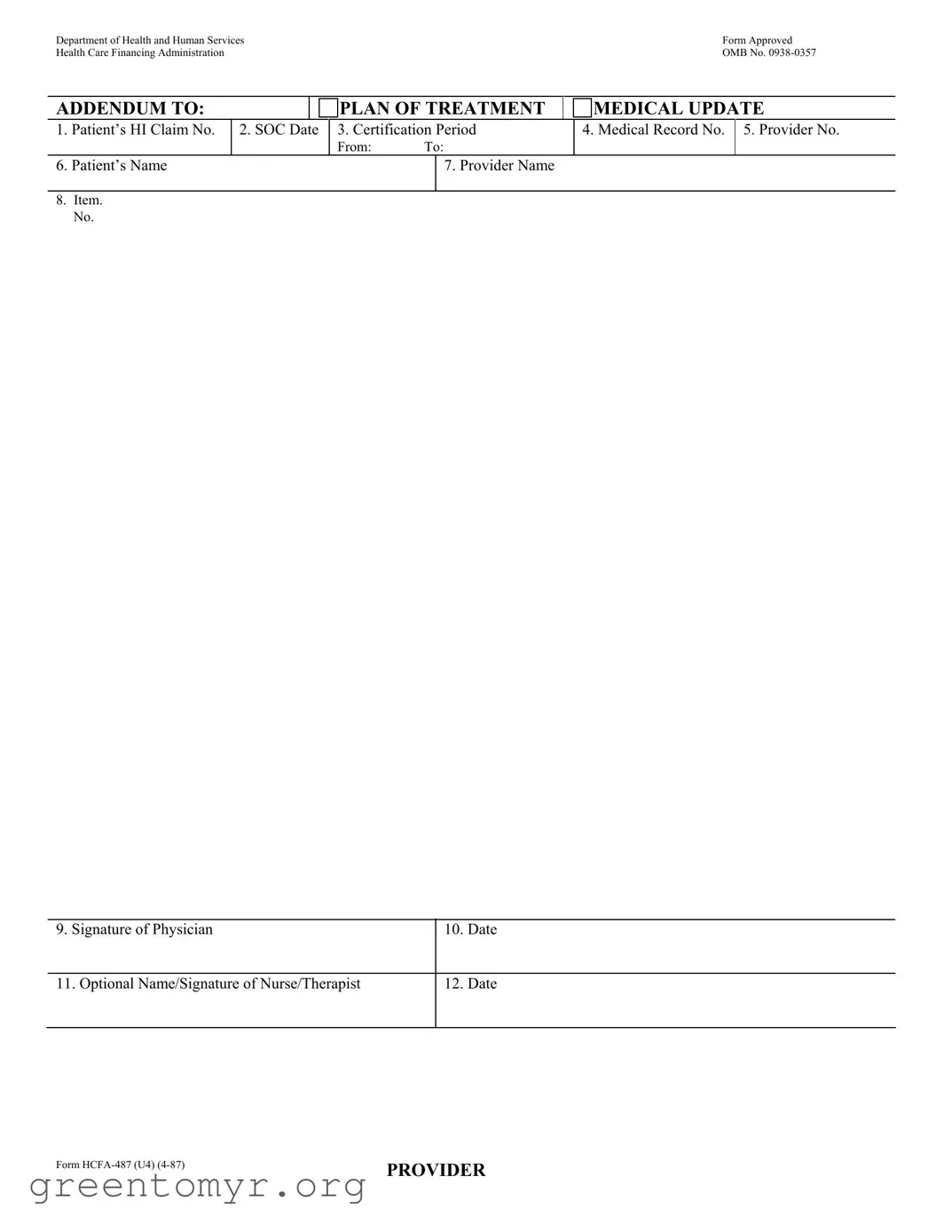
The HCFA 487 form is an essential document used in the healthcare industry, specifically designed to provide a medical update as an addendum to a patient's plan of treatment. This form captures critical information, including the patient's health insurance claim number and the date of service certification. It also outlines the certification period and includes a space for the medical record number, which helps in tracking patient history. The form requires the patient's name and the provider's name, ensuring that the information is correctly attributed. Additionally, it features an item number for easy reference, as well as signature lines for both the physician and an optional nurse or therapist. These signatures validate the medical update and confirm the accuracy of the information provided. The HCFA 487 form is crucial for maintaining comprehensive patient records and facilitating communication among healthcare providers.

Department of Health and Human Services |
Form Approved |
Health Care Financing Administration |
OMB No. |
ADDENDUM TO: |
|
|
PLAN OF TREATMENT |
|
MEDICAL UPDATE |
||||
|
|
|
|
|
|
|
|
|
|
1. |
Patient’s HI Claim No. |
2. SOC Date |
3. Certification Period |
|
4. Medical Record No. |
5. Provider No. |
|||
|
|
|
|
From: |
To: |
|
|
|
|
6. |
Patient’s Name |
|
|
|
|
7. Provider Name |
|
|
|
|
|
|
|
|
|
|
|
|
|
8.Item.
No.
9. Signature of Physician
10. Date
11. Optional Name/Signature of Nurse/Therapist
12. Date
Form
PROVIDER
| Fact Name | Details |
|---|---|
| Form Purpose | The HCFA 487 form serves as an addendum to the plan of treatment, specifically for medical updates. |
| Governing Agency | This form is approved by the Department of Health and Human Services under the Health Care Financing Administration. |
| OMB Approval Number | The form has been assigned the OMB No. 0938-0357 for tracking and regulatory purposes. |
| Required Information | Key details such as patient’s HI Claim No., SOC Date, and Certification Period must be filled out. |
| Signature Requirements | The form requires the signature of a physician, along with optional signatures from nurses or therapists. |
| State-Specific Laws | Each state may have specific regulations governing the use of this form; consult local laws for compliance. |
Completing the HCFA 487 form requires careful attention to detail. This form is essential for documenting medical updates and treatment plans. Follow the steps below to ensure accurate completion.
The HCFA 487 form, also known as the Addendum to Plan of Treatment Medical Update, is used by healthcare providers to update a patient's treatment plan. It is essential for documenting changes in a patient's medical condition or treatment regimen, ensuring that the information is current and accurate for billing and care purposes.
This form is typically filled out by healthcare providers, including physicians, nurses, and therapists. If there are updates to a patient's treatment plan, the responsible provider must complete the form to reflect these changes. Patients may also need to be involved in the process, particularly when it comes to their treatment decisions.
The HCFA 487 form requires the following information:
All this information helps maintain a complete and accurate medical record for the patient.
After completing the HCFA 487 form, it should be submitted according to your healthcare facility's protocols. Typically, the form is sent to the appropriate billing department or insurance company. Ensure that all required signatures are obtained before submission to avoid delays in processing.
If the HCFA 487 form is not filled out when necessary, it could lead to issues such as delayed payments from insurance companies or miscommunication about a patient's treatment plan. This may ultimately affect the quality of care provided to the patient.
The HCFA 487 form can typically be obtained from your healthcare provider's office or downloaded from the Centers for Medicare & Medicaid Services (CMS) website. Ensure you are using the most current version of the form to avoid any issues with submission.
When filling out the HCFA 487 form, many individuals encounter pitfalls that can lead to delays or denials in processing. One common mistake is not providing the correct patient identification. Ensure that the patient's HI Claim Number and Medical Record Number are accurate. An incorrect number can complicate the claims process and may result in the claim being rejected.
Another frequent error is failing to include the signature of the physician. This signature is crucial for validating the medical update and confirming the treatment plan. Without it, the form may be considered incomplete, which can hinder timely reimbursement.
Many people also overlook the importance of the certification period. The certification period must clearly reflect the start and end dates of the treatment. If this information is missing or incorrect, it can lead to misunderstandings regarding the duration of care provided.
Inaccurate or incomplete dates are another common issue. For example, the SOC date (Start of Care) must align with the treatment timeline. If the SOC date does not match the actual date care began, it can create confusion and delay processing.
Additionally, some individuals neglect to fill in the provider information completely. This includes the provider's name and number. Missing this information can lead to difficulties in identifying who provided the care, complicating the claims process.
People often forget to review the entire form before submission. Omissions or errors in any section can lead to significant processing delays. A thorough review can catch mistakes that might otherwise go unnoticed.
Another mistake is misunderstanding the requirements for the optional name/signature of the nurse or therapist. While this section is optional, including it can provide additional context and support for the claim. Neglecting to do so may result in a lack of supporting documentation.
Some individuals also fail to keep a copy of the completed form for their records. This can lead to complications if there are questions about the submission later on. Keeping a copy ensures that you have a reference point for any follow-up communications.
Finally, not adhering to the submission guidelines can lead to problems. Each form has specific instructions regarding how and where to submit it. Ignoring these guidelines can result in the form being returned or delayed, impacting the overall claims process.
The HCFA 487 form, also known as the Addendum to Plan of Treatment Medical Update, plays a crucial role in documenting updates to a patient's treatment plan. When submitting this form, you may also need several other documents to ensure a comprehensive and compliant submission. Below is a list of commonly used forms that accompany the HCFA 487, each serving a specific purpose in the healthcare documentation process.
Having these documents ready can streamline the claims process and help avoid delays in reimbursement. Each form plays a vital role in ensuring that all aspects of patient care and billing are documented accurately and comprehensively. Always check with your healthcare provider or billing department to confirm which forms are necessary for your specific situation.
The HCFA 487 form serves as an important document in the healthcare system, particularly in relation to treatment plans and medical updates. Several other forms share similar purposes or structures. Here’s a list of documents that are comparable to the HCFA 487 form:
When filling out the HCFA 487 form, it is essential to follow specific guidelines to ensure accuracy and compliance. Here is a list of things you should and shouldn't do:
Here are nine misconceptions about the HCFA 487 form, along with clarifications to help you understand its purpose and requirements.
This form is used for various health care plans, not just Medicare. It serves as an addendum to the treatment plan for any patient receiving care.
A physician's signature is required on the form to validate the medical update. Without it, the form may not be accepted.
These forms serve different purposes. The HCFA 1500 is primarily for billing, while the HCFA 487 focuses on updating the treatment plan.
Patient information, including the patient's name and medical record number, is crucial for identifying the individual receiving treatment.
This form may need to be completed multiple times throughout a patient's care, especially if there are significant updates to the treatment plan.
Timely submission is important. Check with the specific health plan to understand their deadlines for submitting this form.
Only qualified health care providers, such as physicians or authorized nurses/therapists, should complete this form.
For many health plans, submitting the HCFA 487 form is a requirement for continuing care and reimbursement.
It is advisable to keep a copy for your records. This can help in case there are any questions or disputes regarding the treatment provided.
When filling out and using the HCFA 487 form, it is essential to keep the following key takeaways in mind: