The HVAC Inspection Checklist form is a vital tool for ensuring the efficiency and safety of heating, ventilation, and air conditioning systems in buildings. This comprehensive checklist covers several key areas, including the mechanical room, major mechanical equipment, air handling units, distribution systems, and occupied spaces. Each section prompts the inspector to evaluate essential components, such as cleanliness, maintenance plans, and operational efficiency. For instance, the checklist requires inspectors to assess the condition of boilers, chillers, and cooling towers, focusing on aspects like combustion air requirements and refrigerant leaks. Additionally, it emphasizes the importance of indoor air quality by examining air intake locations, potential contaminant sources, and the functionality of thermostats and humidistats. By systematically addressing these elements, the checklist not only aids in identifying maintenance needs but also helps in maintaining a healthy indoor environment for occupants.

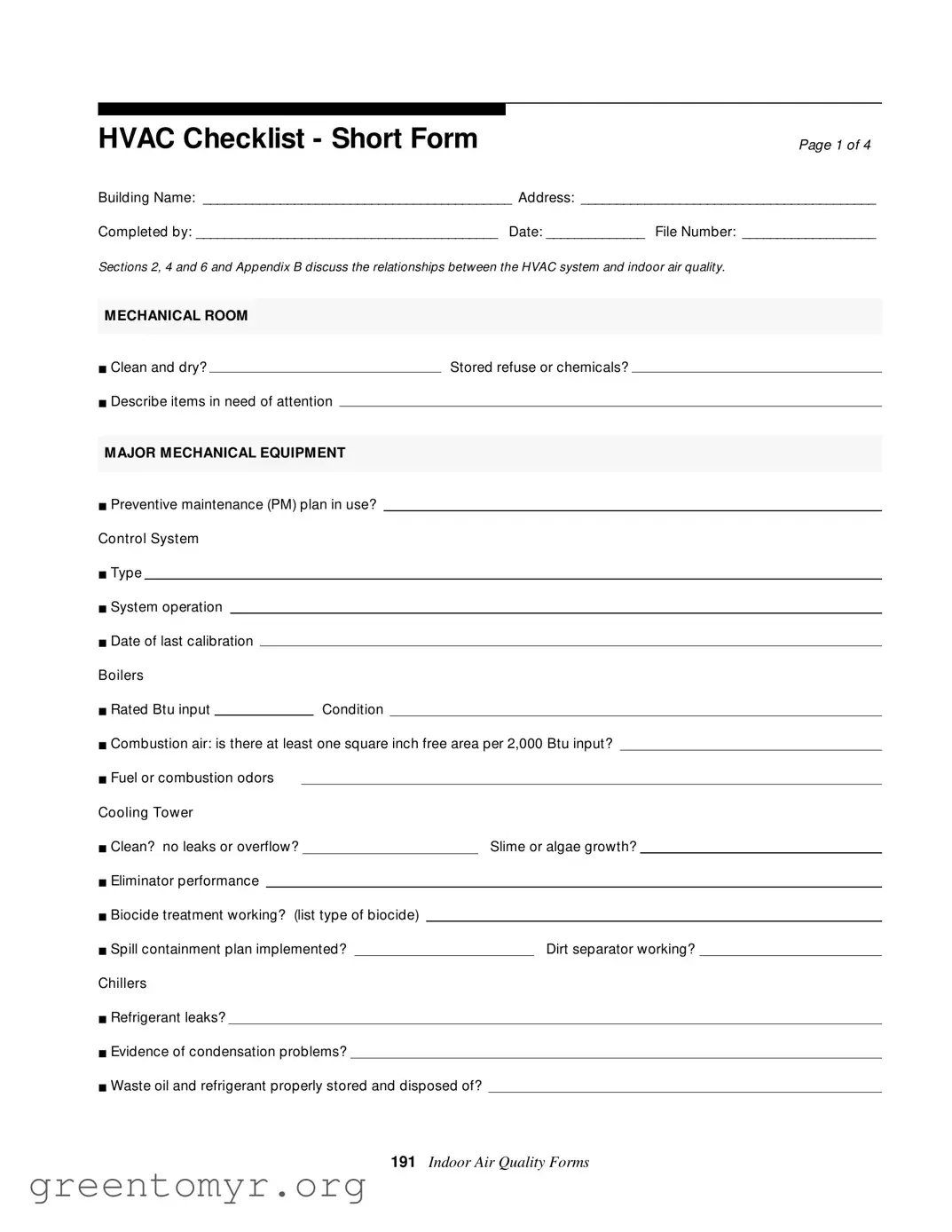
HVAC CHECKLIST - SHORT FORM
Page 1 of 4
Building Name: ____________________________________________ Address: __________________________________________
Completed by: ___________________________________________ Date: ______________ File Number: ___________________
Sections 2, 4 and 6 and Appendix B discuss the relationships between the HVAC system and indoor air quality.
MECHANICAL ROOM
■ Clean and dry? |
|
Stored refuse or chemicals? |
■Describe items in need of attention
MAJOR MECHANICAL EQUIPMENT
■Preventive maintenance (PM) plan in use? Control System
■Type
■System operation
■Date of last calibration
Boilers
■ Rated Btu input |
|
Condition |
■Combustion air: is there at least one square inch free area per 2,000 Btu input?
■Fuel or combustion odors
Cooling Tower
■ Clean? no leaks or overflow? |
|
Slime or algae growth? |
■Eliminator performance
■Biocide treatment working? (list type of biocide)
■ Spill containment plan implemented? |
|
Dirt separator working? |
Chillers
■Refrigerant leaks?
■Evidence of condensation problems?
■Waste oil and refrigerant properly stored and disposed of?
191Indoor Air Quality Forms

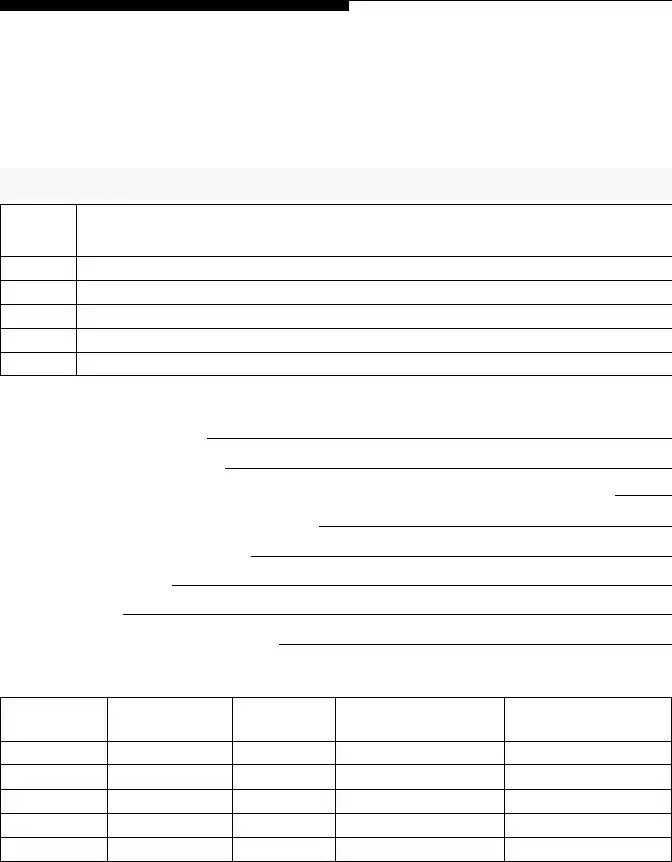
HVAC CHECKLIST - SHORT FORM
Page 2 of 4
Building Name: ____________________________________________ Address: __________________________________________
Completed by: ___________________________________________ Date: ______________ File Number: ___________________
AIR HANDLING UNIT
■ Unit identification |
|
Area served |
Outdoor Air Intake, Mixing Plenum, and Damper
■Outdoor air intake location
■Nearby contaminant sources? (describe)
■Bird screen in place and unobstructed?
■ Design total cfm |
|
outdoor air (O.A.) cfm |
|
date last tested and balanced |
|
|
|
|||
■ Minimum % O.A. (damper setting) |
|
Minimum cfm O.A. |
(total cfm x minimum % O.A.) |
|
= |
|
||||
|
|
|
|
|||||||
|
|
|
|
|
|
|
100 |
|
|
|
■Current O.A. damper setting (date, time, and HVAC operating mode)
■Damper control sequence (describe)
■Condition of dampers and controls (note date)
Fans
■ Control sequence
■ Condition (note date)
■ Indicated temperatures |
supply air |
|
mixed air |
|
return air |
|
outdoor air |
|
|
|||||||||||
■ Actual temperatures |
supply air |
mixed air |
return air |
|
outdoor air |
|
|
|||||||||||||
Coils |
|
|
|
|
|
|
|
|
|
|
|
|
|
|
|
|
|
|||
■ Heating fluid discharge temperature |
|
|
|
|
ΔT |
|
cooling fluid discharge temperature |
ΔT |
||||||||||||
■ Controls (describe) |
|
|
|
|
|
|
|
|
|
|
|
|
|
|
|
|
|
|
||
■ Condition (note date) |
|
|
|
|
|
|
|
|
|
|
|
|
|
|
|
|
|
|
||
Humidifier |
|
|
|
|
|
|
|
|
|
|
|
|
|
|
|
|
|
|||
■ Type |
|
|
|
if biocide is used, note type |
|
|
|
|
|
|
|
|
||||||||
■Condition (no overflow, drains trapped, all nozzles working?)
■No slime, visible growth, or mineral deposits?
Indoor Air Quality Forms 192
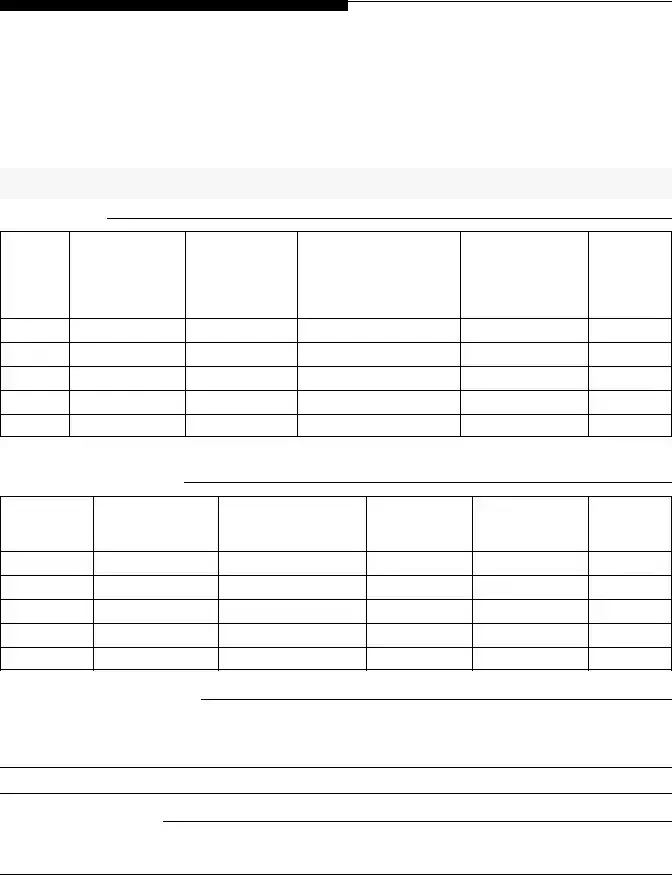
HVAC CHECKLIST - SHORT FORM
Page 3 of 4
Building Name: ____________________________________________ Address: __________________________________________
Completed by: ___________________________________________ Date: ______________ File Number: ___________________
DISTRIBUTION SYSTEM
Zone/ Room
System
Type
Supply Air |
Return Air |
|
Power Exhaust |
|
|||
|
|
|
|
|
|
|
|
ducted/ |
cfm* |
ducted/ |
cfm* |
cfm* |
|
control |
serves |
unducted |
|
unducted |
|
|
|
|
(e.g. toilet) |
|
|
|
|
|
|
|
|
Condition of distribution system and terminal equipment (note locations of problems)
■Adequate access for maintenance?
■Ducts and coils clean and obstructed?
■ Air paths unobstructed? |
supply |
|
return |
|
transfer |
|
exhaust |
|
|
|
|
|
|
■Note locations of blocked air paths, diffusers, or grilles
■Any unintentional openings into plenums?
■Controls operating properly?
■Air volume correct?
■Drain pans clean? Any visible growth or odors?
FILTERS
Location
Type/Rating
Size
Date Last Changed
Condition (give date)
193Indoor Air Quality Forms
HVAC CHECKLIST - SHORT FORM
Page 4 of 4
Building Name: ____________________________________________ Address: __________________________________________
Completed by: ___________________________________________ Date: ______________ File Number: ___________________
OCCUPIED SPACE
Thermostat types
Zone/ Room
Thermostat Location
What Does Thermostat Control? (e.g., radiator, AHU- 3)
Setpoints
Summer |
Winter |
|
|
Measured Temperature
Day/ Time
Humidistats/Dehumidistats type
Zone/ Room
Humidistat/
Dehumidistat
Location
What Does It
Control?
Setpoints
(% RH)
Measured Temperature
Day/ Time
■Potential problems (note location)
■Thermal comfort or air circulation (drafts, obstructed airflow, stagnant air, overcrowding, poor thermostat location)
■Malfunctioning equipment
■Major sources of odors or contaminants (e.g., poor sanitation, incompatible uses of space)
Indoor Air Quality Forms 194
| Fact Name | Description |
|---|---|
| Purpose of the Checklist | The HVAC Inspection Checklist is designed to evaluate the performance and safety of HVAC systems, ensuring they meet health and safety standards. |
| Key Components | It covers essential areas such as mechanical rooms, major mechanical equipment, air handling units, and distribution systems, helping to identify maintenance needs. |
| Indoor Air Quality Focus | Sections of the checklist specifically address the relationship between HVAC systems and indoor air quality, highlighting the importance of clean air for occupants. |
| State-Specific Regulations | In California, for instance, the checklist must comply with Title 24 of the California Code of Regulations, which governs energy efficiency standards for HVAC systems. |
| Regular Maintenance Importance | Regular inspections using this checklist can help prevent costly repairs and ensure that HVAC systems operate efficiently, ultimately saving energy and costs. |
Completing the HVAC Inspection Checklist form is straightforward. This checklist helps ensure that all essential aspects of the HVAC system are reviewed. Follow these steps to fill out the form accurately.
Once you have filled out all sections of the form, review your entries for accuracy. This will ensure that any necessary follow-up actions can be taken based on your findings.
The HVAC Inspection Checklist form is designed to help ensure that heating, ventilation, and air conditioning systems are functioning properly. It provides a structured way to evaluate various components of the HVAC system, assess indoor air quality, and identify any maintenance needs. By using this checklist, property managers and technicians can systematically review the system, ensuring that all critical aspects are covered.
The checklist should be completed by qualified personnel, such as HVAC technicians, facility managers, or building engineers. These individuals should have a good understanding of HVAC systems and their components. Completing the checklist requires knowledge of system operation, maintenance procedures, and indoor air quality standards. This ensures that the inspection is thorough and accurate.
The checklist is divided into several key sections, including:
Each section addresses specific components and conditions of the HVAC system, focusing on maintenance, performance, and air quality.
It is recommended that the HVAC Inspection Checklist be completed at least once or twice a year. However, more frequent inspections may be necessary depending on the system's usage, age, and any specific issues that arise. Regular inspections help identify potential problems early and ensure the system operates efficiently, contributing to better indoor air quality.
If issues are identified during the inspection, they should be documented in detail on the checklist. It is important to prioritize these issues based on their severity and impact on system performance and indoor air quality. Following the inspection, a maintenance plan should be developed to address the identified problems, and repairs or replacements should be scheduled as necessary.
Yes, the HVAC Inspection Checklist can be customized to meet the specific needs of different buildings. While the standard checklist covers common components and conditions, additional items can be added based on unique building characteristics, local regulations, or specific operational requirements. Customization ensures that all relevant aspects of the HVAC system are evaluated effectively.
Filling out the HVAC Inspection Checklist form can be straightforward, but many people make common mistakes that can lead to incomplete or inaccurate assessments. One frequent error is not providing complete information in the fields for building name, address, or the person completing the checklist. These details are essential for identifying the location and the responsible party. Without them, it can be challenging to track the inspection history or address any issues that arise later.
Another mistake involves neglecting to describe items in need of attention. When individuals skip this section, they miss the opportunity to highlight critical problems that require immediate action. This oversight can lead to safety hazards or inefficiencies in the HVAC system, affecting indoor air quality and comfort.
In the section on major mechanical equipment, people often fail to note the date of the last calibration. This information is vital for ensuring that the control system is functioning correctly. If calibration dates are missing, it can result in equipment operating outside of its optimal range, which may increase energy costs and decrease system reliability.
Many users overlook the importance of documenting the condition of various components, such as the cooling tower and air handling unit. For instance, if someone fails to report slime or algae growth, it can lead to significant maintenance issues down the line. Regularly checking and recording these conditions helps maintain system efficiency and prolongs equipment life.
Additionally, individuals may not adequately assess the distribution system. They might skip noting the condition of ducts and coils or fail to identify any unintentional openings into plenums. These details are crucial for ensuring that air flows properly throughout the building. Poorly maintained ducts can lead to energy loss and unhealthy air quality.
Finally, many people do not pay enough attention to the occupied space section of the checklist. They might neglect to note potential problems related to thermal comfort or air circulation. This oversight can result in discomfort for occupants and affect overall productivity. Addressing these issues requires careful observation and documentation during the inspection.
When conducting an HVAC inspection, several other forms and documents may be helpful in ensuring a comprehensive assessment. These documents can provide additional context and details that support the findings from the HVAC Inspection Checklist. Below are some commonly used forms:
Using these documents alongside the HVAC Inspection Checklist can create a clearer picture of the system's condition and performance. This approach not only helps ensure compliance with regulations but also promotes a healthier indoor environment.
The HVAC Inspection Checklist form serves as a crucial tool for assessing heating, ventilation, and air conditioning systems. Several other documents share similar purposes, focusing on safety, efficiency, and maintenance. Here are five documents that resemble the HVAC Inspection Checklist:
When filling out the HVAC Inspection Checklist form, it's important to be thorough and accurate. Here are seven things you should and shouldn't do to ensure a successful inspection.
By following these guidelines, you can ensure that the HVAC Inspection Checklist is filled out correctly and thoroughly, contributing to a safer and more efficient environment.
Understanding the HVAC Inspection Checklist can be challenging, and misconceptions often arise. Here are eight common misunderstandings about this important document:
By clearing up these misconceptions, individuals can better appreciate the significance of the HVAC Inspection Checklist and its role in maintaining a safe and comfortable environment.
Using the HVAC Inspection Checklist form effectively ensures that all necessary components of the HVAC system are evaluated for optimal performance. Here are key takeaways: