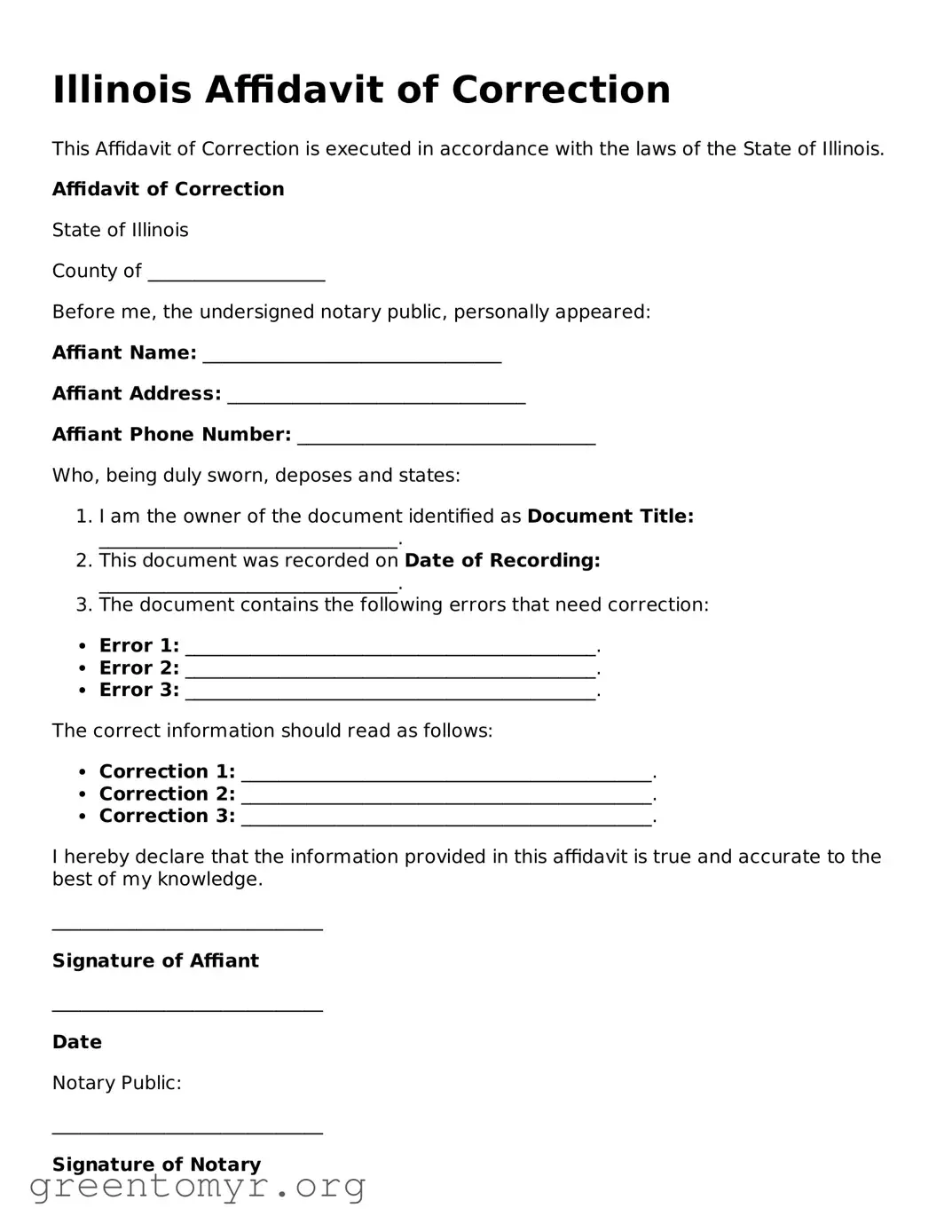
In the state of Illinois, the Affidavit of Correction form serves as a crucial tool for individuals seeking to rectify errors in official documents. This form is often utilized to amend mistakes found in various records, such as property deeds, vital records, or court documents. By providing a straightforward process for corrections, it helps ensure that public records accurately reflect the true information. The form requires the individual to provide specific details about the error, the correct information, and an affirmation of the truthfulness of the claims made. Completing this form correctly is vital, as it can prevent future legal complications and maintain the integrity of public records. Timely submission of the Affidavit of Correction can safeguard your rights and facilitate smoother transactions in the future.
Illinois Affidavit of Correction
This Affidavit of Correction is executed in accordance with the laws of the State of Illinois.
Affidavit of Correction
State of Illinois
County of ___________________
Before me, the undersigned notary public, personally appeared:
Affiant Name: ________________________________
Affiant Address: ________________________________
Affiant Phone Number: ________________________________
Who, being duly sworn, deposes and states:
The correct information should read as follows:
I hereby declare that the information provided in this affidavit is true and accurate to the best of my knowledge.
_____________________________
Signature of Affiant
_____________________________
Date
Notary Public:
_____________________________
Signature of Notary
My commission expires: ________________________________.
| Fact Name | Description |
|---|---|
| Purpose | The Illinois Affidavit of Correction is used to correct errors in recorded documents. |
| Governing Law | It is governed by the Illinois Compiled Statutes, specifically 765 ILCS 27. |
| Eligibility | Any individual or entity that has filed a document with errors can use this form. |
| Common Uses | This form is often used to correct typographical errors, misstatements, or clerical mistakes. |
| Filing Requirements | The affidavit must be signed in the presence of a notary public. |
| Where to File | It should be filed with the same office where the original document was recorded. |
| Impact on Original Document | The original document remains valid; the affidavit simply clarifies or corrects it. |
| Cost | Filing fees may apply, varying by county, so it’s important to check local regulations. |
| Public Record | Once filed, the affidavit becomes part of the public record, available for public inspection. |
| Legal Advice | While the form is straightforward, seeking legal advice is recommended for complex corrections. |
Filling out the Illinois Affidavit of Correction form is a straightforward process. Once completed, you will be able to submit the form to correct any errors in a previously filed document. Follow these steps to ensure accuracy and completeness.
The Illinois Affidavit of Correction form is a legal document used to correct mistakes in previously filed documents. This form is particularly useful for errors found in property records, such as deeds or mortgages. By filing this affidavit, individuals can ensure that the public record accurately reflects the intended information.
Any individual or entity that has a vested interest in the document can file an Affidavit of Correction. This includes property owners, lenders, or their legal representatives. It is important that the person filing the affidavit has the authority to make corrections to the document in question.
The Affidavit of Correction can address various types of errors, including:
However, the form cannot be used to change the substantive rights of the parties involved; it is strictly for correcting clerical or factual mistakes.
The process generally involves several steps:
After filing, it is advisable to obtain a copy of the recorded affidavit for personal records.
Yes, there are typically fees associated with filing the Affidavit of Correction. These fees can vary by county, so it is essential to check with the local recorder's office for the exact amount. Payment methods may also differ, so be prepared to pay using the accepted forms of payment in that office.
Filling out the Illinois Affidavit of Correction form can be a straightforward process, but many individuals make common mistakes that can lead to delays or complications. One frequent error is failing to provide accurate personal information. When filling out the form, it is crucial to ensure that names, addresses, and other identifying details are correct. An incorrect name or address can render the affidavit ineffective.
Another common mistake involves not signing the affidavit. The form requires a signature from the individual making the correction. Omitting this signature can lead to the rejection of the document. Always double-check that all required signatures are present before submission.
People often overlook the necessity of including supporting documentation. The affidavit should clearly reference any documents that support the correction being made. Without these documents, the affidavit may not be taken seriously or could be dismissed altogether. It is essential to attach any relevant paperwork that substantiates the need for correction.
In addition, individuals may forget to date the affidavit. A date is important as it indicates when the correction was made. An undated affidavit can create confusion and may complicate matters if the correction is questioned later. Always include the date when completing the form.
Another mistake is not following the specific instructions for submission. Each county in Illinois may have different requirements for filing the affidavit. Some may require electronic submission, while others may necessitate a physical copy. It is advisable to verify the submission guidelines for your specific county to avoid unnecessary issues.
Lastly, individuals sometimes fail to keep a copy of the completed affidavit for their records. Having a copy is essential for personal reference and can be helpful if any questions arise in the future. Always make sure to retain a copy before submitting the form to ensure you have a record of the correction made.
When dealing with the Illinois Affidavit of Correction, several other forms and documents may be necessary to ensure proper legal compliance and clarity. Each of these documents serves a specific purpose in the correction process, helping to clarify or amend existing records.
Understanding these related forms can facilitate a smoother correction process and ensure that all necessary documentation is in place. Each document plays a vital role in maintaining the accuracy and integrity of public records.
The Affidavit of Correction is a useful legal document that allows individuals to correct errors in previously filed documents. While it serves a specific purpose, there are several other documents that share similarities in function and intent. Here are six documents that are comparable to the Affidavit of Correction:
Understanding these documents can help individuals navigate the complexities of legal corrections more effectively.
When filling out the Illinois Affidavit of Correction form, it's important to ensure accuracy and completeness. Here’s a list of what you should and shouldn’t do:
By following these guidelines, you can help ensure that your affidavit is processed smoothly and without unnecessary delays.
Misconceptions about the Illinois Affidavit of Correction form can lead to confusion and mistakes. Here are five common misunderstandings:
When dealing with the Illinois Affidavit of Correction form, it’s important to keep several key points in mind to ensure the process goes smoothly. Here are some essential takeaways:
Understanding these points can help streamline the correction process and ensure that your documents are accurate and up-to-date.