The Illinois Bill of Sale form serves as a crucial document in various transactions, particularly when buying or selling personal property. This form provides a clear record of the exchange, outlining essential details such as the names and addresses of the buyer and seller, a description of the item being sold, and the agreed-upon purchase price. It often includes the date of the transaction, which is important for both parties for record-keeping and legal purposes. By using this form, individuals can protect their rights and clarify the terms of the sale, helping to prevent disputes down the line. Additionally, the Bill of Sale may be required for registering certain items, such as vehicles, with the state. Understanding the importance of this document can help ensure a smooth transaction and provide peace of mind for both buyers and sellers in Illinois.
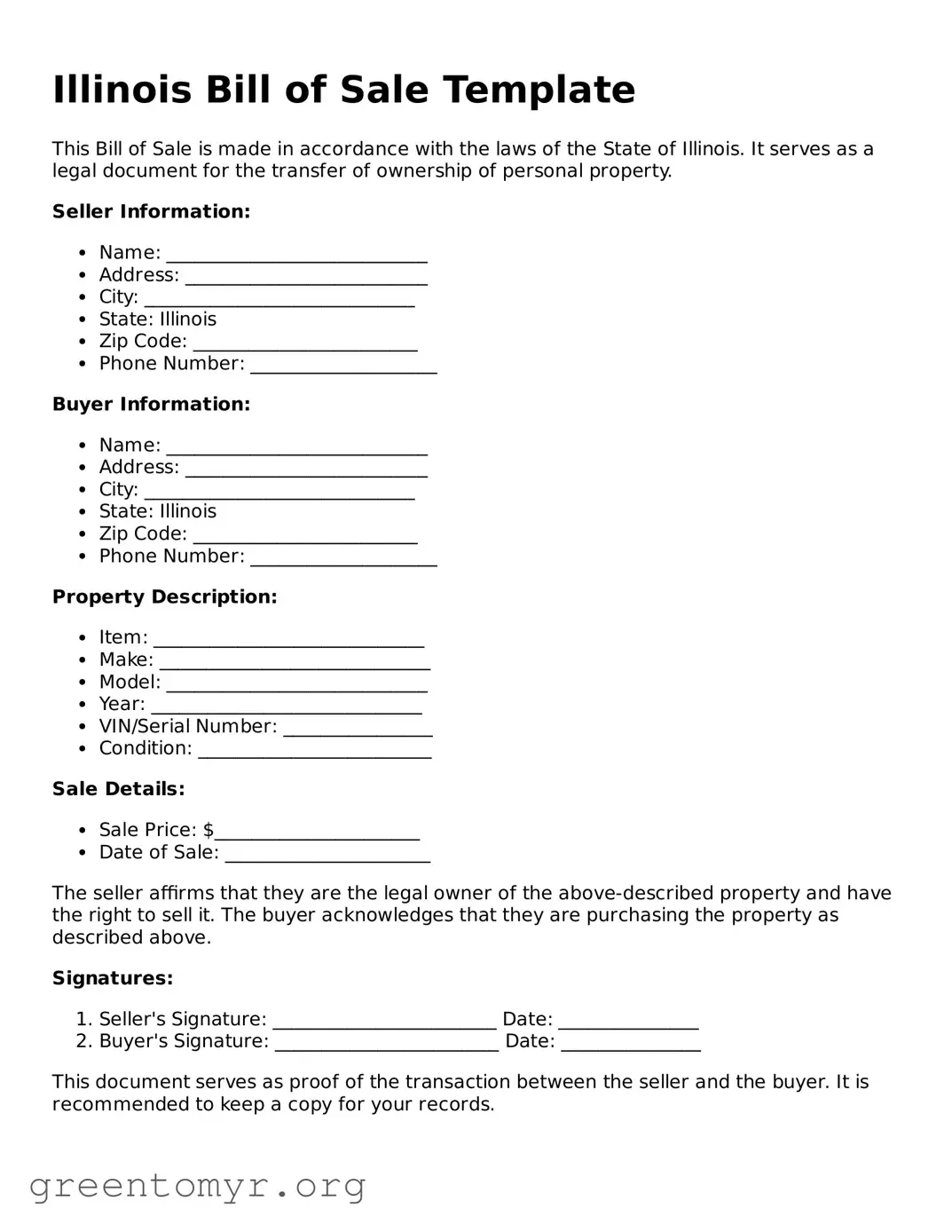
Illinois Bill of Sale Template
This Bill of Sale is made in accordance with the laws of the State of Illinois. It serves as a legal document for the transfer of ownership of personal property.
Seller Information:
Buyer Information:
Property Description:
Sale Details:
The seller affirms that they are the legal owner of the above-described property and have the right to sell it. The buyer acknowledges that they are purchasing the property as described above.
Signatures:
This document serves as proof of the transaction between the seller and the buyer. It is recommended to keep a copy for your records.
| Fact Name | Description |
|---|---|
| Purpose | The Illinois Bill of Sale serves as a legal document that records the transfer of ownership of personal property from one party to another. |
| Governing Law | This document is governed by the Illinois Uniform Commercial Code, which outlines the regulations for the sale of goods. |
| Required Information | The form typically requires details such as the names and addresses of the buyer and seller, a description of the item being sold, and the sale price. |
| Notarization | While notarization is not mandatory for all Bill of Sale forms in Illinois, it is highly recommended for certain transactions to ensure authenticity. |
| Types of Property | The Bill of Sale can be used for various types of personal property, including vehicles, boats, and equipment. |
| Tax Implications | In Illinois, sales tax may apply to the sale of certain items, and it is the responsibility of the seller to ensure compliance with tax regulations. |
| Record Keeping | Both the buyer and seller should keep a copy of the Bill of Sale for their records, as it serves as proof of the transaction. |
After obtaining the Illinois Bill of Sale form, you will need to fill it out accurately to ensure a smooth transaction. Follow these steps carefully to complete the form correctly.
Once you have completed the form, keep a copy for your records. The buyer should also retain a copy as proof of purchase.
An Illinois Bill of Sale is a legal document that serves as proof of the transfer of ownership of personal property from one party to another. It details the transaction, including information about the buyer, seller, and the item being sold. This document is particularly important for high-value items, such as vehicles, as it provides a record of the sale and can help prevent disputes later on.
A Bill of Sale is often required when selling or purchasing certain types of property, especially vehicles, boats, and trailers. While not legally required for every transaction, having a Bill of Sale is highly recommended. It protects both the buyer and seller by providing a clear record of the transaction.
Essential information to include in an Illinois Bill of Sale consists of:
Yes, a Bill of Sale is legally binding as long as it includes all necessary information and is signed by both parties. It serves as a contract that outlines the terms of the sale. However, to enforce the agreement, both parties must adhere to the terms outlined in the document.
In Illinois, notarization is not a requirement for a Bill of Sale to be valid. However, having the document notarized can add an extra layer of protection, as it verifies the identities of both parties and the authenticity of the signatures. This can be particularly useful in disputes or if the transaction involves a significant amount of money.
Yes, you can use a generic Bill of Sale form, but it is advisable to ensure that it meets the specific requirements of Illinois law. Many templates are available online, but they should be tailored to include all necessary details relevant to your transaction. Customizing the form ensures that it is valid and enforceable.
If you lose your Bill of Sale, you may have difficulty proving ownership of the item sold. In the case of vehicles, it may complicate the registration process. If you are the seller, consider providing a copy to the buyer if they need it. If you are the buyer, try to obtain a replacement from the seller or reconstruct the transaction details as best as possible.
Yes, a Bill of Sale can be used for a gift, although it may not be necessary. If you wish to document the transfer of ownership for a gift, especially for high-value items, a Bill of Sale can serve as a record. It is important to note that gifts may have different tax implications, so consulting a tax professional may be advisable.
You can obtain an Illinois Bill of Sale form from various sources. Many legal websites offer free templates that you can download and customize. Additionally, local government offices, such as the Department of Motor Vehicles (DMV), may provide forms specifically for vehicle sales. Always ensure that the form you choose complies with Illinois laws.
Filling out the Illinois Bill of Sale form can seem straightforward, but many individuals make common mistakes that can lead to complications. One prevalent error is not providing complete information about the buyer and seller. Each party's full name, address, and contact information should be clearly stated. Omitting any of these details can create confusion and may affect the validity of the transaction.
Another frequent mistake is failing to accurately describe the item being sold. The form should include a detailed description, including the make, model, year, and Vehicle Identification Number (VIN) for vehicles. Without this information, it may be challenging to establish ownership or resolve disputes in the future.
Many individuals neglect to include the sale price. This omission can lead to misunderstandings regarding the terms of the sale. It is crucial to clearly state the amount agreed upon to avoid any potential disputes later on. Additionally, not specifying the payment method can also lead to confusion.
People often forget to date the Bill of Sale. A date is essential as it marks the official transfer of ownership. Without a date, it may be difficult to establish when the transaction occurred, which can complicate matters if legal issues arise later.
Another common error involves signatures. Both the buyer and seller must sign the document for it to be legally binding. Some individuals mistakenly think that only one signature is necessary. Ensure that both parties sign and print their names for clarity.
Failing to keep copies of the Bill of Sale is a mistake that can have long-term consequences. It is advisable for both parties to retain a copy of the signed document for their records. This practice helps in case any disputes arise in the future.
People sometimes forget to check for additional requirements. Depending on the type of item being sold, there may be specific regulations or forms required by the state. For example, vehicle sales may require additional documentation, such as a title transfer.
Another mistake is not reviewing the completed form for errors. Simple typos or inaccuracies can lead to significant issues. Taking the time to double-check all information before submitting the form can prevent future complications.
Lastly, some individuals may not understand the importance of notarization. While not always required, having the Bill of Sale notarized can add an extra layer of protection for both parties. It can serve as a verification of the identities of those involved in the transaction.
When completing a transaction involving the sale of personal property in Illinois, several additional documents may be required or recommended to ensure a smooth process. Each of these documents serves a specific purpose and helps protect both the buyer and seller. Here’s a list of forms commonly used alongside the Illinois Bill of Sale:
Having these documents prepared and organized can greatly simplify the transaction process. It’s important to ensure that all necessary paperwork is completed accurately to avoid any future disputes or complications.
A Bill of Sale form serves as a crucial document in various transactions. Here are five documents that share similarities with a Bill of Sale:
When filling out the Illinois Bill of Sale form, it is important to follow certain guidelines to ensure accuracy and compliance. Here are some things you should and shouldn't do:
Understanding the Illinois Bill of Sale form is essential for anyone involved in buying or selling personal property. However, several misconceptions exist that can lead to confusion. Here are ten common misunderstandings:
By addressing these misconceptions, individuals can better navigate the process of buying or selling personal property in Illinois. Being informed helps ensure a smoother transaction.
When filling out and using the Illinois Bill of Sale form, keep the following key takeaways in mind: