Going through a divorce can be a challenging and emotional experience, but having the right tools can make the process smoother. One essential tool in this journey is the Illinois Divorce Settlement Agreement form. This document serves as a comprehensive outline of the terms agreed upon by both parties regarding various aspects of their separation. It typically includes provisions for the division of property, allocation of debts, child custody arrangements, visitation rights, and child support obligations. By clearly detailing these agreements, the form helps to prevent misunderstandings and disputes down the line. Both parties can benefit from a well-structured agreement, as it promotes clarity and ensures that each individual’s rights and responsibilities are clearly defined. Understanding the significance of this form can empower individuals to navigate their divorce with greater confidence and peace of mind.
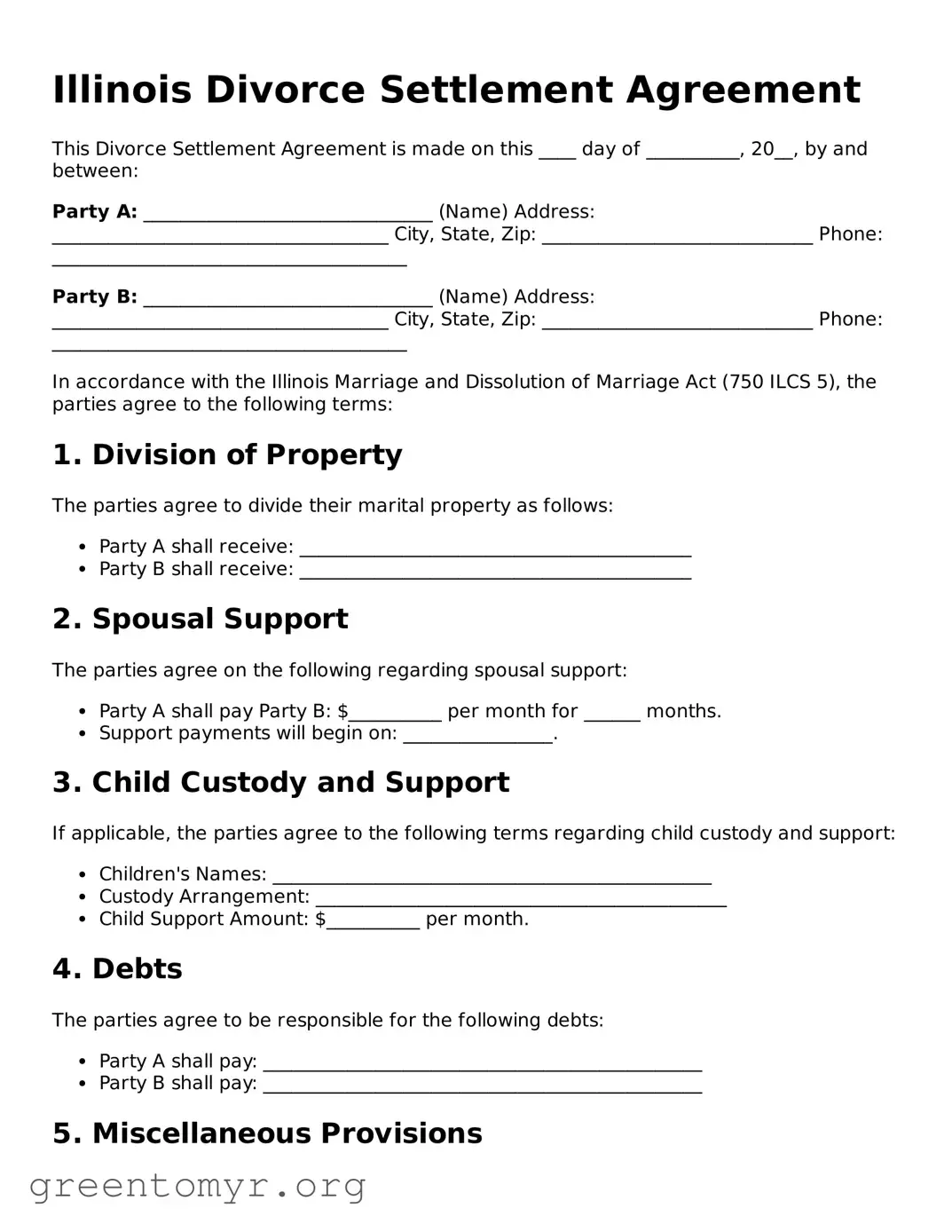
Illinois Divorce Settlement Agreement
This Divorce Settlement Agreement is made on this ____ day of __________, 20__, by and between:
Party A: _______________________________ (Name) Address: ____________________________________ City, State, Zip: _____________________________ Phone: ______________________________________
Party B: _______________________________ (Name) Address: ____________________________________ City, State, Zip: _____________________________ Phone: ______________________________________
In accordance with the Illinois Marriage and Dissolution of Marriage Act (750 ILCS 5), the parties agree to the following terms:
1. Division of Property
The parties agree to divide their marital property as follows:
2. Spousal Support
The parties agree on the following regarding spousal support:
3. Child Custody and Support
If applicable, the parties agree to the following terms regarding child custody and support:
4. Debts
The parties agree to be responsible for the following debts:
5. Miscellaneous Provisions
Additional agreements include:
This agreement constitutes the entire understanding between the parties. It may only be modified in writing, signed by both parties.
IN WITNESS WHEREOF, the parties hereto have executed this Divorce Settlement Agreement on the day and year first above written.
_____________________________ Party A Signature
_____________________________ Party B Signature
_____________________________ Date
_____________________________ Witness Signature
_____________________________ Date
| Fact Name | Details |
|---|---|
| Governing Law | Illinois Marriage and Dissolution of Marriage Act (IMDMA) |
| Purpose | The form outlines the terms of the divorce settlement between parties. |
| Required Signatures | Both parties must sign the agreement for it to be valid. |
| Property Division | The form addresses how marital assets and debts will be divided. |
| Child Custody | It includes provisions for child custody and visitation arrangements. |
| Spousal Support | The agreement can specify terms for alimony or spousal support. |
| Filing Requirement | The completed form must be filed with the court to finalize the divorce. |
| Modification | The agreement can be modified later if both parties consent. |
After obtaining the Illinois Divorce Settlement Agreement form, you will need to provide specific information related to your divorce settlement. Completing this form accurately is essential for ensuring that your agreement is clear and legally binding.
A Divorce Settlement Agreement is a legally binding document that outlines the terms agreed upon by both spouses regarding the division of assets, debts, child custody, and support obligations. This agreement is crucial as it helps to finalize the divorce process and ensures that both parties are on the same page regarding their responsibilities moving forward.
This agreement is essential because it provides clarity and prevents future disputes. By detailing how assets will be divided and how children will be cared for, both parties can avoid misunderstandings later. It also serves as a legal record of the decisions made, which can be referenced if disagreements arise in the future.
While either party can prepare the agreement, it is often beneficial to have legal assistance to ensure that all necessary terms are included and that the document complies with Illinois law. Each spouse should also review the agreement to ensure it accurately reflects their understanding and intentions.
The agreement should cover several key areas, including:
Once the agreement is signed by both parties and approved by the court, it becomes legally binding. If one party fails to comply with the terms, the other party can seek enforcement through the court system. This may involve filing a motion for enforcement or modification, depending on the circumstances.
Yes, modifications can be made, but they typically require the agreement of both parties. If circumstances change significantly, such as a change in income or living arrangements, either party can request a modification. This request will need to be presented to the court for approval.
Even if both parties agree on the terms, a written Divorce Settlement Agreement is necessary to make the agreement enforceable. Verbal agreements can lead to misunderstandings and disputes. A written document provides a clear record of the terms and protects both parties’ interests.
The time it takes to finalize the agreement can vary based on the complexity of the issues involved and how quickly both parties can reach an agreement. Simple cases may be resolved in a matter of weeks, while more complicated situations could take several months. It is advisable to act promptly to avoid unnecessary delays.
If both parties cannot reach an agreement, the case may need to go to court for a judge to decide the terms of the divorce. This process can be lengthy and costly. Mediation is often recommended as a way to facilitate discussions and help both parties find common ground before resorting to litigation.
The Divorce Settlement Agreement form can typically be obtained from the Illinois court's website or at your local courthouse. Additionally, many legal document preparation services offer templates that can be customized to fit your specific situation. Ensure that you are using the most current version of the form to comply with local requirements.
Filling out the Illinois Divorce Settlement Agreement form can be a challenging task, and many individuals make common mistakes that can delay the process. One frequent error is failing to provide complete information about assets and debts. It is essential to list all property, bank accounts, and any liabilities. Omitting even a small detail can lead to complications later in the divorce proceedings.
Another mistake involves not clearly stating the terms of spousal support or child support. If these terms are vague or unclear, it can create confusion and disputes in the future. It’s important to specify the amount, frequency, and duration of payments to avoid misunderstandings.
Many individuals also neglect to consider tax implications when dividing assets. Certain assets, like retirement accounts, may have tax consequences that should be addressed. Failing to account for these can result in unexpected financial burdens after the divorce is finalized.
Inaccurate or inconsistent information can also be a significant issue. For instance, if one spouse lists different values for the same asset in various sections, it raises red flags. Consistency is key; double-checking figures and ensuring they match throughout the document is crucial.
Additionally, individuals often forget to date and sign the agreement properly. Without the necessary signatures and dates, the document may not be considered valid. Each party must review the document thoroughly and ensure that all required fields are completed.
Lastly, some people fail to seek legal advice or assistance when needed. While it may seem straightforward, divorce agreements can be complex. Consulting with a legal professional can help ensure that all aspects of the agreement are fair and legally binding, preventing potential issues down the line.
When navigating the complexities of divorce proceedings in Illinois, several forms and documents often accompany the Divorce Settlement Agreement. These documents help clarify the terms of the divorce and ensure that all parties are on the same page. Here are four essential forms that you may encounter:
Understanding these accompanying documents is crucial for a smooth divorce process. Each form plays a significant role in ensuring that the rights and responsibilities of both parties are clearly defined and legally recognized.
When filling out the Illinois Divorce Settlement Agreement form, it’s important to approach the task with care. Here are five essential do's and don'ts to keep in mind:
When navigating the Illinois Divorce Settlement Agreement form, it’s important to clarify some common misconceptions. Understanding these can help ensure a smoother process during what can be a challenging time. Here are nine misconceptions:
By addressing these misconceptions, individuals can approach the Illinois Divorce Settlement Agreement form with a clearer understanding, ultimately leading to a more informed and effective divorce process.
Filling out and utilizing the Illinois Divorce Settlement Agreement form is a critical step in the divorce process. Here are ten essential takeaways to keep in mind:
By keeping these key points in mind, individuals can navigate the complexities of the Divorce Settlement Agreement process more effectively, ensuring a smoother transition into post-divorce life.